The best shapes for tomato sauce
Tomatoes cooked down with oil and basil until smooth. It is the base sauce of the Italian kitchen, and the reason it goes with almost any shape is that it asks nothing structural of one: there are no solids to catch and no weight to support, only a surface to film.
A smooth reduced tomato coats whatever it touches, so it is the universal donor of pasta sauces. It rides strands well and films short shapes evenly.
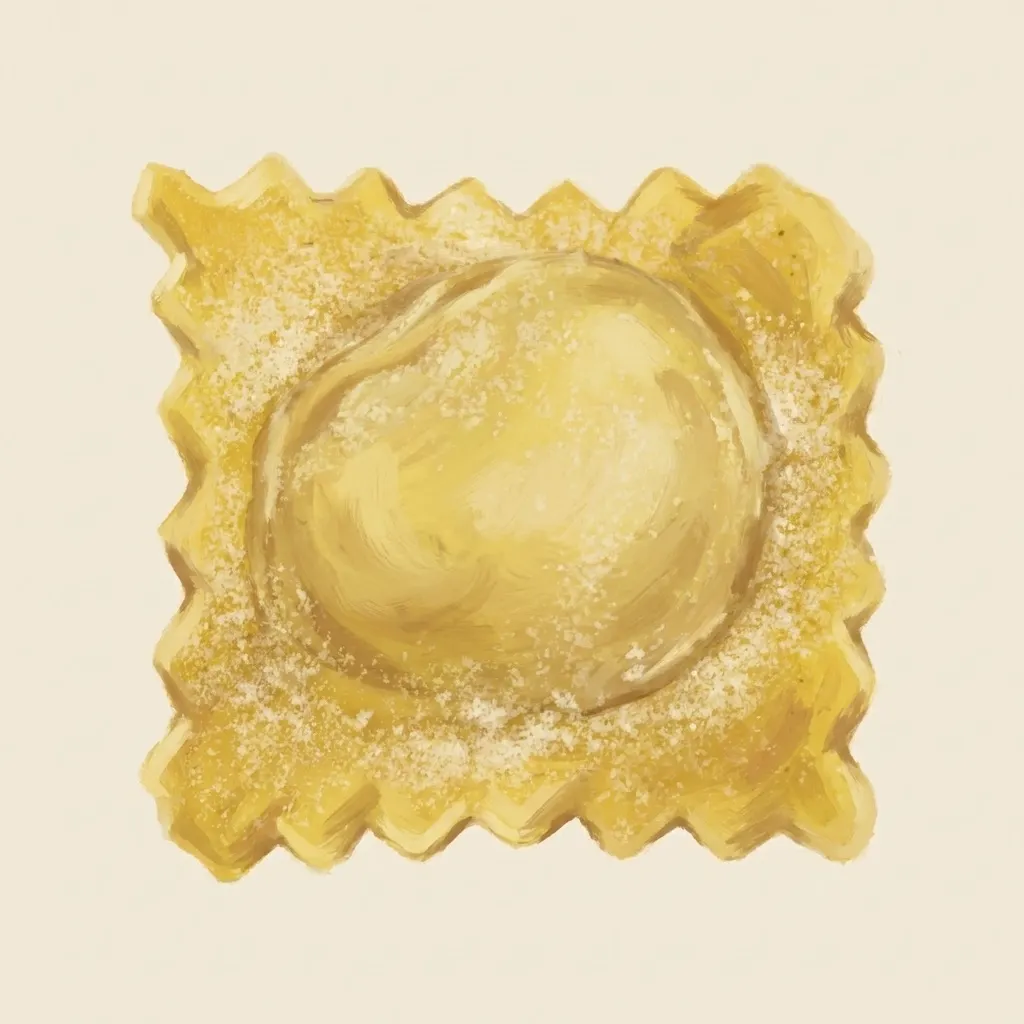
The filling carries roasted meat, so the dressing stays quiet and lets it lead.
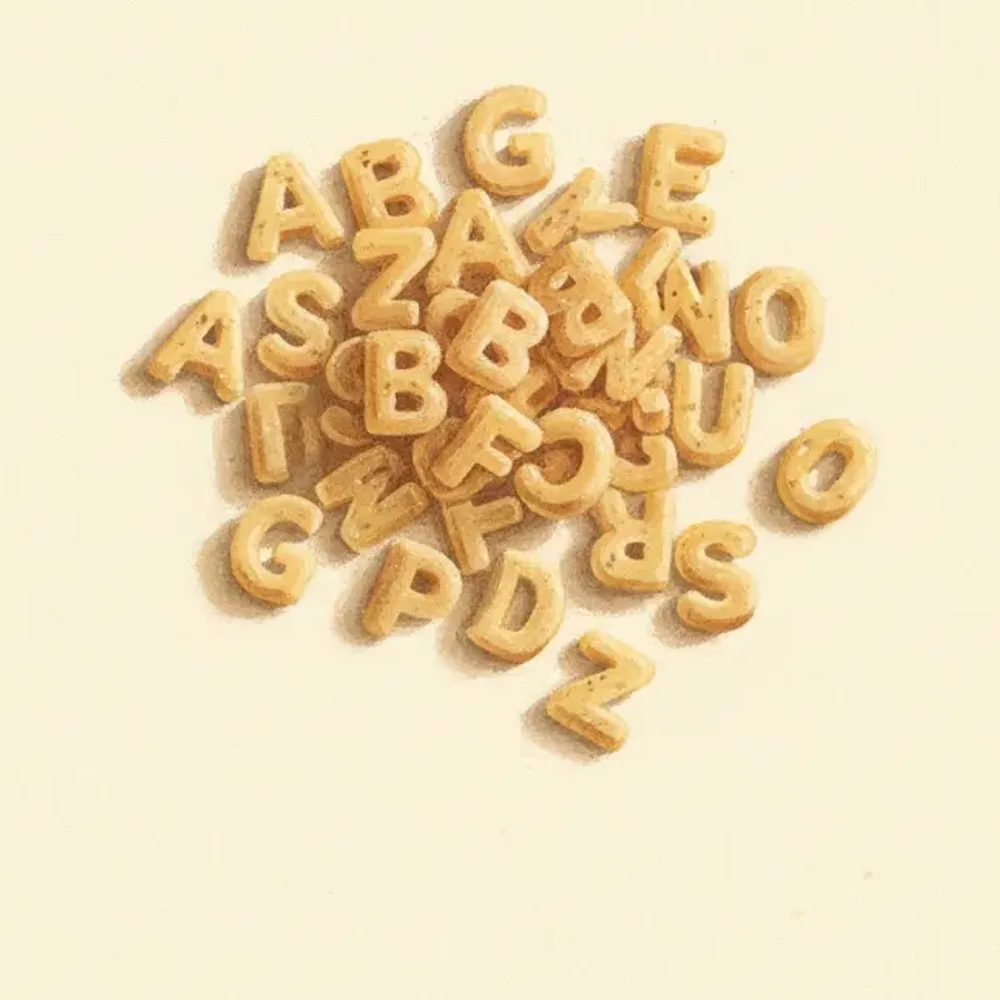
This is pastina scale, so the cooking liquid is the dish.
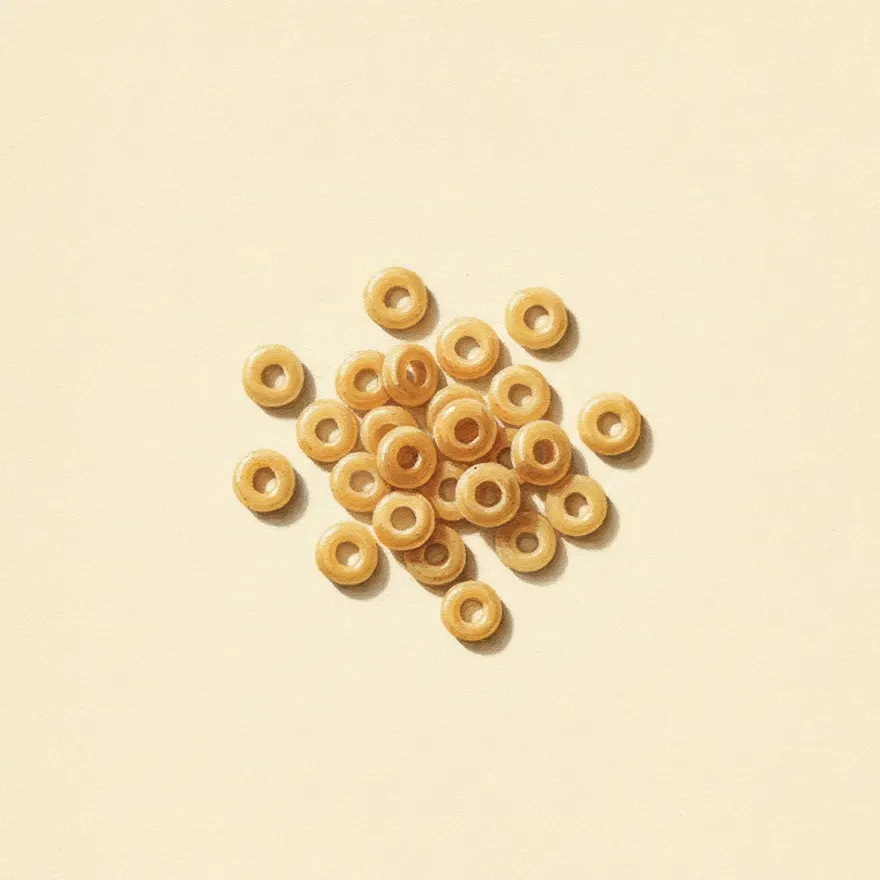
The rings are a binding shape, not a plating shape.
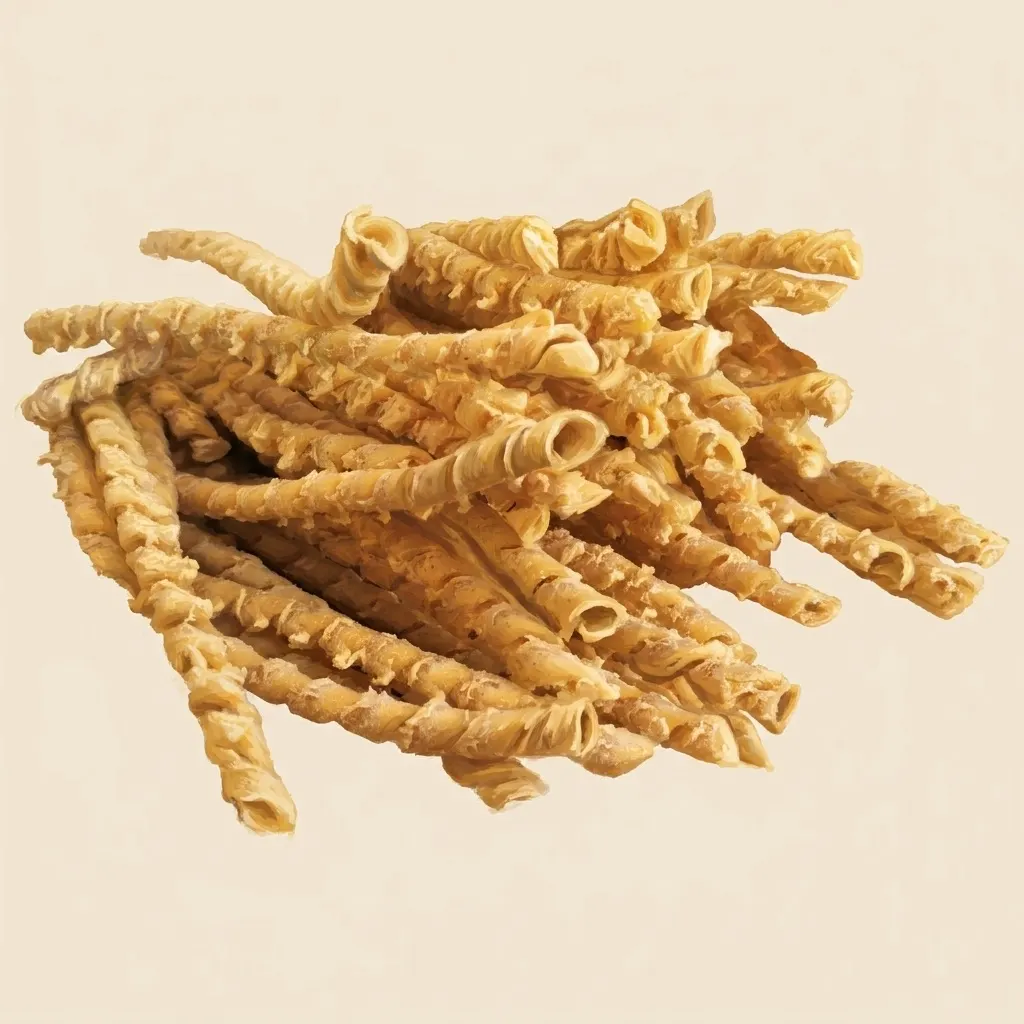
The long twist works like a spring.
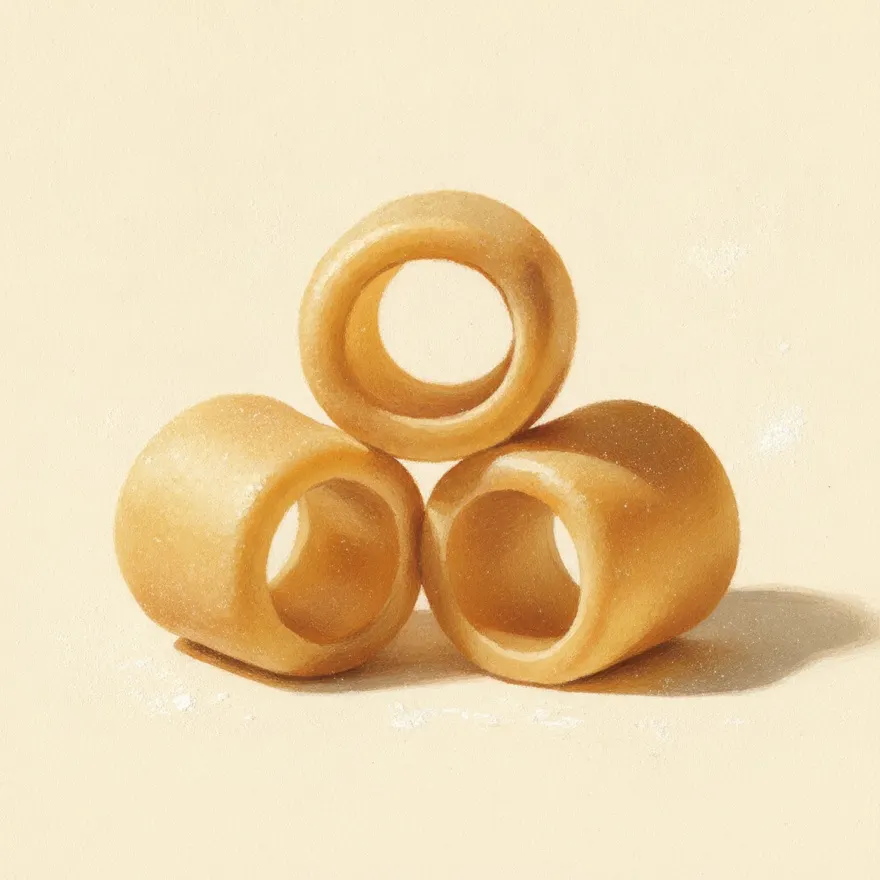
The wide short ring wants seafood and a light tomato base, not heavy meat.
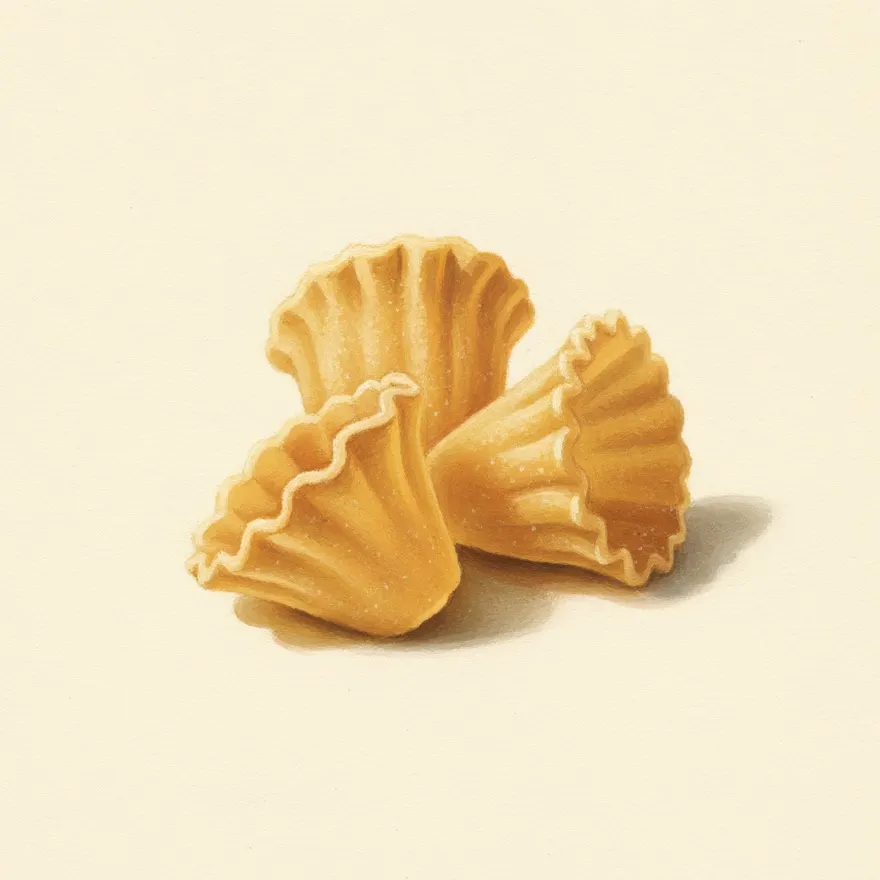
Campanelle works like a scoop with a grip.
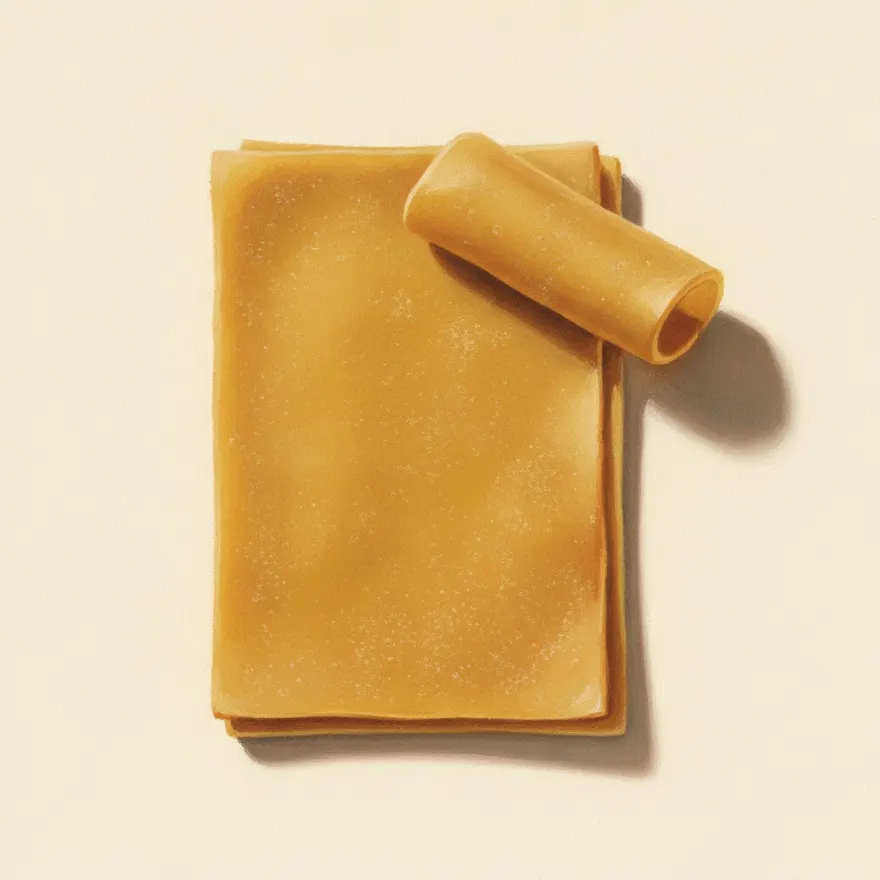
A cannelloni does not catch sauce, it contains the meal.
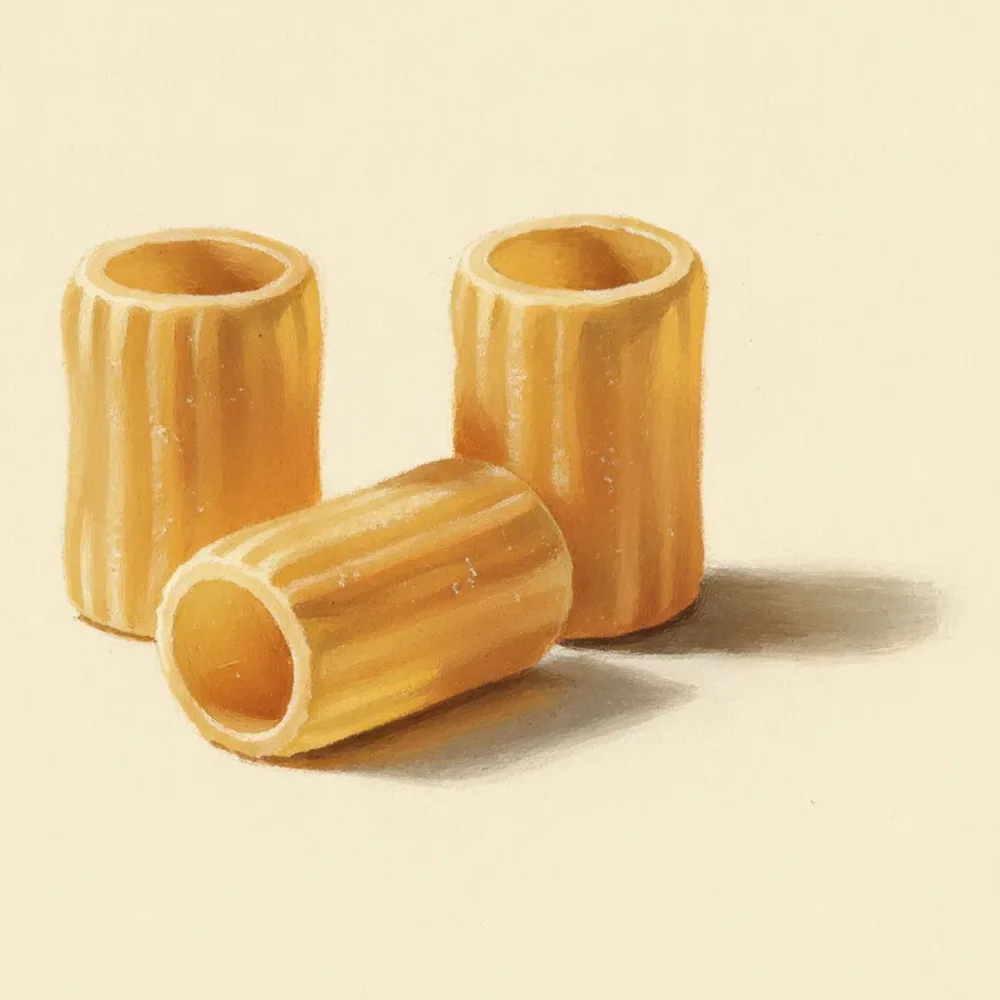
A short small tube reads as a soup and braise pasta first.
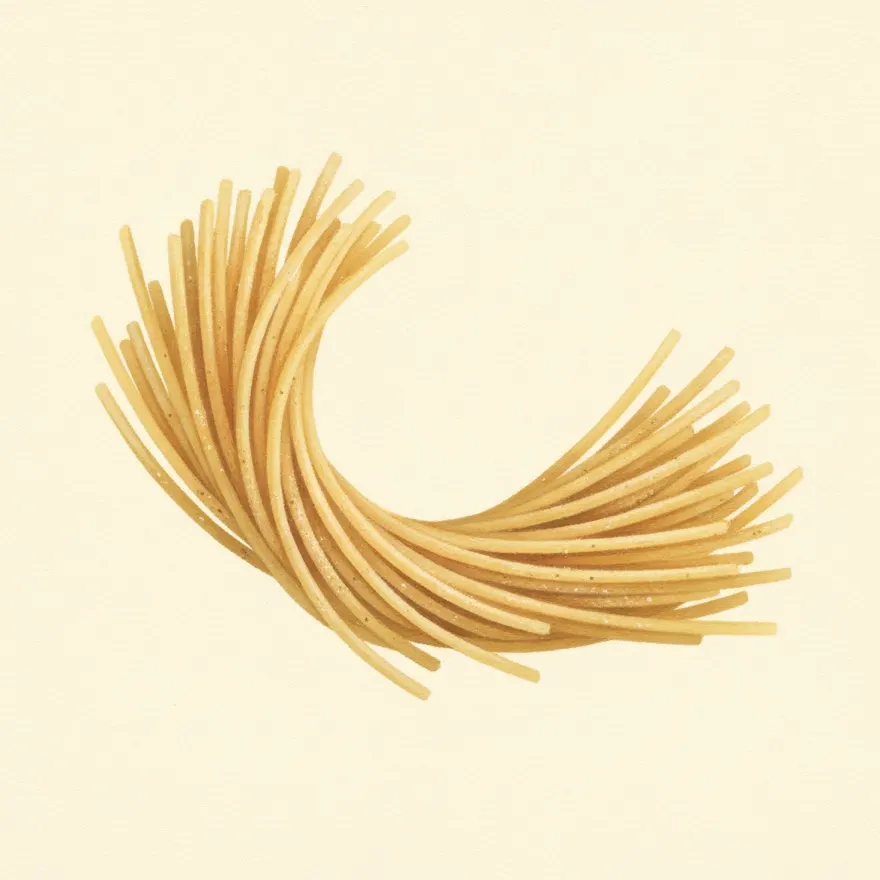
A strand under a millimeter wide is nearly all surface.
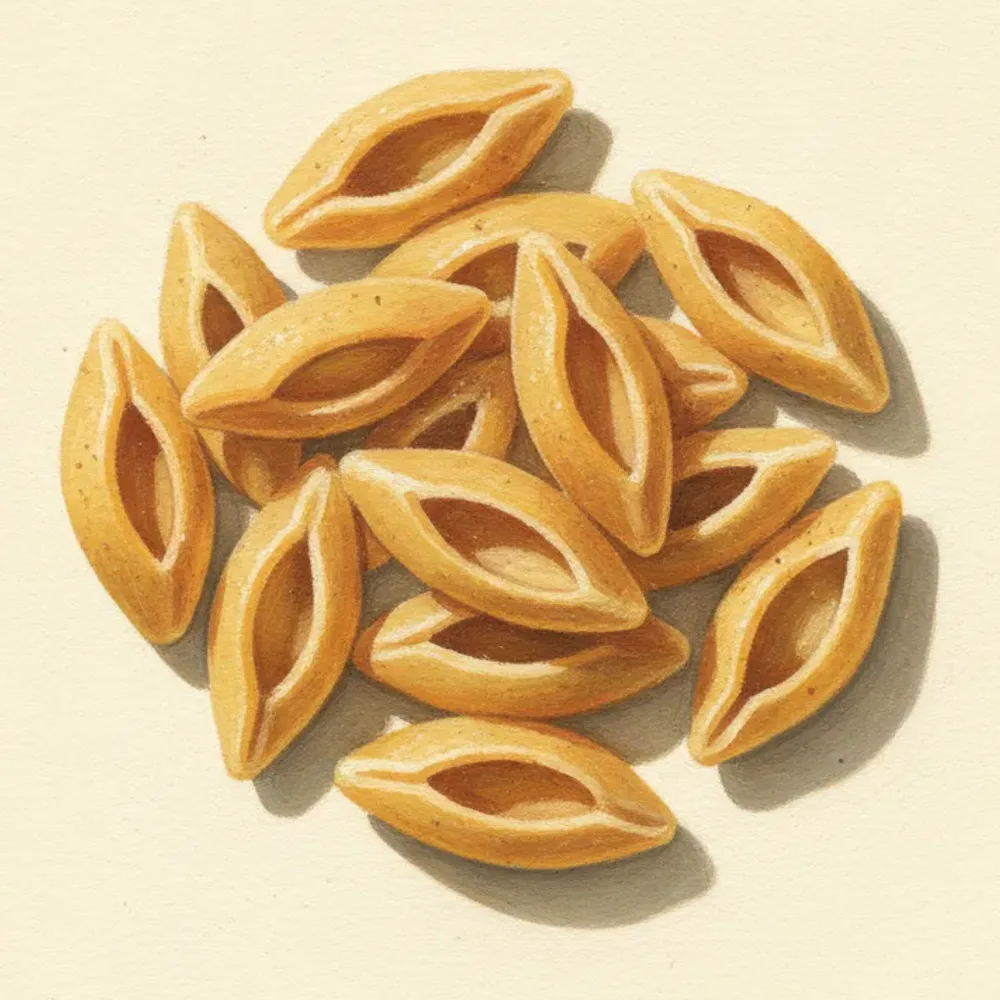
The long open hollow and the dragged-rough surface catch chunky sauce along the whole piece rather than just in a single curl.
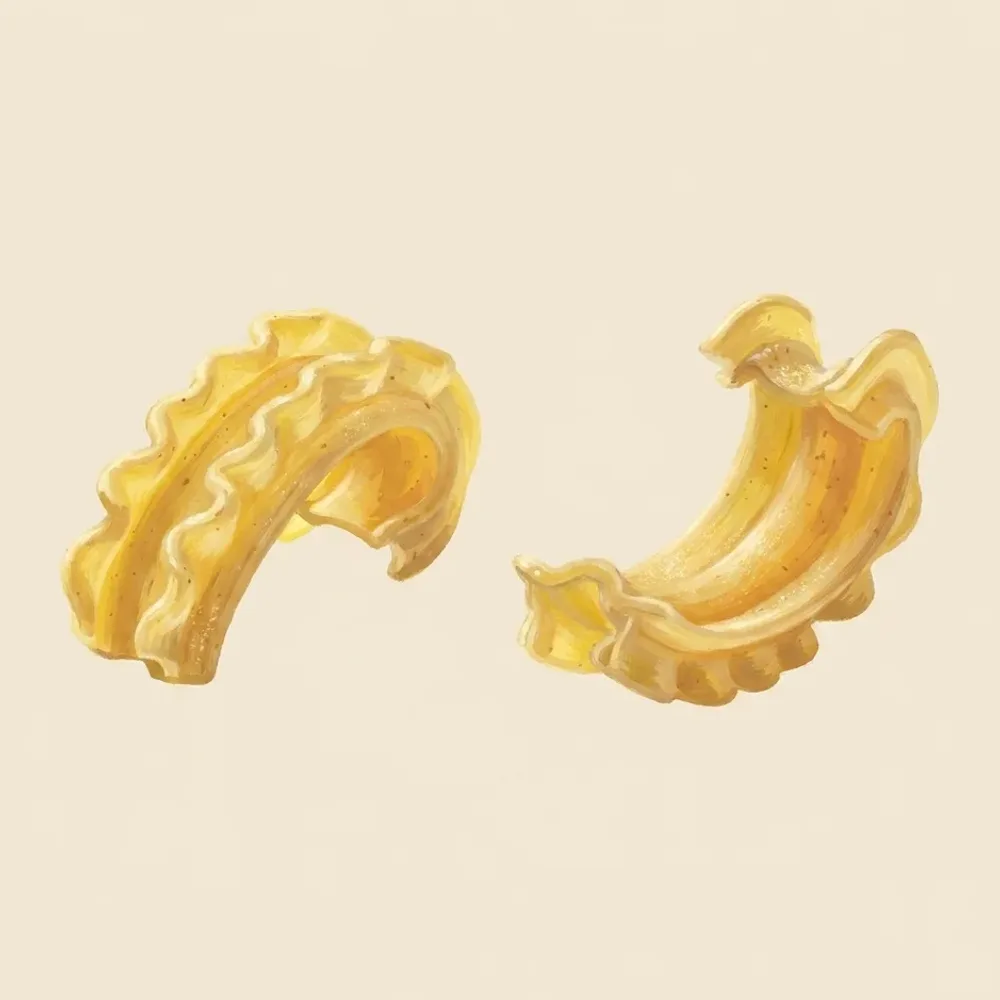
The geometry is built around catching sauce.
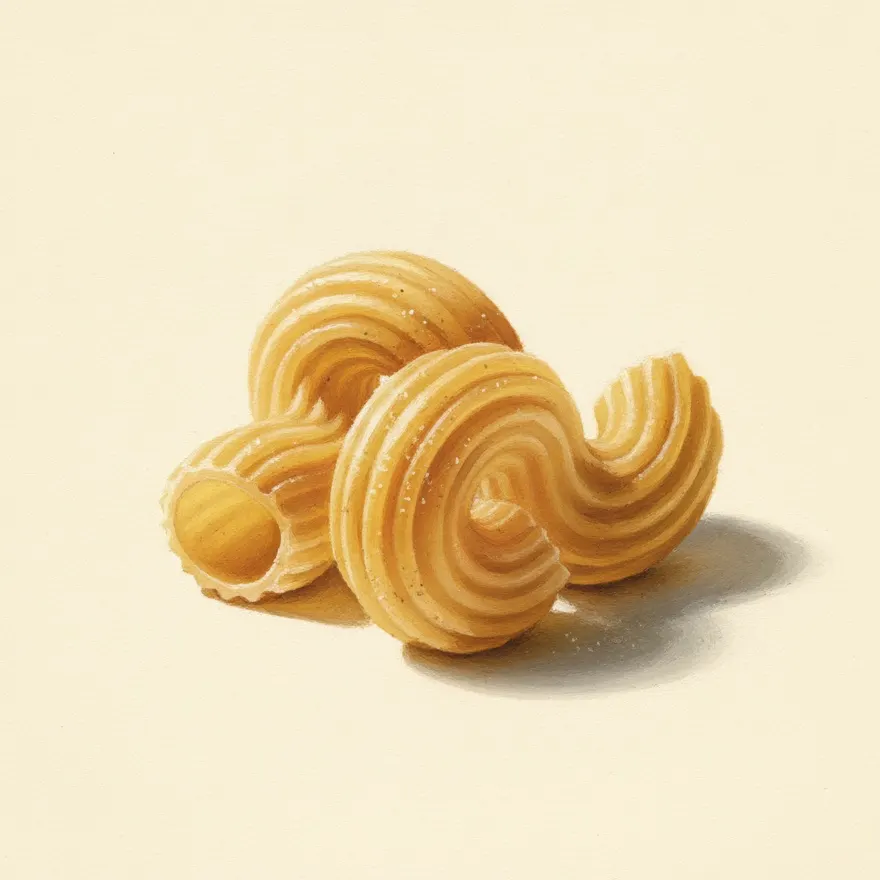
Cavatappi grips sauce three ways at once.

Each piece is a small scoop.
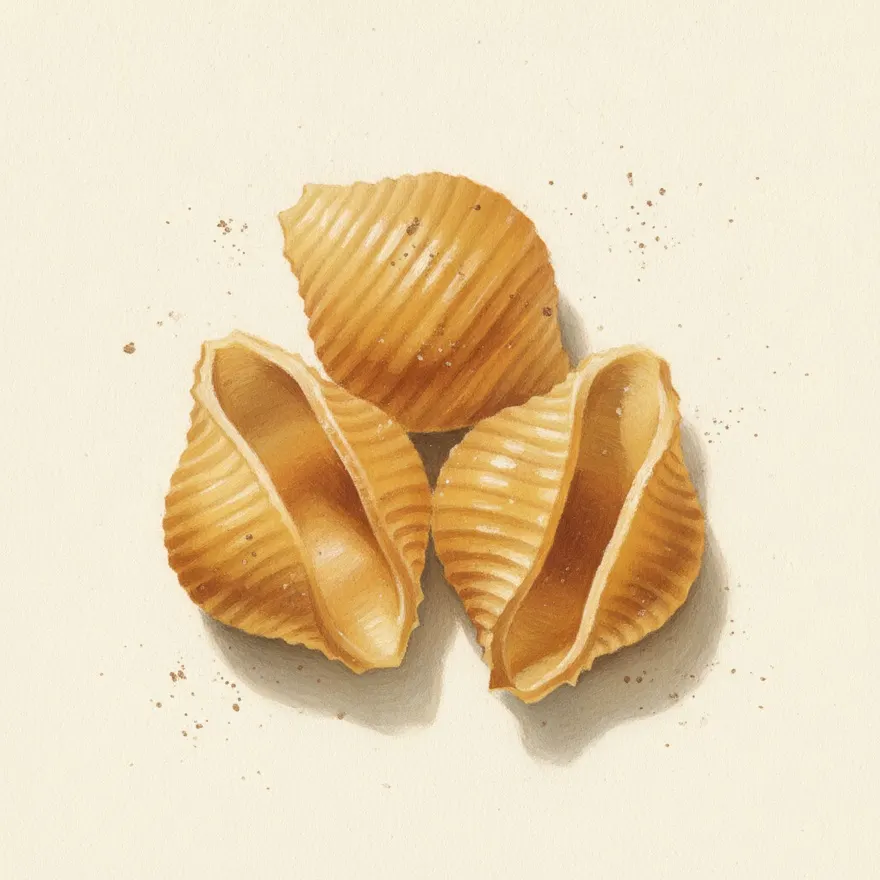
A shell is a scoop.
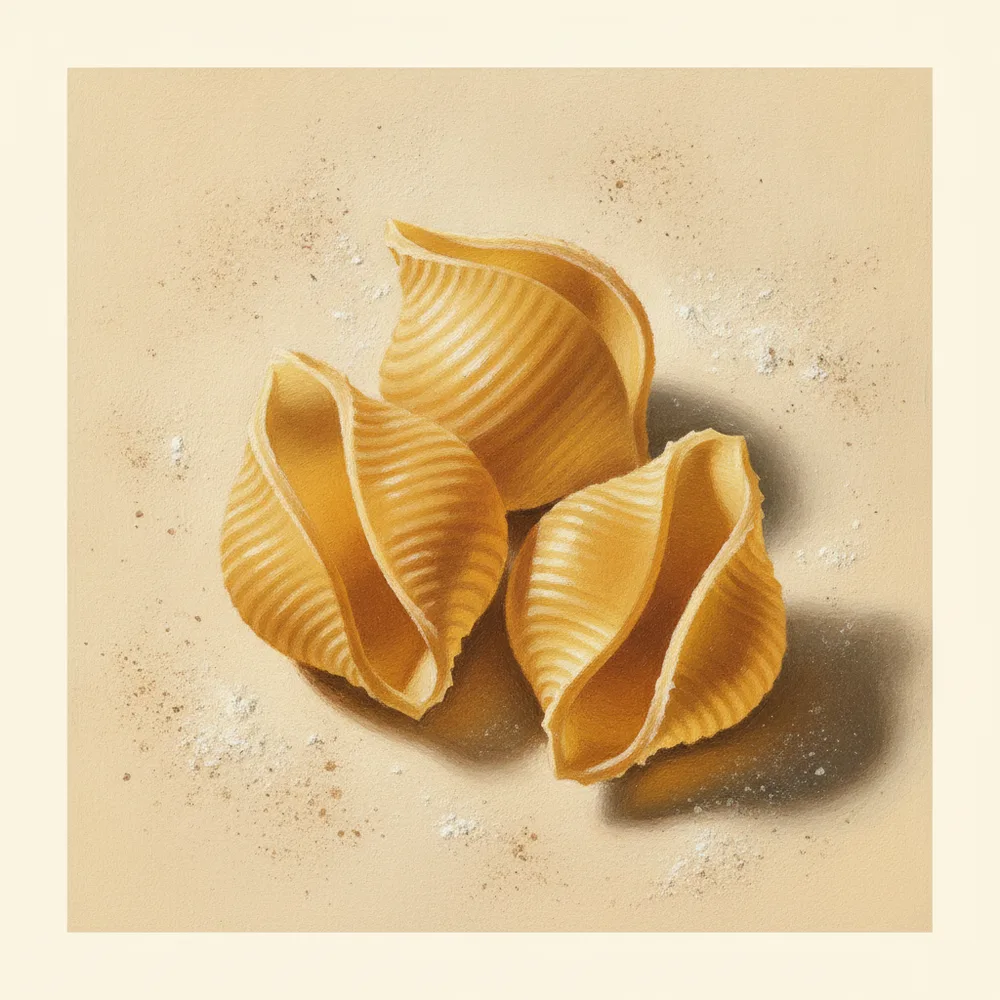
Conchiglioni are built to be stuffed and baked rather than tossed.
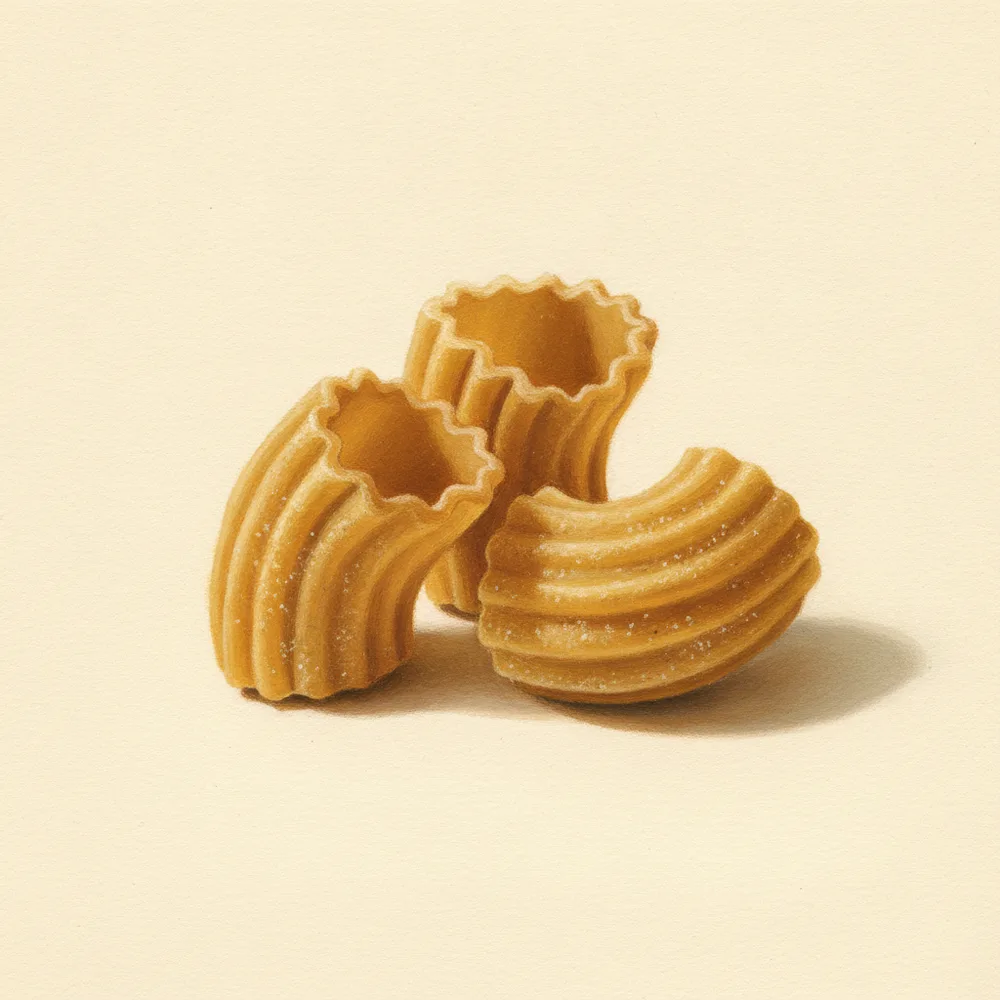
The hollow inner curve scoops and holds sauce while the ruffled crest and light ridges along the outside catch whatever coats them.
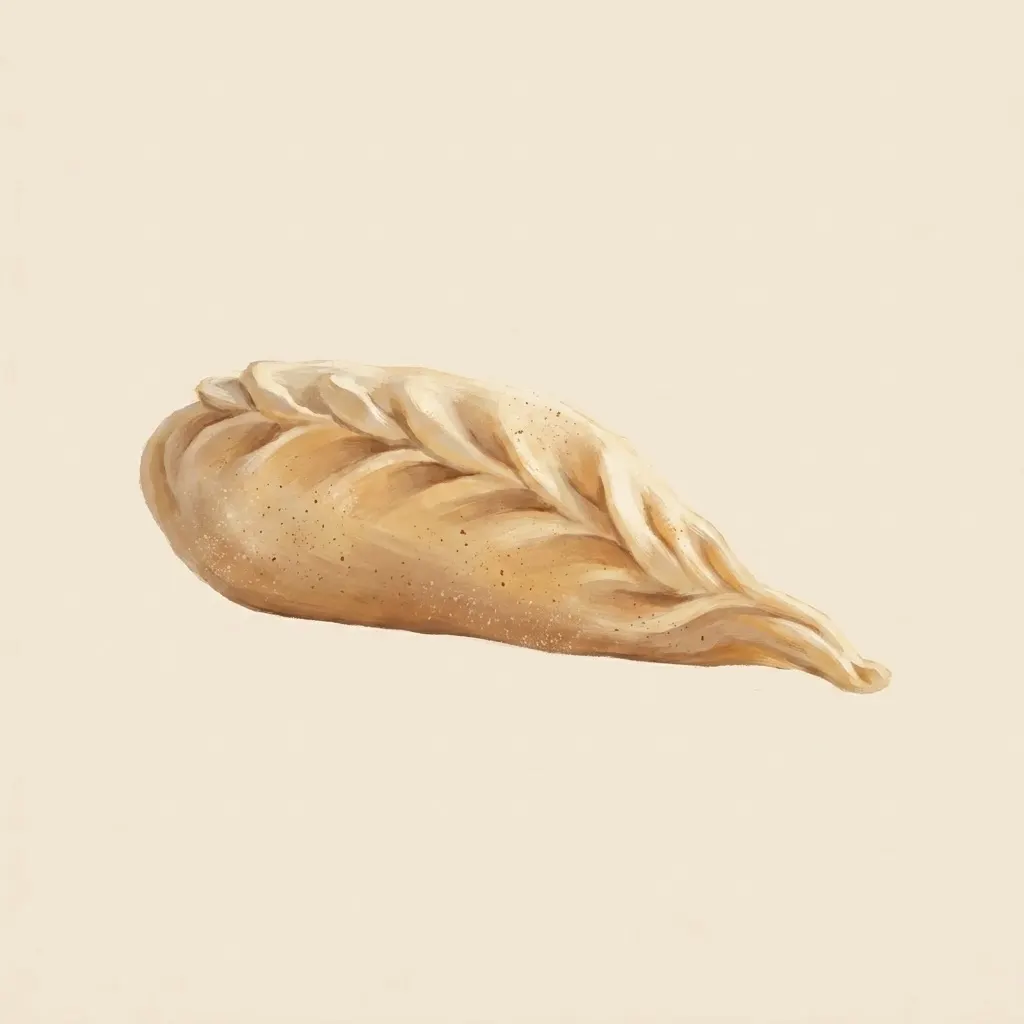
The filling carries the dish, so the dressing stays quiet.
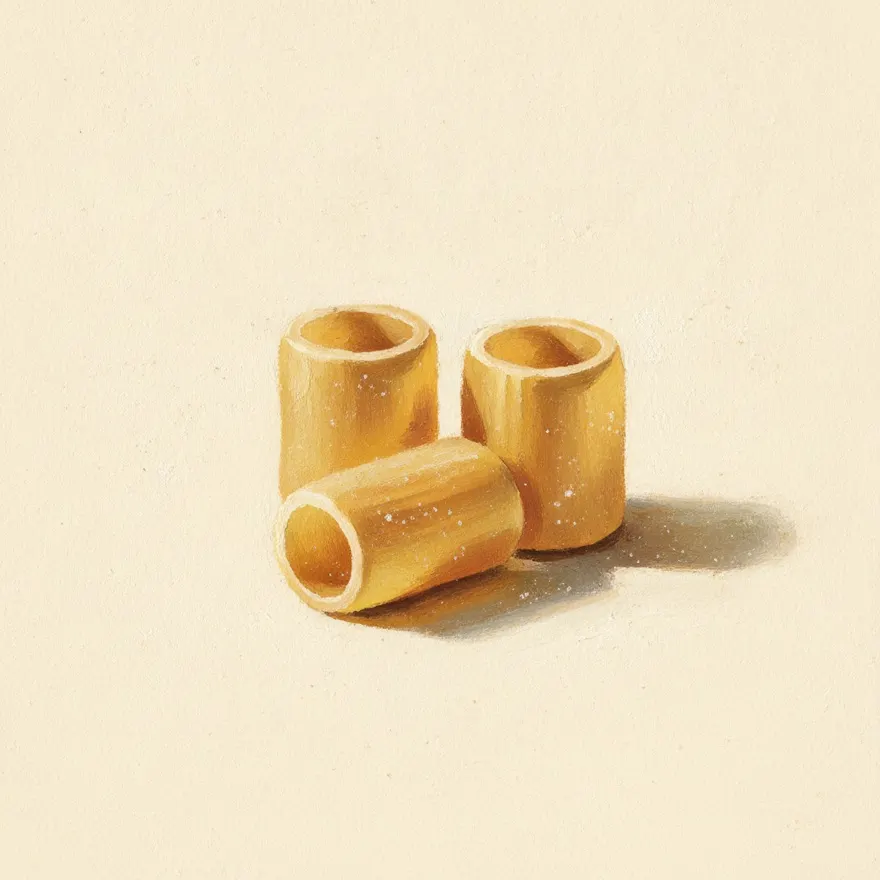
This is a spoon shape.
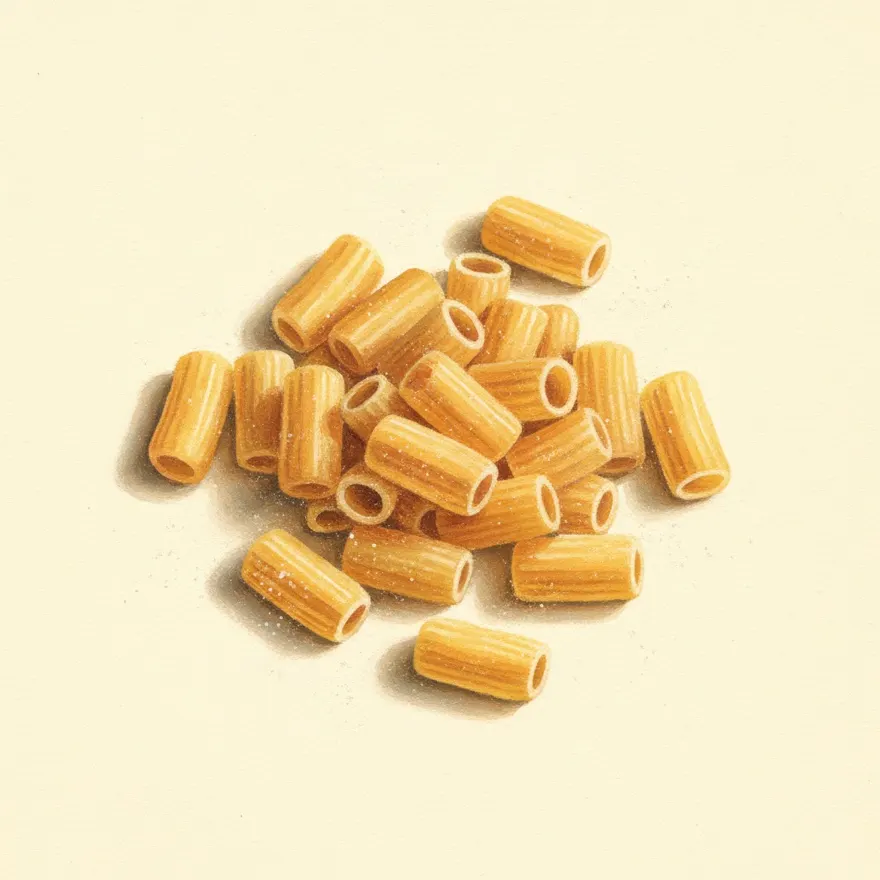
Scale every pairing to a soup spoon.
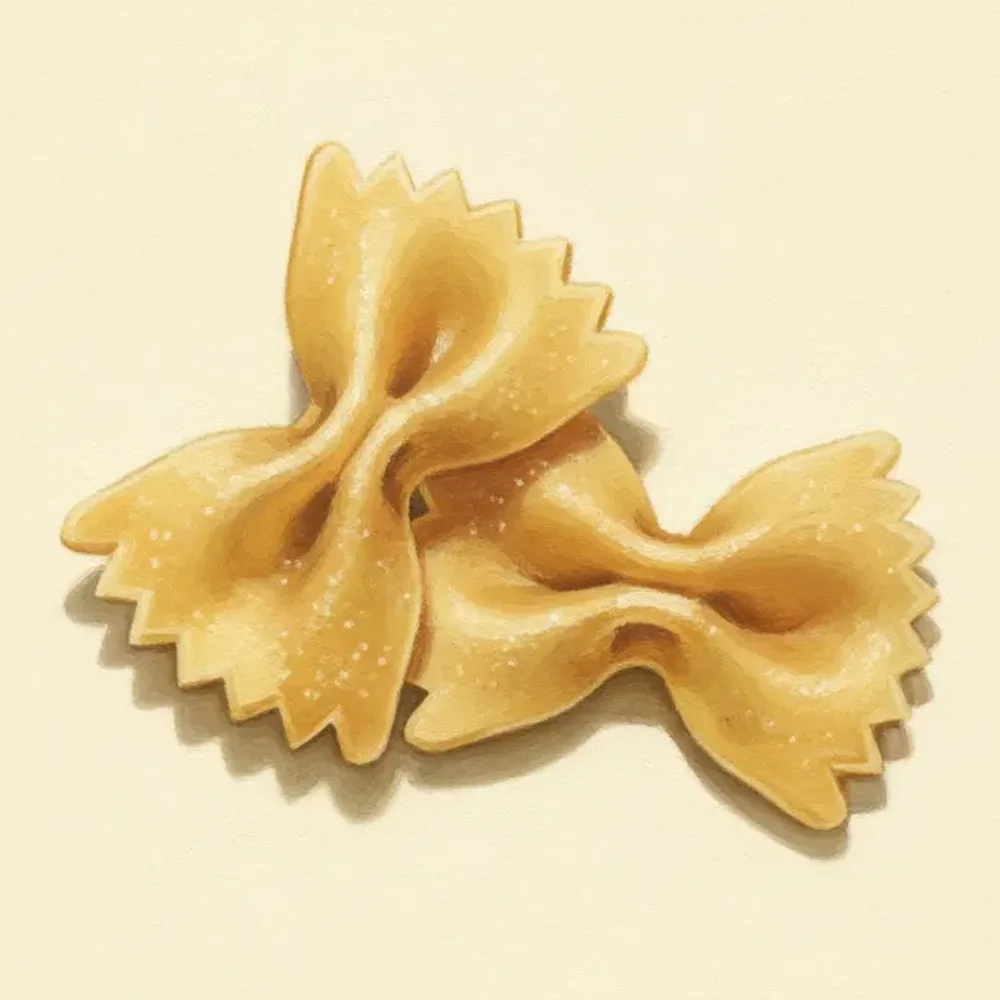
The pinch does the work.
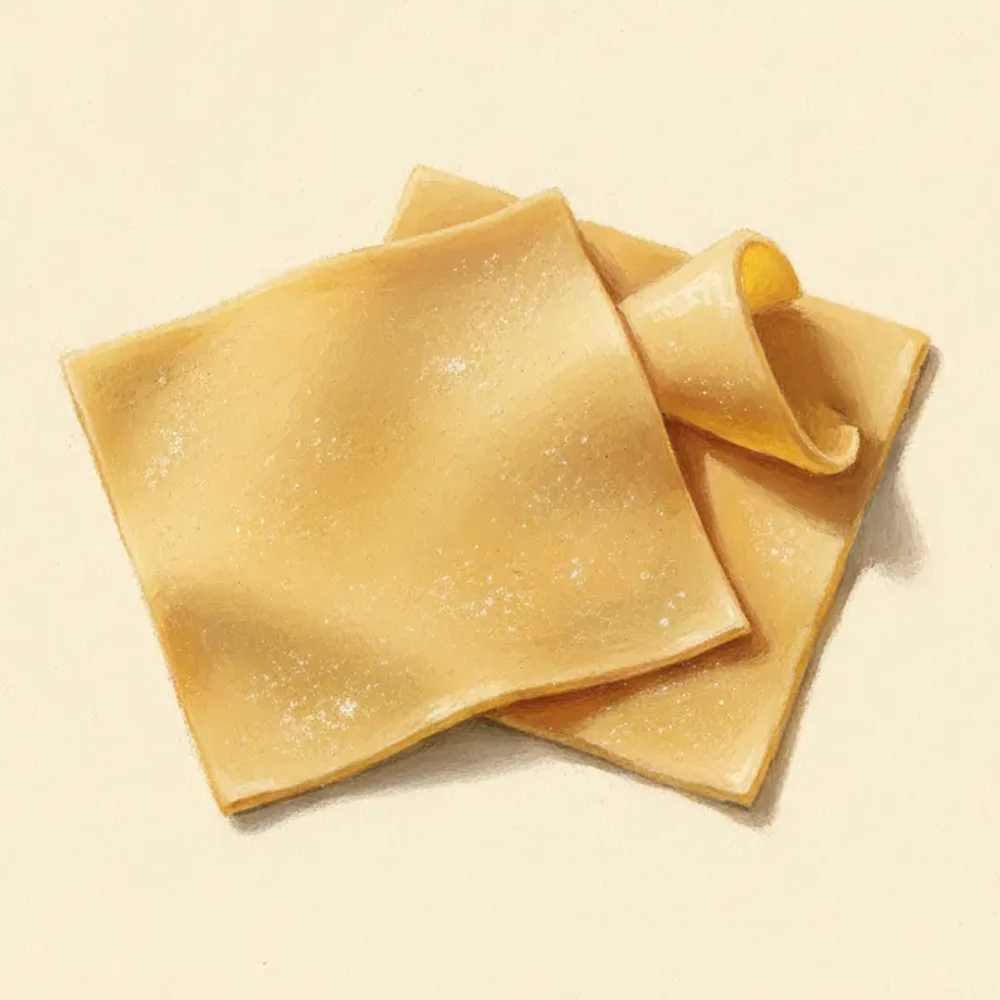
A fazzoletto is a wide, very thin sheet, so it presents a large flat face to its dressing rather than a groove or a twist to trap it.
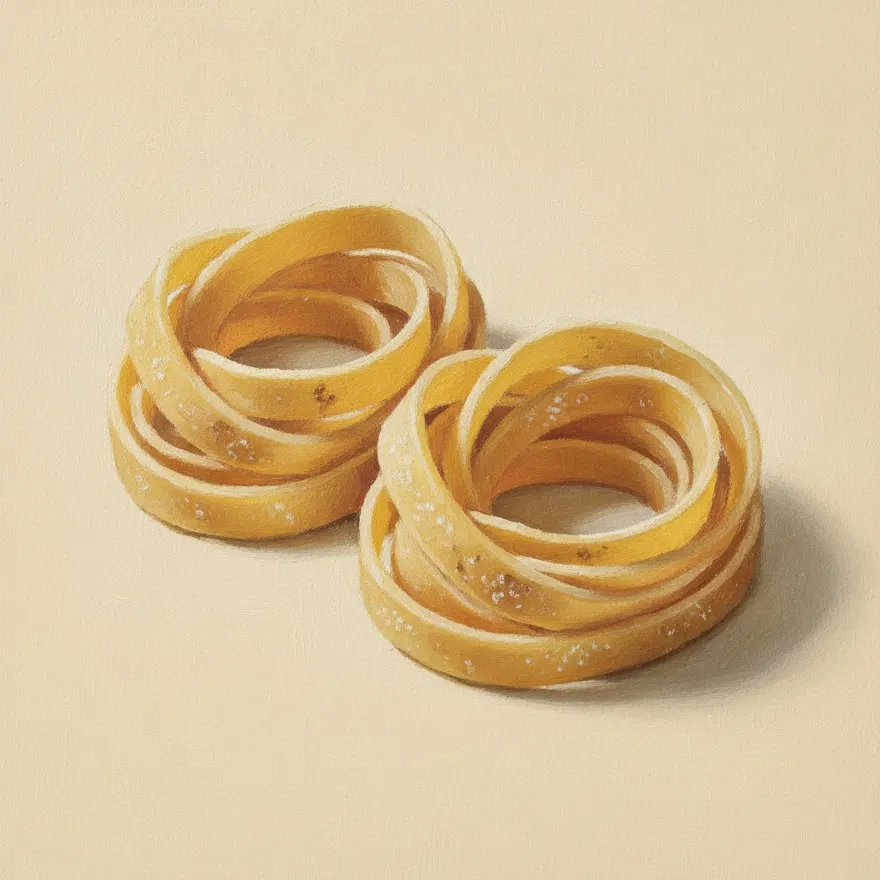
Butter and cheese emulsions need surface, not pockets.
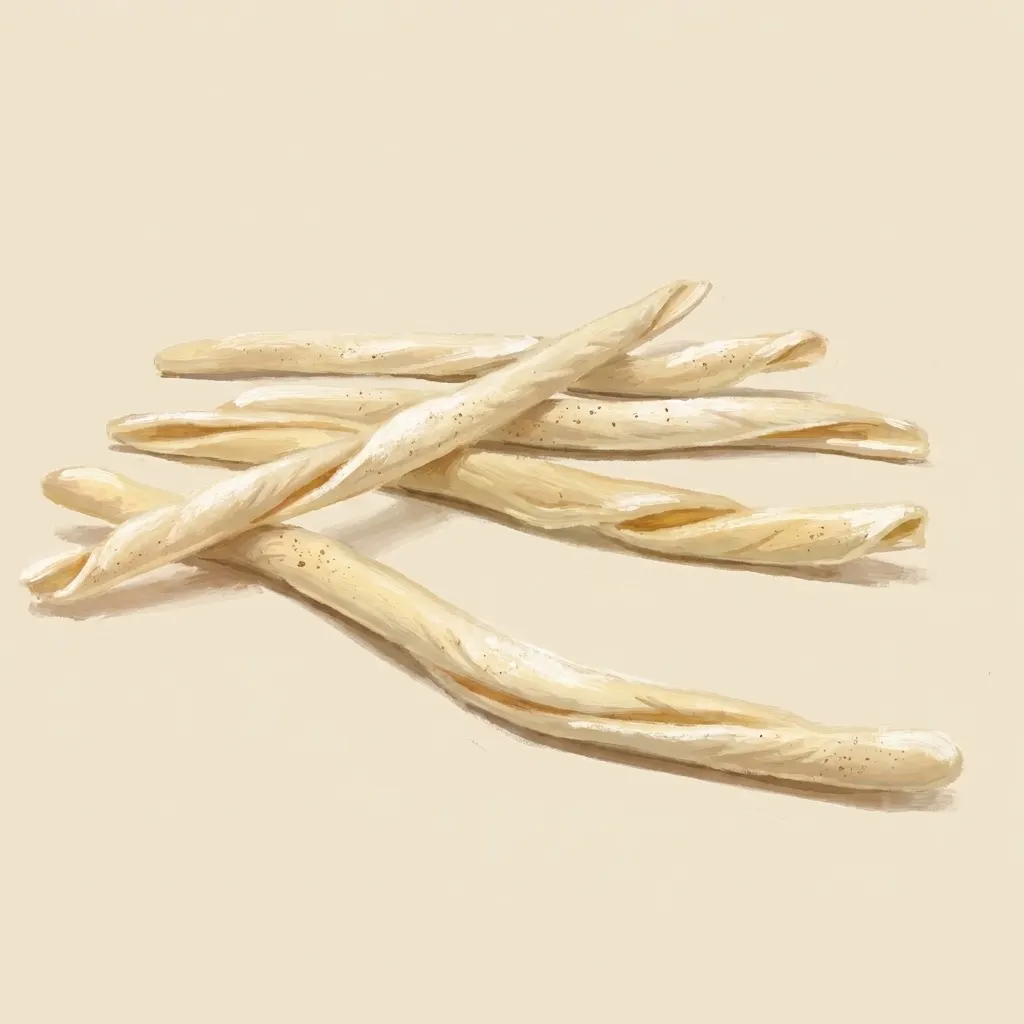
The twist and the open hollow channel give spicy nduja and pork ragu something to cling to, pulling the soft sausage and fat into and around each strand.
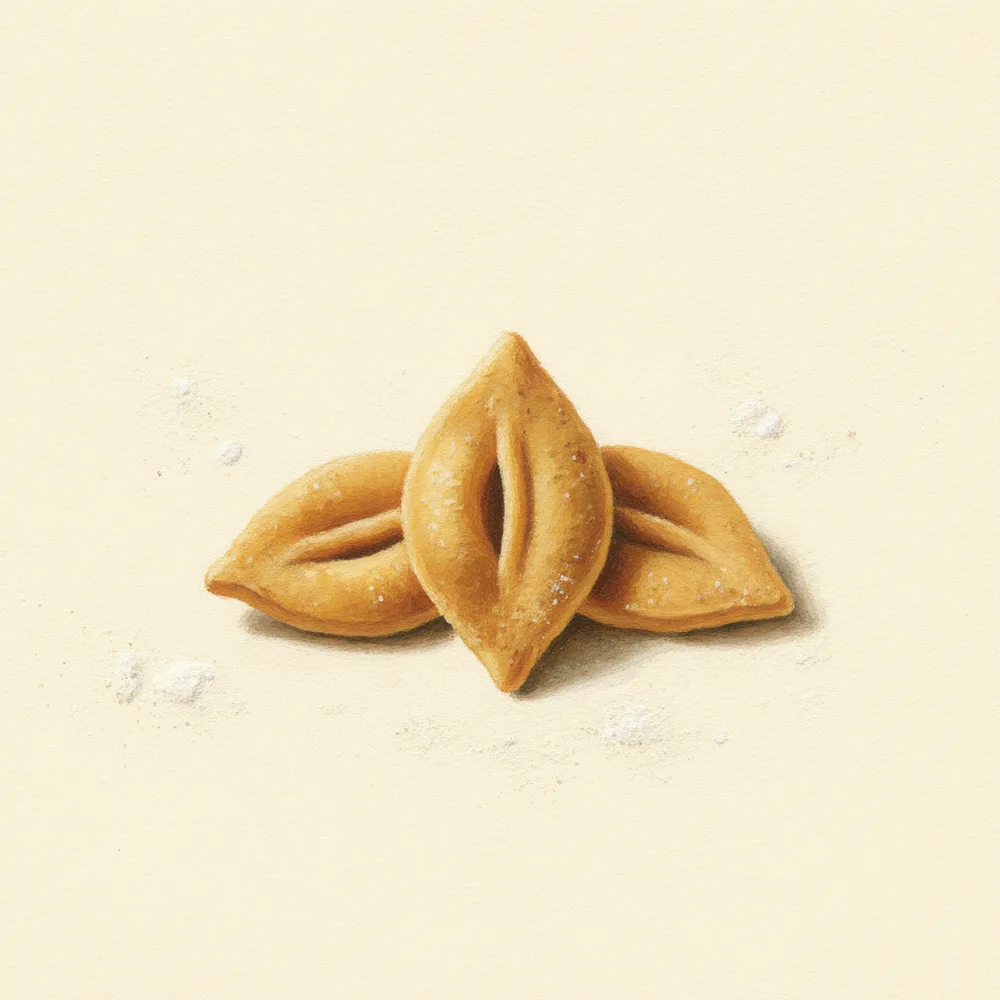
The flat leaf body offers broad surface for a sauce to cling to, while the raised central ridge and slightly thicker curved edges give the strand structure and grip.
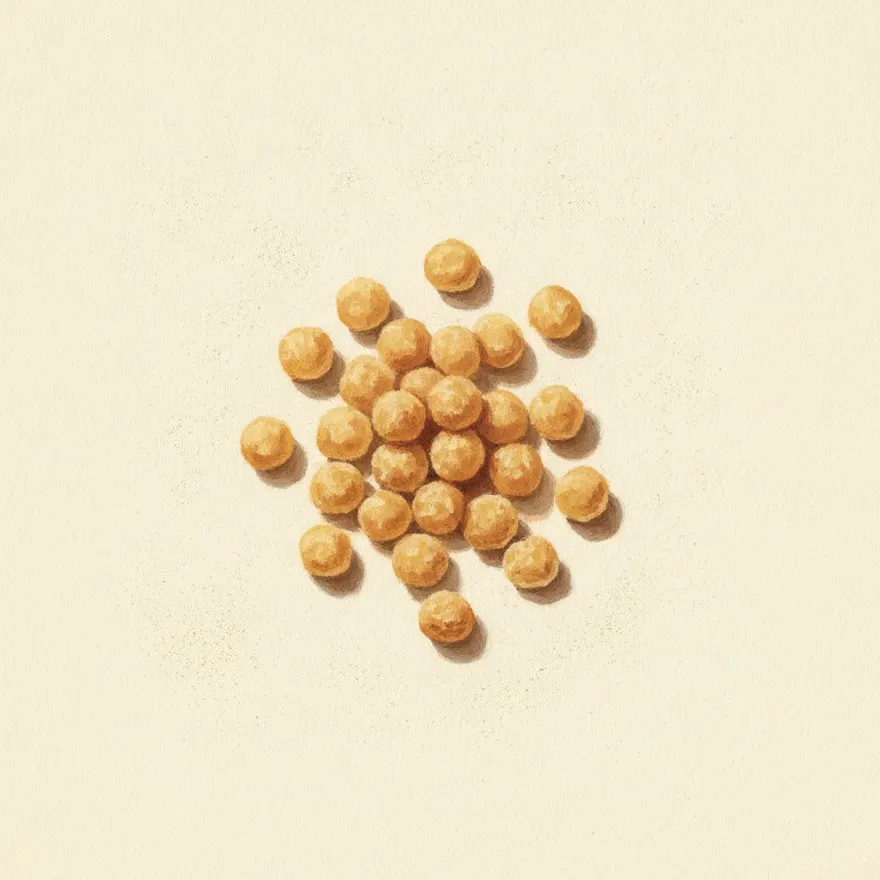
Toasting changes how fregula behaves.
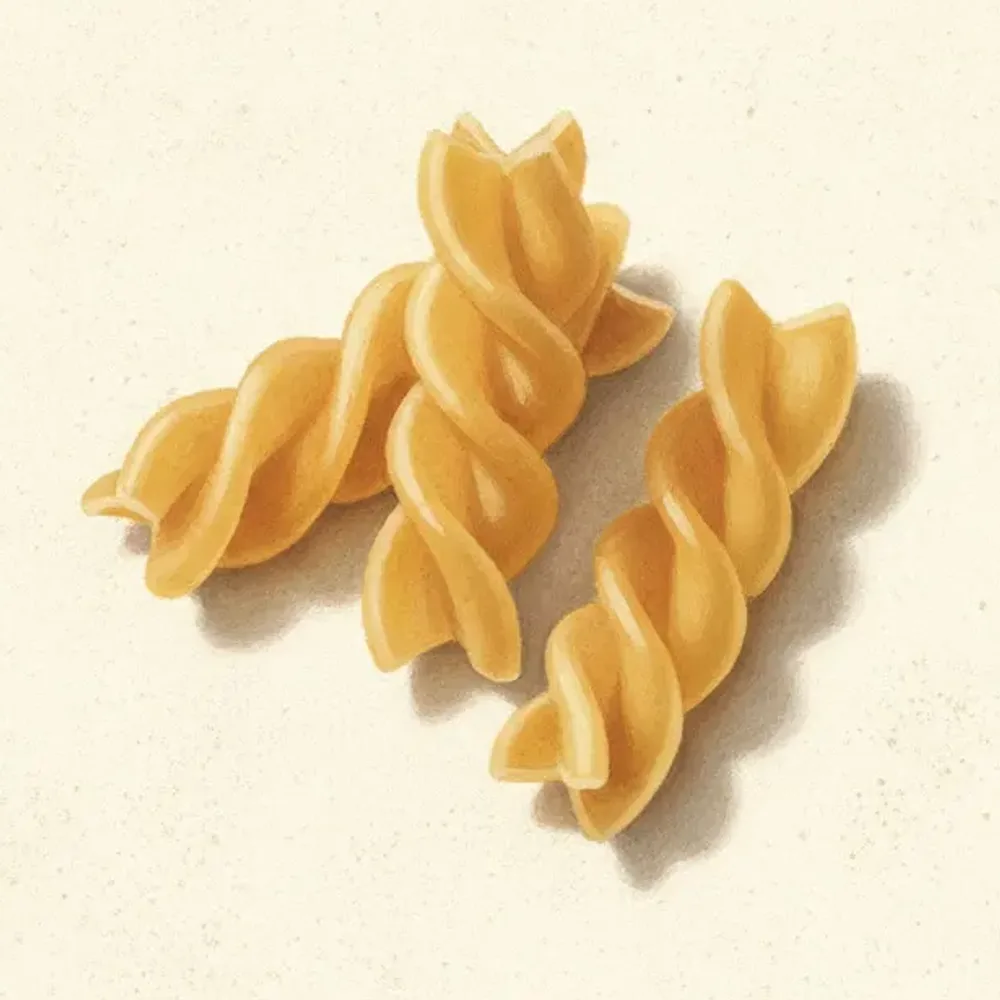
A fusillo is a ribbon twisted into a helix, so sauce does not just coat it, it lodges in the grooves between the turns.
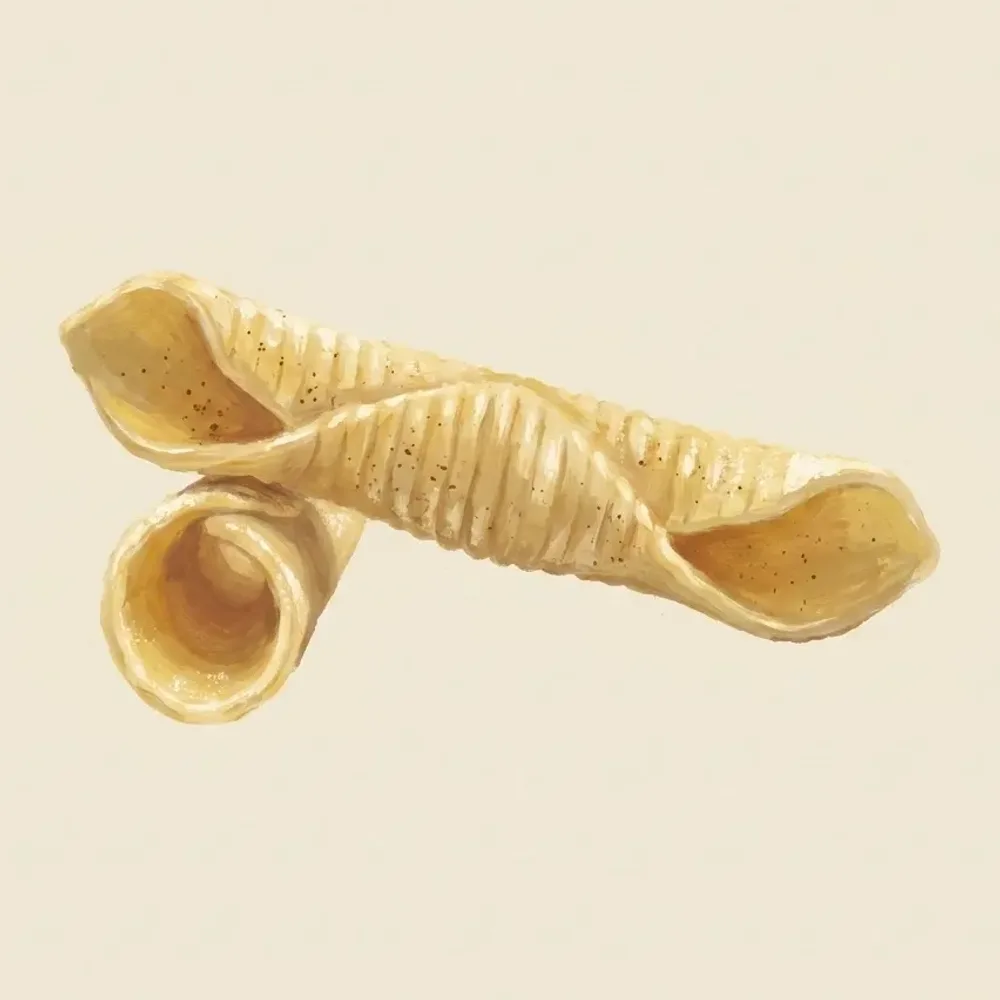
The shape works two ways at once.
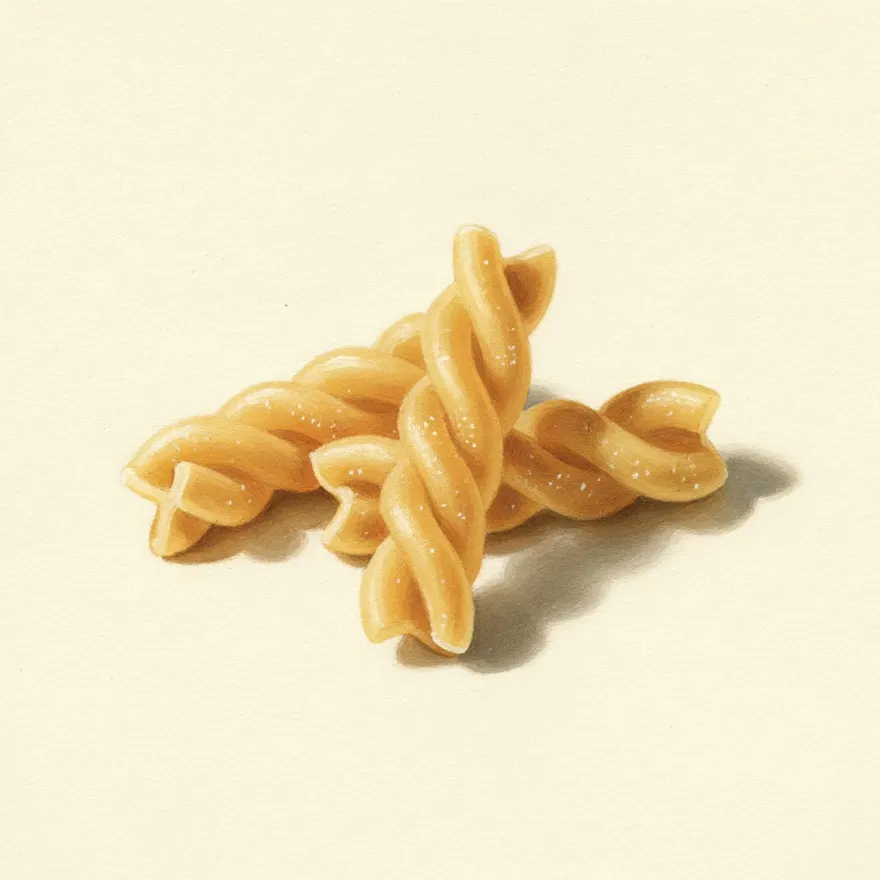
The helix works like fusilli with the volume turned down.
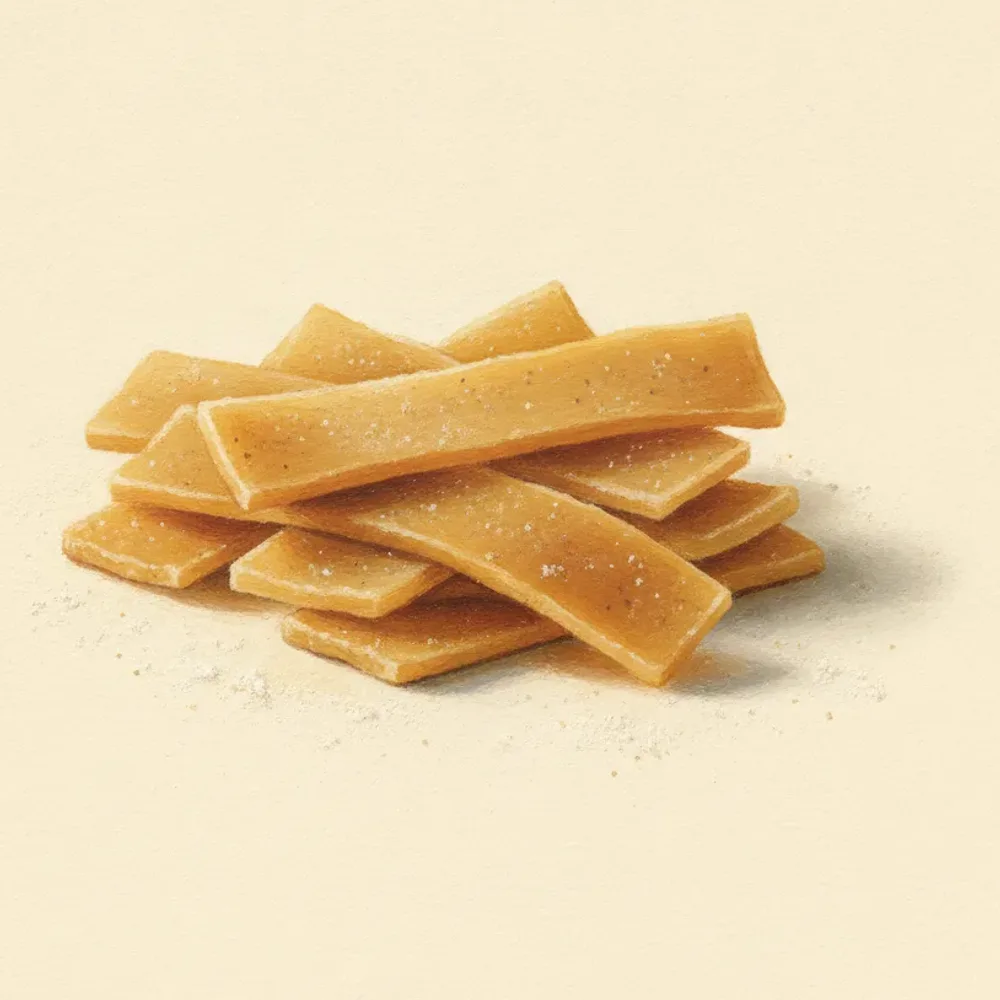
A broad rough surface and an eggless dough that cooks up firm let lagane grip a thick legume sauce, which is why the classic treatment is chickpeas stewed with garlic, rosemary, and olive oil.
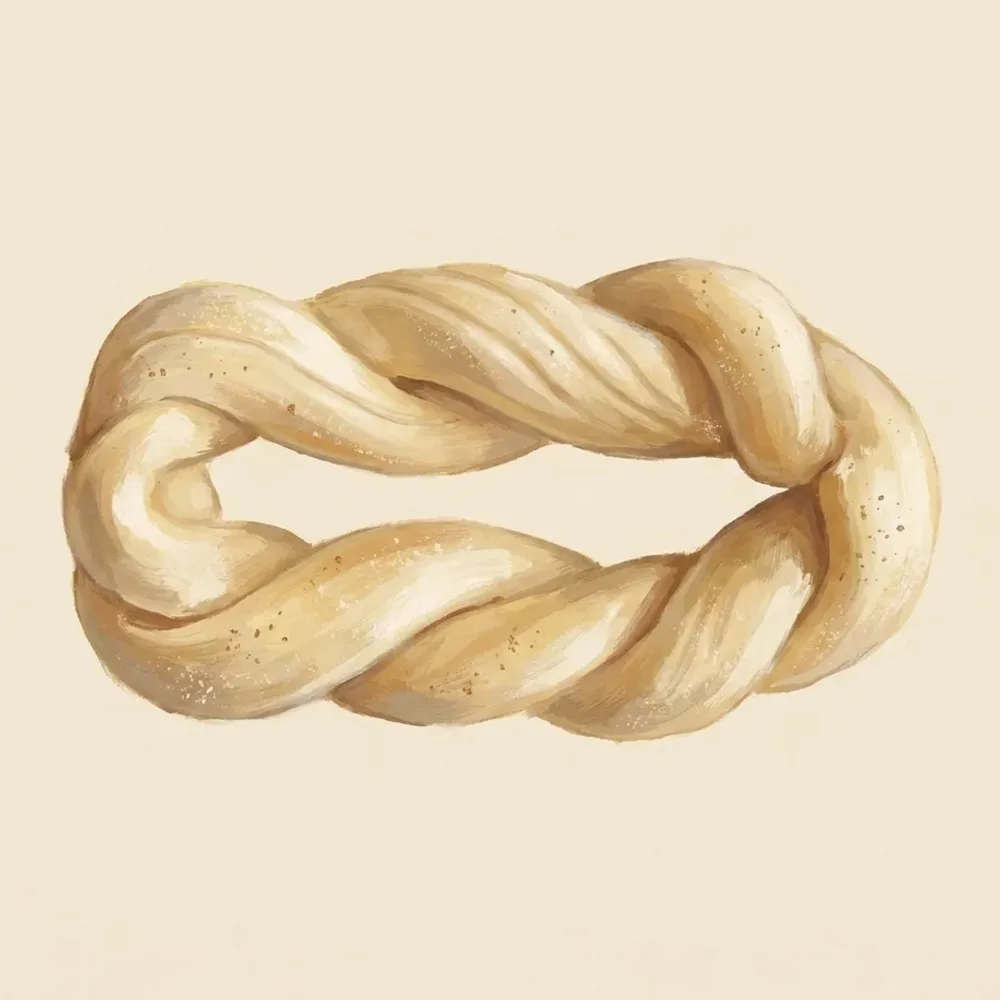
The braided twist gives the ring a ridged, grooved surface that traps sauce along the plait, and the open center lets a brothy or oily sauce pool through.
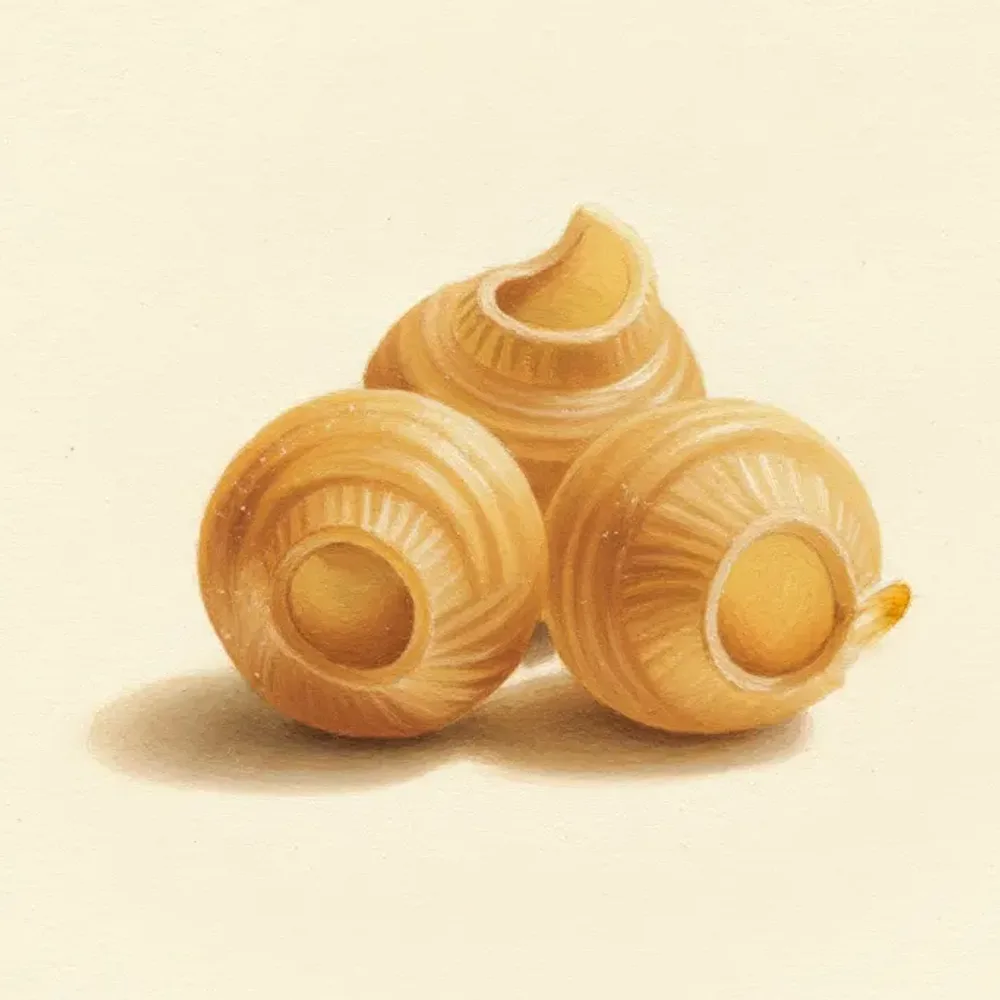
The cupped shell works like a small spoon.
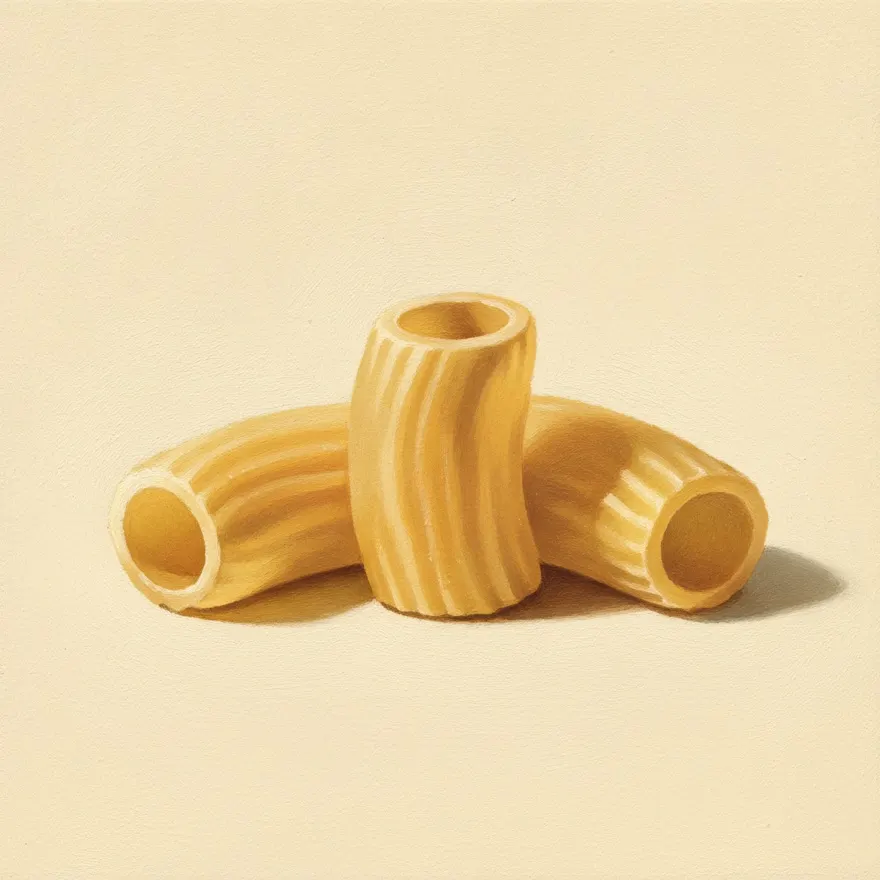
Elbows are open at both ends, so sauce flows through the cavity instead of pooling against a closed seam.
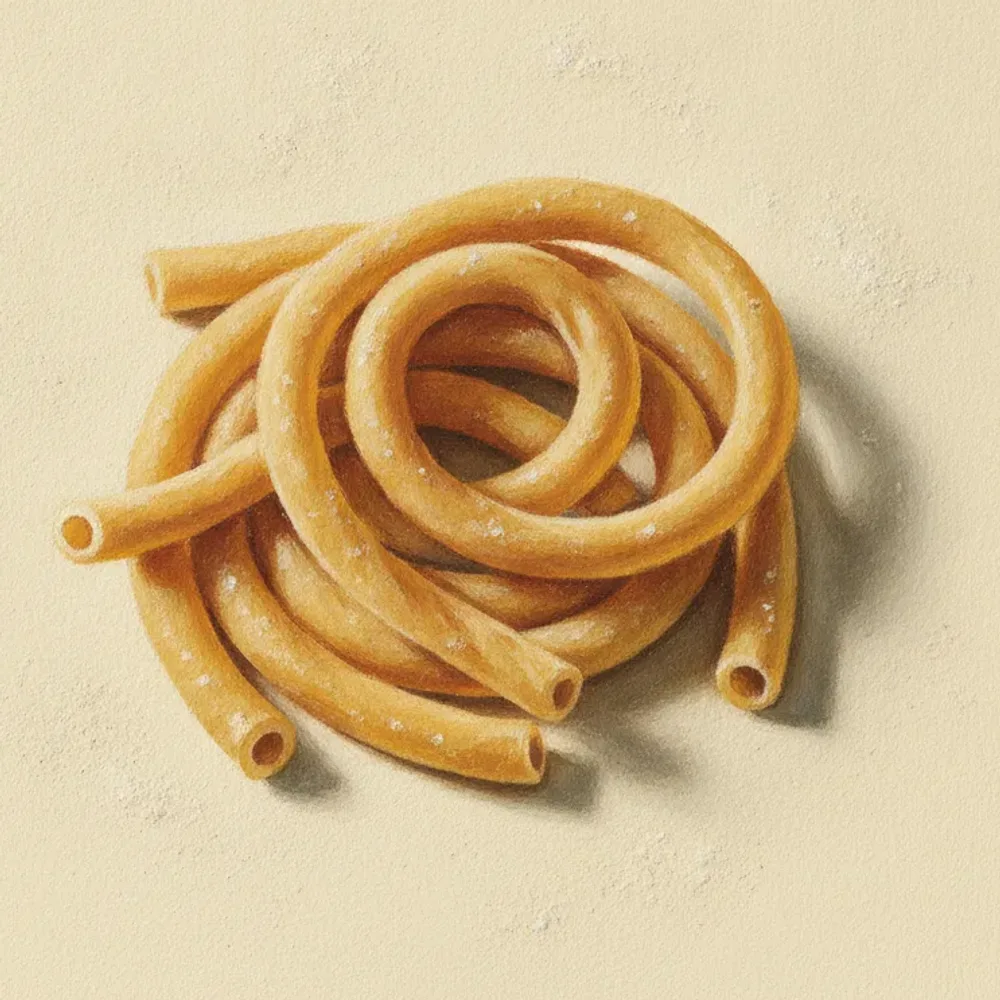
The hollow bore and the rod-pressed groove are built to trap heavy, clinging sauces, which is why the southern tradition pairs it with long-cooked meat ragu.
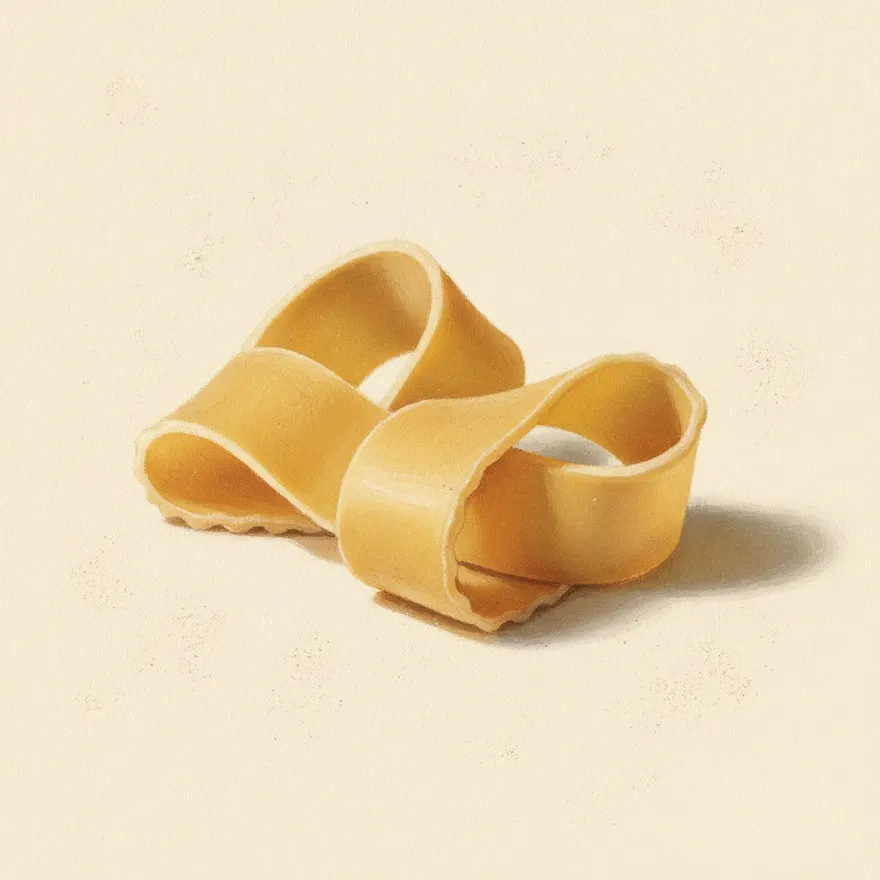
The build is a contrast machine.
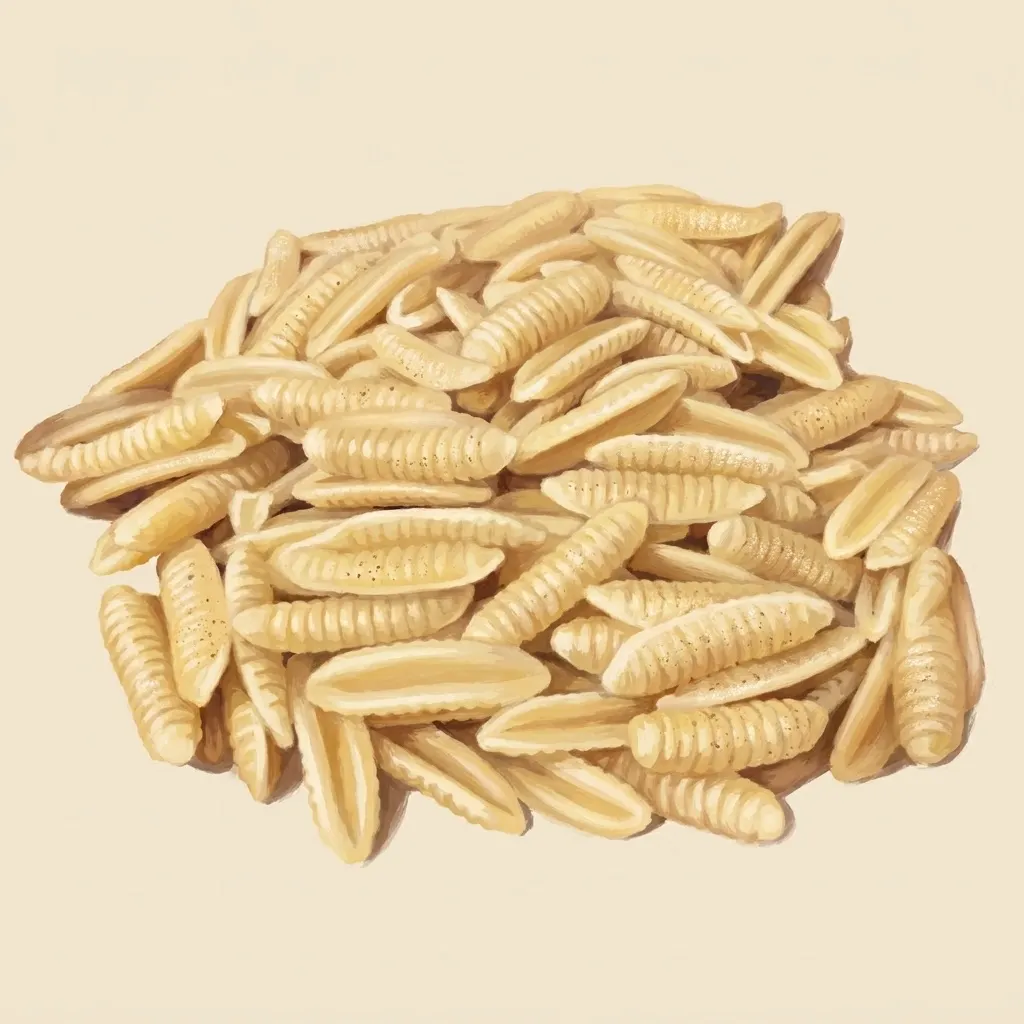
The ridged back and hollow belly catch and hold a thick sauce, which is why the canonical pairing is malloreddus alla campidanese: a ragu of crumbled Sardinian fennel sausage, tomato and saffron, finished with grated pecorino sardo.
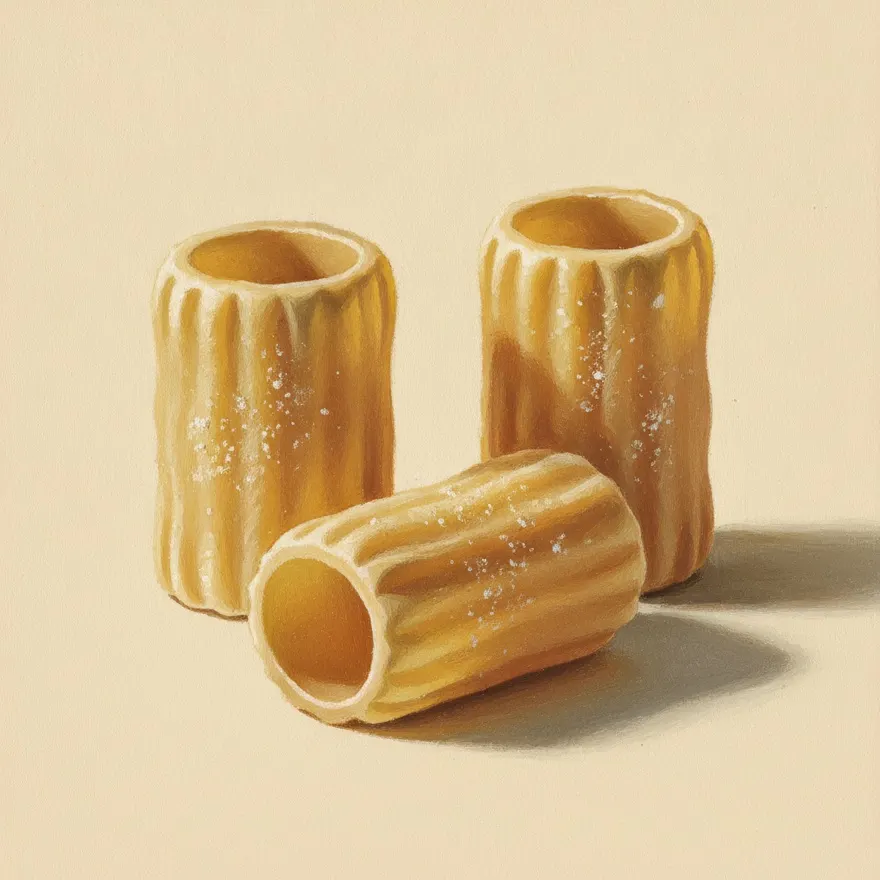
Manicotti works as a container first and a noodle second.
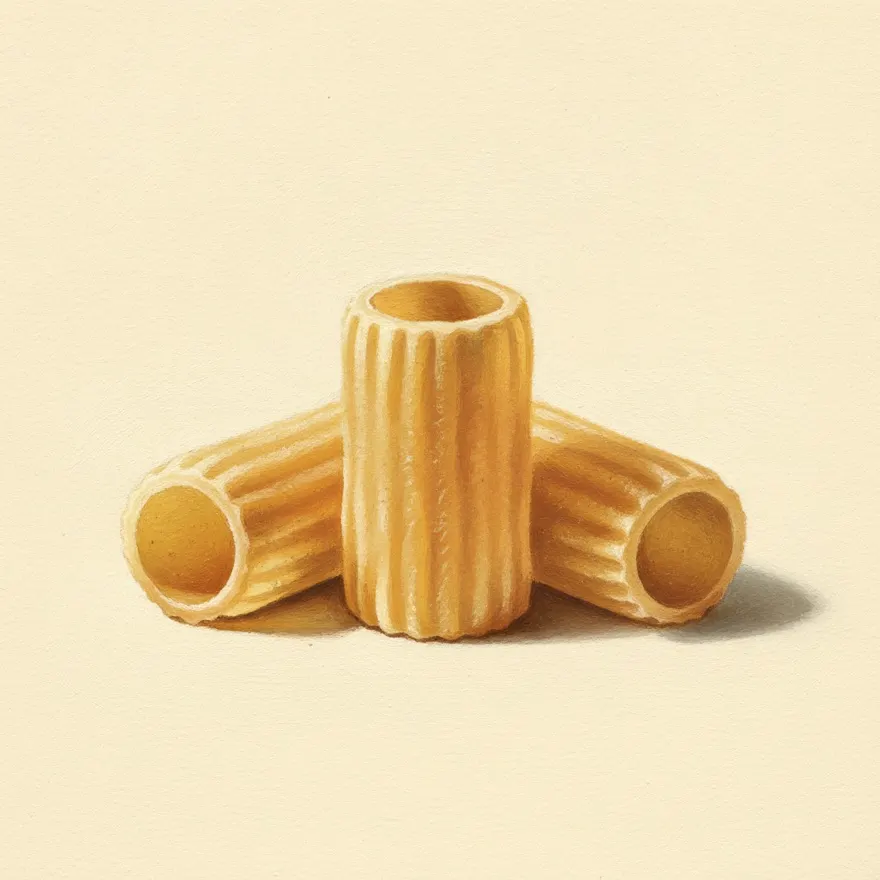
Think of it as a short rigatoni.
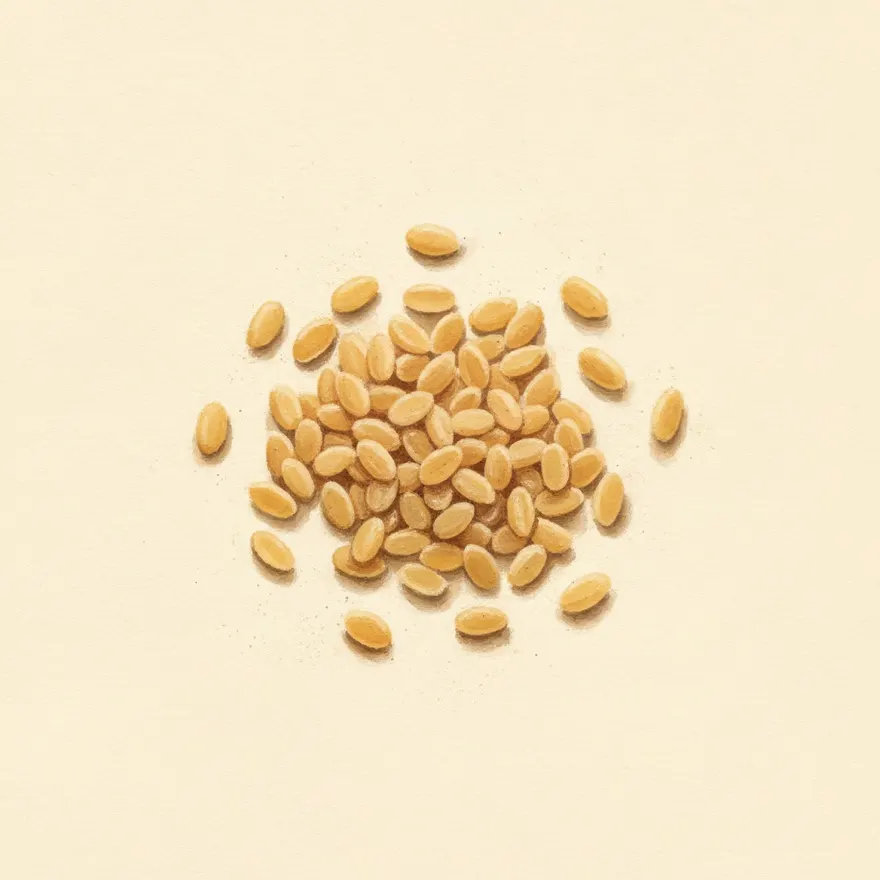
Treat orzo as a grain that happens to be pasta.
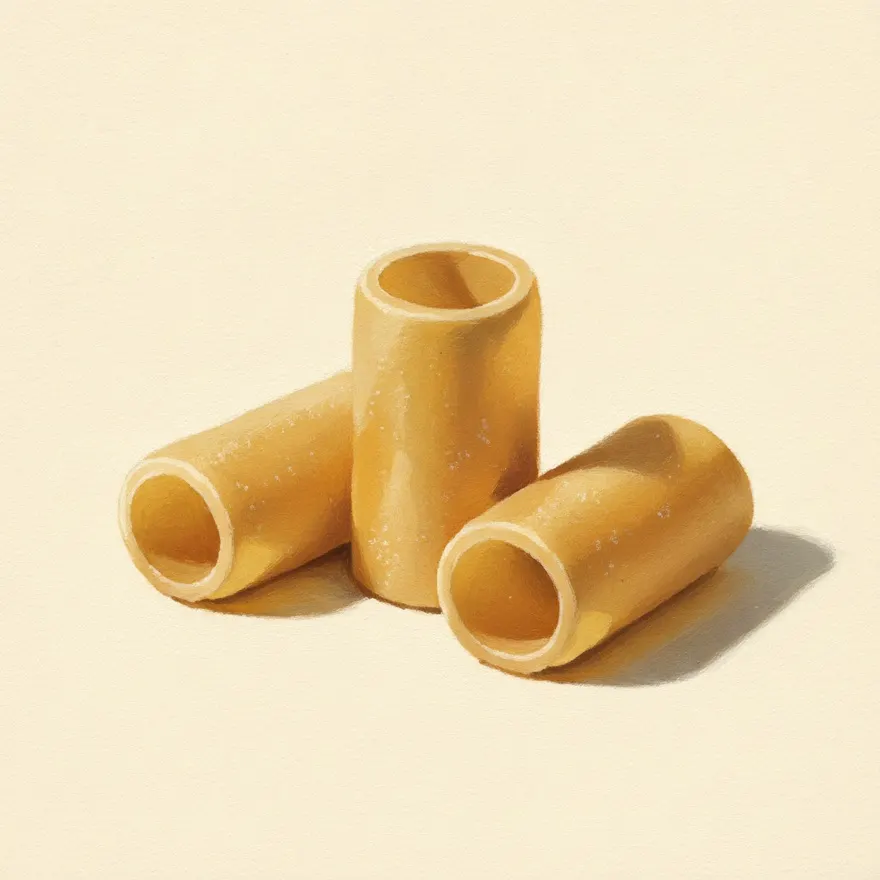
A cooked pacchero rarely stays a cylinder.
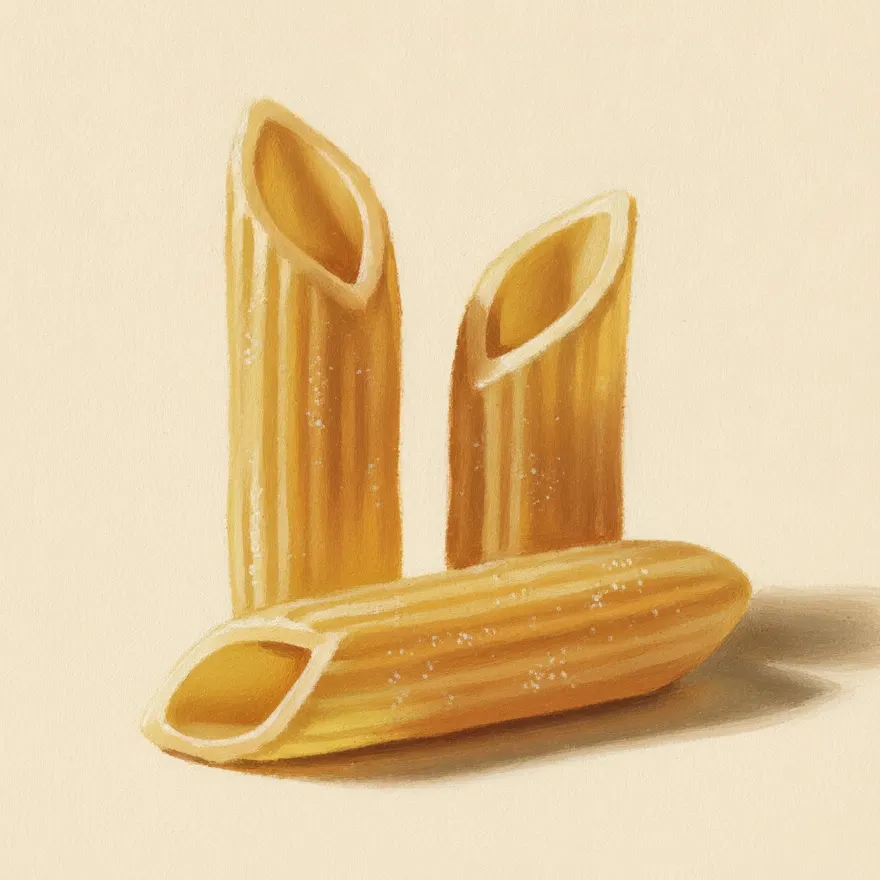
The diagonal cut is functional, not decorative.
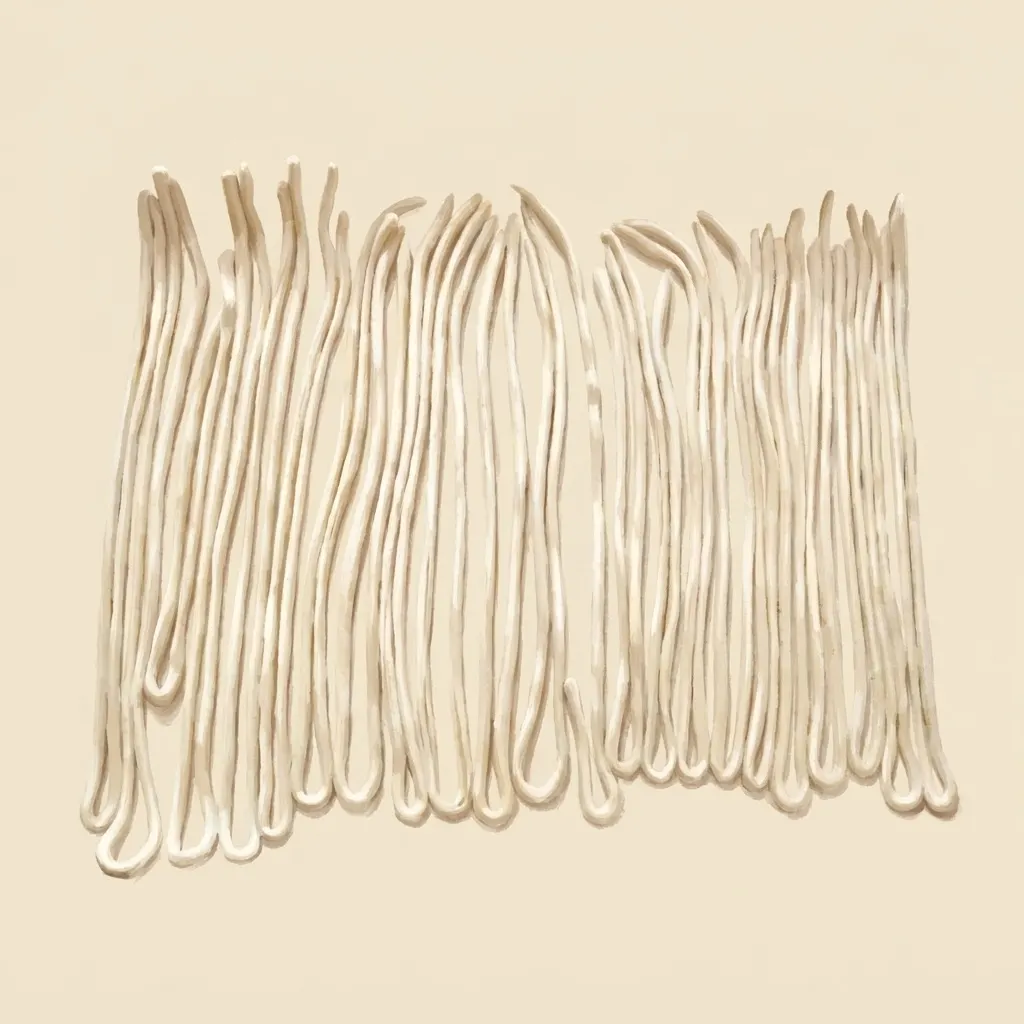
A pici strand is thick, soft, and slightly uneven, so it behaves more like a noodle with muscle than like spaghetti.
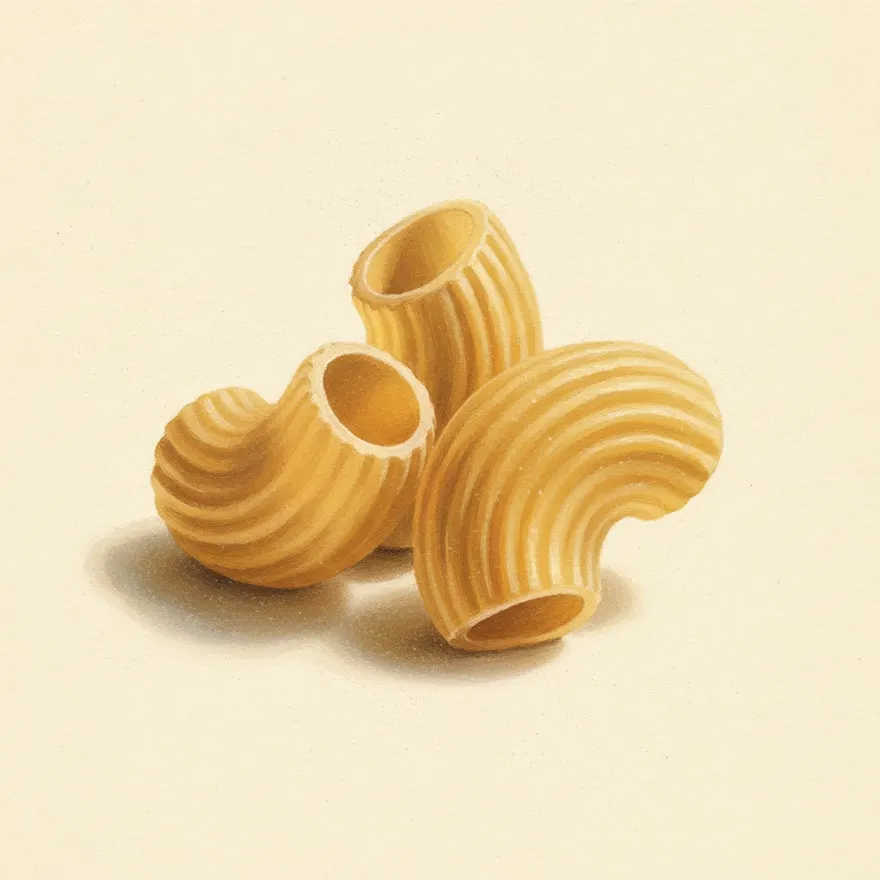
The curl of the body and the pinched closed end work like a scoop.
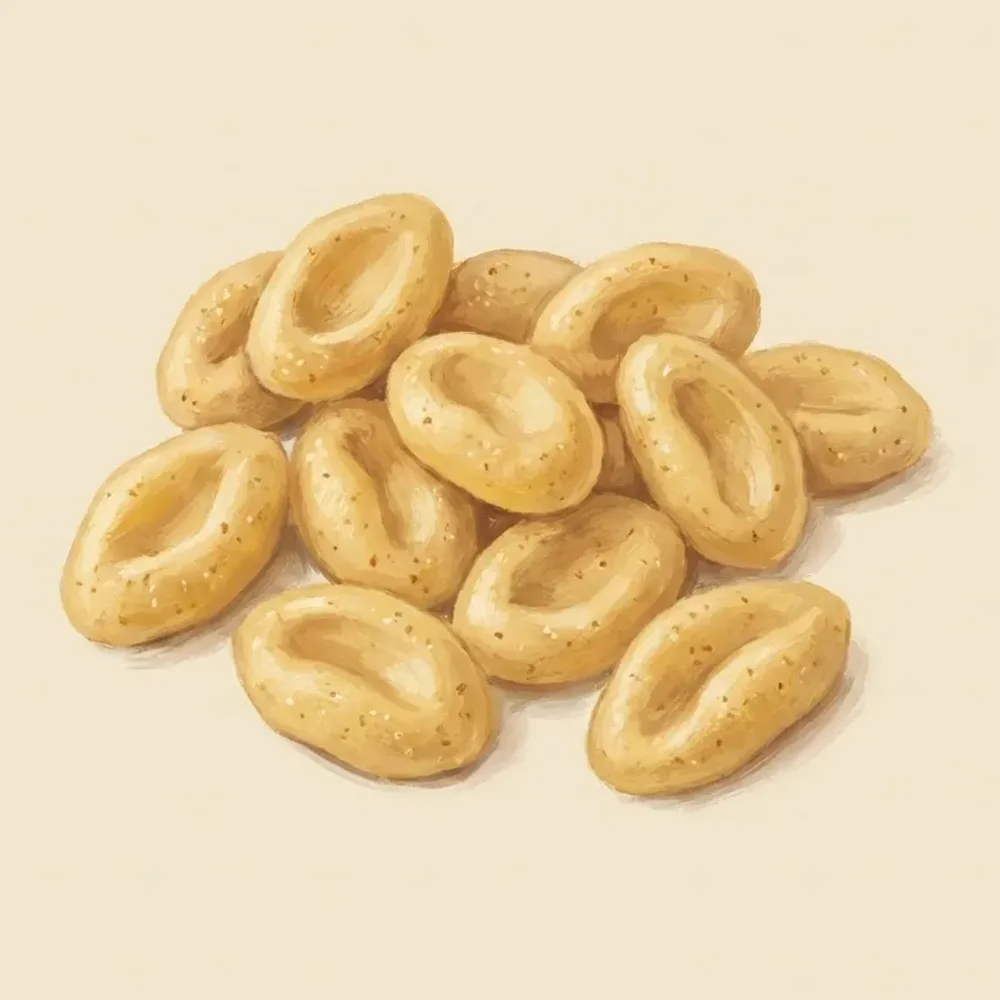
Each piece is pressed with the thumb into a little concavity, and that hollow plus the rough breadcrumb surface catches a chunky sauce.
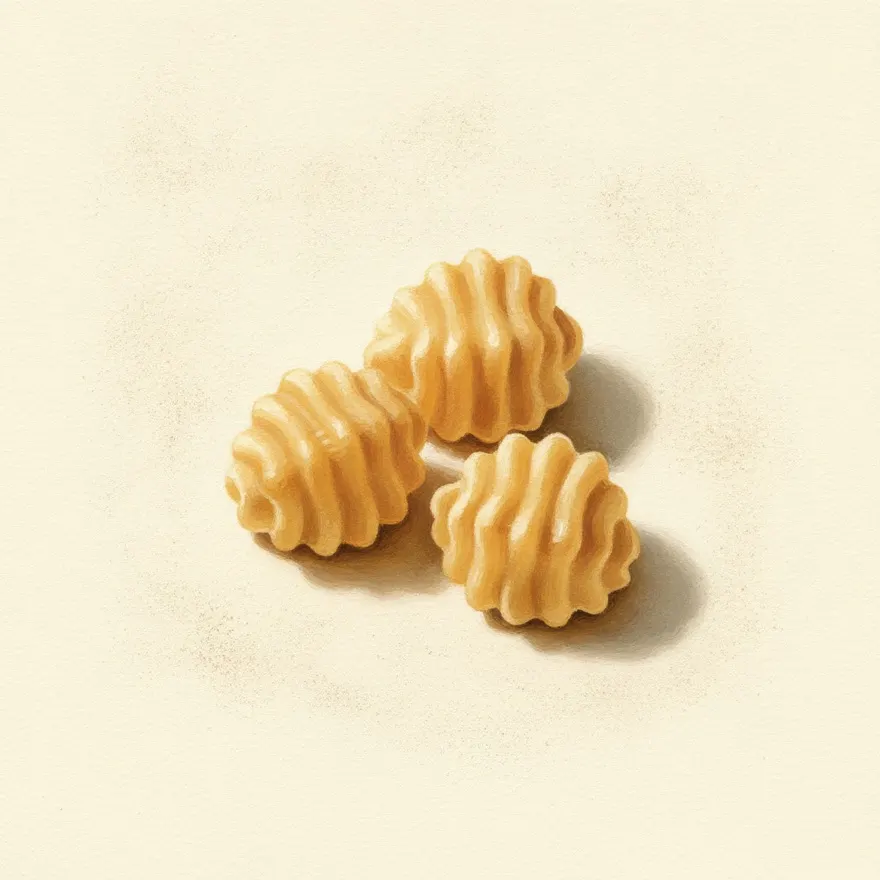
The fins and ruffled ridges are the whole point.
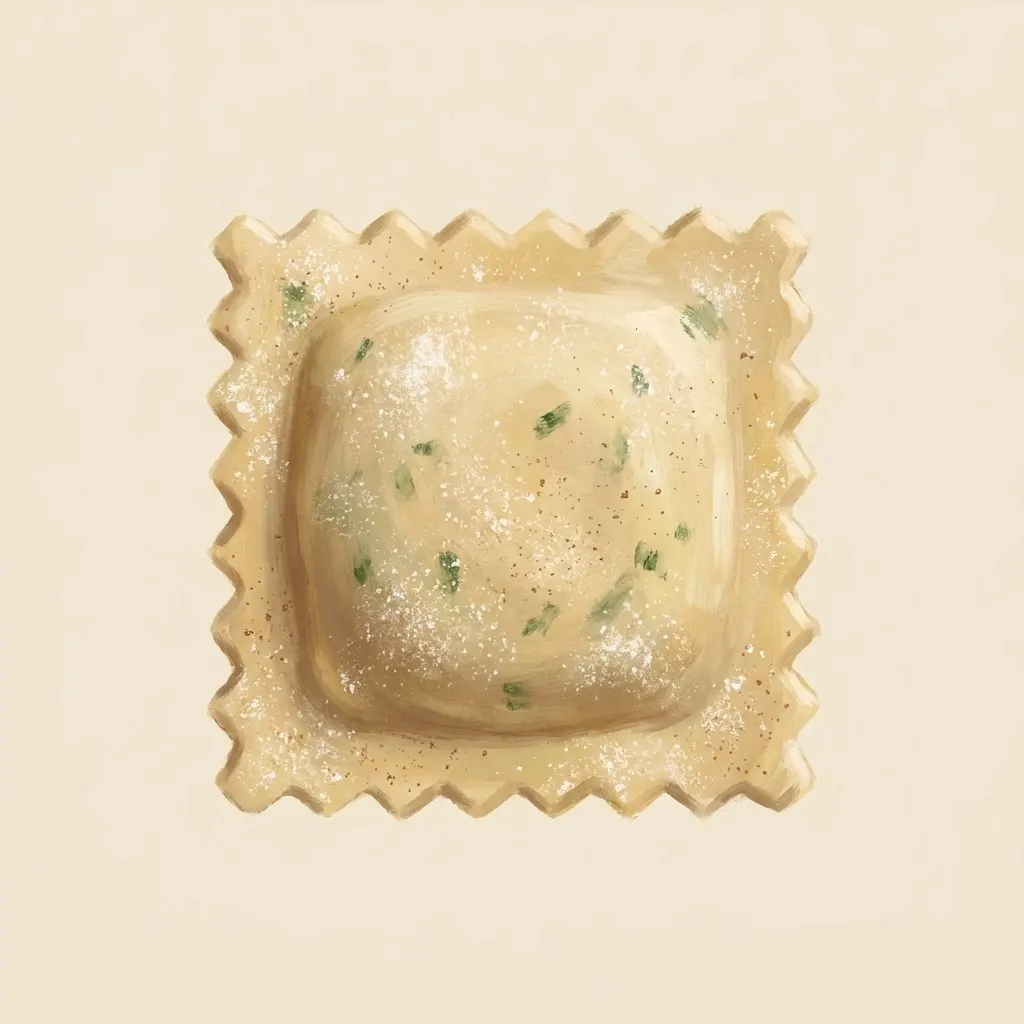
The filling carries the flavor, so the sauce's job is to coat, not compete.
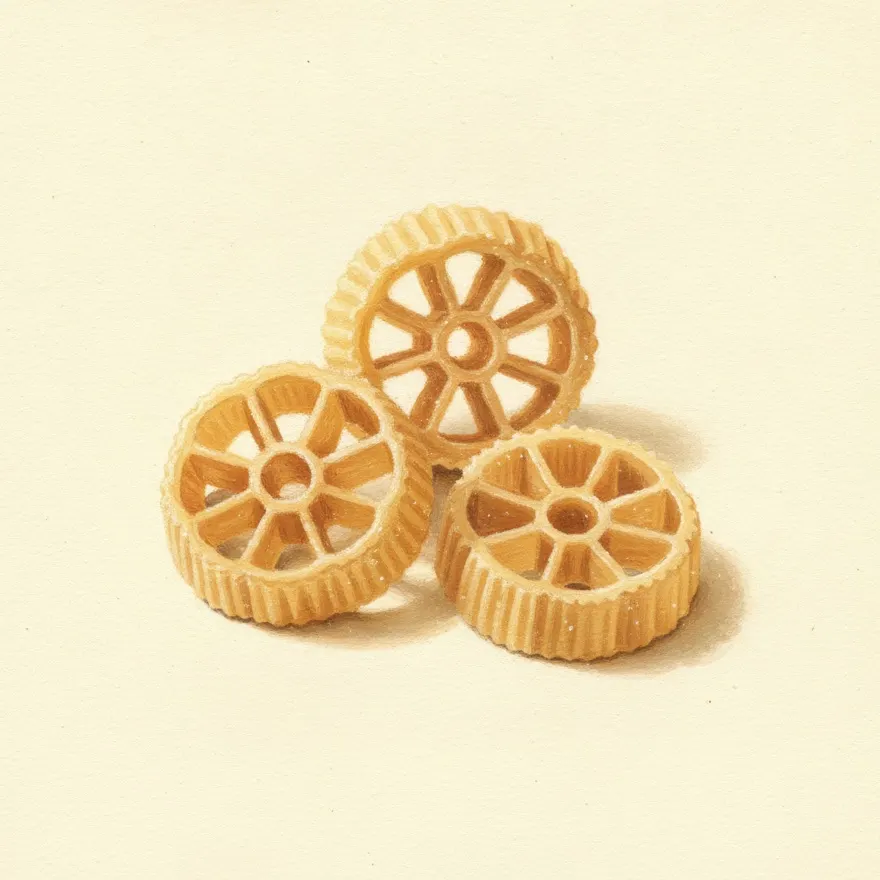
The wheel works like a small net.
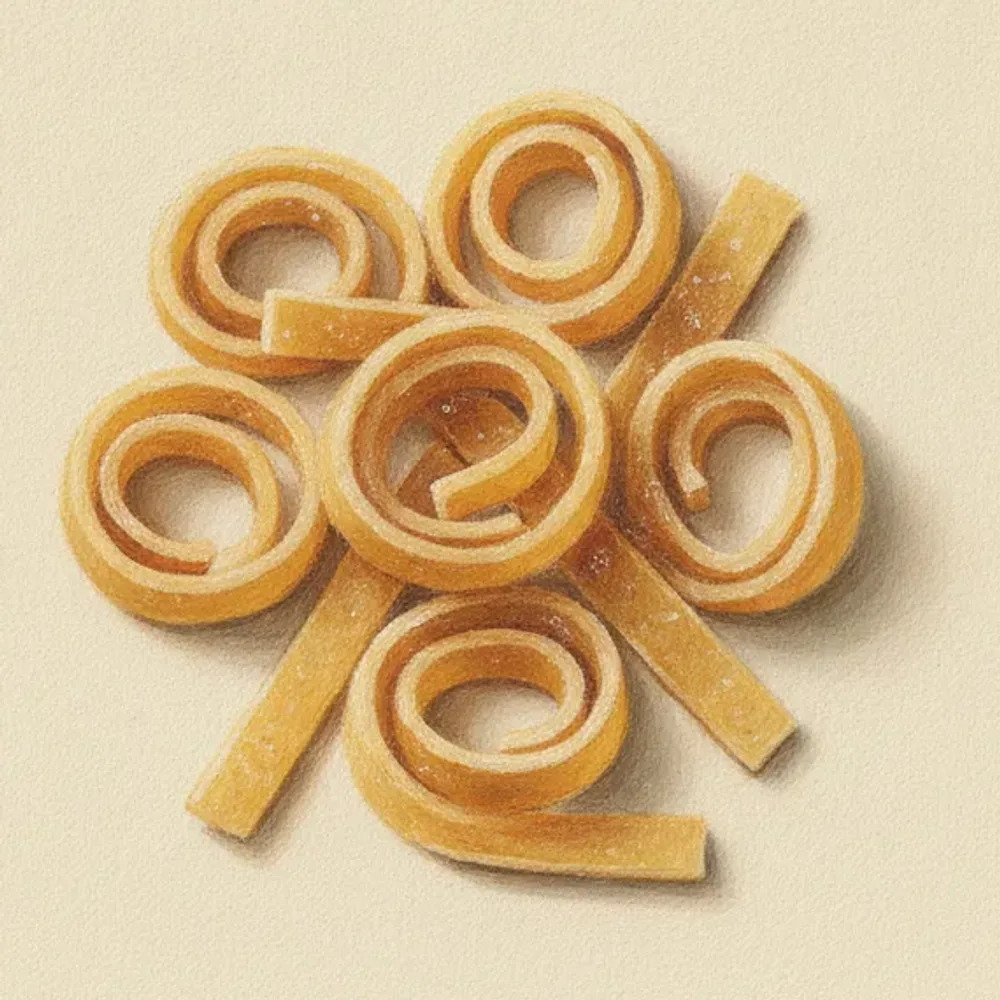
The open twist and the rough hand-rolled surface of the semolina ribbon catch and hold sauce in their folds.
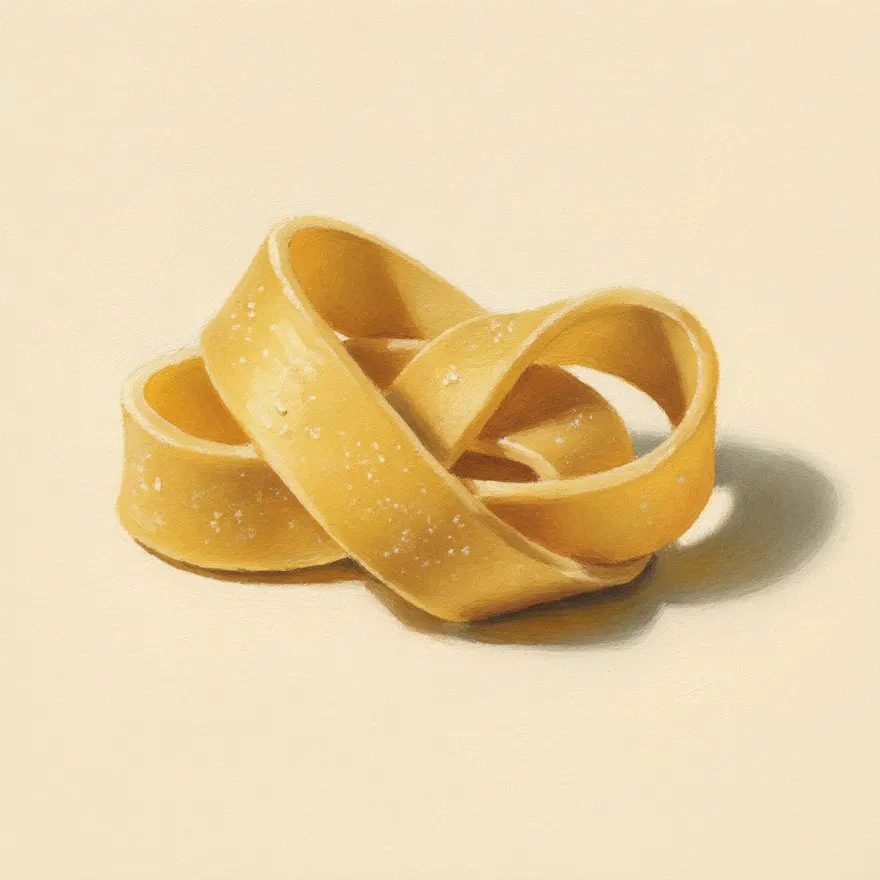
This is a short, thick, rough fresh ribbon, so it wants a sauce with body and pieces to catch.
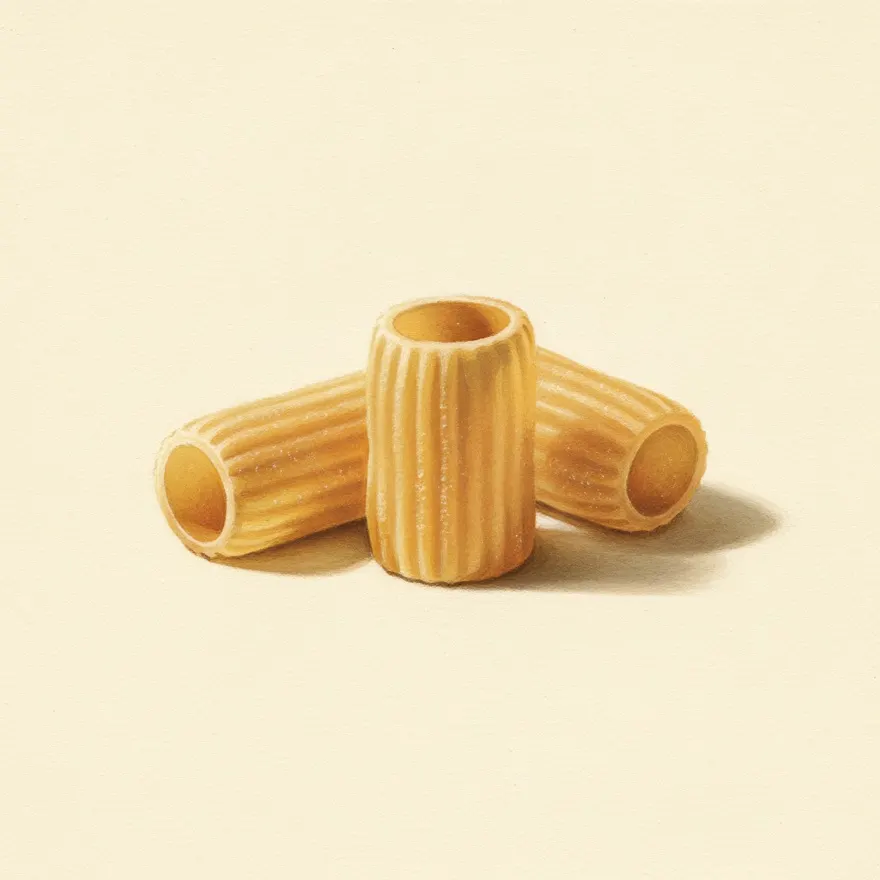
This is a curved, ridged tube, and both traits do work.
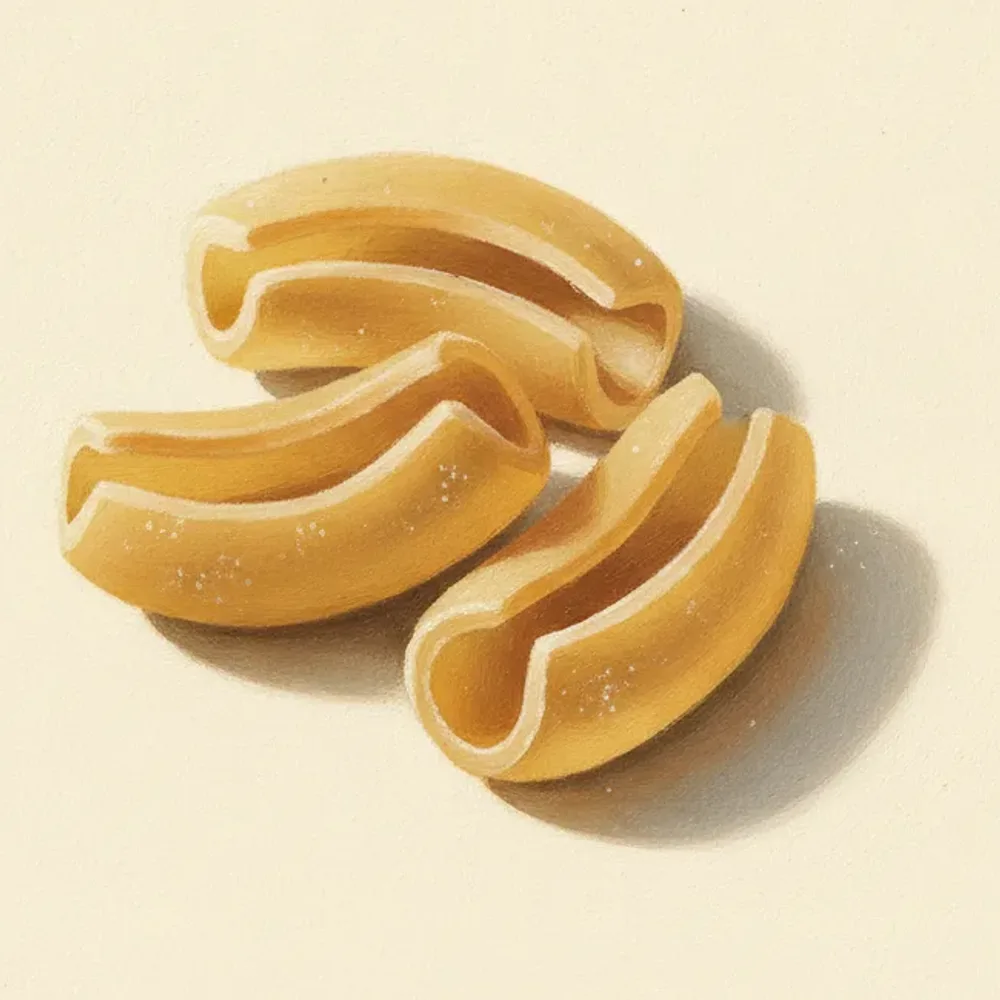
The curved body cups sauce on the outside while the open split traps smaller bits and liquid along its channel.

A solid round strand offers modest surface area for its weight, so it favors sauces that coat rather than chunk.
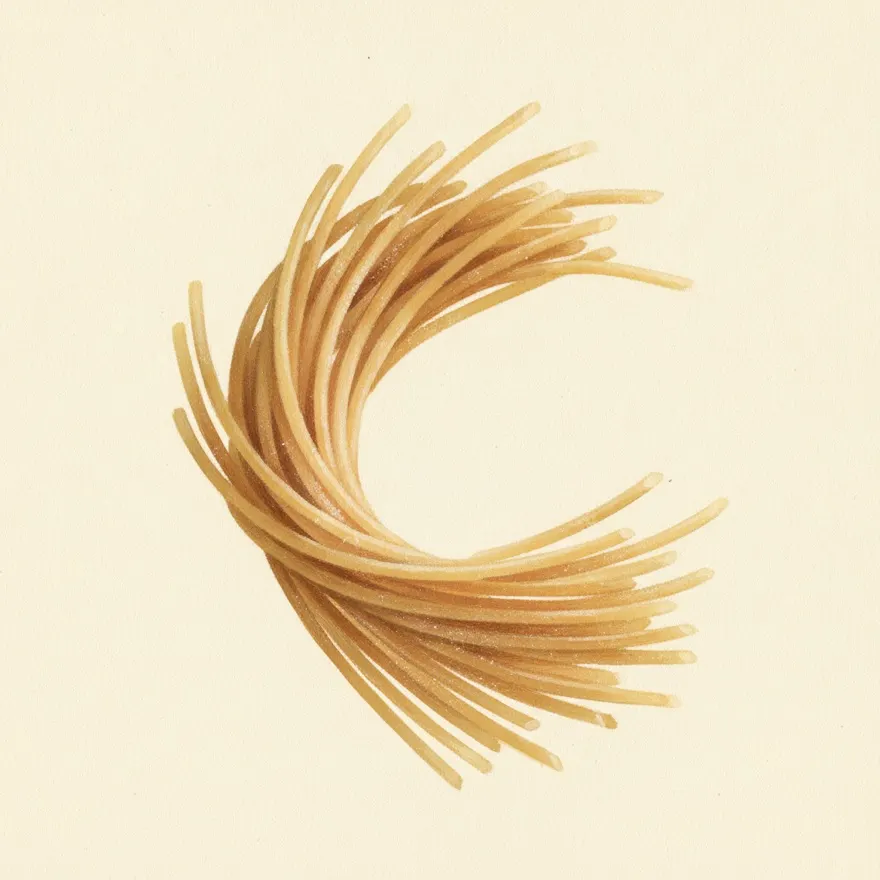
Spaghettini runs thinner than spaghetti, so it boils faster and asks for sauces that stay light.
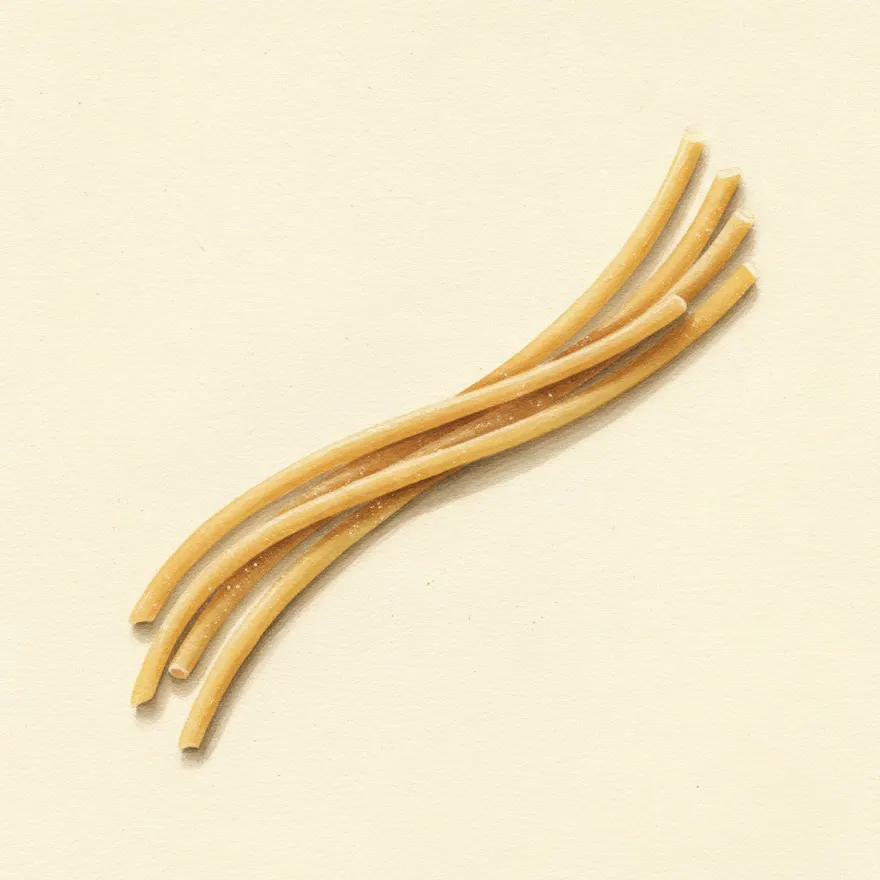
The extra mass is the whole point.
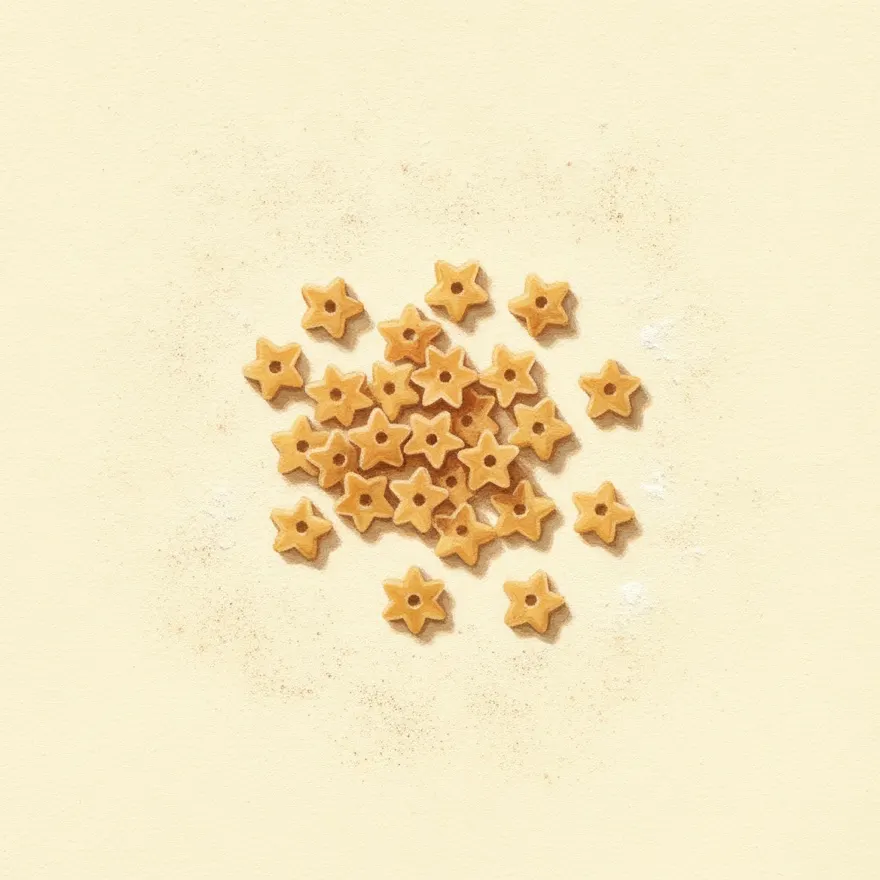
Stelline are soup physics in miniature.
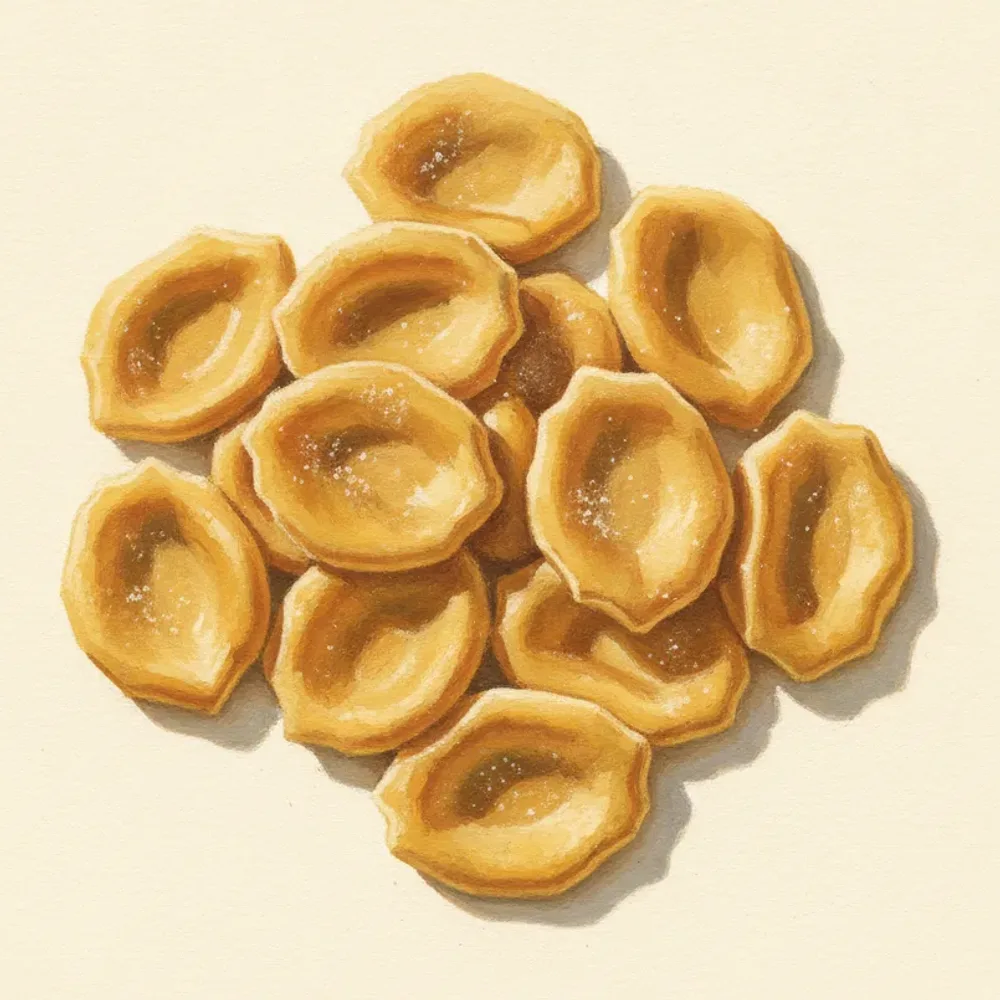
The rough, dragged face and slightly cupped form catch and hold loose, rustic dressings.
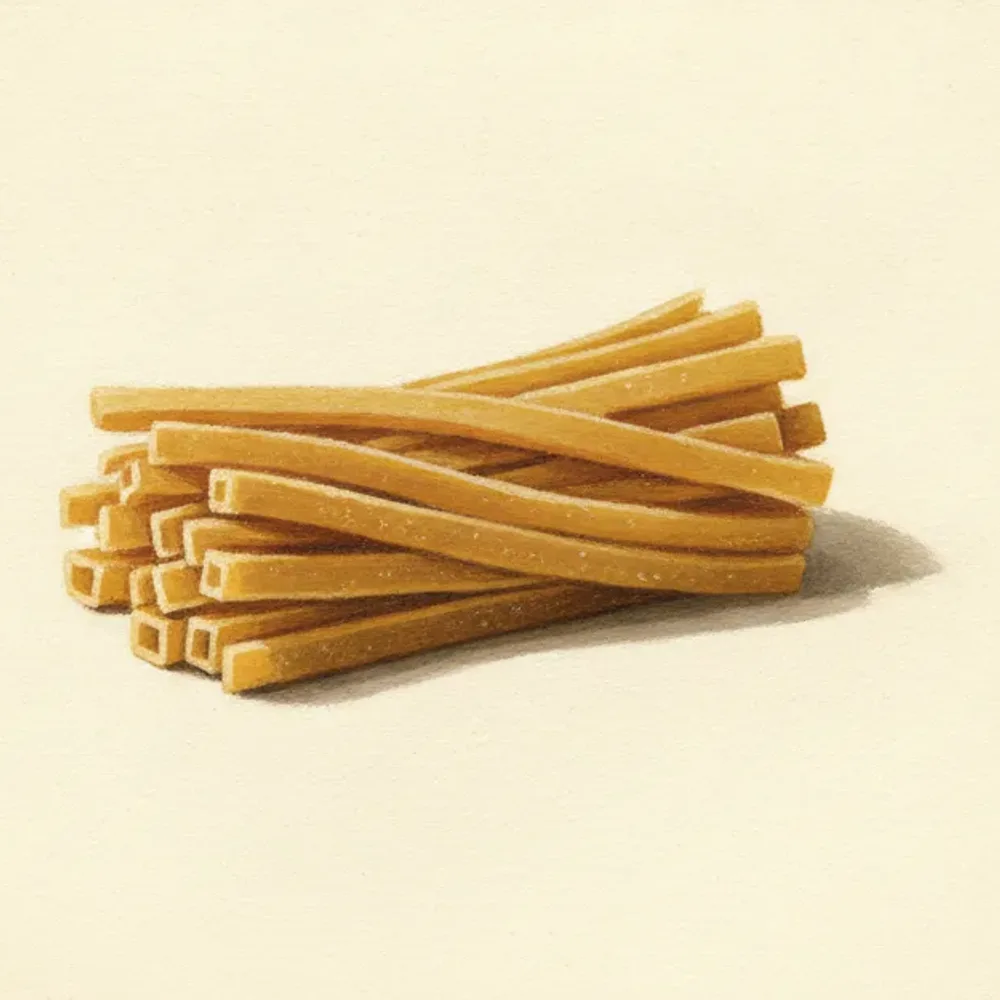
A long strand with a squarish, slightly rough section holds a clinging sauce along its length.
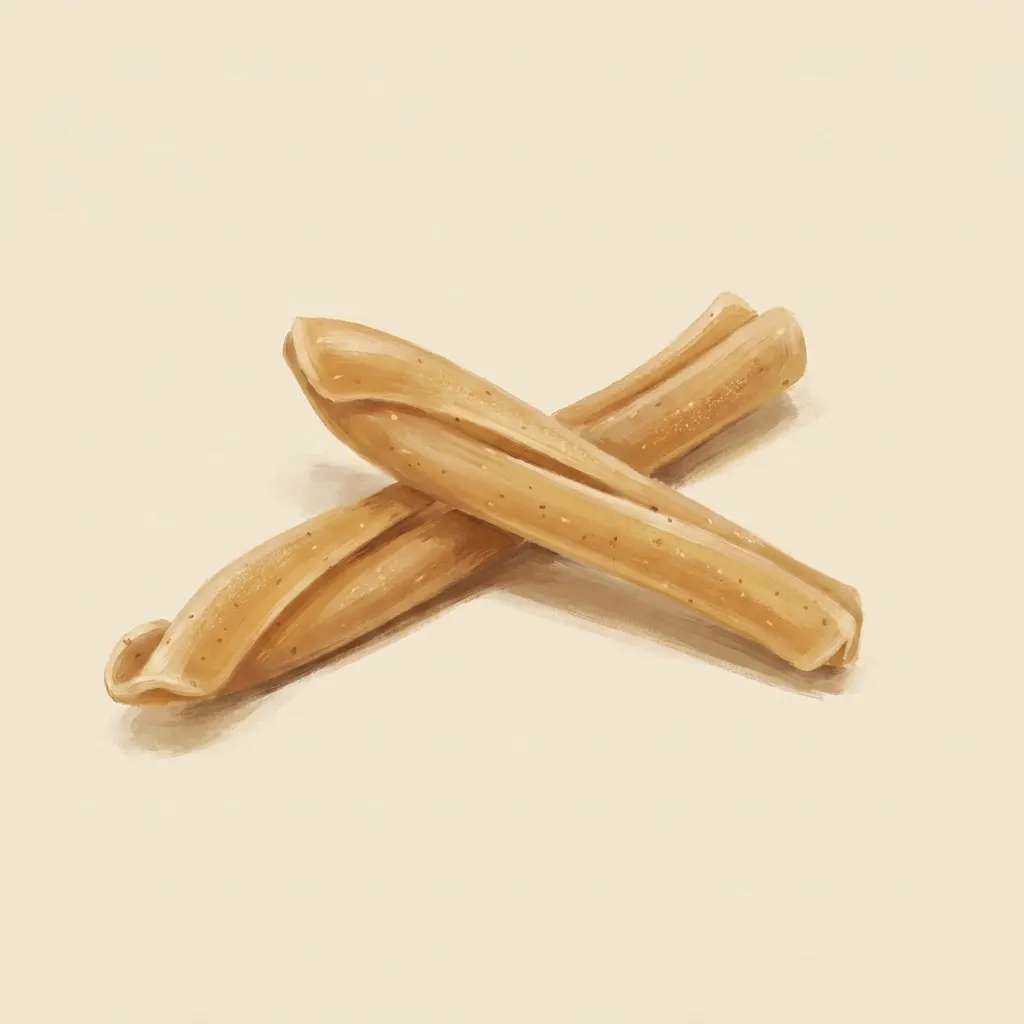
The twist is the working part.
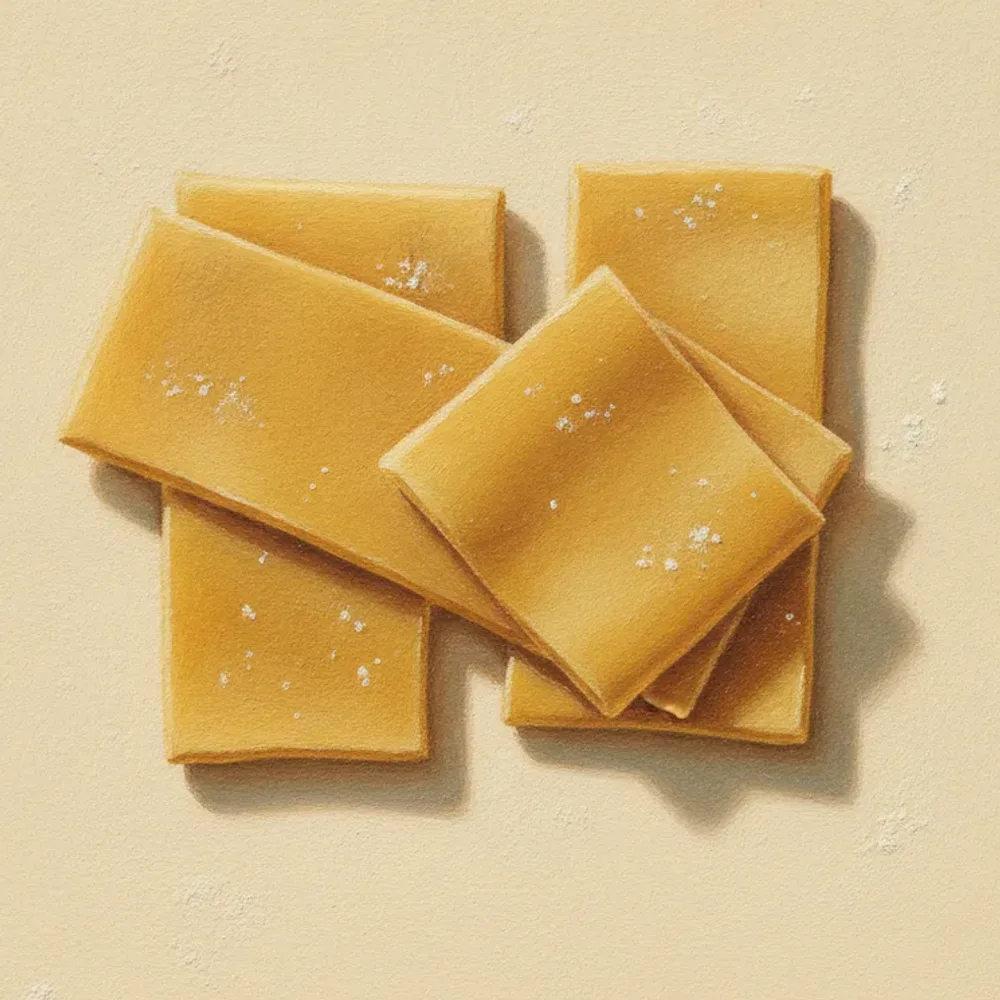
A flat patch of dough catches sauce on its broad faces and sits well in brothy legume dishes, which is its oldest home.
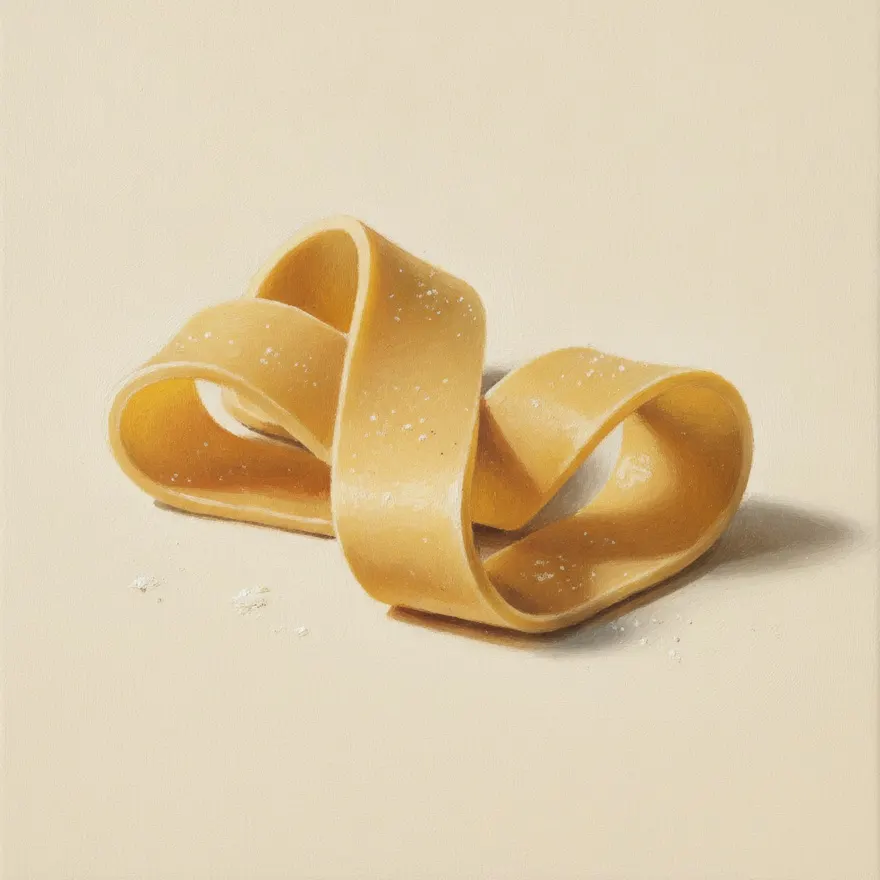
A wide flat ribbon gives sauce more landing area per strand than any round noodle.
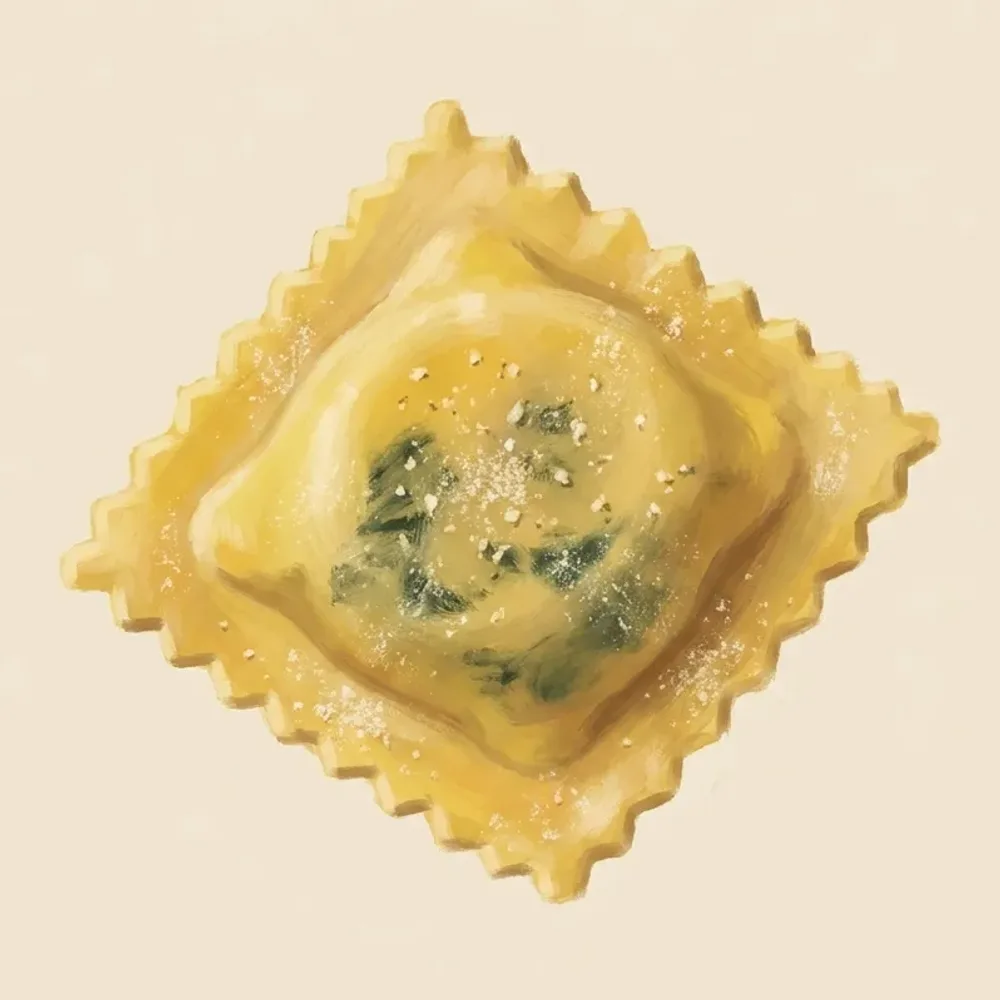
The filling leads and the dressing stays light.
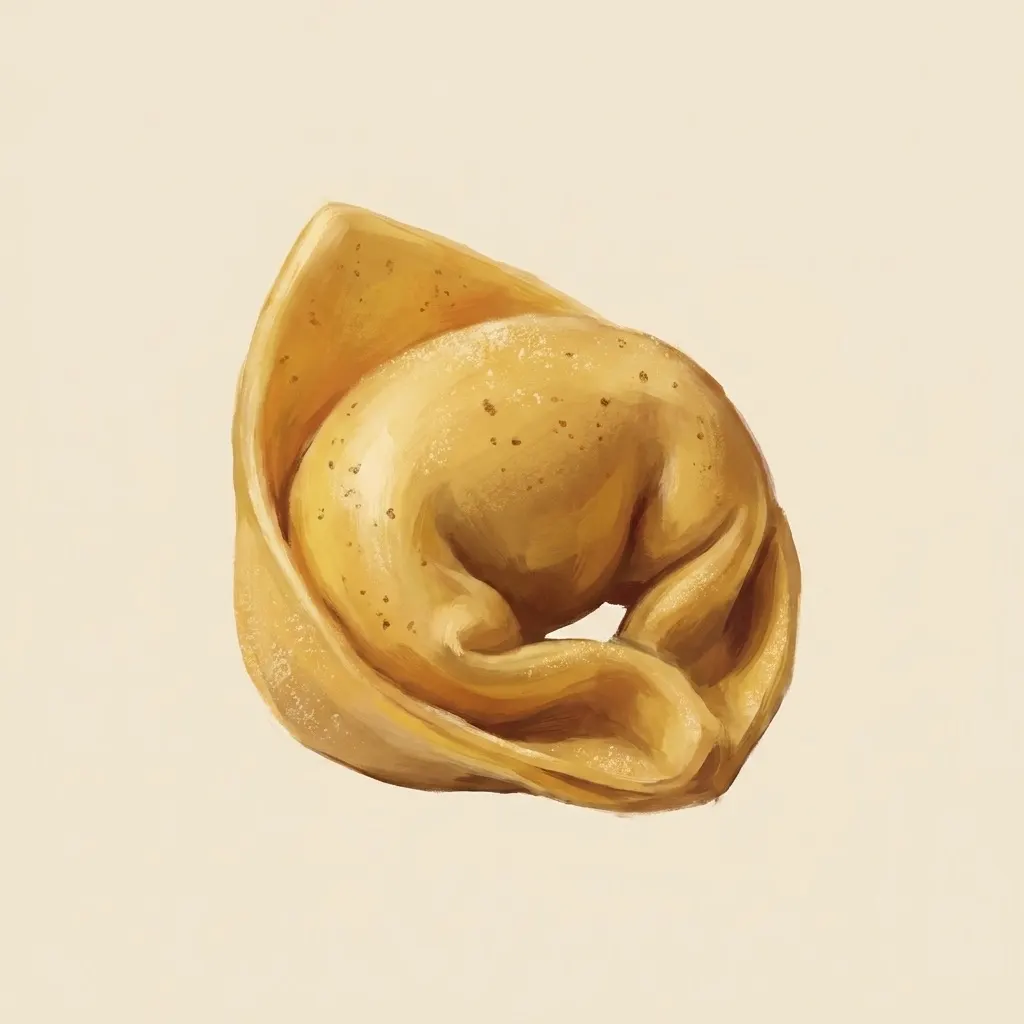
Tortellini are built for broth.
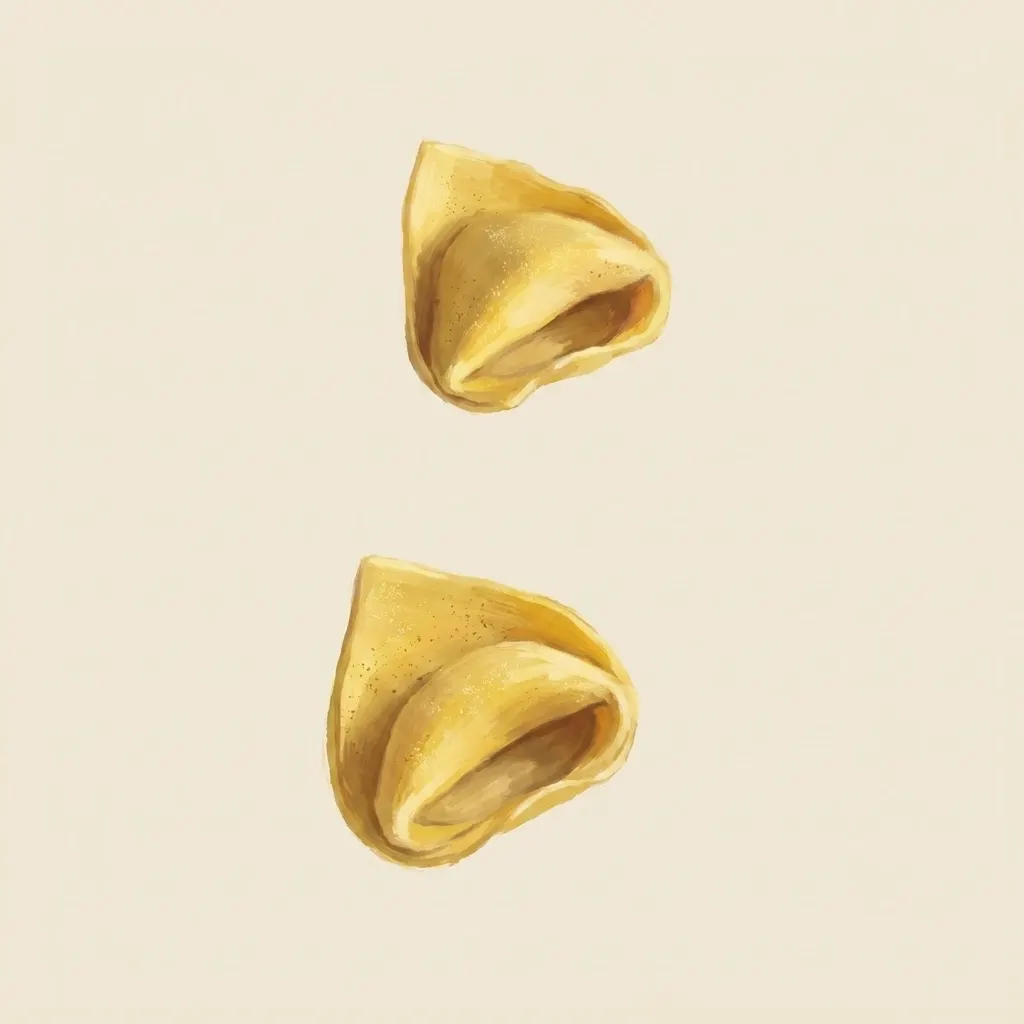
The bigger parcel asks for a sauce that frames it rather than hides it.
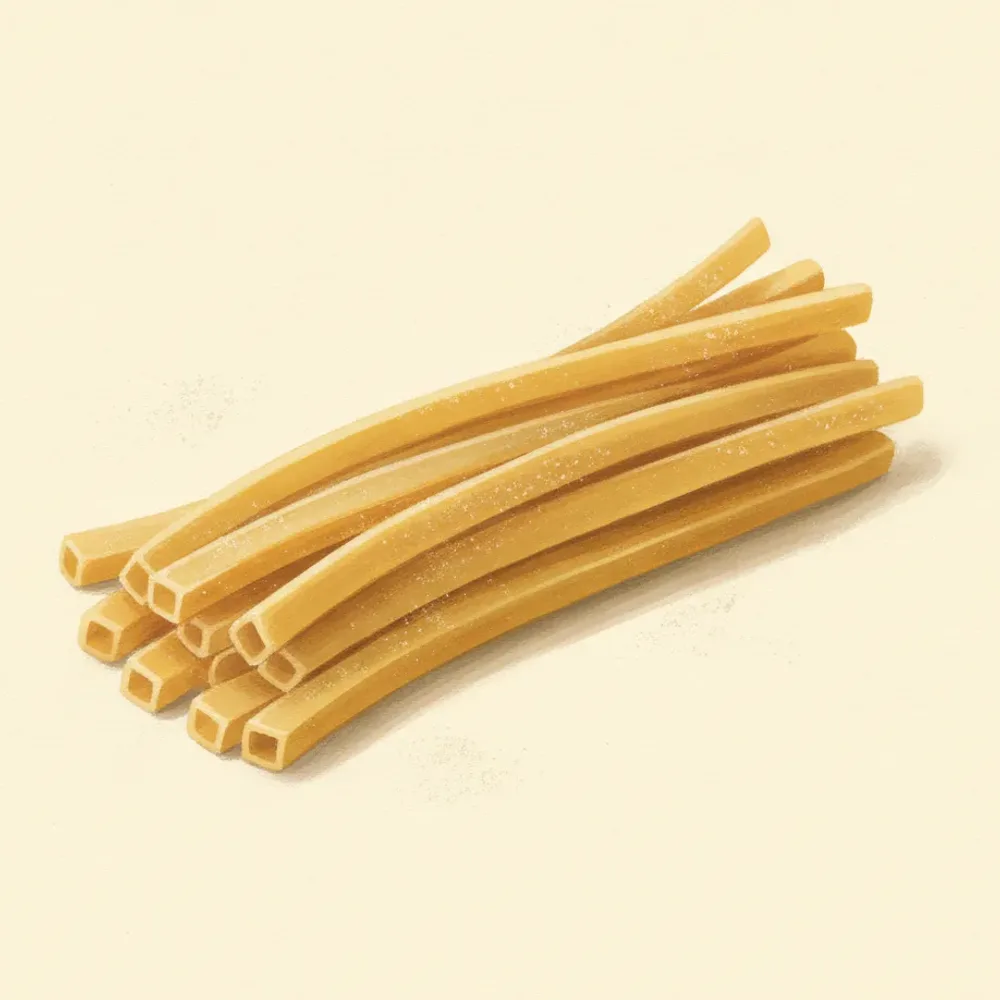
A thick rough square strand carries weight and clings to dense sauces, so the traditional dressings are hearty.
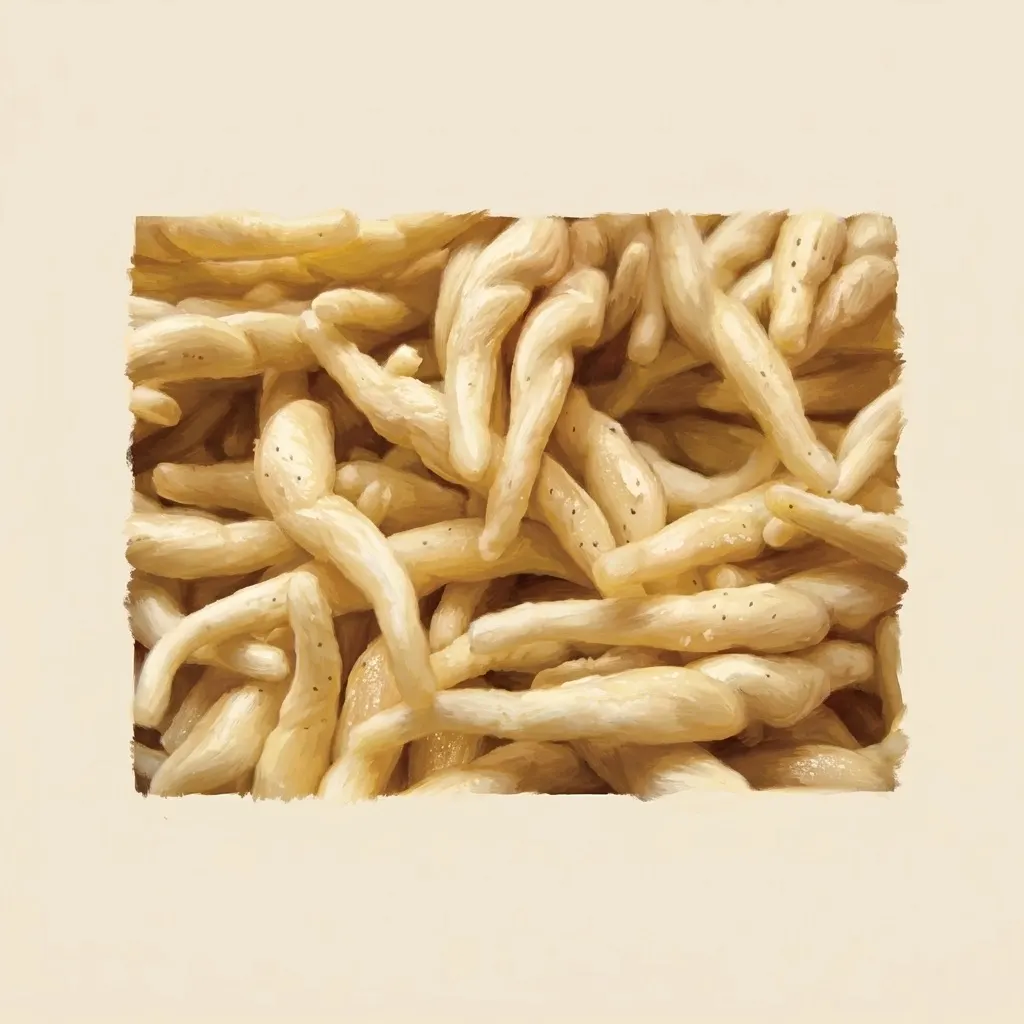
The twist is the working part.
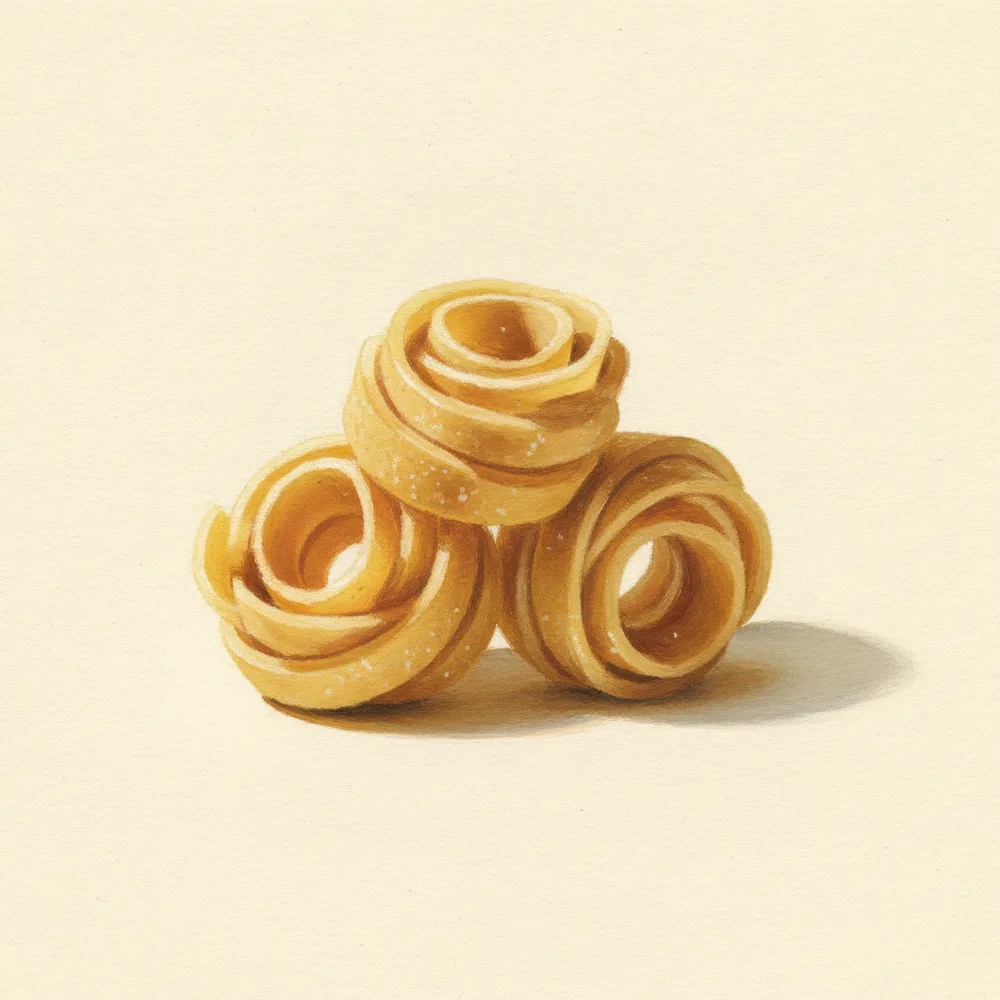
The broad spiralling ruffle and circular folds create deep pockets that trap thick, chunky sauce against the central core.
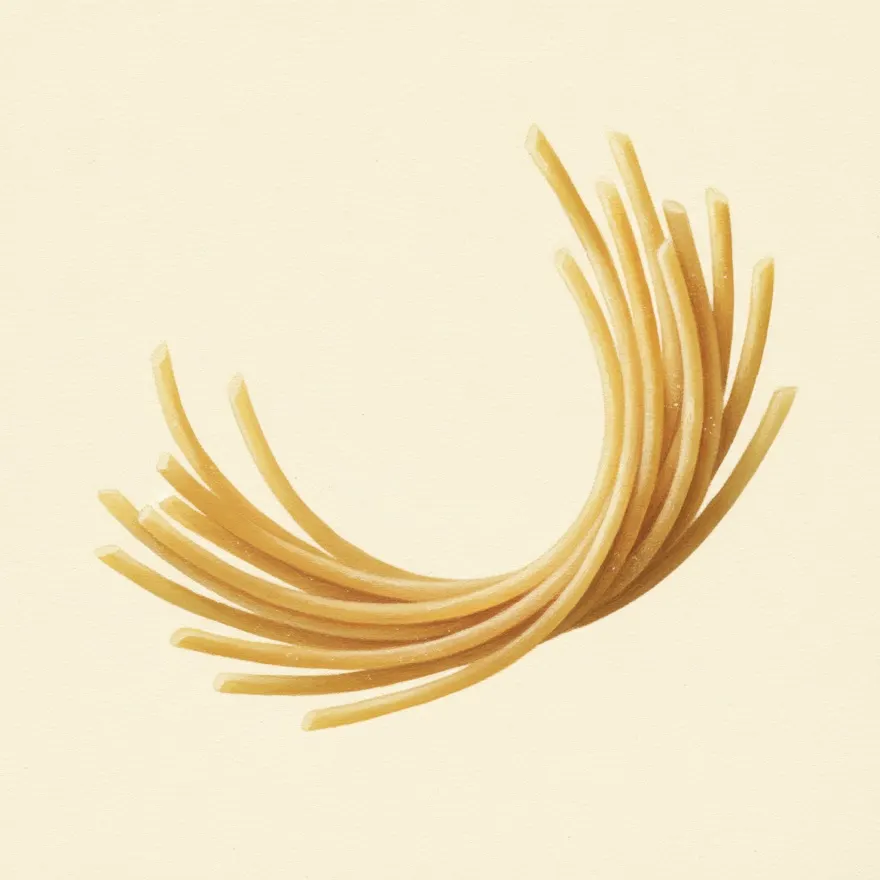
Which sauce fits depends on which vermicelli is in the box.
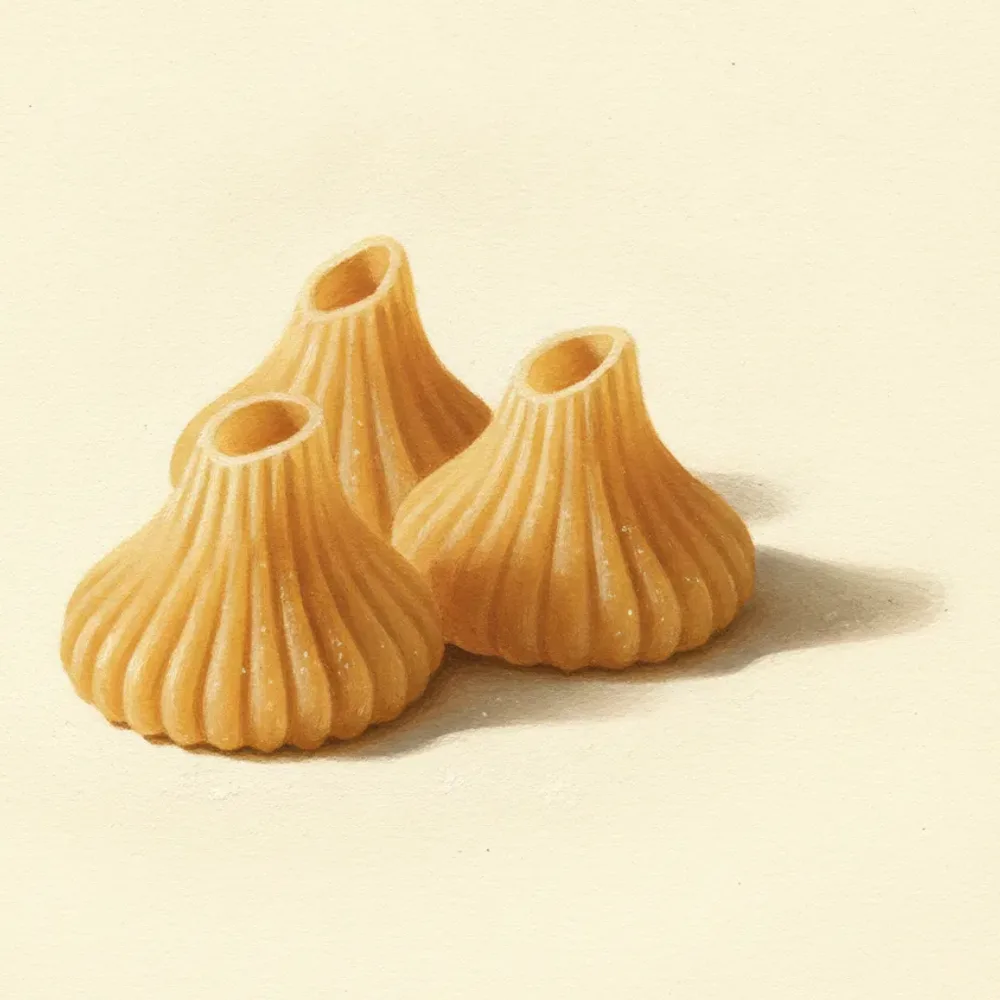
The piece is built like a hollow swirl that climbs from a wide base to a thin peak, so sauce settles into the folds and the central cavity instead of sliding off.
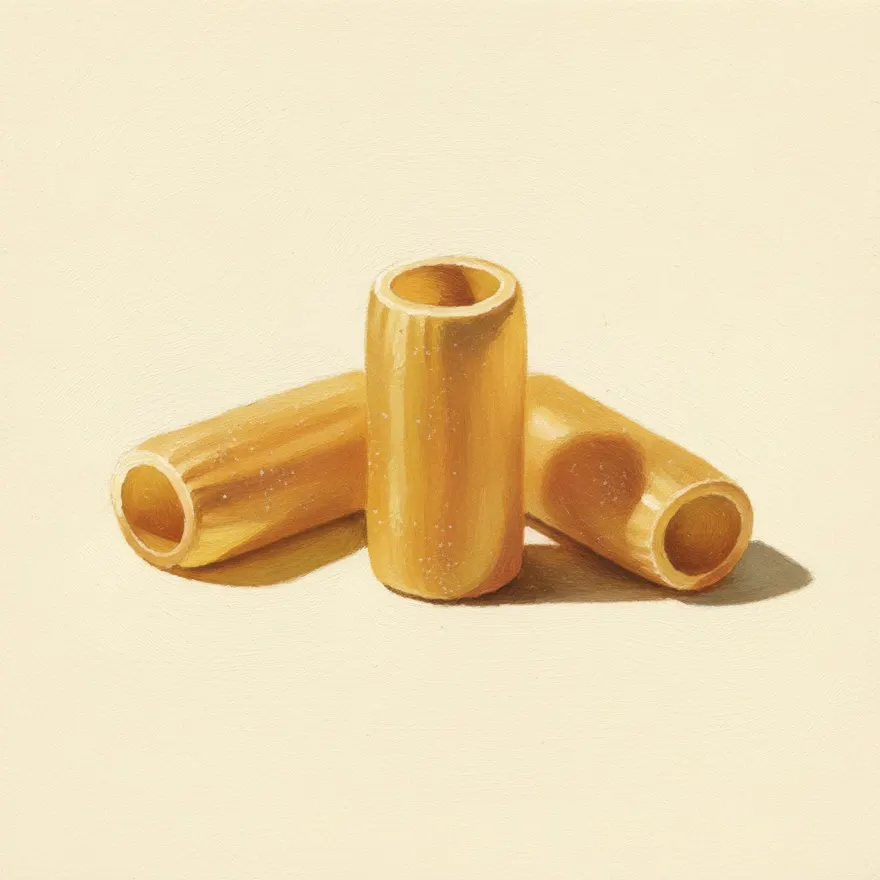
Ziti is a smooth, even-walled tube, so it slips past thin sauces and asks for ones with real body.
What we would not put it on
Shapes built for chunky sauce. A deep cavity meant to trap meat collects a thin tomato sauce that then runs straight back out on the way to the mouth.
Want it the other way around? Start from a shape in the Pairing Finder.
Stay in the loop
From the Almanac
Updates from Pasta Almanac, when there is something worth sharing.