Sagne incannulate
SAH-nyeh een-kah-noo-LAH-teh
Also known as sagne 'ncannulate, sagne ncannulate, sagne torte, sagne ricce.
What it is
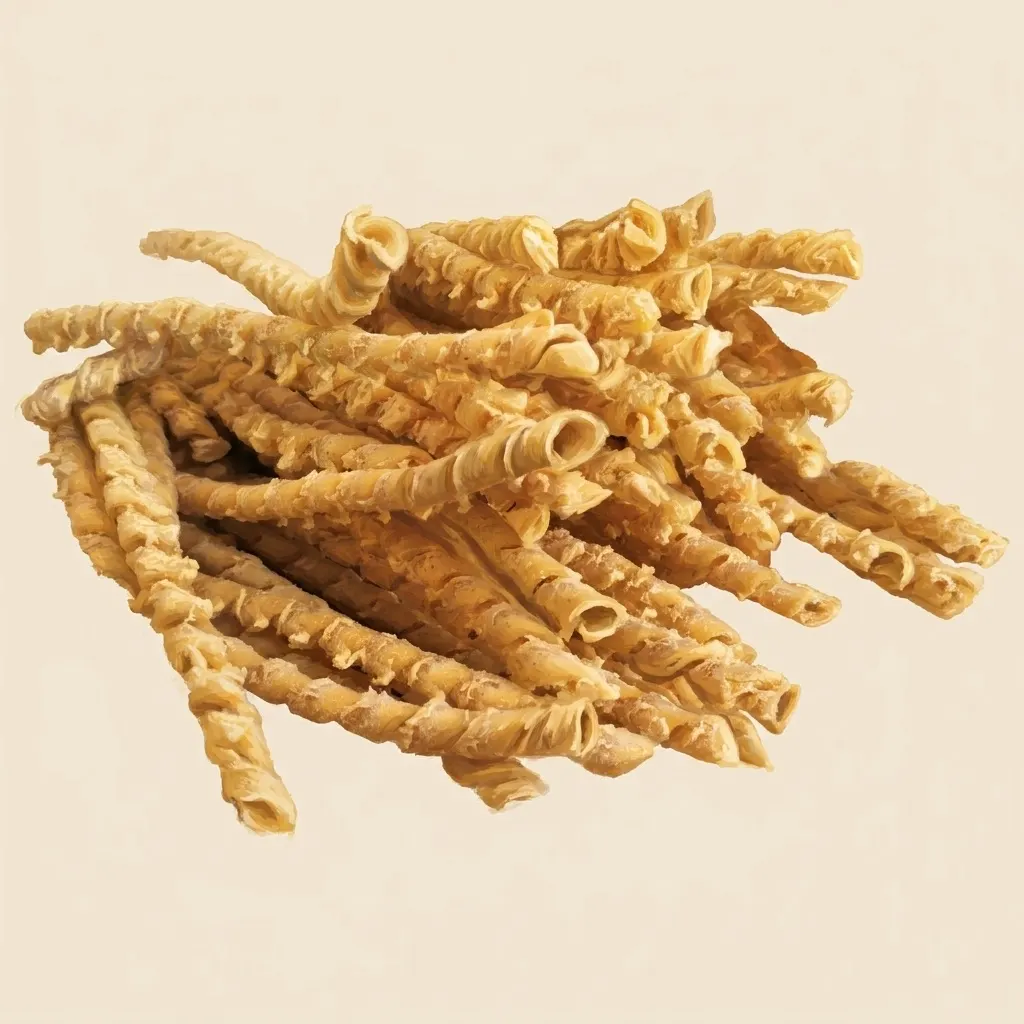
A long ribbon of semolina dough twisted into a loose corkscrew, sagne incannulate is the hand-formed pasta of Salento, around Lecce in the heel of Puglia. Cooks roll each strip of dough around a finger or thin rod with a half turn of the wrist, then let it relax into an open spiral, which is why the name reads as twisted or coiled. The dough is the poor southern kind, durum wheat semolina and water with no egg, giving a thick, chewy ribbon that grips robust dressings. It is a Sunday and feast-day plate in the Lecce countryside, often called sagne torte for the same twist.
Sagne descends from the Latin laganum (Greek laganon), the ancient flat sheet of dough cut into strips that also gives us lagane and lasagne. Incannulate, in Salentine dialect 'ncannulate, means coiled or twisted as if wound around a cannula or reed (canna), describing the ribbon rolled around a finger or rod.
What sauce it wants, and why
The open twist and the rough hand-rolled surface of the semolina ribbon catch and hold sauce in their folds. The traditional dressing is fresh tomato with basil finished with cacio-ricotta or the pungent local ricotta forte, the curls trapping both the liquid sauce and the crumbled cheese. A heavier meat ragu or a chickpea sauce clings to the same coils.
Classic plates: sagne incannulate al pomodoro e ricotta forte, sagne incannulate con i ceci.
No sagne incannulate? Use these
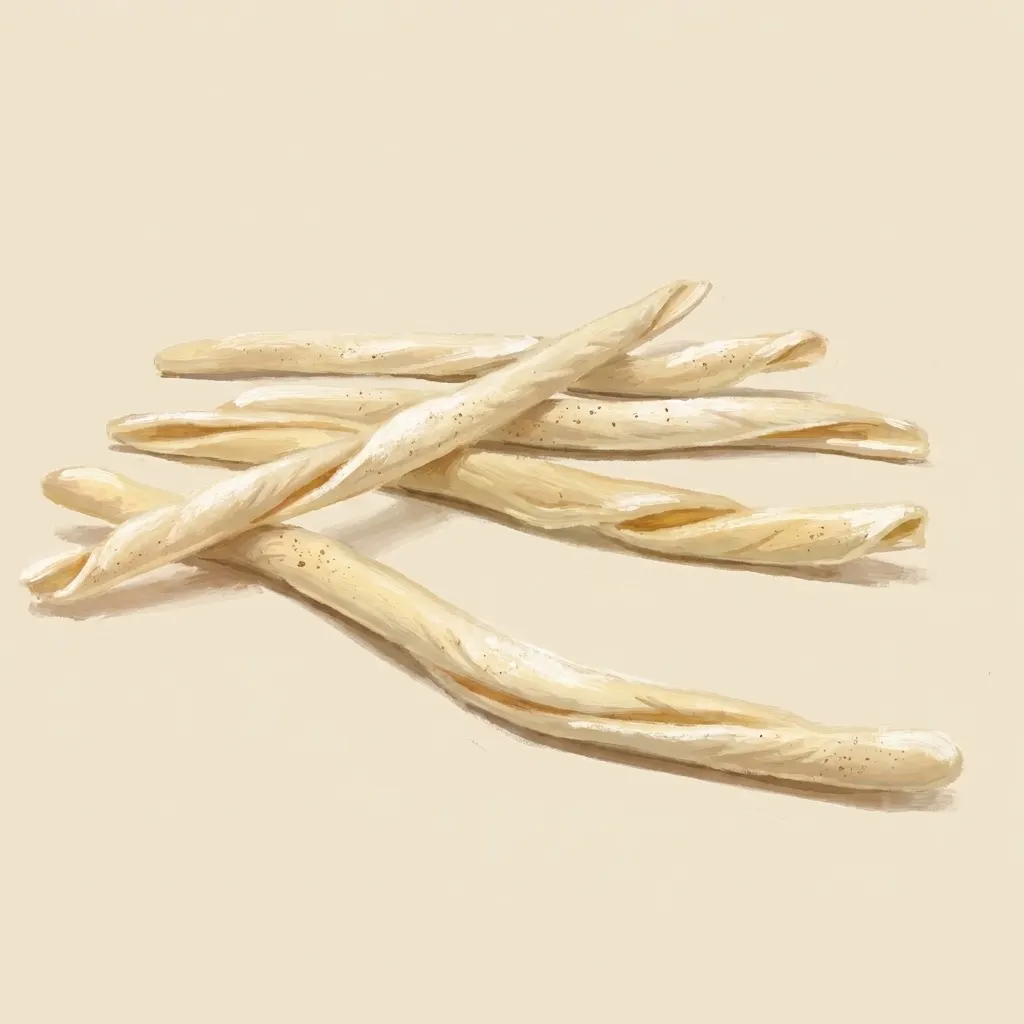
Closest swaps by sauce behavior, not by looks. The ones most easily confused with sagne incannulate, and how they read.

Newsletter
Pasta mail
A new shape now and then, plus whatever pasta rabbit hole we fell down lately. No spam, promise.