Ravioli
rav-ee-OH-lee
Also known as raviolo.
What it is
Ravioli are among the oldest documented pastas in Italy. A recipe collection in Italian vernacular from the late 1300s, the Venetian Libro per cuoco, gives a filling of blanched green herbs, beaten egg, and fresh cheese, cooked in broth. The letters of Francesco di Marco Datini, a merchant of Prato, mention the dish in the same century, and England's Forme of Cury lists rauioles in the 1300s as well, so the idea had already traveled. One legend credits a 13th century Genoese cook with the invention, but that story is attribution, not record. By 1549 Bartolomeo Scappi was serving ravioli at the papal conclave in Rome. The form stayed in home kitchens too. Fillings shifted by region, ricotta and spinach around Rome, ricotta with grated lemon rind in Sardinia, round cheese parcels in Campania. The square parcel, boiled and sauced lightly, remains the template today.
The root is contested. Wiktionary and Wikipedia report a proposed derivation from rava, turnip, from Latin rapa, though the earliest recipes contain no turnips, while Etymonline traces the word through dialectal raviolo to Medieval Latin rauba, meaning covered, and labels the whole chain uncertain.
What sauce it wants, and why
The filling carries the flavor, so the sauce's job is to coat, not compete. Melted butter with sage is the default for cheese and herb fillings, fat plus one aromatic and nothing else. Delicate fillings also take broth, the oldest serving method on record. A light tomato sauce suits ricotta and spinach versions. Save ragu for sturdier fillings and use it sparingly, the Campania tradition reserves it for winter. Finish with grated cheese and stop. A ravioli plate fails when you cannot taste what is inside the parcel.
Classic plates: ravioli di ricotta e spinaci, ravioli al burro e salvia, ravioli in brodo.
No ravioli? Use these
Closest swaps by sauce behavior, not by looks. The ones most easily confused with ravioli, and how they read.
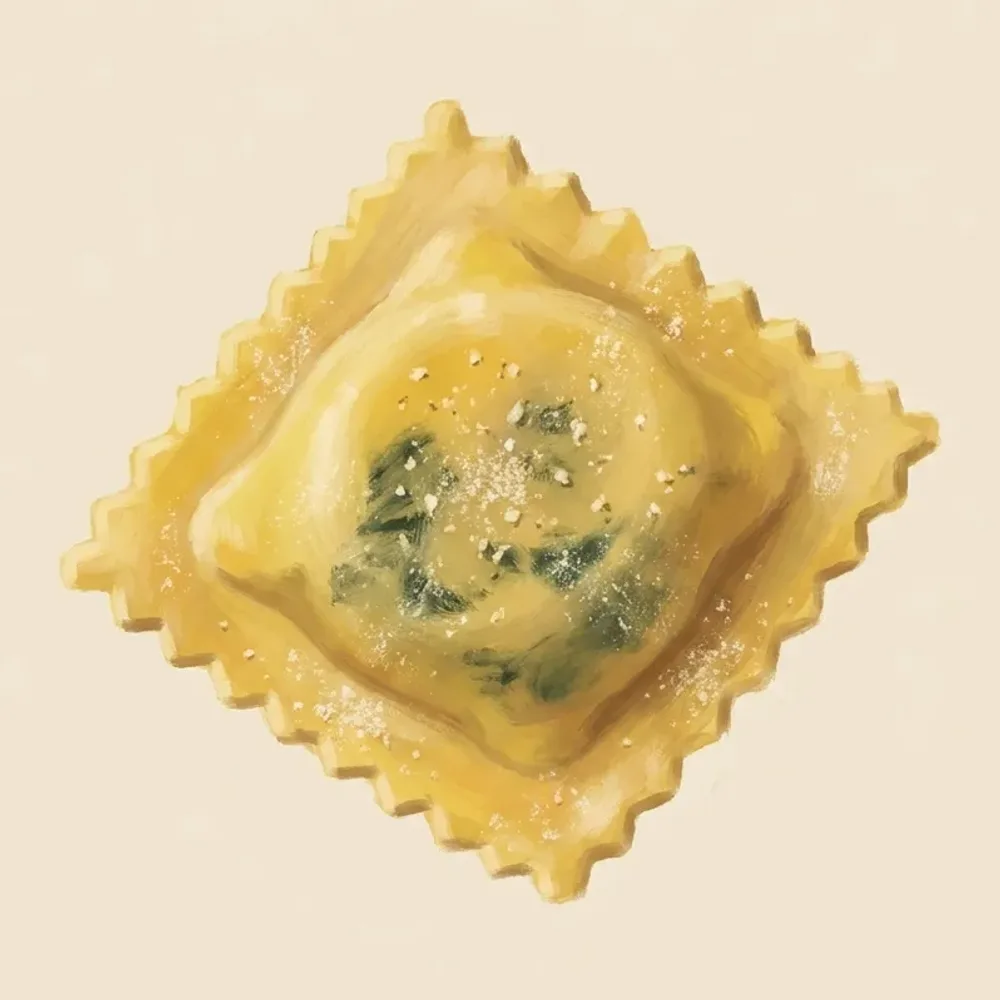 Tortelli
two sheets of egg sfoglia sealed around a filling into a flat square or rectangle, the regional fillings change but the flat sealed parcel does not
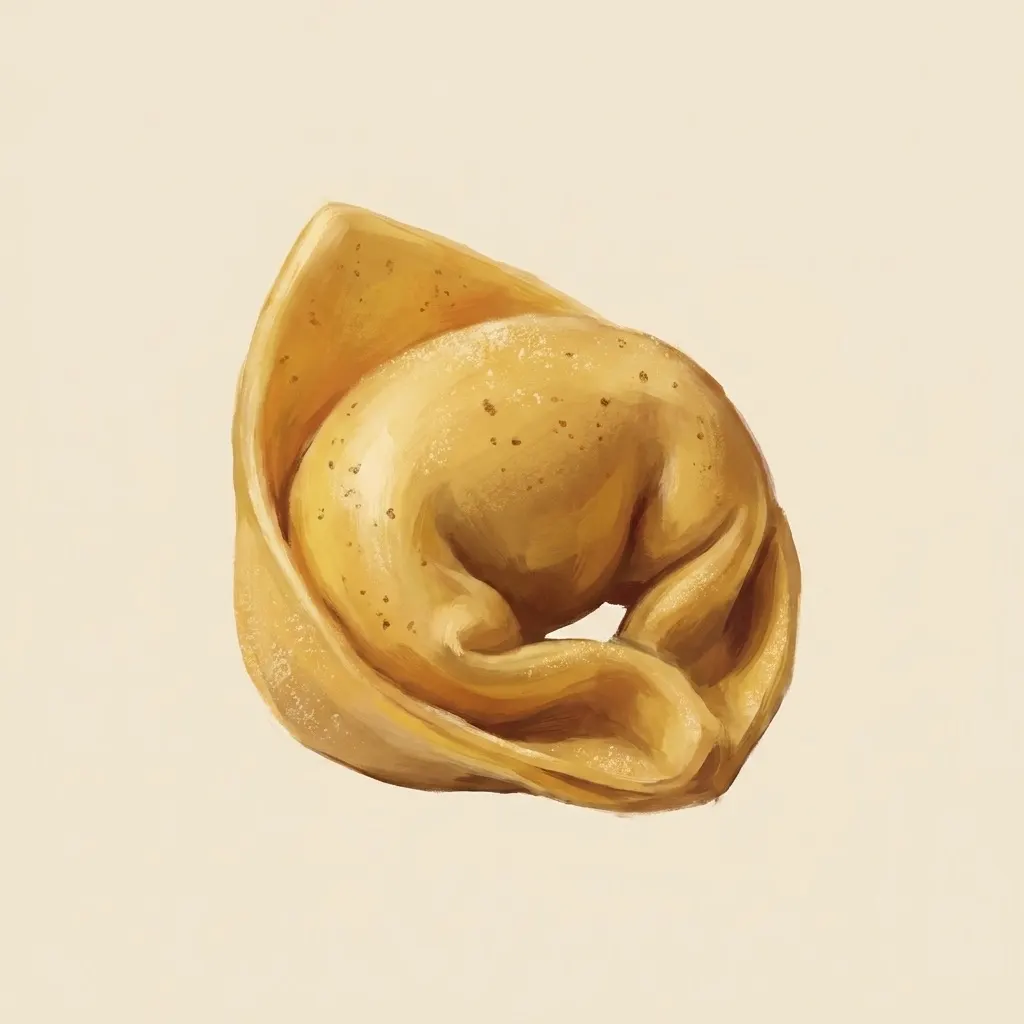 Tortellini
sealed ring, a square of sfoglia folded into a triangle over the filling, then wrapped around the finger and pinched closed
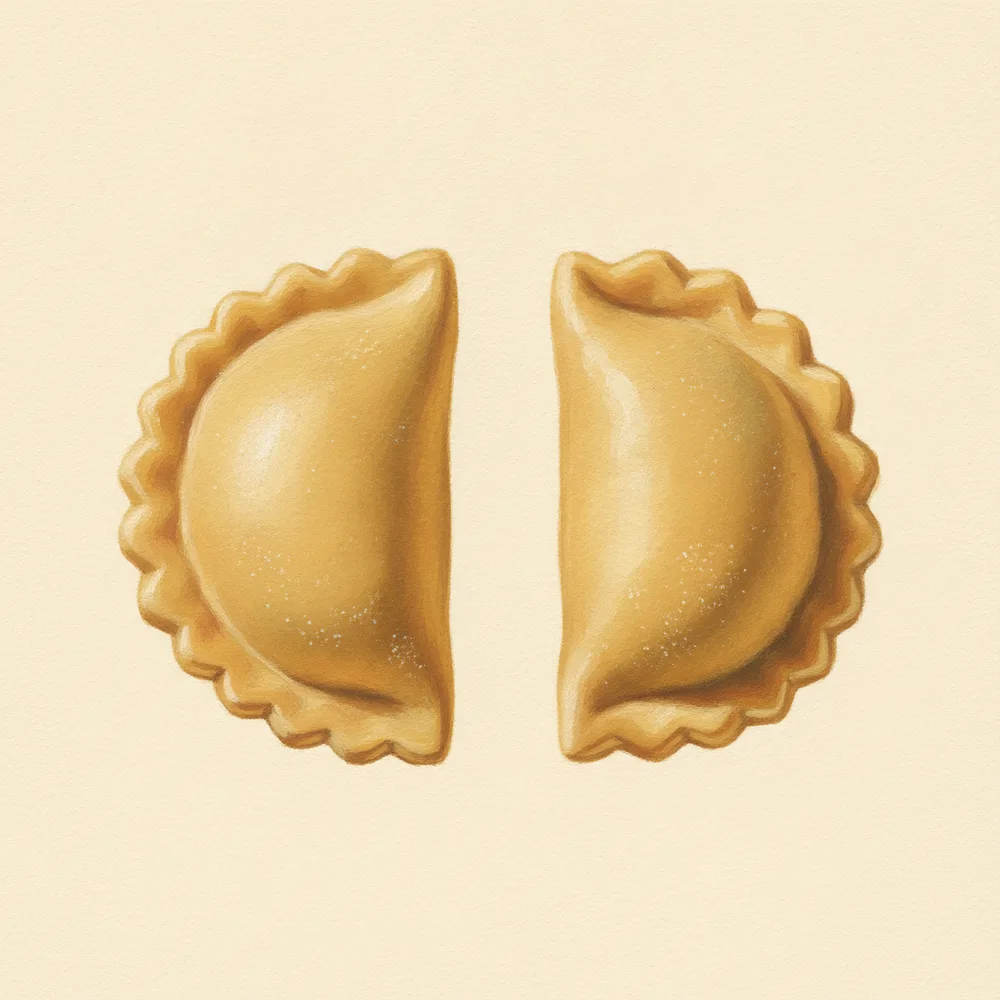 Mezzelune
half-moon filled parcel
Ravioli vs Tortellini·Ravioli vs Agnolotti·Ravioli vs Tortelloni·Ravioli vs Cappelletti·Ravioli vs Casoncelli·Ravioli vs Pansotti·Ravioli vs Tortelli
Easy to confuse with
Filled parcels. Ravioli and tortelli are flat sealed pillows, agnolotti a smaller pinched one, while tortellini and cappelletti fold into rings around a fingertip (cappelletti peaked like a hat). Tortelloni is the big ring, balanzoni its green spinach-dough version, and cappellacci a larger peaked hat filled with squash.
- Tortellitwo sheets of egg sfoglia sealed around...
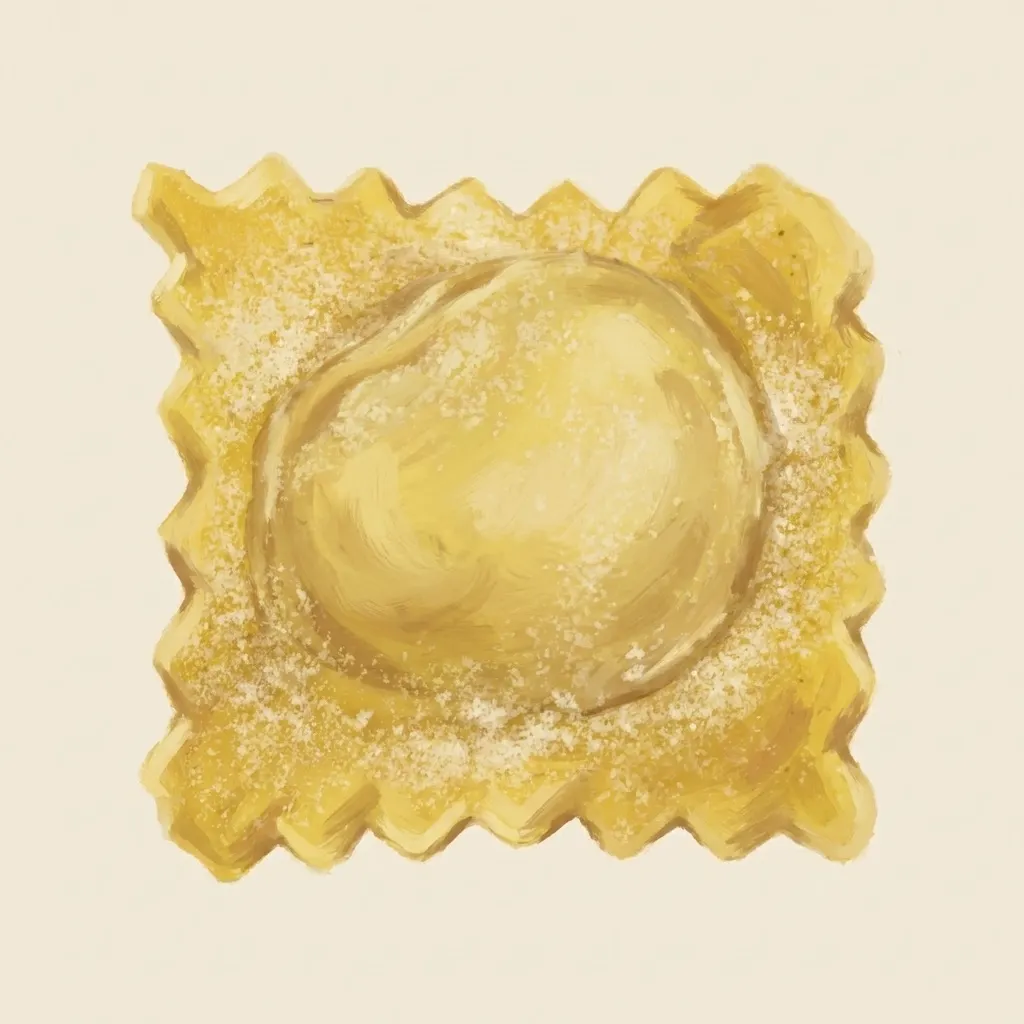 Agnolottisquare pillow (smaller rectangular form...
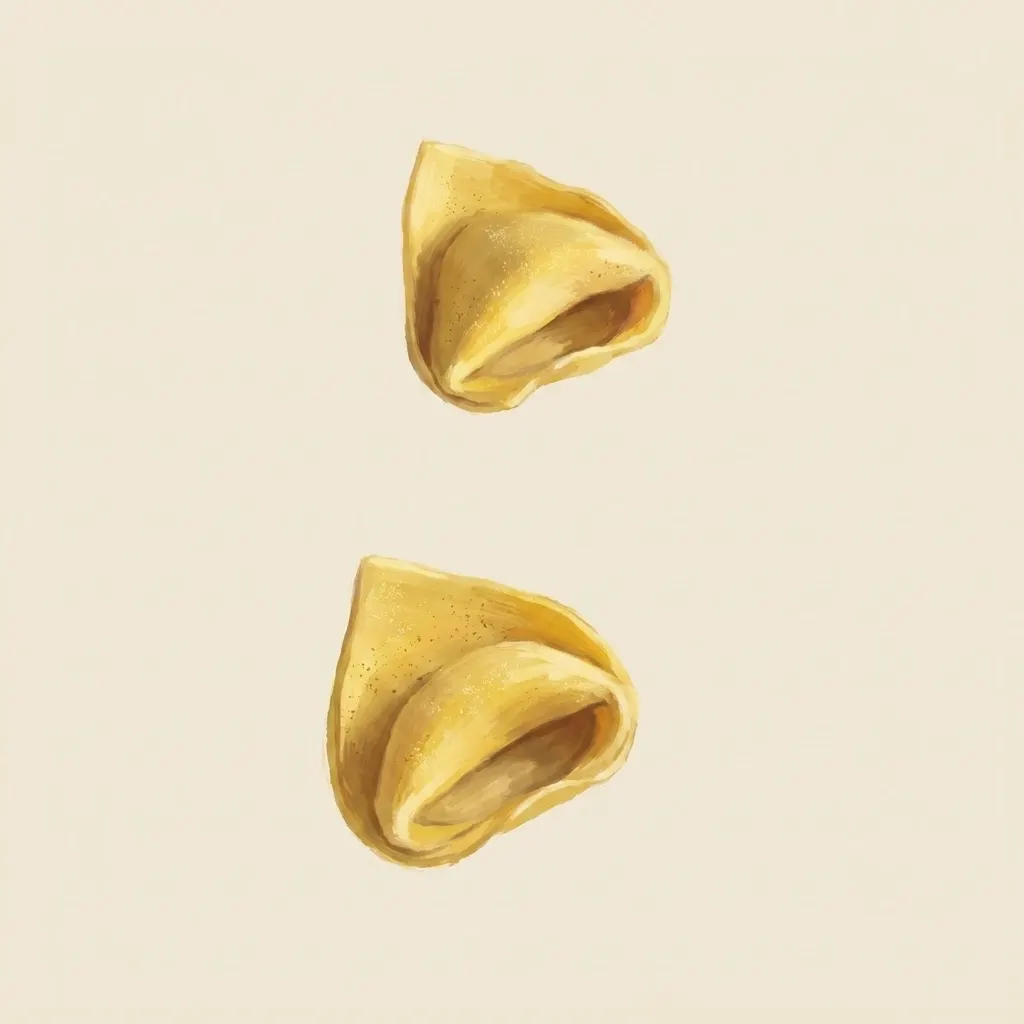 Tortellonisquare folded into a stuffed parcel
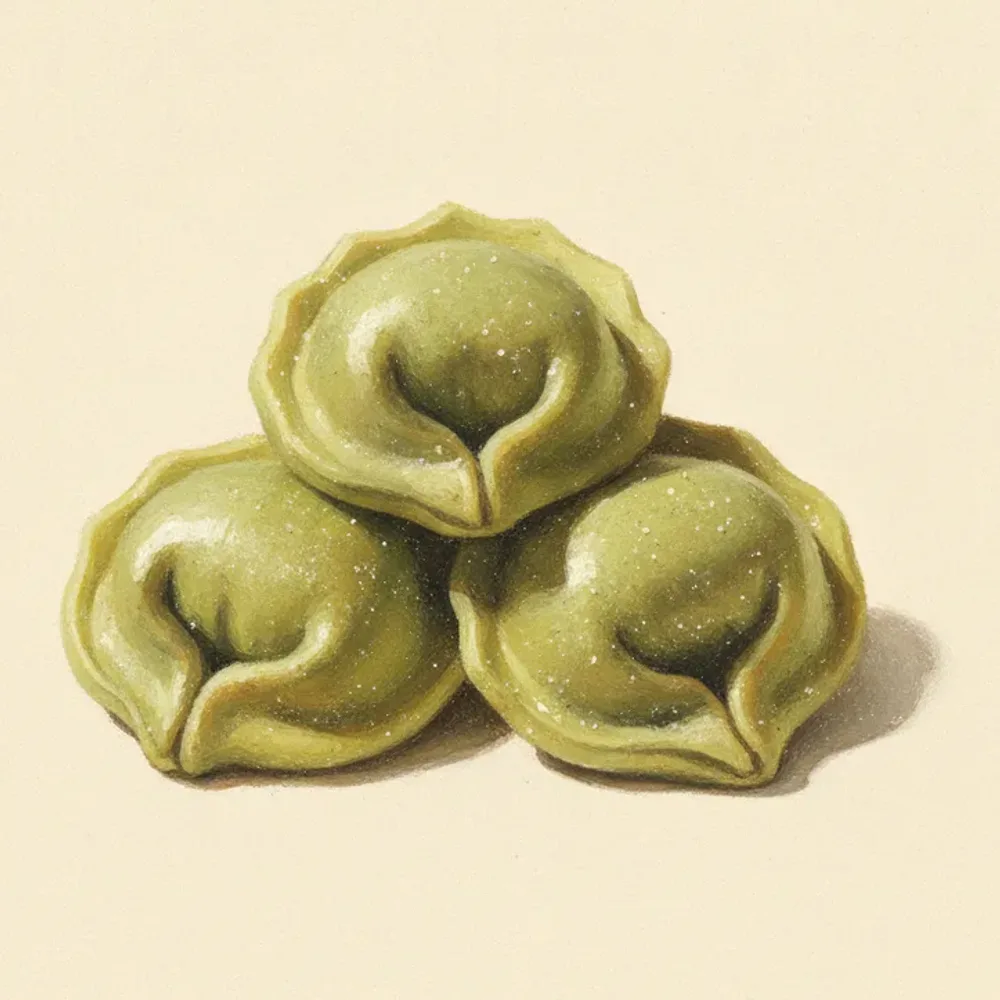 Balanzonisquare or rectangular sheet folded and p...
- Tortellinisealed ring
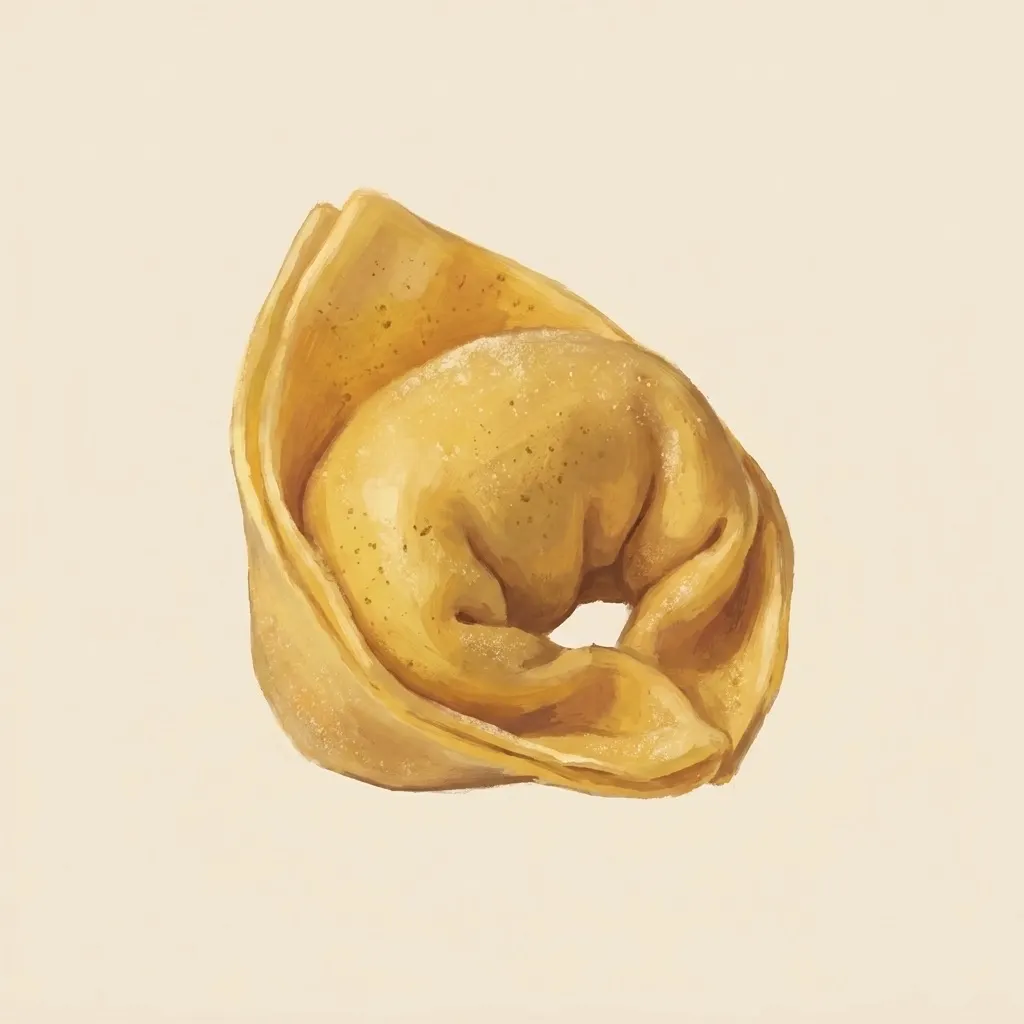 Cappellettifilled hat-shaped parcel
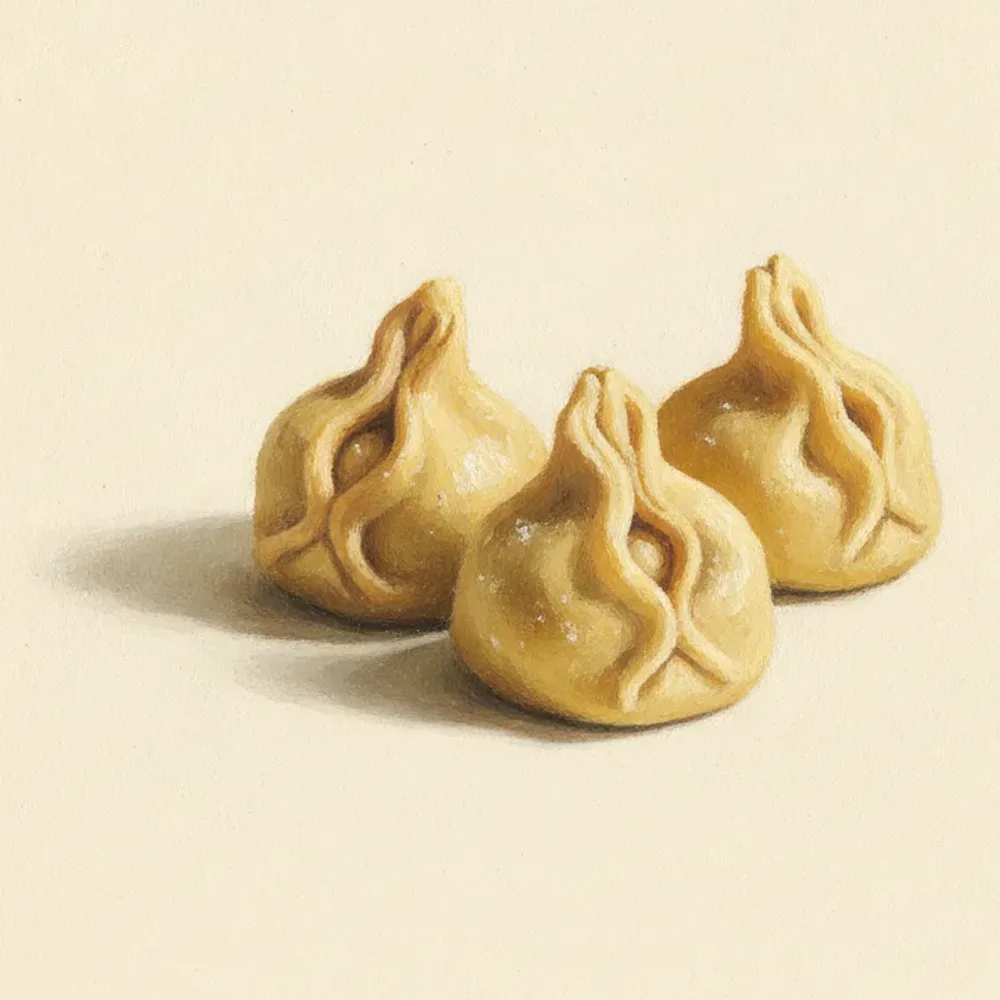 Cappellaccia square of egg sfoglia folded over a sq...
Stay in the loop
From the Almanac
Updates from Pasta Almanac, when there is something worth sharing.