Ditali
Also known as thimbles.
What it is
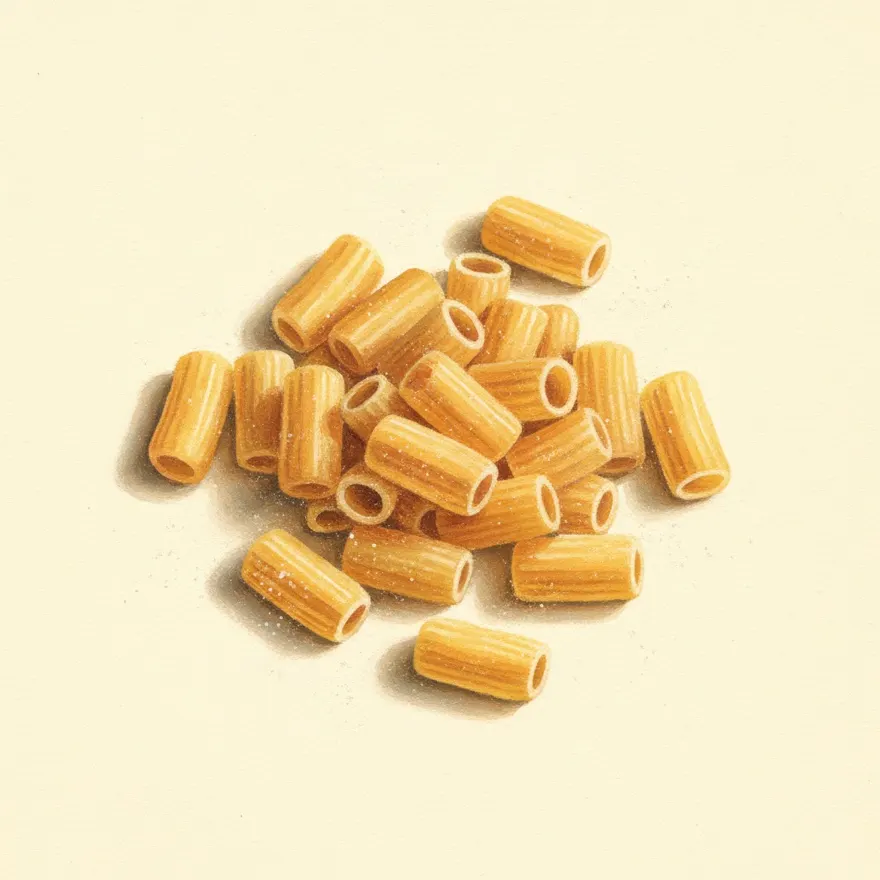
The name is a kitchen joke about sewing. Ditale means thimble, the small cap a tailor slips over a fingertip, and ditali are short tubes cut to roughly that shape. The family runs as a ladder. Ditalini are the smallest, ditali sit in the middle, and ditaloni are the largest, named big thimbles, little thimbles, and very little thimbles. The shape belongs to southern Italy, with roots in Campania and the area near Naples, and it spread through Calabria and Sicily. Industrial extrusion in the south made these short cuts cheap and common in the 1800s. Cooks reached for them when a dish needed pasta a spoon could carry. They turned up in pasta e fagioli and pasta e patate, plain pots where a sturdy little tube earns its place.
From the Italian ditale, plural ditali, meaning thimble. Wiktionary traces ditale to Late Latin digitale, from Latin digitalis, rooted in digitus, finger. The thimble sits over a fingertip as a short open cylinder, and the pasta borrows that picture: a little thimble of a tube. Ditali are the mid-size thimbles, larger than ditalini and smaller than ditaloni.
What sauce it wants, and why
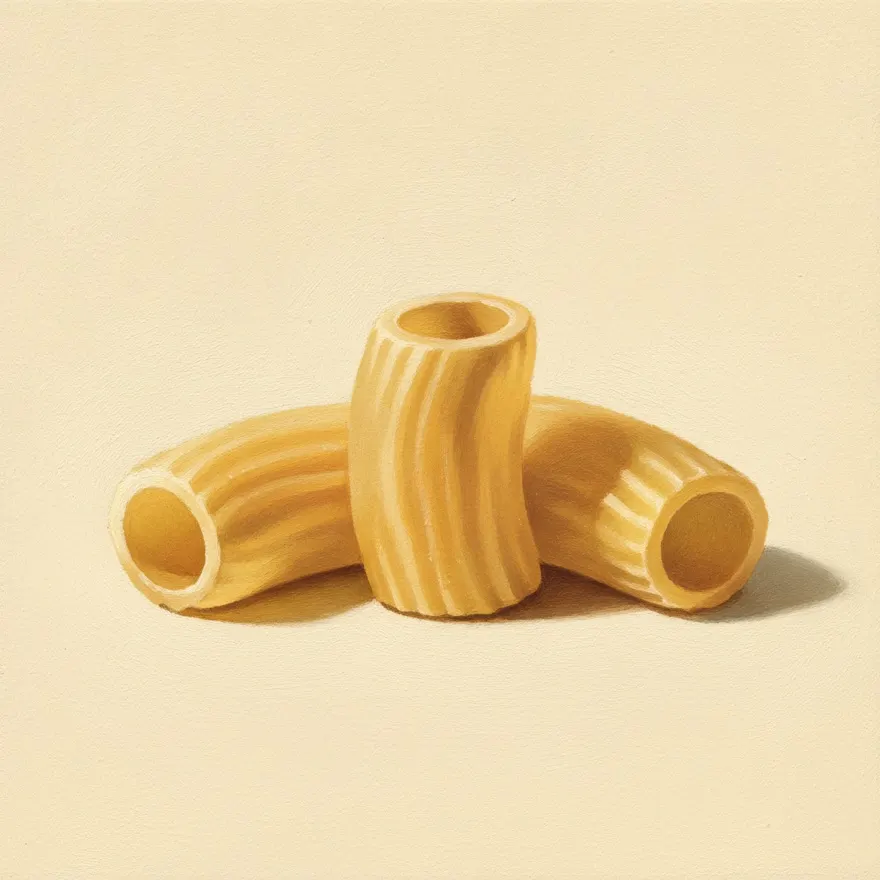
This is a spoon shape. A short straight tube holds its bite in a pot of soup, where longer pasta would slip and tangle. Cooks lean on ditali for legume stews like beans and chickpeas, for vegetable soups, and for brothy minestrone. The open ends matter. Each tube drinks in broth and bean liquid, so the pasta carries the flavor of the pot instead of sitting apart from it. Smooth ditali suit lighter soups, while ridged ones grip thicker sauces.
Classic plates: pasta e fagioli, pasta e ceci.
No ditali? Use these
Closest swaps by sauce behavior, not by looks. The ones most easily confused with ditali, and how they read.
Stay in the loop
From the Almanac
Updates from Pasta Almanac, when there is something worth sharing.