Capellini
kah-peh-LEE-nee
Also known as angel hair, capelli d'angelo.
What it is
The earliest records put this pasta in convents. Food writing traces capelli d'angelo to seventeenth century Rome as a specialty of religious houses, and Rummo dates the shape to the Renaissance, when it was served sparingly because it was so hard to make. Wikipedia notes the cut has been popular in Italy since at least the fourteenth century. The birthplace is argued. De Cecco names three claimants, the area around Genoa, Naples, and the Ciociaria in central Italy. Strands this fine snap when boxed loose, so producers wind the thinnest versions into nests before drying, a fragility fix that became the format's signature look. In Campania the pasta traditionally lands in broth or with lentils, and De Cecco still pitches capellini as a first pasta for children from nine months. The angel hair name crossed the Atlantic with Italian immigrants in the early twentieth century and now dominates American packaging.
From Italian capelli, hair, with a diminutive ending, literally thin hair. Wiktionary dates the English borrowing to the 1950s.
What sauce it wants, and why
A strand under a millimeter wide is nearly all surface. That ratio means heat and salt reach the core almost instantly, so the gap between al dente and mush is about a minute. It also means sauce grips everywhere at once, and anything heavy drags the strands into clumps. The producers agree on the fix. De Cecco points to butter, raw tomato, and light broth. Garofalo names broth and light condiments. Ronzoni suggests oils, thin cream sauces, and light seafood. Pull the strands early, finish them in the pan for seconds, and keep the sauce loose.
Classic plates: capellini in brodo, capellini al burro e basilico, capellini with lentils.
No capellini? Use these
Closest swaps by sauce behavior, not by looks. The ones most easily confused with capellini, and how they read.
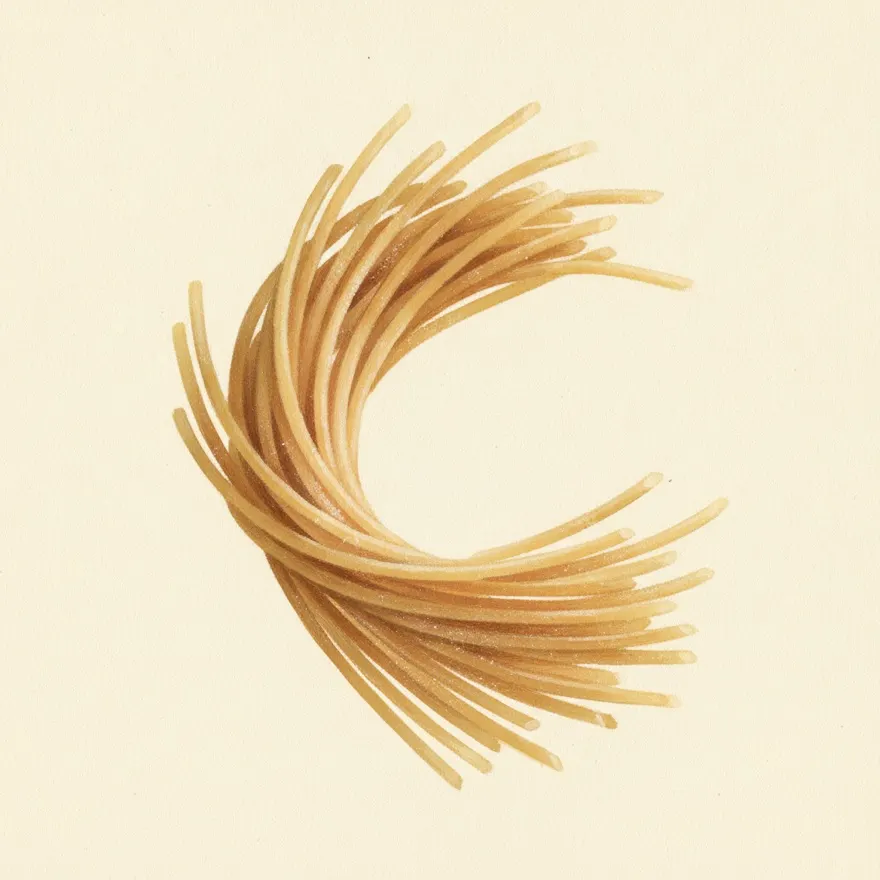
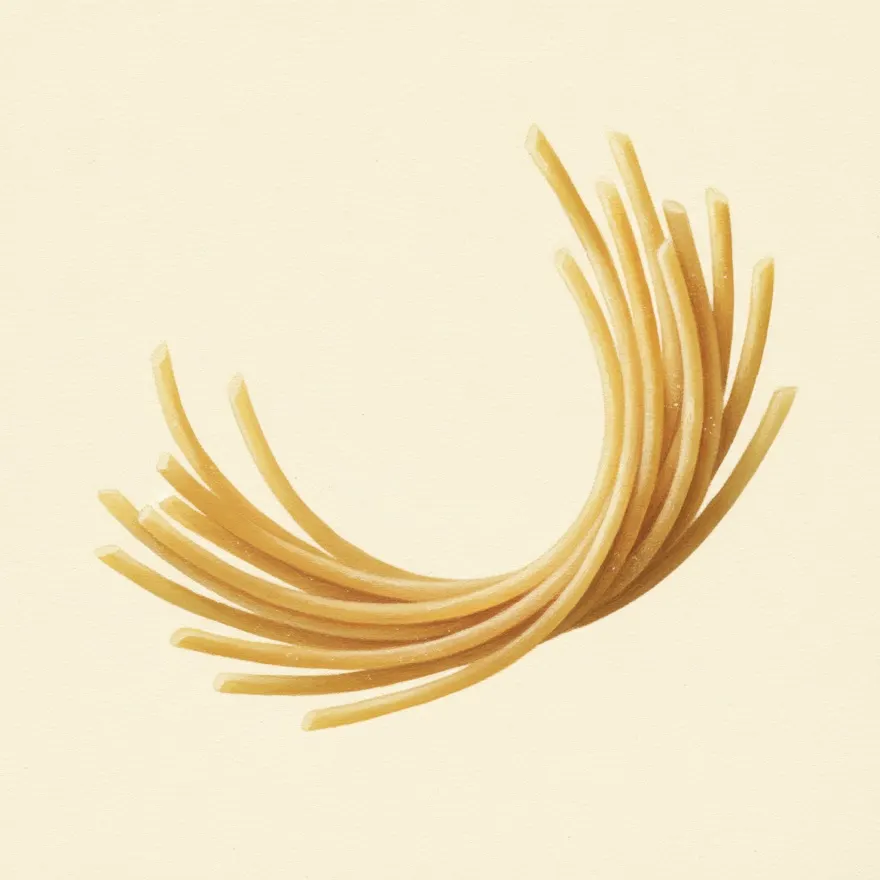
Capellini vs Spaghetti·Capellini vs Spaghettini·Capellini vs Vermicelli
Easy to confuse with
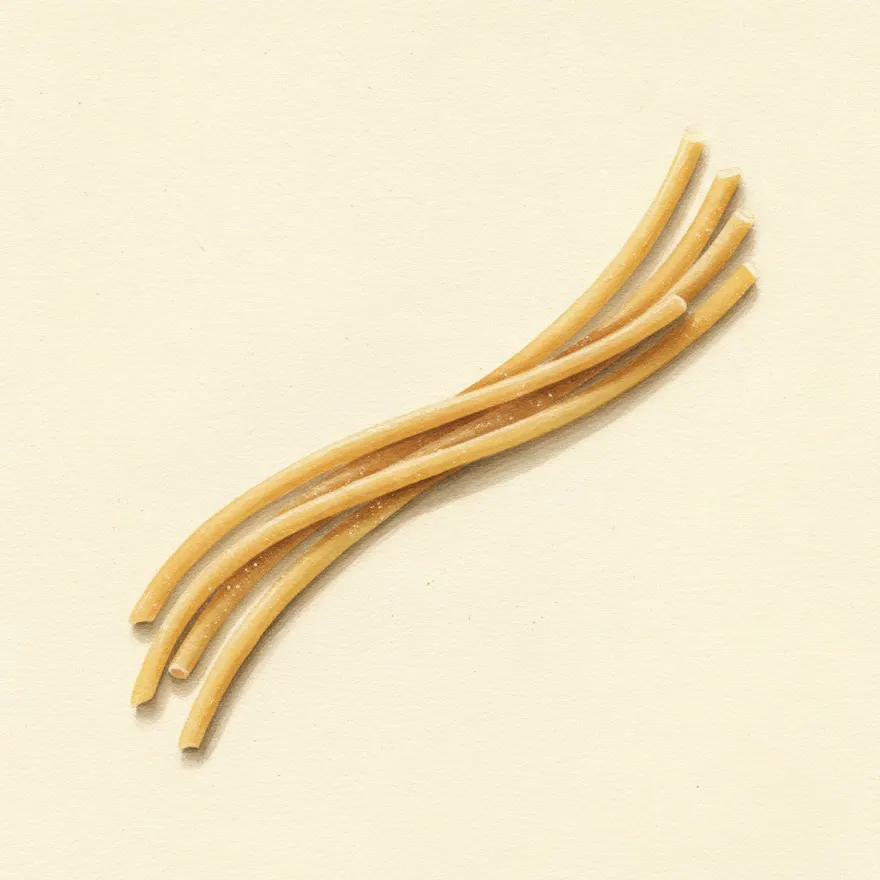
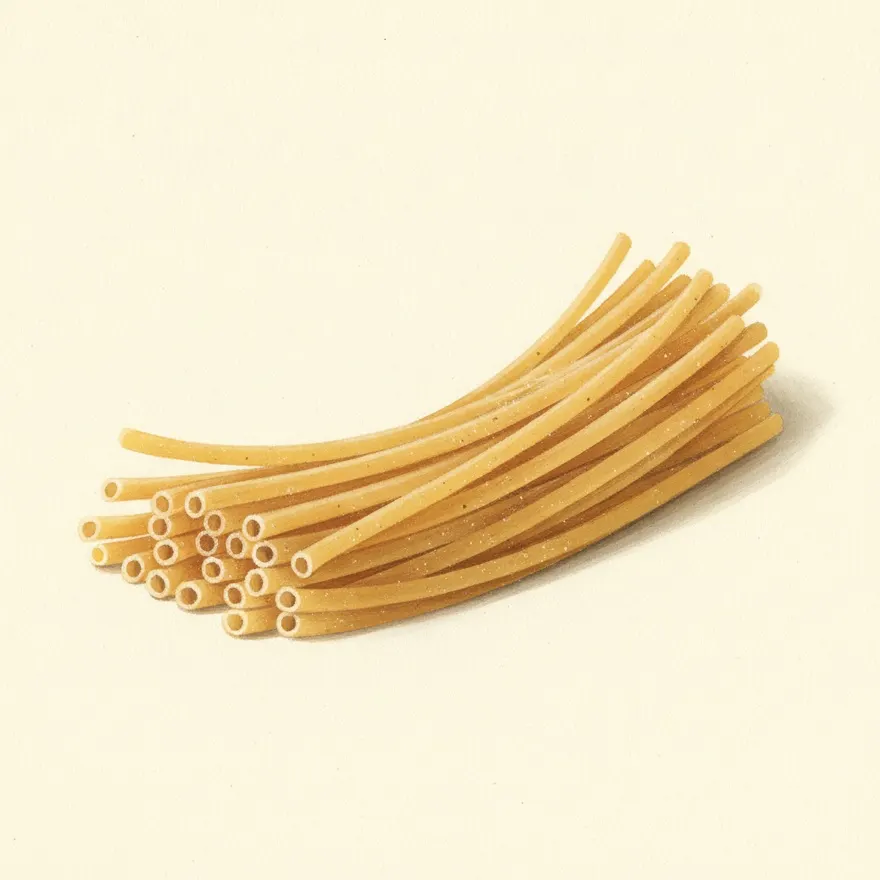
Solid round strands graded only by thickness: capellini (finest), spaghettini, spaghetti, then spaghettoni (thickest), with vermicelli sitting near spaghetti. Bucatini looks like a thick spaghetti but has a hole running through the center.

Stay in the loop
From the Almanac
Updates from Pasta Almanac, when there is something worth sharing.