Spaghettoni
spah-geht-TOH-nee
Also known as spaghettone, thick spaghetti.
What it is
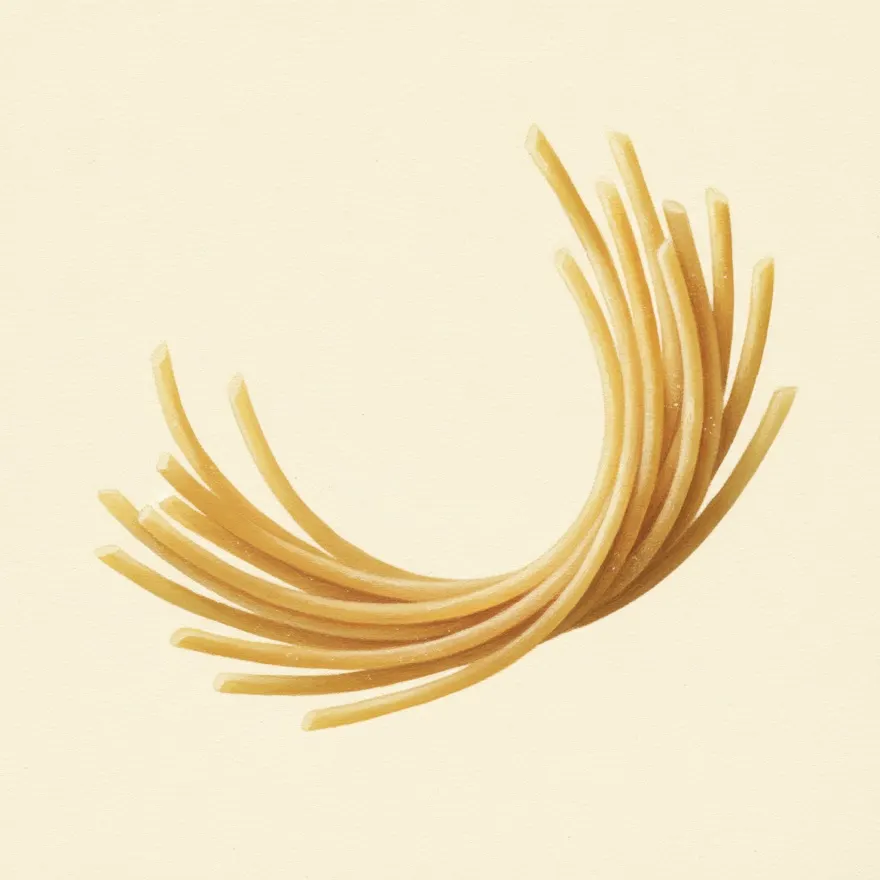
The defining detail is gauge. Spaghettoni is simply spaghetti drawn fatter, a thicker round strand that takes a longer cook and gives a denser, chewier bite. The name carries the Italian augmentative suffix -oni, the opposite move from spaghettini. There is no single town of origin; it is a national long-strand variation rather than a regional invention. Major producers sell it as a distinct cut. De Cecco lists a Spaghettoni under number 412, bronze drawn for a rough surface. Garofalo built a Gragnano PGI Spaghettone XXL around 2.5 mm, calling it among the thickest spaghetti made. Artisan makers such as Mancini extrude through bronze dies for a porous, sauce-gripping texture. The thicker strand became a favorite for Roman plates like cacio e pepe and carbonara, where extra mass stands up to a heavy cheese or egg emulsion.
Spaghettoni is the augmentative form of spaghetti, signaling a thicker strand. Spaghetti is the plural of spaghetto, a diminutive of spago, meaning cord or string, a word of uncertain origin. So the chain runs from spago (cord) to spaghetto (little cord) to spaghetti (the familiar strands) and finally to spaghettoni, the enlarged version. The singular is spaghettone. Sources: Etymonline traces spaghetti to spaghetto, diminutive of spago; Wiktionary lists spaghettoni as the augmentative of spaghetti.
What sauce it wants, and why
The extra mass is the whole point. A fatter strand carries more interior chew and holds heavier coatings without going limp, so it suits reduced and emulsified sauces that need something sturdy to cling to. Bronze drawing adds a rough, porous surface that grips cheese and fat. This is why spaghettoni is a common pick for cacio e pepe and carbonara, where a thin strand can drown, and it stands up to amatriciana and rich tomato as well. Garofalo and Mancini both pair it with full-flavored condiments.
Classic plates: cacio e pepe, carbonara, amatriciana.
No spaghettoni? Use these
Closest swaps by sauce behavior, not by looks. The ones most easily confused with spaghettoni, and how they read.

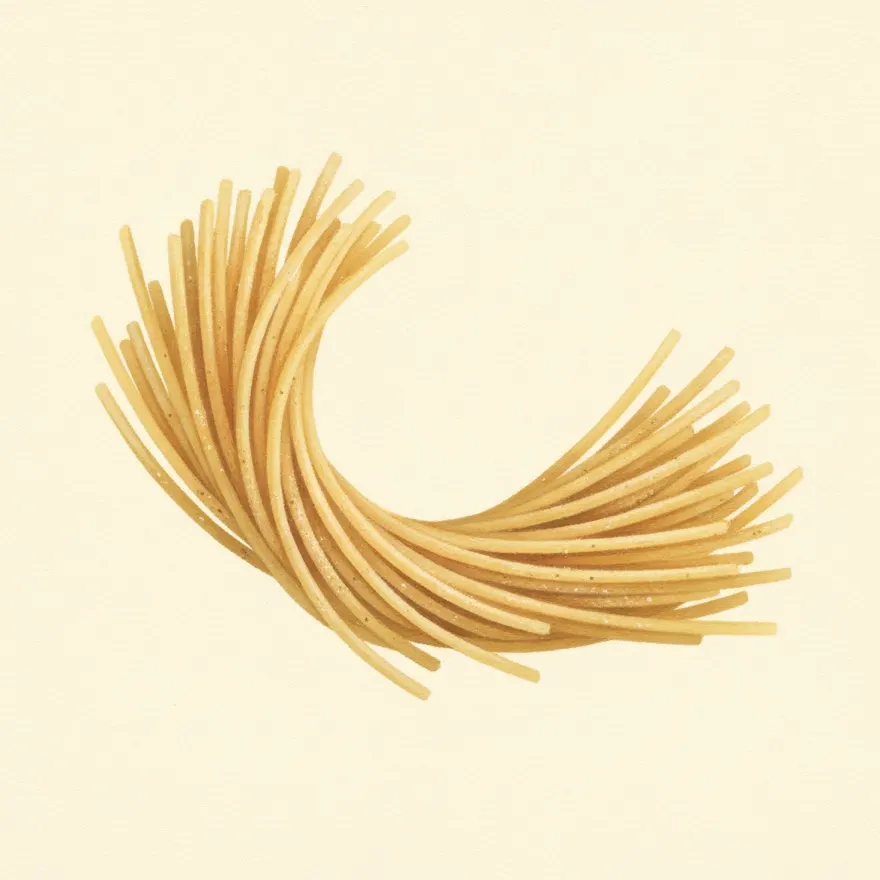
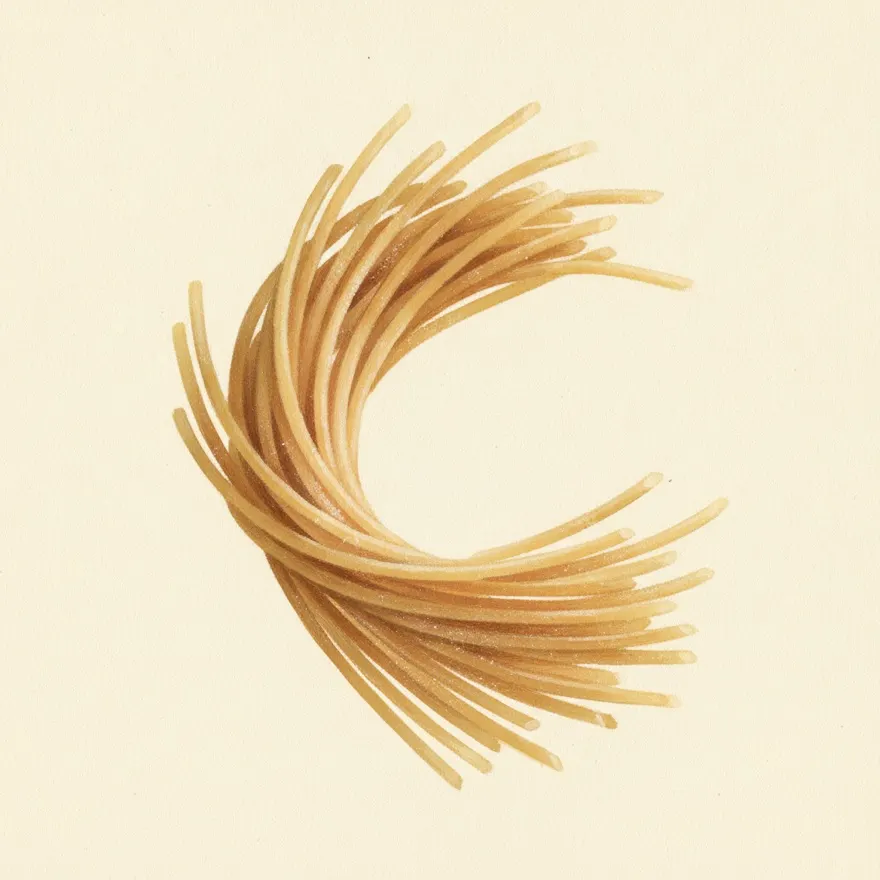
Spaghettoni vs Spaghetti·Spaghettoni vs Vermicelli·Spaghettoni vs Spaghettini
Easy to confuse with
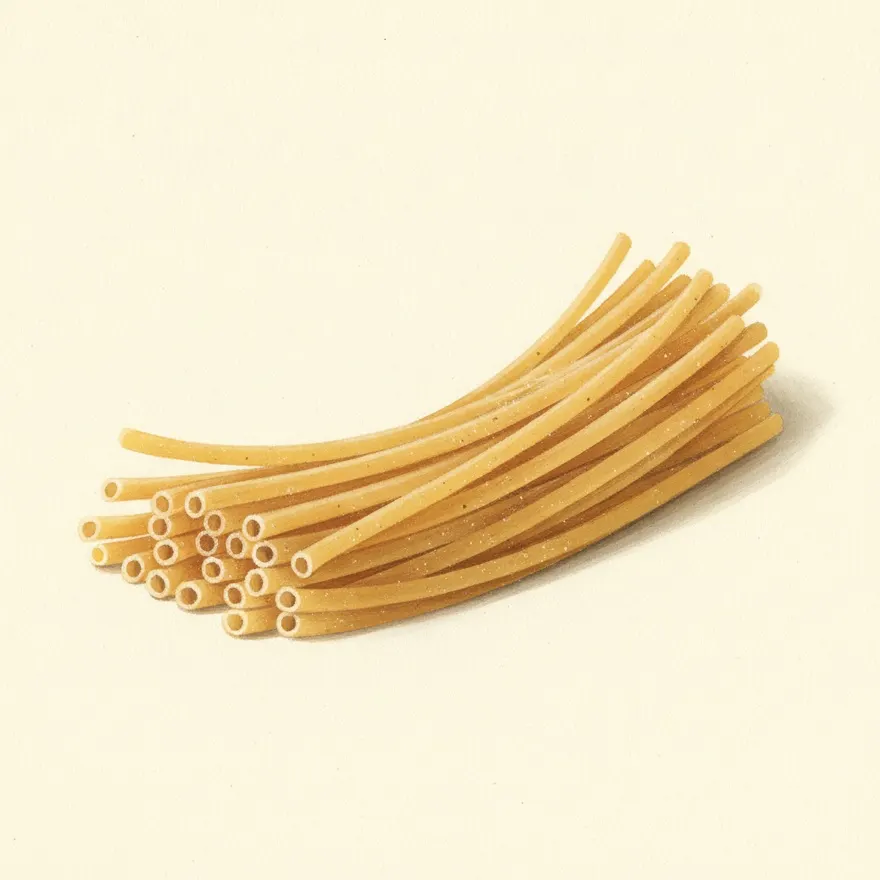
Solid round strands graded only by thickness: capellini (finest), spaghettini, spaghetti, then spaghettoni (thickest), with vermicelli sitting near spaghetti. Bucatini looks like a thick spaghetti but has a hole running through the center.
Stay in the loop
From the Almanac
Updates from Pasta Almanac, when there is something worth sharing.