Pisarei
pee-zah-RAY
Also known as pissarei, pisarei e fasò.
What it is
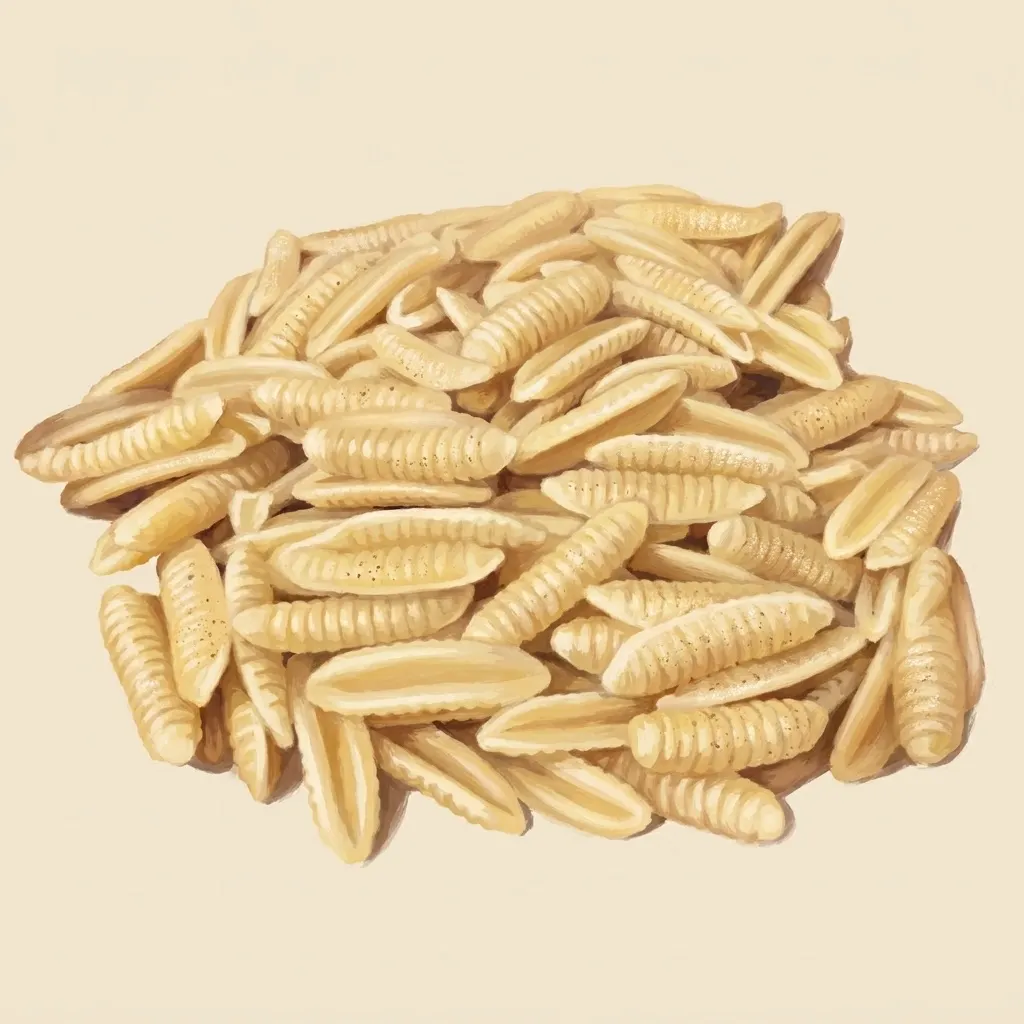
Pisarei are small thumb-pressed dumplings from the province of Piacenza, set apart from ordinary gnocchi by a dough of flour and grated breadcrumb. Tradition holds the recipe took form in the Middle Ages inside Piacenza convents, where monks fed pilgrims passing on the Via Francigena with poor but filling ingredients. The breadcrumb is the practical signature, a way to stretch precious flour and put stale bread to use. Paired with a bean sauce they become pisarei e fasò, the dish most identified with Piacenza, now carried under the city's De.CO municipal origin mark.
From the Piacentine dialect word pisarell, the local name the shape is said to resemble. Both English and Italian Wikipedia trace the name to that dialect term rather than to standard Italian.
What sauce it wants, and why
Each piece is pressed with the thumb into a little concavity, and that hollow plus the rough breadcrumb surface catches a chunky sauce. The shape was built for pisarei e fasò, a sauce of borlotti beans finished in tomato over a lard, onion, and aromatic base, so the dumplings carry beans and sauce in every spoonful. A bean stew clings where a smooth shape would shed it.
Classic plates: pisarei e fasò.
No pisarei? Use these
Closest swaps by sauce behavior, not by looks. The ones most easily confused with pisarei, and how they read.


Newsletter
Pasta mail
A new shape now and then, plus whatever pasta rabbit hole we fell down lately. No spam, promise.