Pici
PEE-chee (Italian IPA: /ˈpi.tʃi/)
Also known as pinci.
What it is
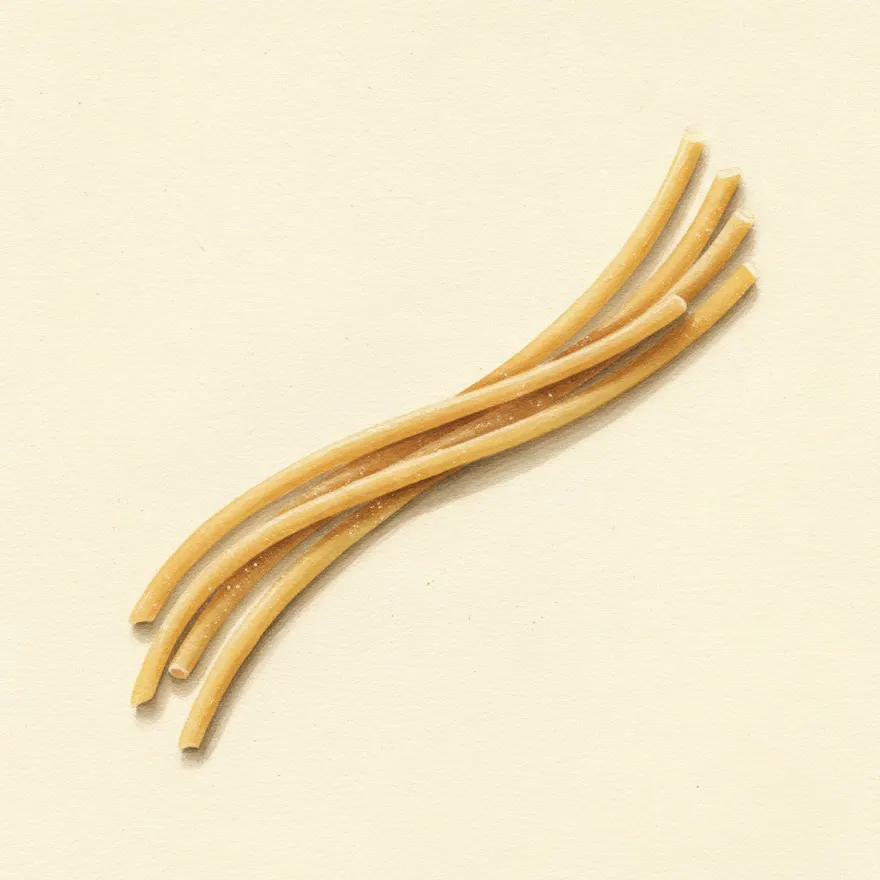
Pici are fat strands rolled by hand from a plain dough of flour and water. They come from the province of Siena, in the Val d'Orcia and Val di Chiana hill country of southern Tuscany. Egg is left out of the standard recipe, though Wikipedia notes some families add one. This was poverty cooking. Visit Tuscany describes pici as a farmer's dish, made when the pantry held only flour, oil, and salt, and Mama Florence compares its place in peasant diets to polenta in the north. The origin story reaches further back in popular telling. Several sources repeat the claim that pici descend from the Etruscans. The Pasta Project points to a banquet fresco in the Tomb of the Leopards at Tarquinia, where a servant carries a bowl of long irregular pasta. That link is speculation, reported as belief rather than evidence. What is certain is the local table: pici with aglione, a garlic and tomato sauce, and pici with cacio e pepe.
Treccani calls pici probably an expressive coinage (voce espressiva), while Wiktionary derives the word from appiccare and food writers such as Mama Florence link it to appiciare, described as the way the dough is rolled out. The derivation is contested, so no single story should be treated as settled.
What sauce it wants, and why
A pici strand is thick, soft, and slightly uneven, so it behaves more like a noodle with muscle than like spaghetti. That heft carries dense sauces. Aglione, a garlic and tomato sauce, clings to the rough hand-rolled surface. Toasted breadcrumbs in oil, the briciole treatment, lodge in the same irregularities. Game ragu works because the chew of the pasta matches slow cooked boar or duck. Light broths and delicate seafood waste the format. Pick sauces with grip, fat, or both.
Aglione·Cacio e pepe·Wild boar ragu·Tomato sauce
Classic plates: pici all'aglione, pici cacio e pepe, pici alle briciole.
No pici? Use these
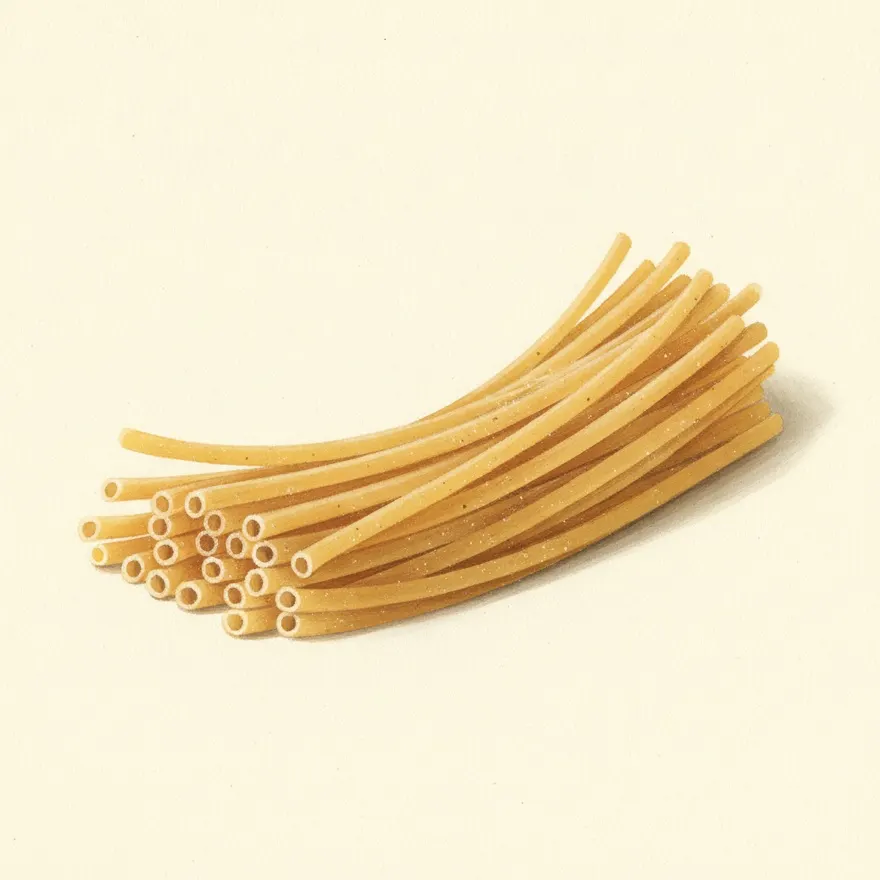
Closest swaps by sauce behavior, not by looks. The ones most easily confused with pici, and how they read.
Learn it from someone
- Giulia Scarpaleggia, Juls' Kitchen
Teaches hands-on Tuscan cooking at her family's kitchen studio in the Sienese countryside, market-to-table and seasonal classes that include rolling fresh pasta by hand. A cookbook author who has been writing about Tuscan food for over a decade.
People who teach this, listed because we think they are good at it. We take nothing for these.
Stay in the loop
From the Almanac
Updates from Pasta Almanac, when there is something worth sharing.