Conchiglioni
kon-kee-lee-OH-nee
Also known as jumbo shells, giant shells, large shells.
What it is
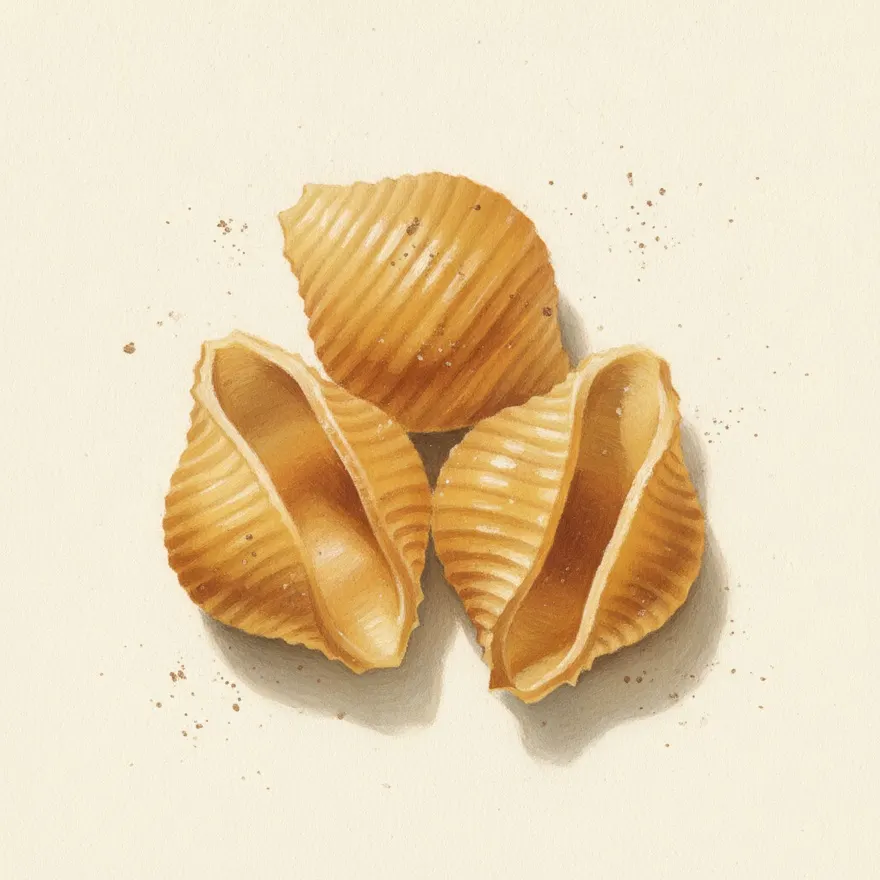
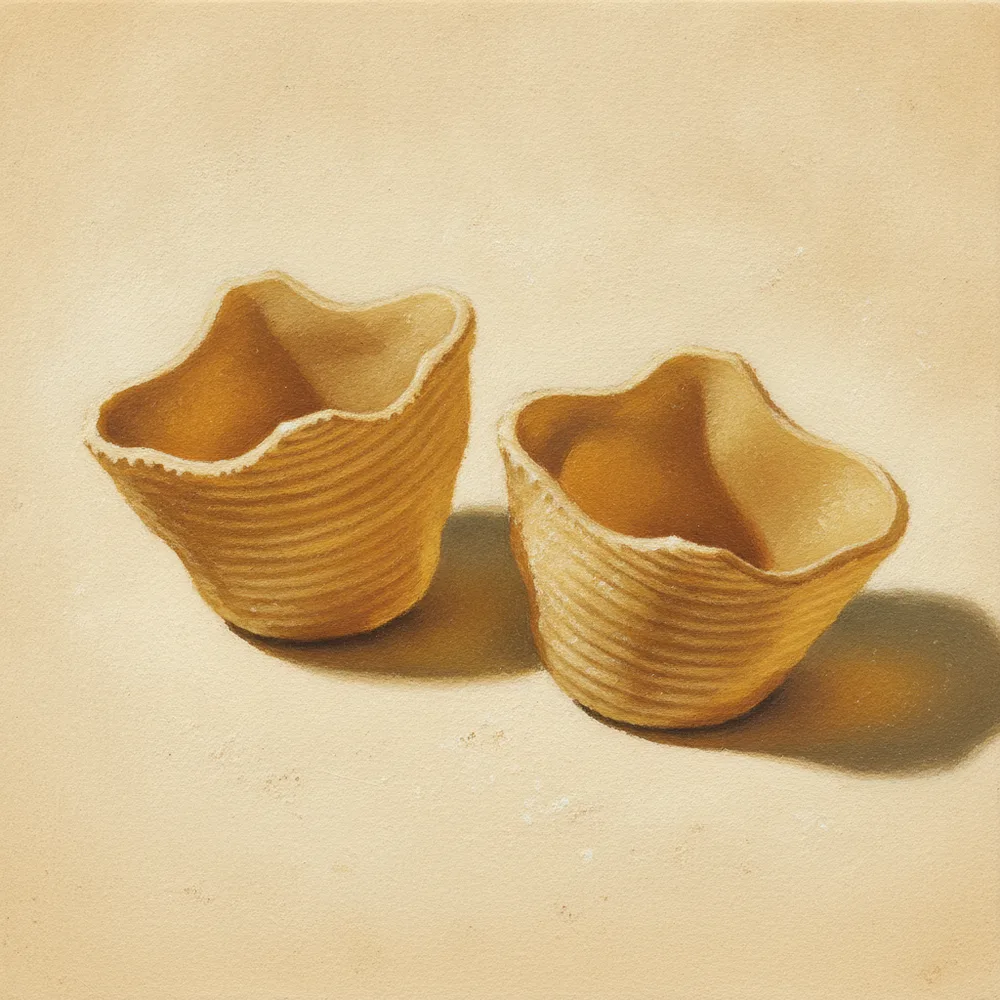
Conchiglioni are the largest size of conchiglie, the shell-shaped Italian pasta, made big enough to be stuffed and baked. The shell is designed so sauce and filling cling to the ridged, cupped surface. Conchiglie come in three sizes: the large conchiglioni, the standard conchiglie, and the small conchigliette, in both ridged and smooth forms. English sources trace conchiglie to southern Italy, where it was made from durum wheat semolina, and Italian sources note conchiglioni are especially popular in Campania, prepared with ragu, ricotta and spinach, or mozzarella and tomato. Because the ridged shell requires machine dies rather than hand shaping, it is a comparatively modern form.
Conchiglioni is the augmentative plural of conchiglia, the Italian word for seashell, formed by adding the -one suffix (here pluralized as -oni) to mean large shells. Conchiglia descends from Latin conchylium, from Ancient Greek konkhylion, a small mussel or shellfish.
What sauce it wants, and why
Conchiglioni are built to be stuffed and baked rather than tossed. The deep, cupped shell holds a filling like ricotta or a meat mixture, the open side keeps the cavity accessible for piping, and the ridged exterior grabs the sauce poured over the top. The large, sturdy walls hold their shape through baking so the filling stays sealed inside.
Classic plates: stuffed shells, conchiglioni ripieni al forno.
No conchiglioni? Use these
Closest swaps by sauce behavior, not by looks. The ones most easily confused with conchiglioni, and how they read.
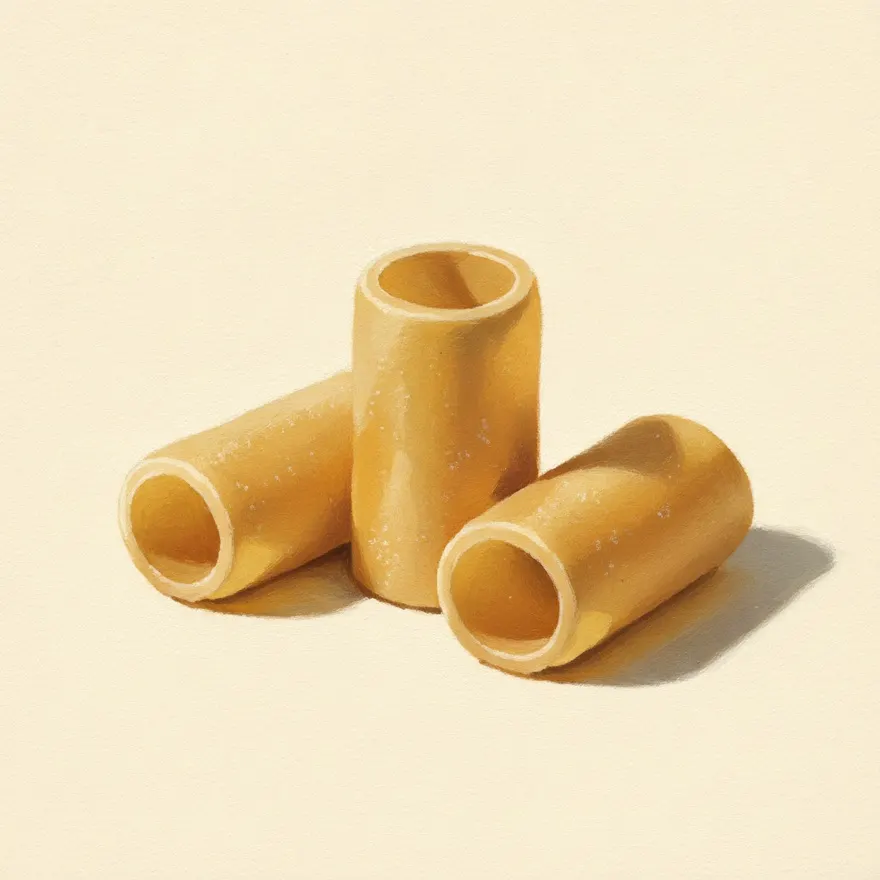
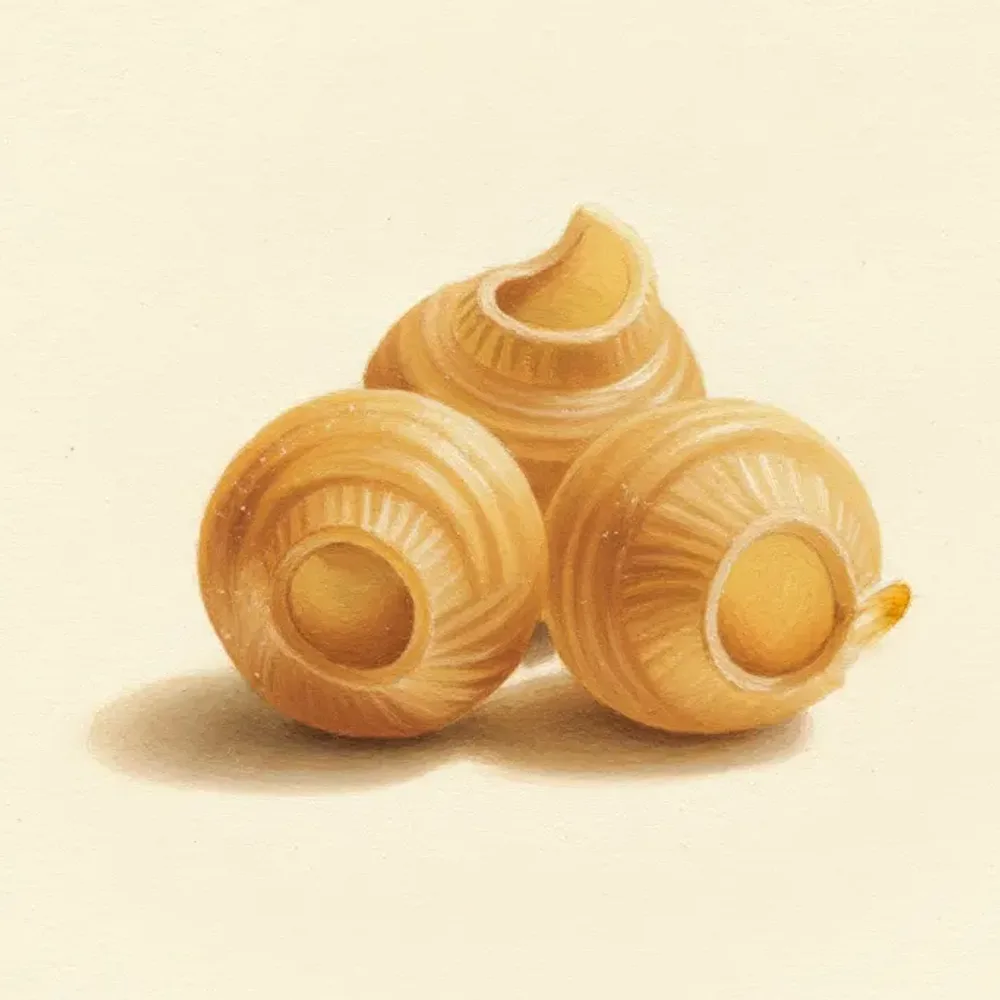
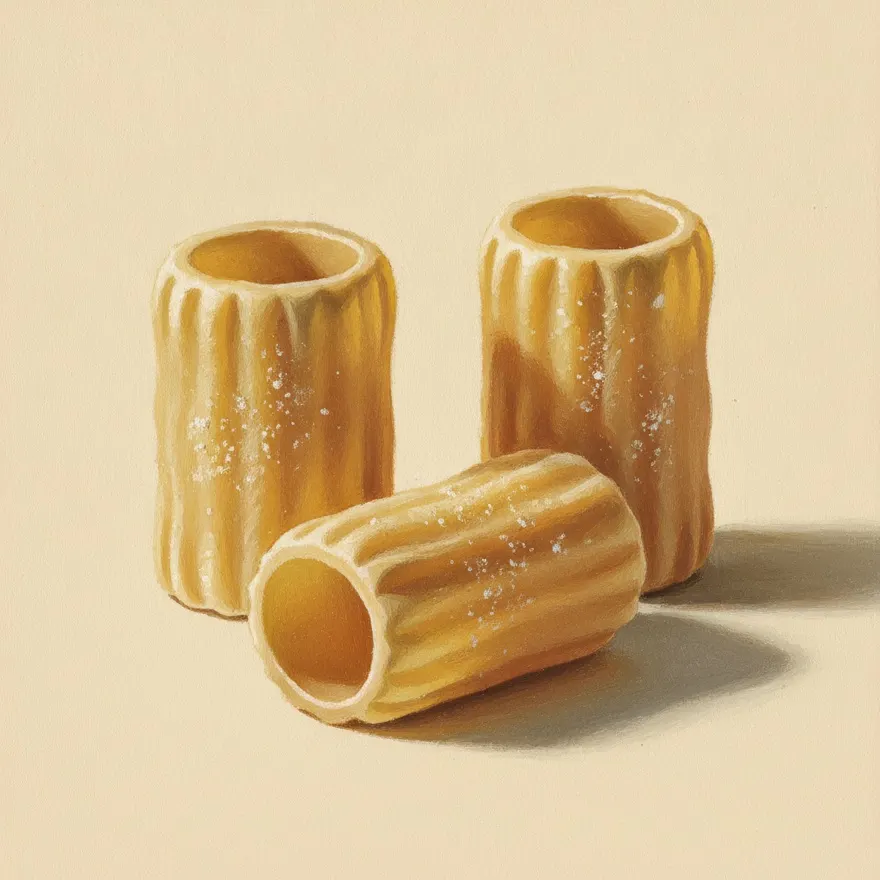
Easy to confuse with
Giant shells made to be stuffed and baked. Conchiglioni is a large ridged conch open along one side, while caccavelle is an even larger deep Gragnano bowl, close to a cup.
Stay in the loop
From the Almanac
Updates from Pasta Almanac, when there is something worth sharing.