Fusilli
fyoo-SILL-ee
Also known as rotini, spirals.
What it is
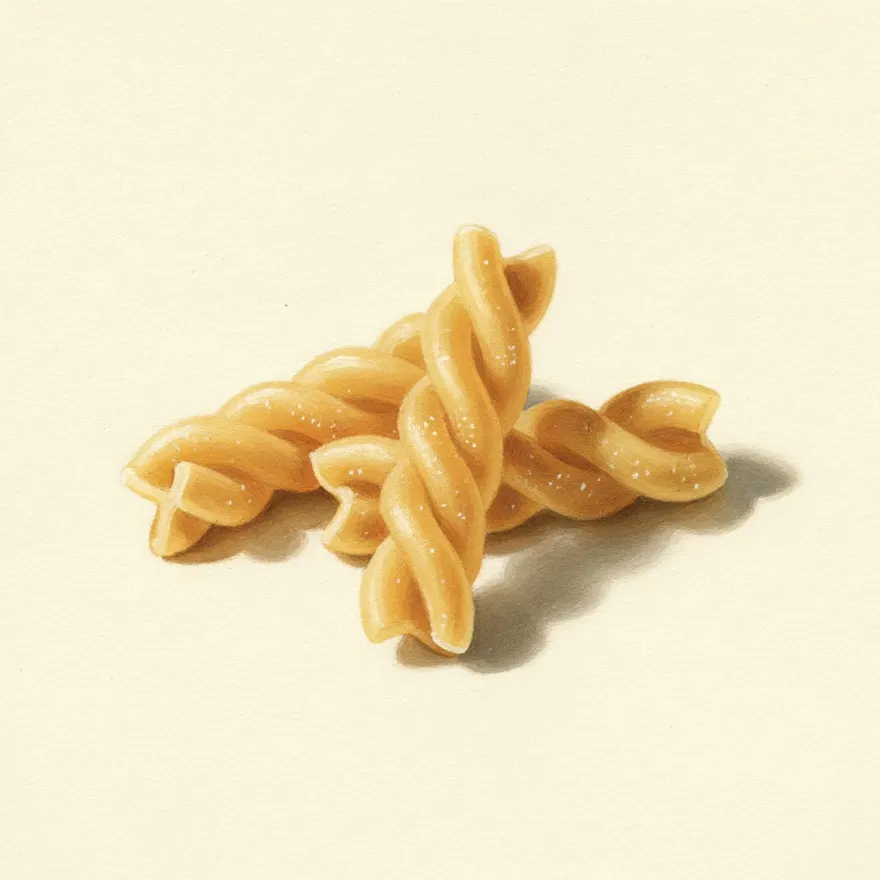
Fusilli began as a hand shape in southern Italy. Cooks in Campania, Basilicata, and Calabria pressed a strip of dough against a thin iron rod called a ferretto, often a repurposed knitting needle, and rolled it along the board until the dough wound into a spiral. The pasta took its name from the fuso, the spindle used for wool, which the twisting motion resembles. Each hand rolled piece came out slightly different, so home batches cooked unevenly. Mechanization is credited to Guido and Aurelio Tanzi, two Italian immigrants in New York whose 1924 machine turned out uniform spirals with a centered hole. Factory extrusion then carried the shape from village kitchens to supermarket shelves around the world. In Viggiano, in Basilicata, locals tell of dropping a long fusillo into boiling water to predict a baby's sex by whether it stands or lies flat. That is legend, not record, but it shows how deeply the spiral is rooted in the south.
From Italian fusillo, a diminutive of fuso, meaning spindle, from Latin fusus. Treccani classes it as a southern Italian word, named for the spinner's tool whose twisting motion the rolled dough mimics.
What sauce it wants, and why
A fusillo is a ribbon twisted into a helix, so sauce does not just coat it, it lodges in the grooves between the turns. That geometry gives the shape more surface per bite than a smooth tube, which is why thin tomato sauces and oil-based dressings that slide off penne stay put here. The spiral also grips solids, flecks of pesto, crumbled sausage, peas, so each forkful carries an even mix. It keeps its structure when baked or chilled, which makes it a default for casseroles and pasta salads.
Classic plates: fusilli al ragu napoletano, carnival fusilli with ragu and cacioricotta, fusilli pasta salad.
No fusilli? Use these
Closest swaps by sauce behavior, not by looks. The ones most easily confused with fusilli, and how they read.
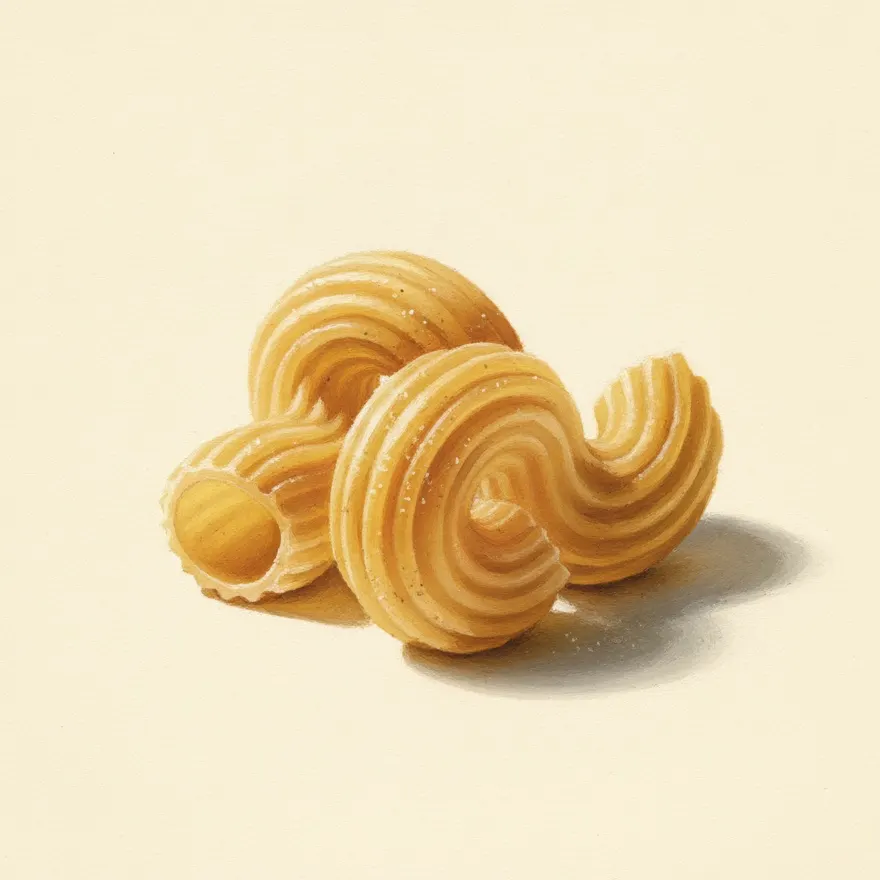

Fusilli vs Casarecce·Fusilli vs Trofie·Fusilli vs Busiate·Fusilli vs Cavatappi·Fusilli vs Gemelli·Fusilli vs Strozzapreti·Fusilli vs Vesuvio
Easy to confuse with
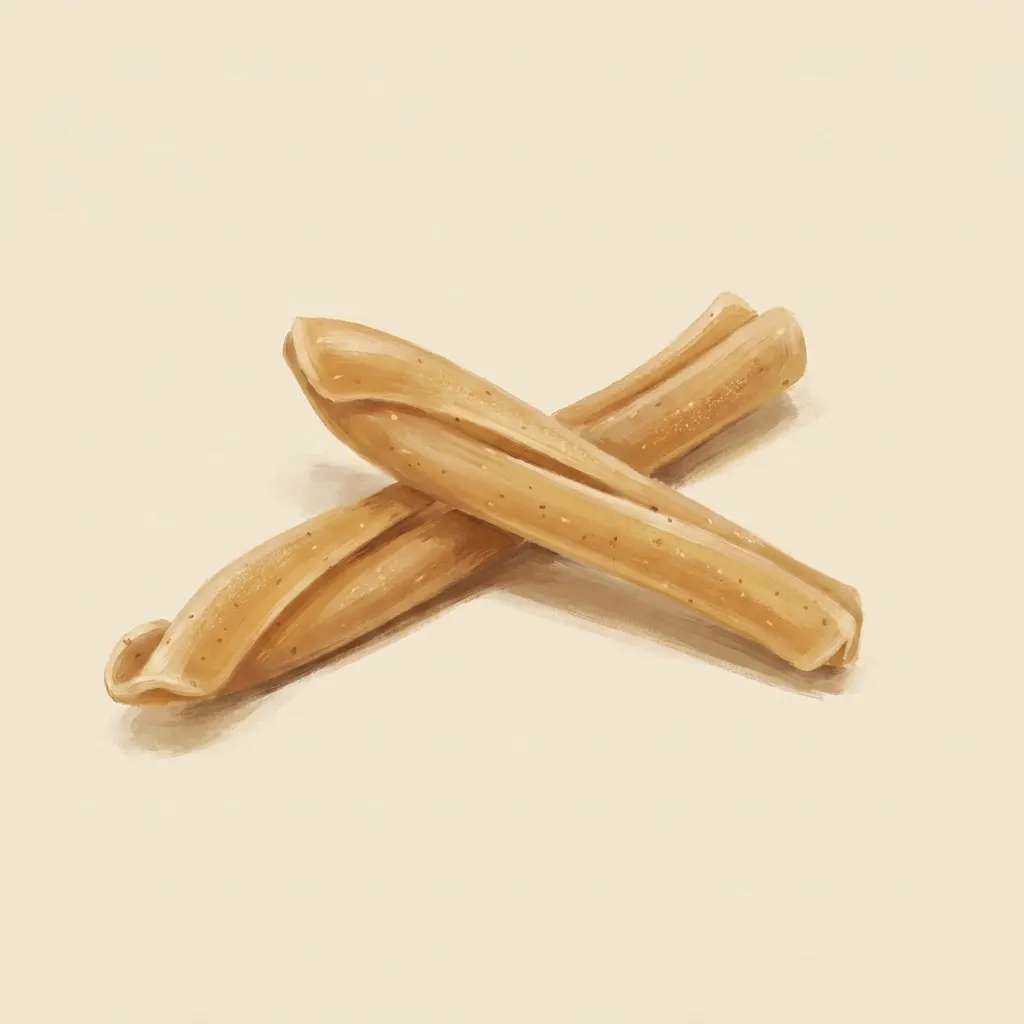
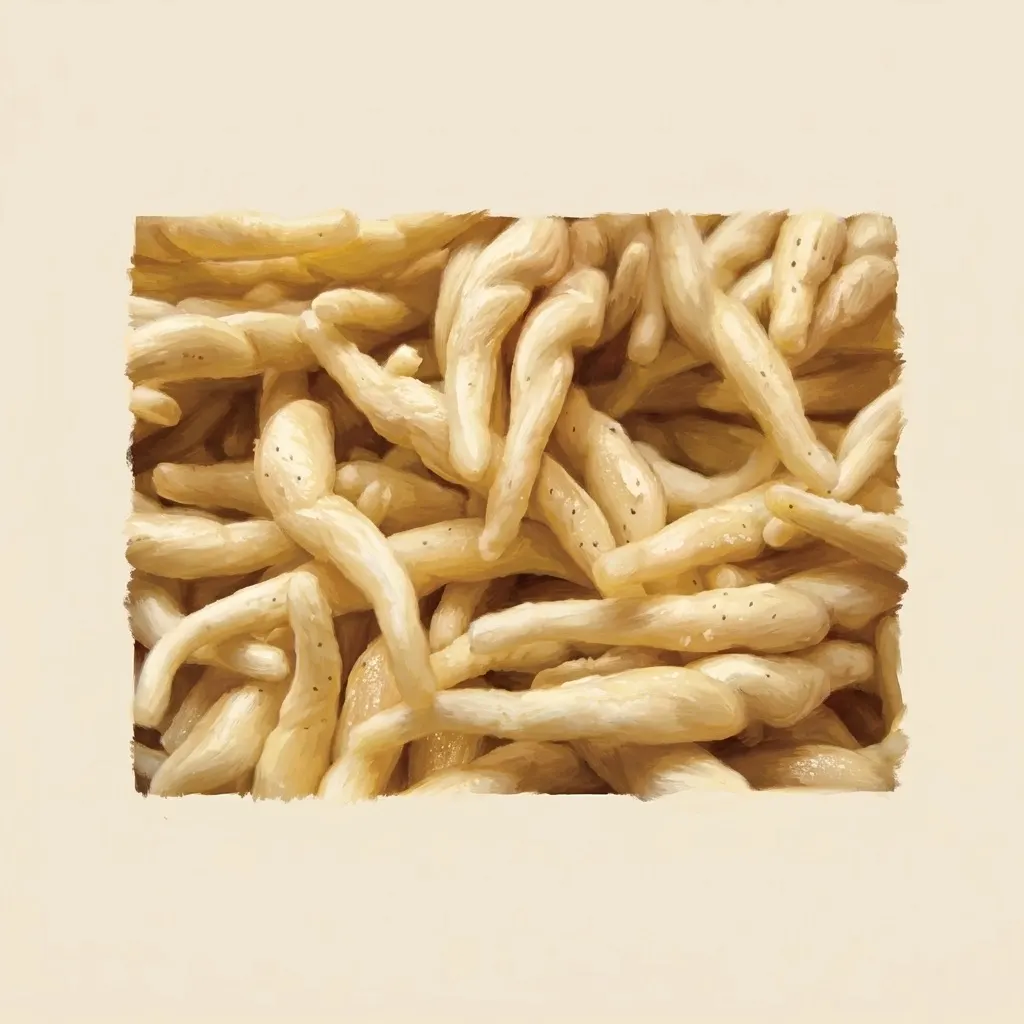
All are twists. Fusilli is a true corkscrew helix, gemelli looks like two strands wound together but is one S-strand twisted on itself, casarecce is a flat ribbon rolled into an open S-channel, and strozzapreti and trofie are hand-rolled and deliberately irregular.
Stay in the loop
From the Almanac
Updates from Pasta Almanac, when there is something worth sharing.