Penne
PEN-neh
Also known as mostaccioli, penne rigate, penne lisce.
What it is
Penne is one of the few pasta shapes with a paper trail. In 1865 Giovanni Battista Capurro, a pasta maker in San Martino d'Albaro near Genoa, patented a machine that cut tube pasta on the diagonal without crushing it. Before that, the angled cut was made by hand with scissors, which left ragged edges. Capurro's machine produced clean cuts at sizes running from about 3 centimeters, the mezze penne, to 5 centimeter penne. The name came from the steel pen nibs that were the standard writing tools of the day. The earliest penne were smooth. Ridged versions arrived later, sold as better at holding sauce, and the rigate cut is now the default on most shelves. Some sources place the shape's roots in southern Italy instead, and Gragnano makers in Campania produce it in volume, but the Genoa patent is the documented starting point.
Penne is the plural of the Italian penna, meaning pen or quill, itself from the Latin penna, a feather. The diagonal cut was meant to imitate the steel nib of the dip pens common in the 1800s.
What sauce it wants, and why
The diagonal cut is functional, not decorative. Each quill ends in an open point that scoops sauce as you stir, so the hollow center fills instead of staying empty. The tube gives every bite two surfaces, outside and inside, and medium-bodied sauces coat both. Ridges on the rigate version add grip for clinging tomato sauces like arrabbiata and for the cream in vodka sauce. Chunky vegetables and sausage crumbles lodge against the angled openings. Very thin broths drain out and oversized chunks stay outside the tube, so aim for sauces with some body.
Arrabbiata·Vodka sauce·Tomato sauce·Ragu·Alfredo
Classic plates: Penne all'arrabbiata, Penne alla vodka.
No penne? Use these
Closest swaps by sauce behavior, not by looks. The ones most easily confused with penne, and how they read.
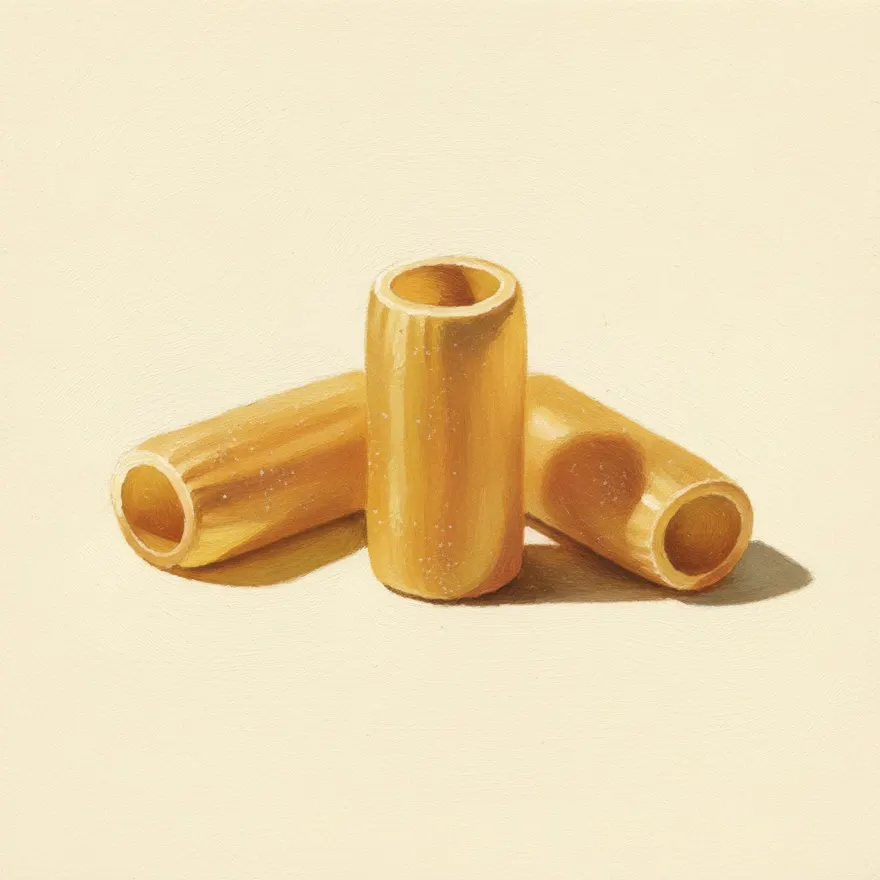

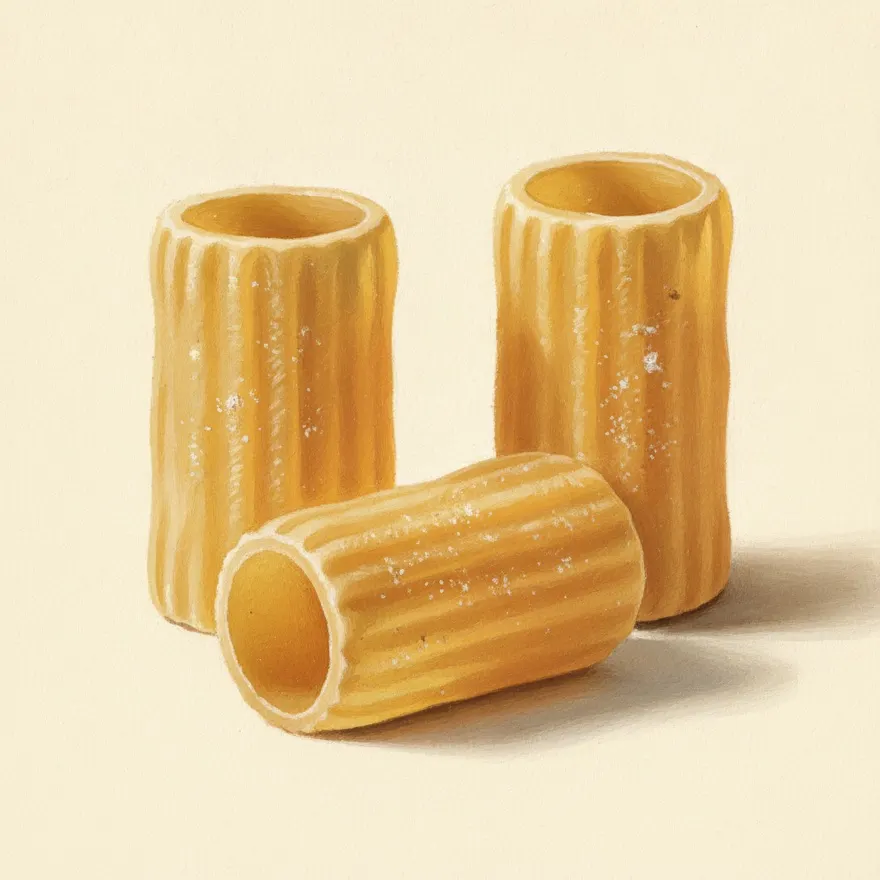
Penne vs Ziti·Penne vs Rigatoni·Penne vs Macaroni·Penne vs Mezze maniche·Penne vs Tortiglioni·Penne vs Sedani
Easy to confuse with
Ridged tubes. Rigatoni is wide and cut straight across, mezze maniche is a shorter rigatoni, tortiglioni carries spiraling ridges, sedani is slightly curved, and penne is cut on the diagonal to a point.
- Pasta shapes for cold salad: which hold, which fall apartA cold bowl flips the rules. With no heat to make the dressing cling, the shape does all the work, and not every shape can.
- Egg vs semolina: the two doughsAlmost every pasta is one of two recipes. The dough tells you the region, the texture, and the sauce.
- Why durum: the wheat that holds its biteThe gold color is the first clue. Durum is a different wheat from the one in bread, the hardest grown, and it is the reason good dried pasta keeps its bite in the water instead of going soft.
Stay in the loop
From the Almanac
Updates from Pasta Almanac, when there is something worth sharing.