Tacconi
tah-KOH-nee
Also known as taccozze, taccunelle, tacconelle, tacconcelli, taccozzelle.
What it is
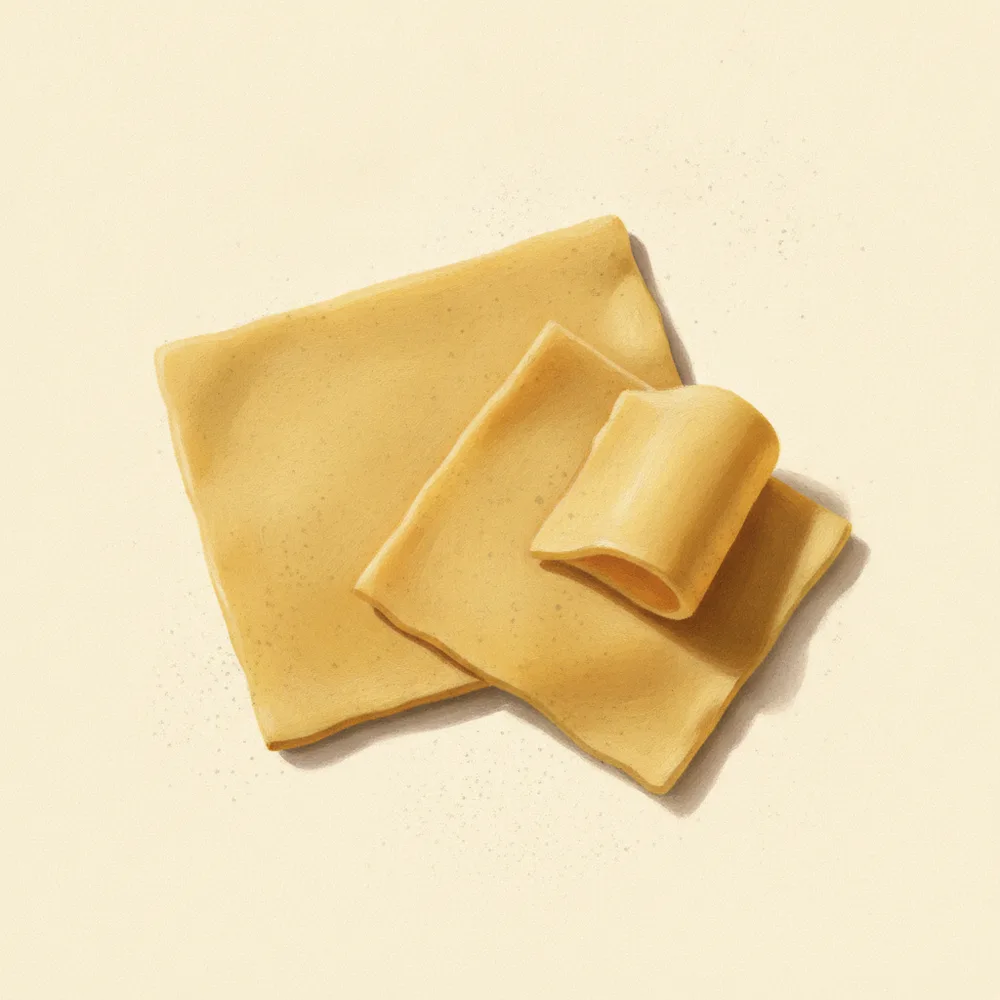
Tacconi are flat patches of dough cut into squares or lozenges, named for the leather toppe a cobbler once stitched over worn boots. They belong to the cucina povera of central and southern Italy, and the same shape changes its name from hill to hill: tacconelle and taccozze in Abruzzo and Molise, tacconi in the Marche. In the Marche the dough was stretched with cheaper alternative flours, fava bean or maize, to make scarce wheat go further for the whole family. Across the south the cut is boiled for soups with chickpeas, beans, or lentils, or dressed simply with oil and grated cheese.
From the dialect taccone, a patch of leather or cloth used to mend a worn shoe or garment, itself probably from tacca, a notch or nick. The squares and lozenges of dough resemble the cobbler's patches the word names. An older sense of taccone is a shoe heel (tacco), and one Marche tradition instead ties the name to the heavy heels on farmers' boots around Ascoli Piceno.
What sauce it wants, and why
A flat patch of dough catches sauce on its broad faces and sits well in brothy legume dishes, which is its oldest home. It takes a plain pomodoro, a meat ragu, or a simple oil-and-cheese dressing equally, and the broader cut stands up to chunky vegetable sauces. In Abruzzo and the south it is most often dropped straight into chickpea or bean soups.
Classic plates: tacconelle e ceci, taccozze e lenticchie, tacconi al pomodoro.
No tacconi? Use these
Closest swaps by sauce behavior, not by looks. The ones most easily confused with tacconi, and how they read.
Easy to confuse with
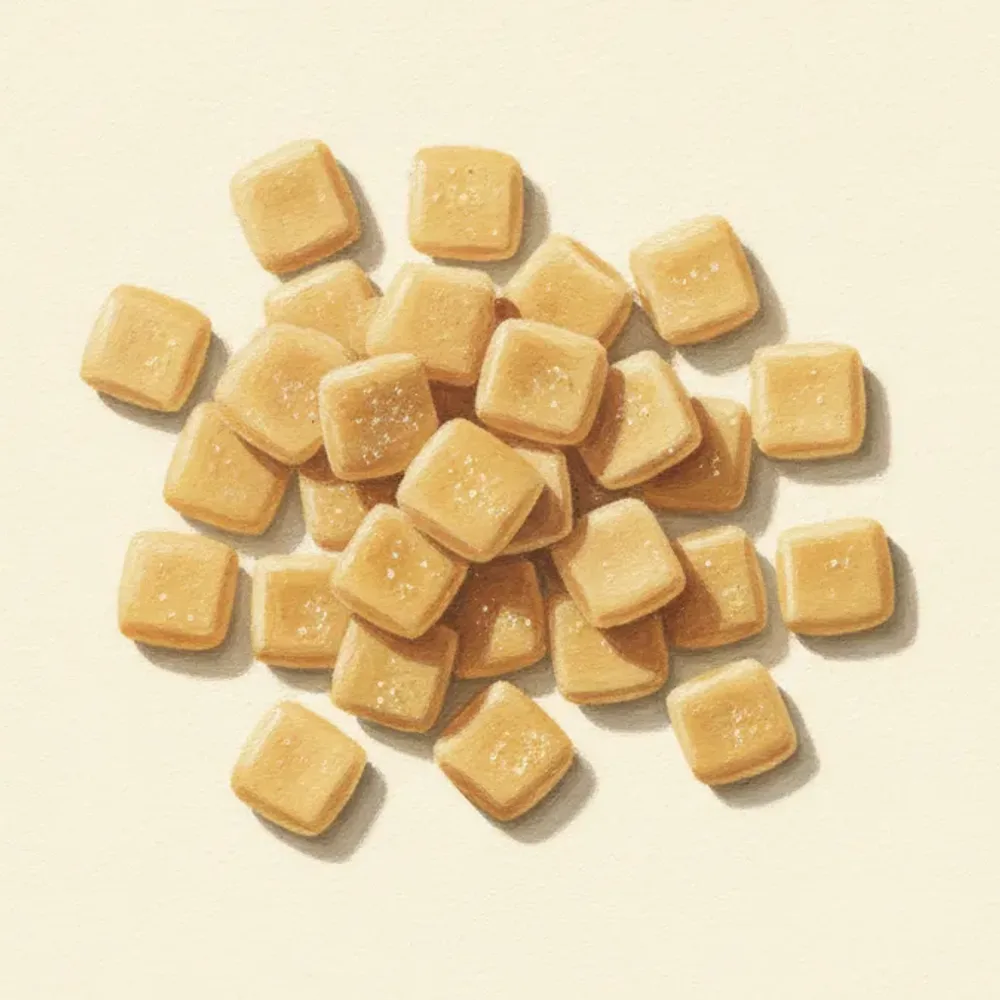
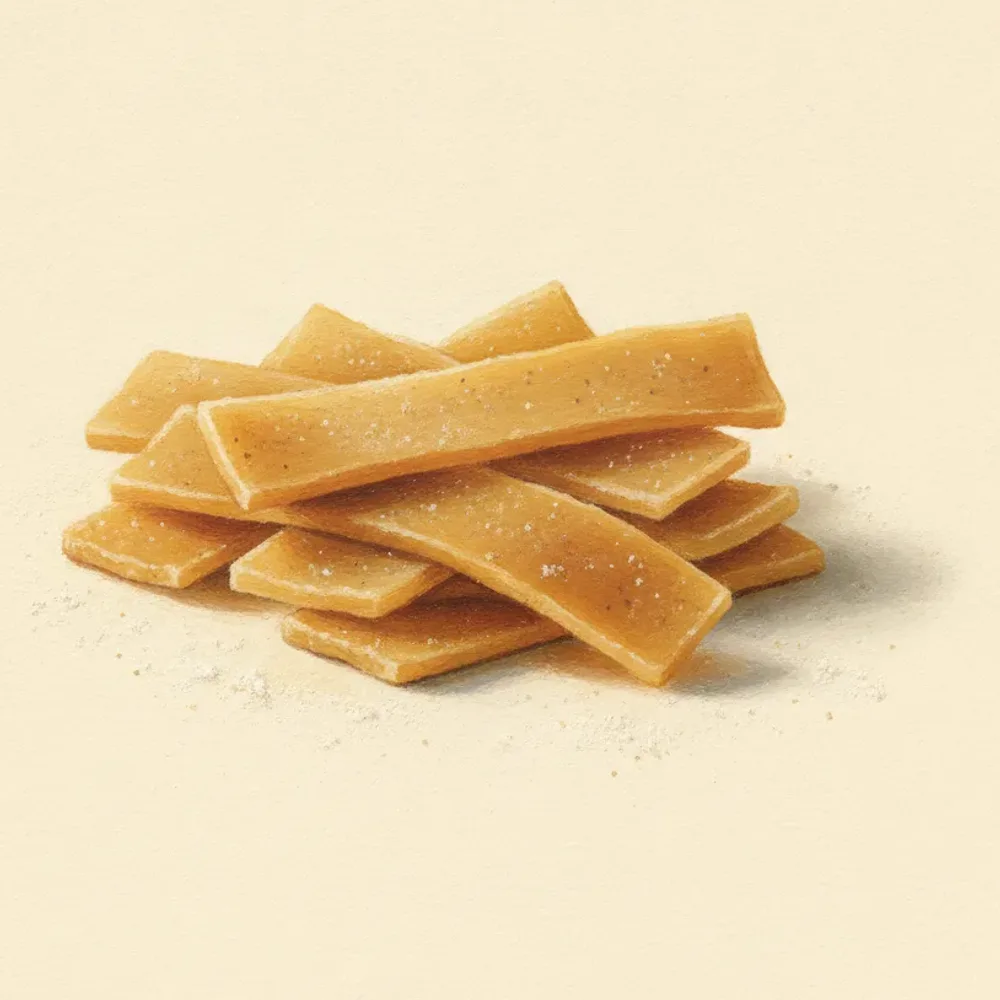
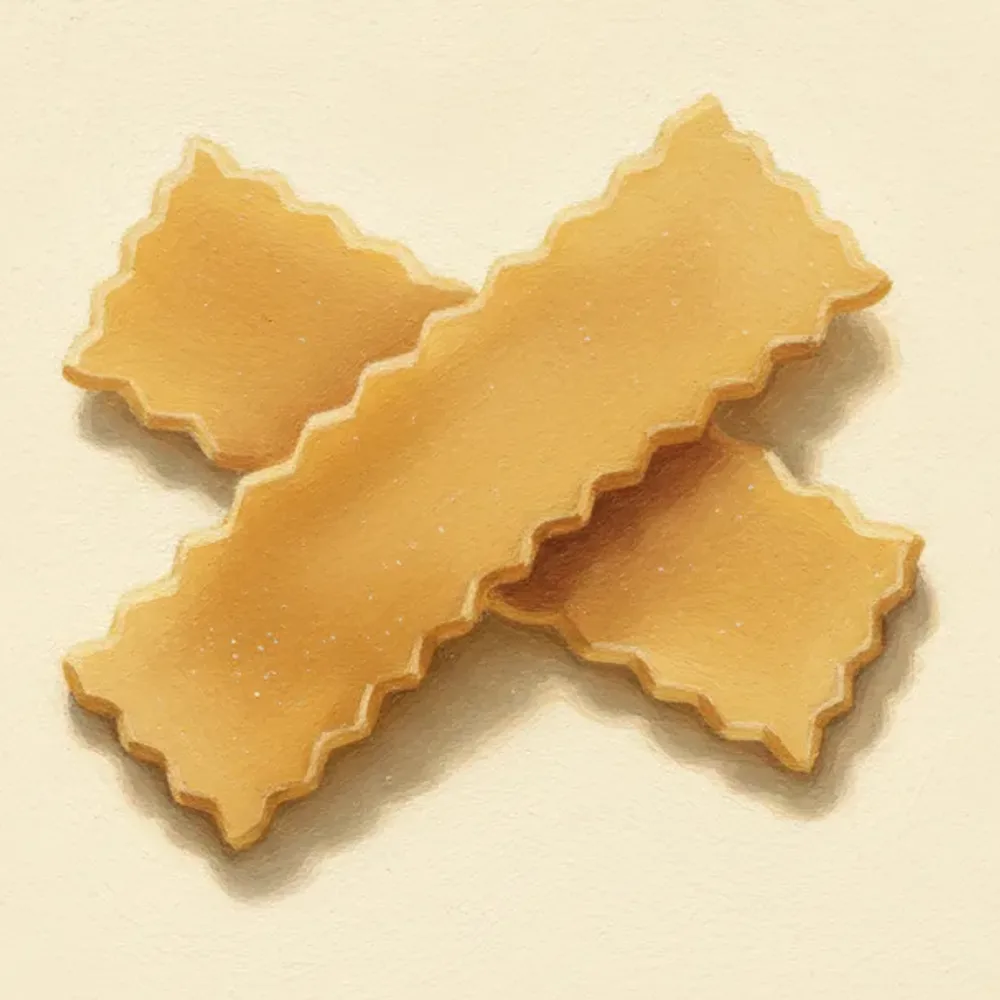
Flat cut pieces of sheet pasta. Maltagliati are irregular offcuts, quadrucci little squares for broth, tacconi larger squares or diamonds, and sagnarelli rectangles with fluted crimped edges.
Newsletter
Pasta mail
A new shape now and then, plus whatever pasta rabbit hole we fell down lately. No spam, promise.