Strascinati
strah-shee-NAH-tee
Also known as strascinate, strascenate, strascinet.
What it is
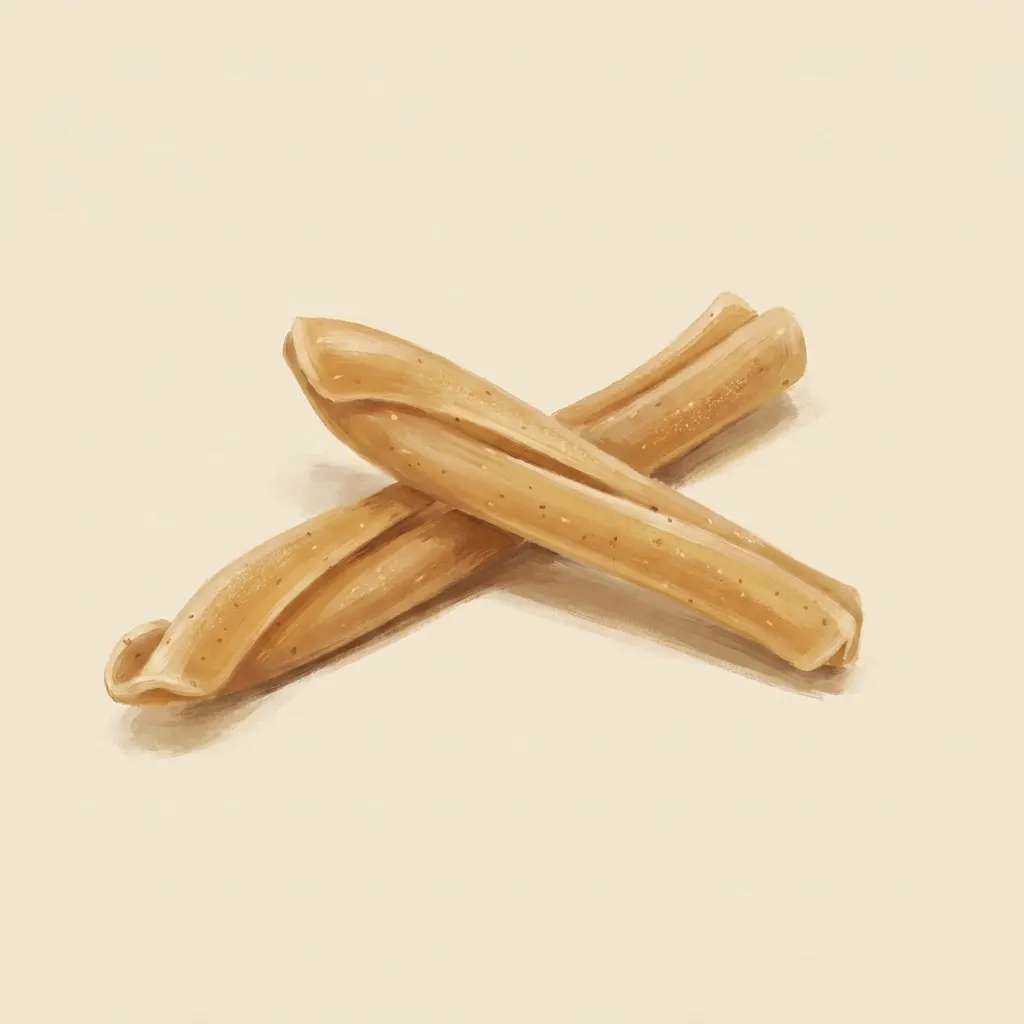
Strascinati take their name and their form from a single gesture: a small piece of semolina dough dragged across a wooden board, traditionally with three fingers or the rounded tip of a knife, until it stretches into a thin, rough oval. They belong to the hand-formed peasant pastas of Basilicata and Puglia, made from nothing but durum wheat semolina and water. Unlike their cousin orecchiette, which is turned over to form a hollow dome, strascinati stay flat and open, and run larger. In Basilicata they are a Sunday format, often dressed with a meat ragu of lamb or local pork sausage.
From the Italian verb strascinare, to drag, itself derived from trascinare (Latin traginare, from trahere, to draw) with the intensive prefix s-; strascinare carries the sense of dragging something across the ground with force. The shape is named for the way each piece of dough is dragged across the board.
What sauce it wants, and why
The rough, dragged face and slightly cupped form catch and hold loose, rustic dressings. Tomato and bitter greens cling to the porous surface, while meat ragu with grated cacioricotta settles into the open hollow. The shape is built for the chunky vegetable and ragu sauces of Lucanian and Apulian tables rather than smooth coatings.
Classic plates: strascinati with cime di rapa, strascinati al ragu alla potentina.
No strascinati? Use these
Closest swaps by sauce behavior, not by looks. The ones most easily confused with strascinati, and how they read.


Easy to confuse with
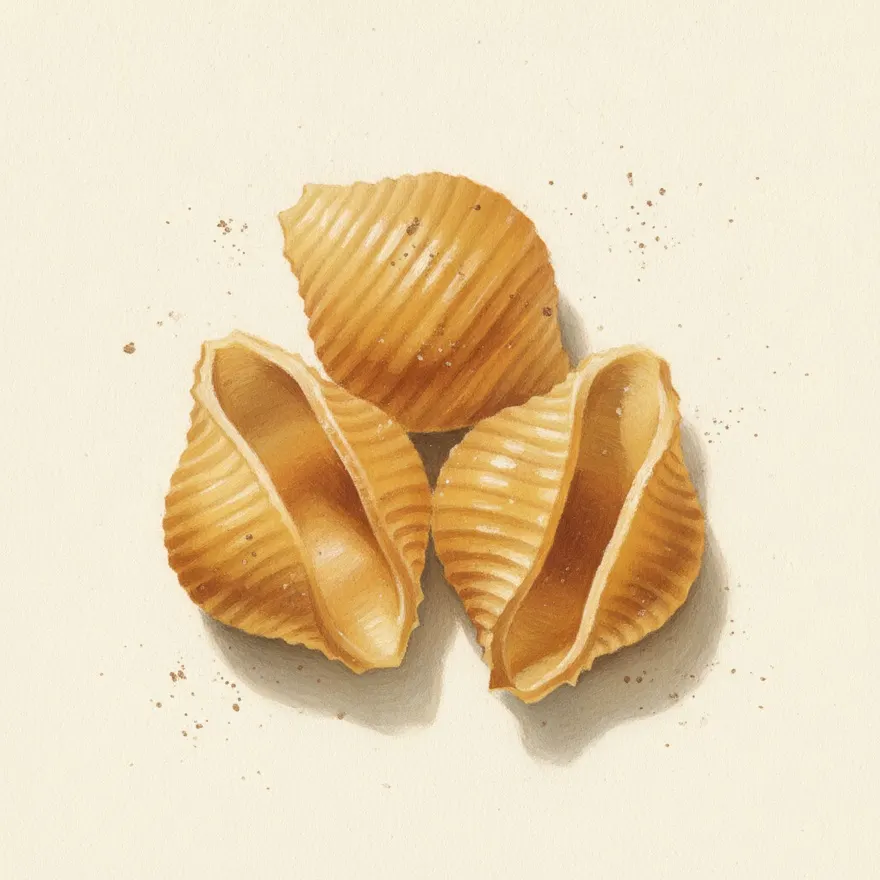
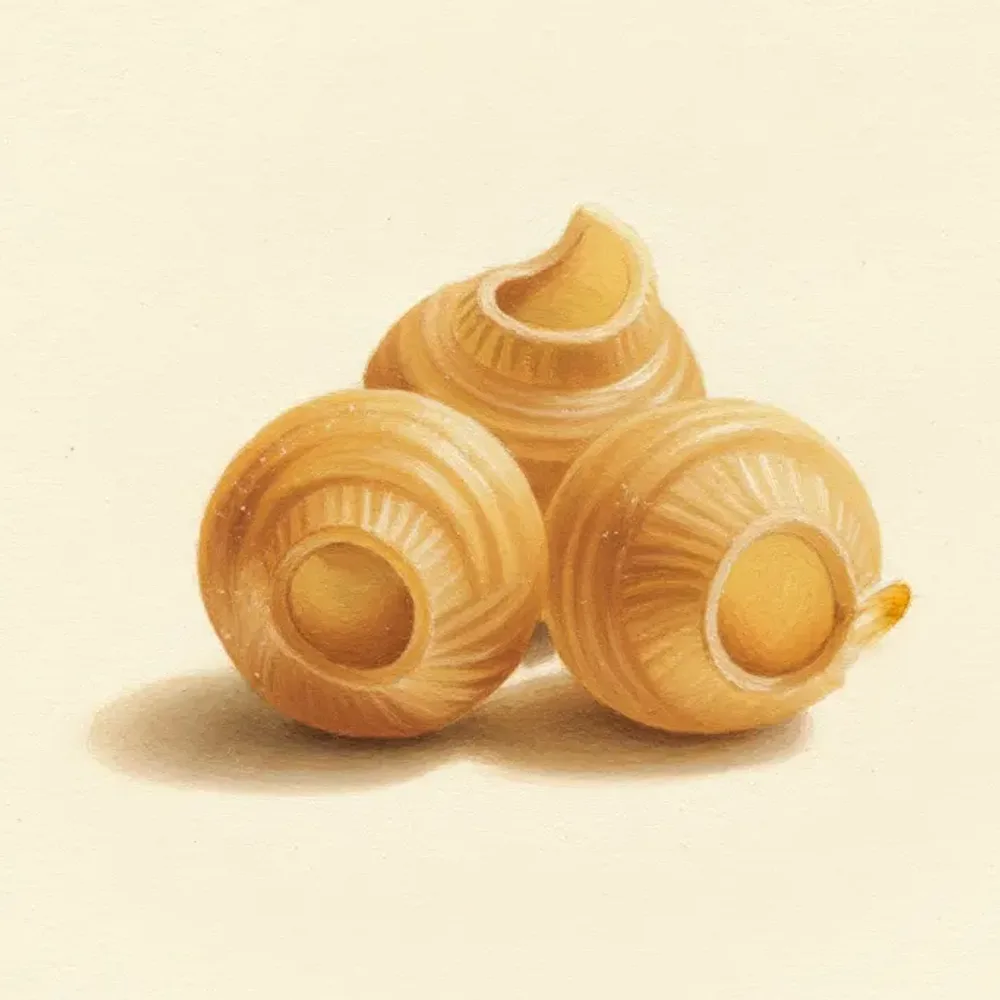
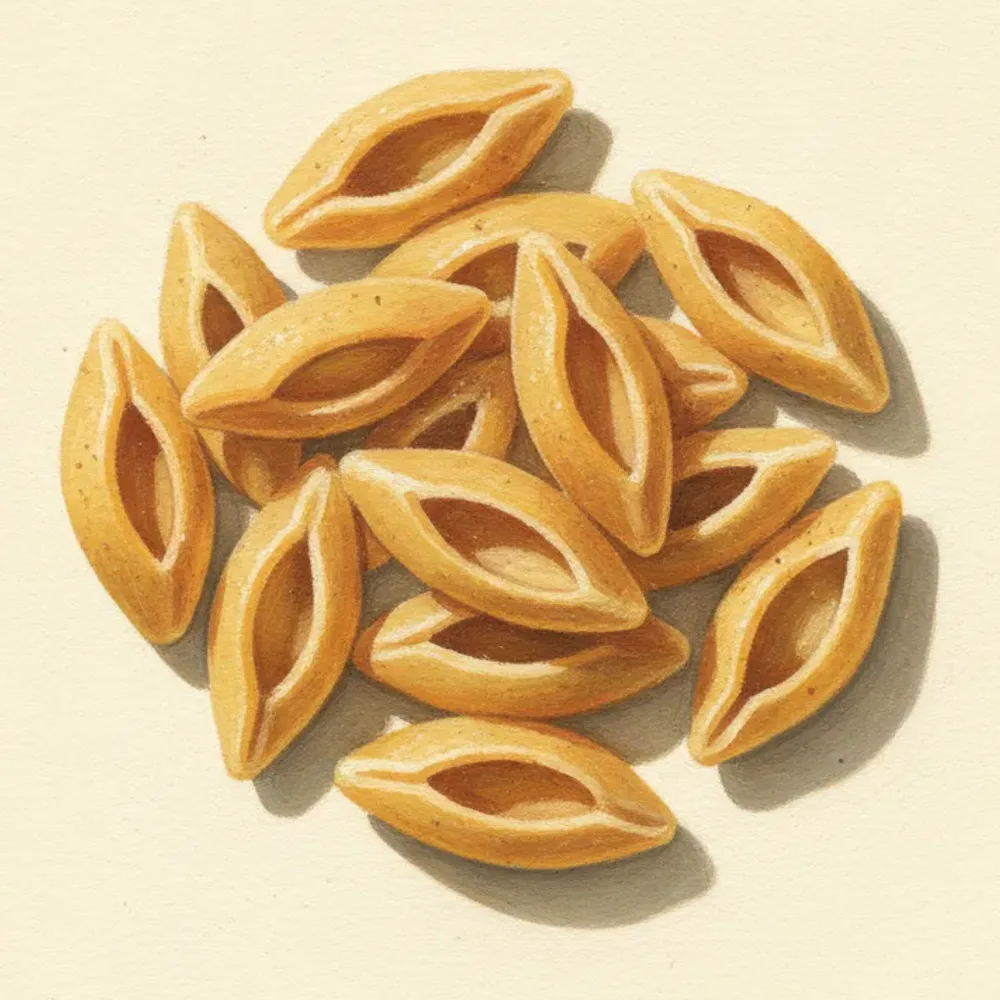
Cupped or dragged. Conchiglie is a ridged shell, lumache a snail with one opening, orecchiette a smooth concave ear, cavatelli a small rolled hull with a hollow, capunti a longer open pod dragged with several fingers, and strascinati a flat dragged oval.
Newsletter
Pasta mail
A new shape now and then, plus whatever pasta rabbit hole we fell down lately. No spam, promise.