Gemelli
jeh-MEL-lee
What it is
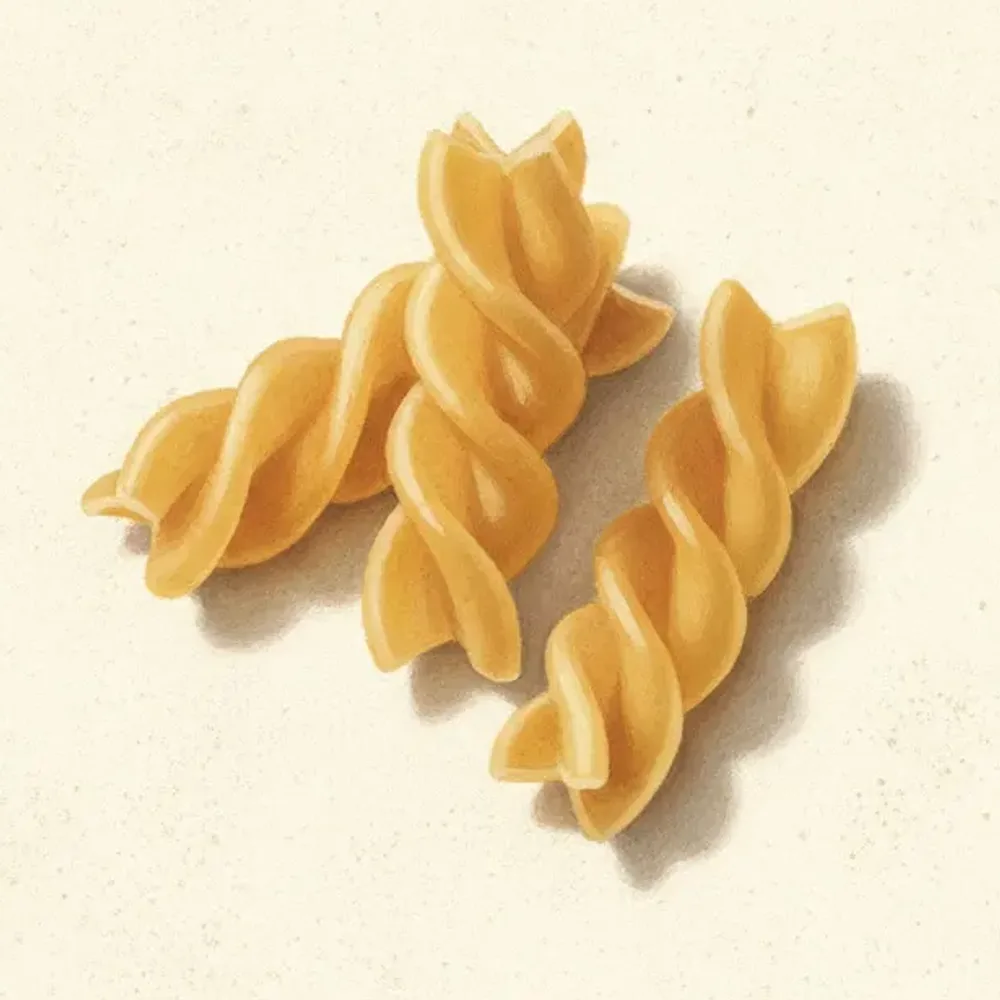
Gemelli runs on a trick of the eye. Each piece looks like two strands of spaghetti wound around each other. It is actually one strand. The dough leaves the die with an S shaped cross section, and that single ribbon is twisted into a tight helix. The lobes of the S read as two separate ropes, so the eye sees twins where there is only one. The name plays along: gemelli is Italian for twins. The shape has no medieval backstory. It belongs to the factory era, when extrusion presses made complicated twists cheap to produce at scale. DeLallo and the food history site Chef Mandala both trace it to Puglia, the breadbasket of the south, though the attribution is thin and Wikipedia assigns it no region at all. DeLallo also notes that some factories instead wrap two real strands together before cutting. Most dried versions from major brands are the single folded strand, cut short at around 35 millimeters.
Gemelli is Italian for twins, the plural of gemello, from Latin gemellus, a diminutive of geminus, twin. The name describes the shape apparent pair of intertwined strands.
What sauce it wants, and why
The helix works like fusilli with the volume turned down. Sauce settles into the groove that spirals along each piece, so every bite carries a coating without needing a hollow center. Because the strand is solid, gemelli stays dense and chewy where tubes go slack, and it holds al dente texture through baking or a second toss in the pan. Pesto and smooth tomato ride the channel evenly, and chopped vegetable sauces lodge in the twist. Very chunky meat ragus can overwhelm it, since the pieces are small and there is no cavity to trap larger bits.
Classic plates: pasta salads, baked pasta casseroles, gemelli with pesto.
No gemelli? Use these
Closest swaps by sauce behavior, not by looks. The ones most easily confused with gemelli, and how they read.

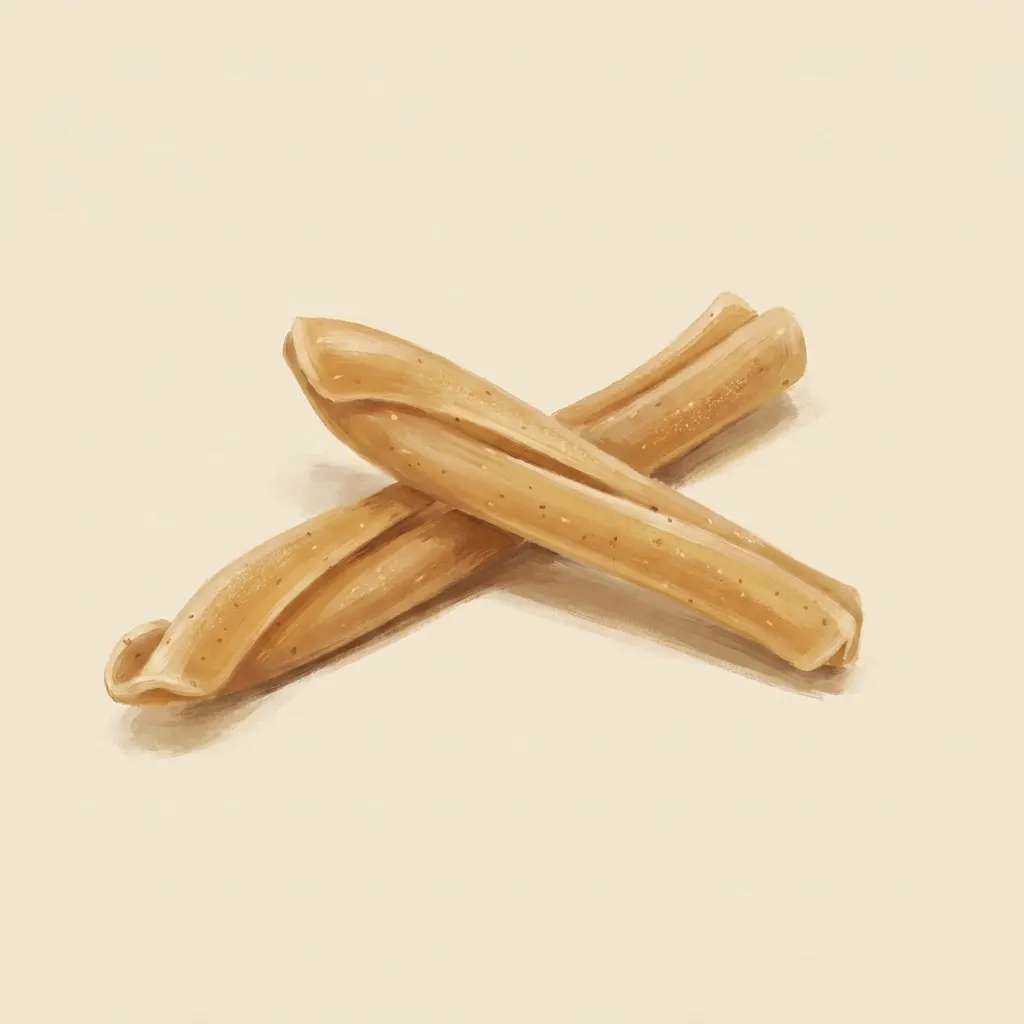
Gemelli vs Casarecce·Gemelli vs Trofie·Gemelli vs Fusilli·Gemelli vs Strozzapreti
Easy to confuse with
All are twists. Fusilli is a true corkscrew helix, gemelli looks like two strands wound together but is one S-strand twisted on itself, casarecce is a flat ribbon rolled into an open S-channel, and strozzapreti and trofie are hand-rolled and deliberately irregular.
Stay in the loop
From the Almanac
Updates from Pasta Almanac, when there is something worth sharing.