Busiate
boo-zee-AH-teh
Also known as busiati, busa.
What it is
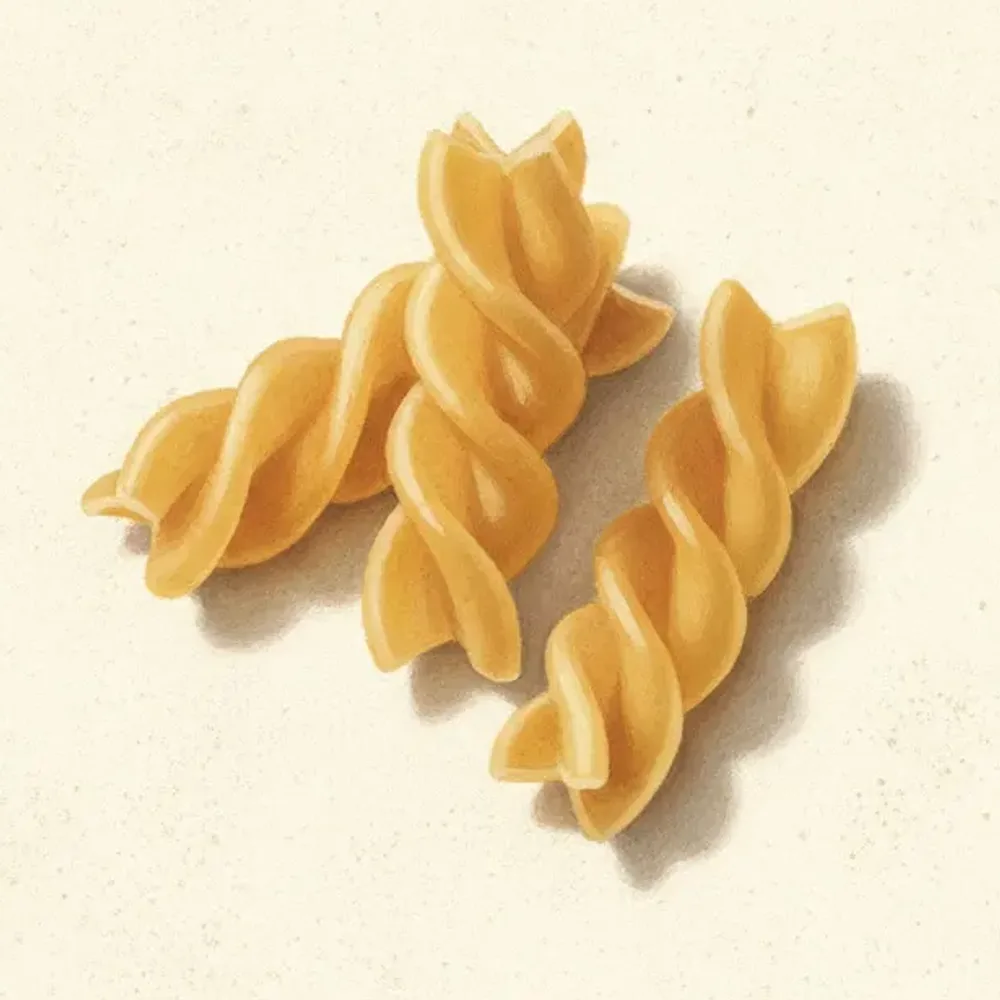
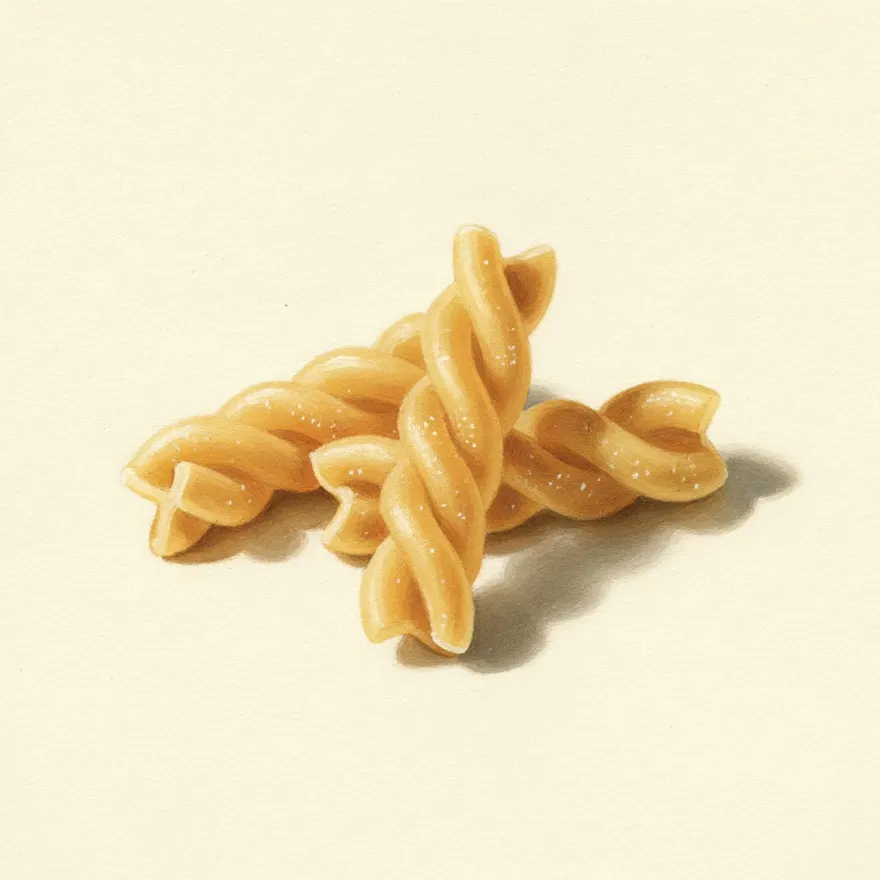
The dough is wound around a thin reed and slid off as a long coiled spring, a shape one cook likens to an old telephone cord. That reed, a stiff grass stem called busa, gave busiate both its form and its name in the countryside around Trapani in western Sicily. Trapanese home cooks later swapped the grass for a knitting needle to make the same twist. The tradition is old. Several accounts tie busiate to the Arab influence on Sicilian cooking, and the shape has been made by hand for generations in Trapani homes. Its signature partner is pesto alla trapanese, a raw sauce of almonds, tomatoes, garlic, and basil that locals link to Genoese ships once calling at the port of Trapani. Busiate entered the Zingarelli Italian dictionary in 2025.
The name comes from busa (also buso), the Sicilian word for the stem of Ampelodesmos mauritanicus, a wiry Mediterranean grass also called disa or diss grass. Cooks wound the dough around this reed to shape each strand, and the pasta took its name from the tool. In Trapani the same word named a domestic knitting needle used for wool and cotton, which later replaced the grass stem. Some accounts trace busa further back to an Arabic root, reflecting the long Arab presence in western Sicily.
What sauce it wants, and why
The long twist works like a spring. Each loop opens a channel that catches the almond and tomato pesto trapanese, and the raised ridges hold the chopped almonds and garlic against the strand. Because the coil runs the length of the pasta, sauce clings along the whole piece instead of sliding off. The spiral grips, so a thick raw sauce travels with every forkful rather than pooling at the bottom of the bowl.
Classic plates: busiate con pesto alla trapanese.
No busiate? Use these
Closest swaps by sauce behavior, not by looks. The ones most easily confused with busiate, and how they read.

Easy to confuse with
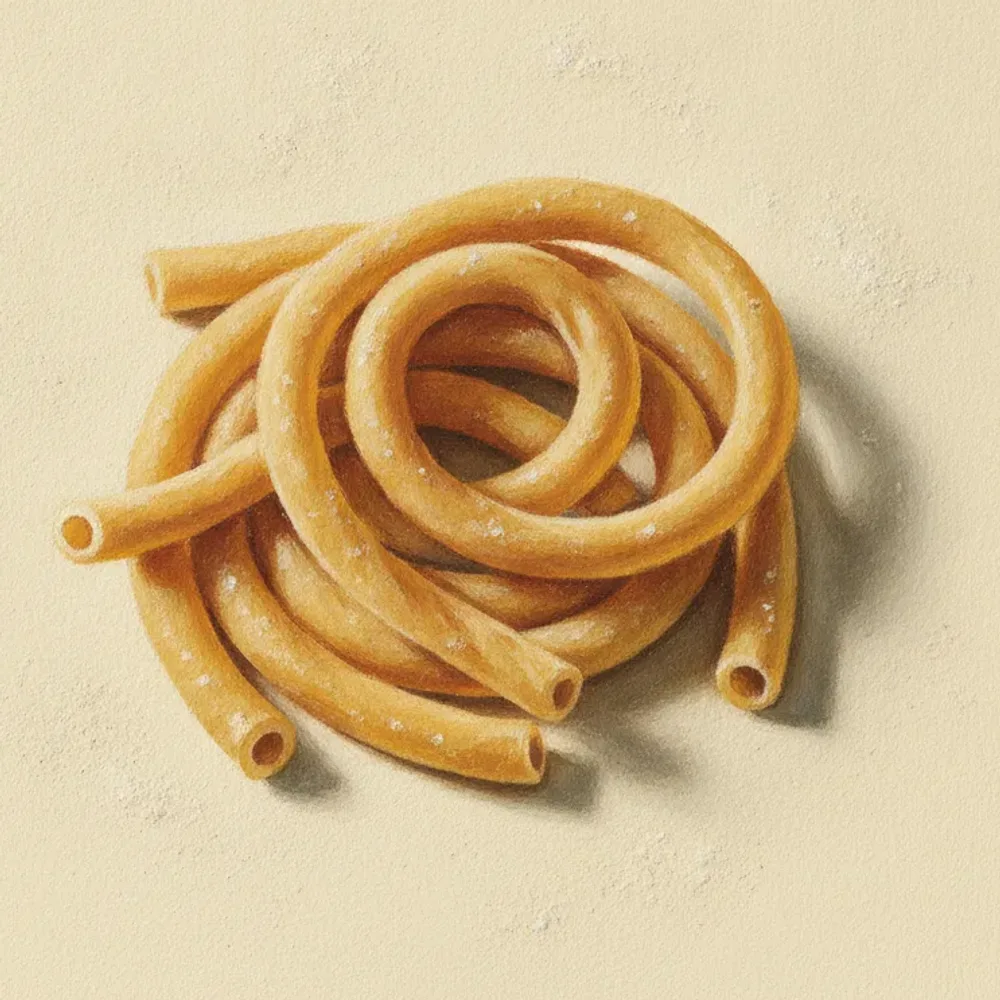
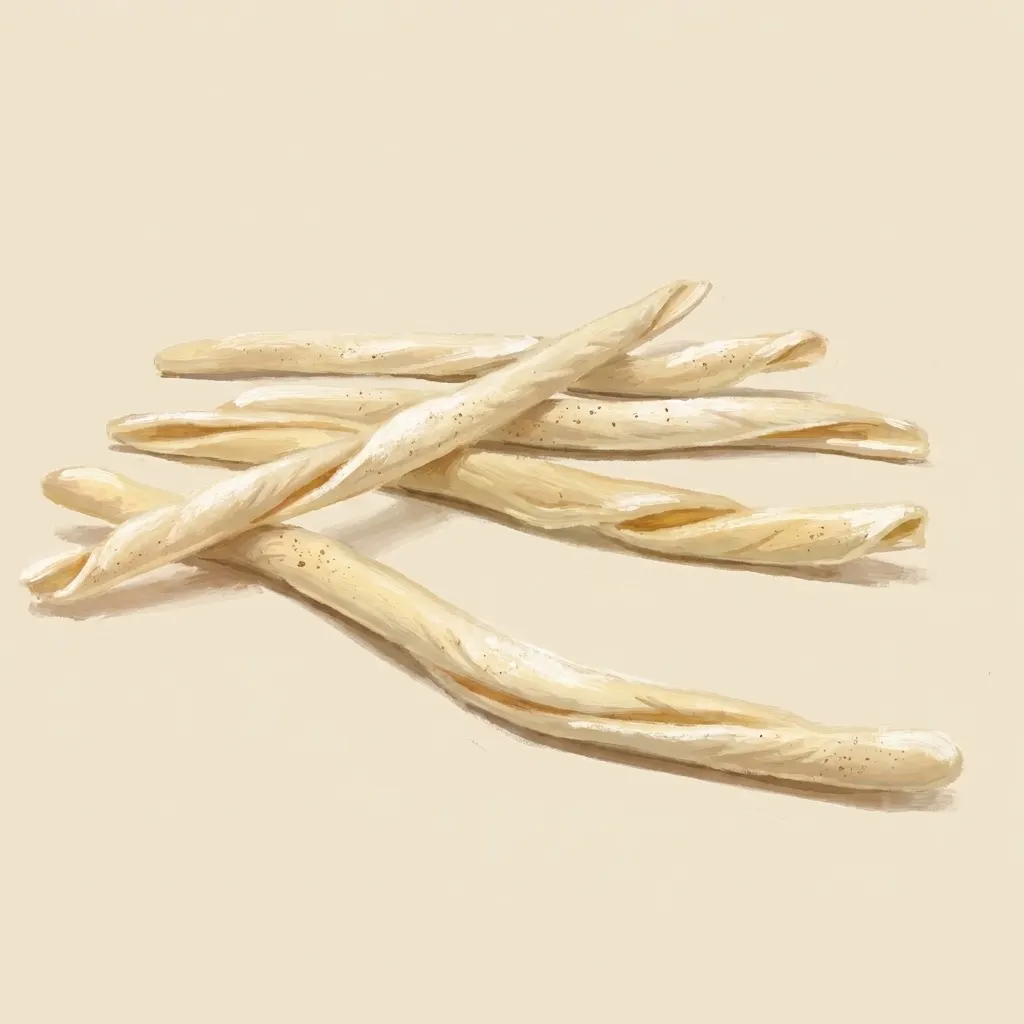
Strands formed around a thin iron rod, the ferretto. Maccheroni al ferretto is the umbrella shape, fileja the short Calabrian rolled spiral, and busiate the long Sicilian corkscrew coiled around a reed.
Stay in the loop
From the Almanac
Updates from Pasta Almanac, when there is something worth sharing.