Rotelle
roh-TEL-leh (Italian IPA: /roˈtɛl.le/)
Also known as ruote, wagon wheels.
What it is
Rotelle is a machine-age shape. De Cecco groups it with the pasta forms that copied mechanics and the automotive industry in the early twentieth century, alongside radiatori and lancette. Wikipedia dates the shape to about 1900 and points, on thin sourcing, to Apulia. Either way, no nonna rolled the first one. A spoked wheel only exists because an extrusion die can produce it. Hub, spokes, and ridged rim all leave the die together, formed in one pass. That makes the shape a showpiece for the die maker as much as a vehicle for sauce. In the United States the wheel found a second life as kid food. Importers and brands sold it as wagon wheels, and Barilla still pitches its Mini Wheels as a kid favorite. One warning for shoppers: the name is not stable. Ronzoni sells a corkscrew under the rotelle label, so check the picture, not the word, when you buy.
Rotelle is the plural of rotella, Italian for a small wheel, from Late Latin rotella, a diminutive of Latin rota, meaning wheel. The pasta name simply means little wheels.
What sauce it wants, and why
The wheel works like a small net. Garofalo notes that condiments reach every millimetre and stay trapped between the full and empty parts of the shape, so diced vegetables and crumbles of meat lodge between the spokes instead of sliding off. That is why chunky sauces and pasta salads suit it: each wheel carries its own cargo, and the shape holds up without squashing during cooking, per Wikipedia. De Cecco points it at tomato sauce with or without meat, minestrone, and cold salads. Smooth, thin sauces waste the architecture.
Classic plates: cold rotelle pasta salads, minestrone and broth soups, ruote con salsa e parmigiano, rotelle with two cheeses.
No rotelle? Use these
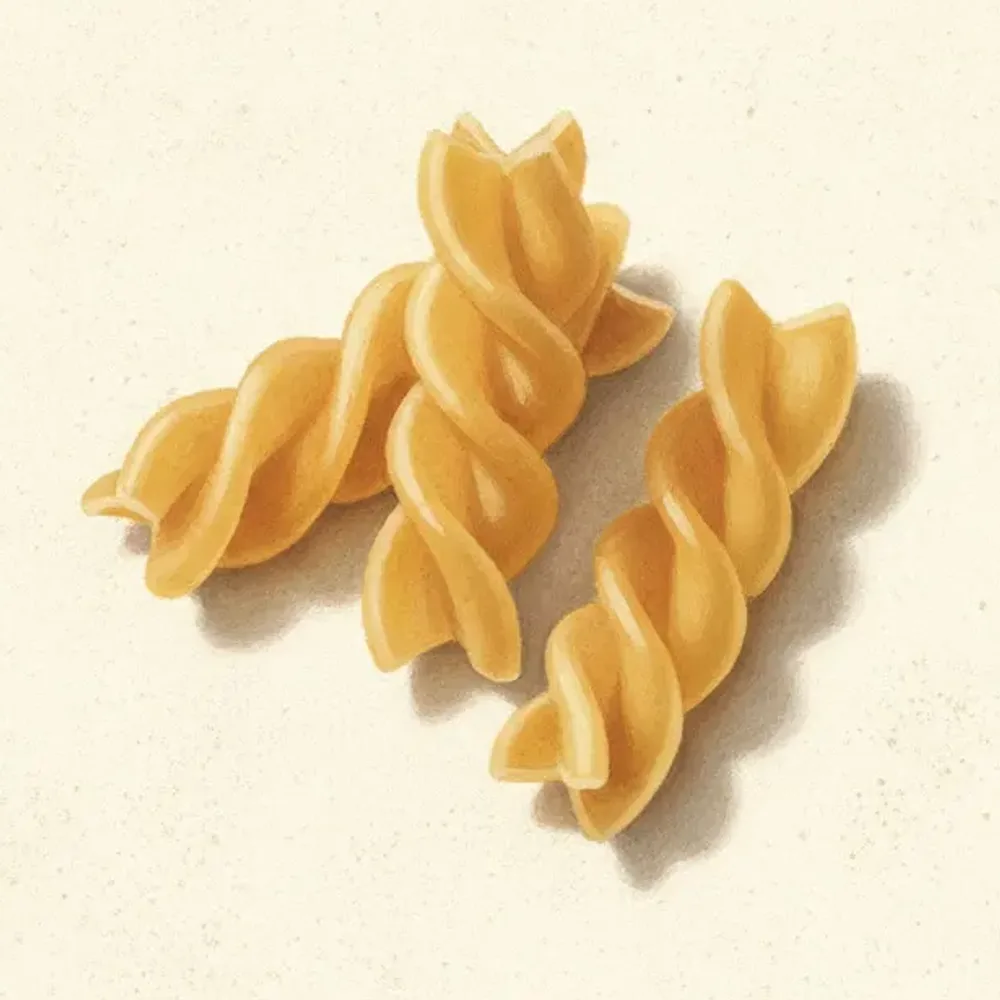
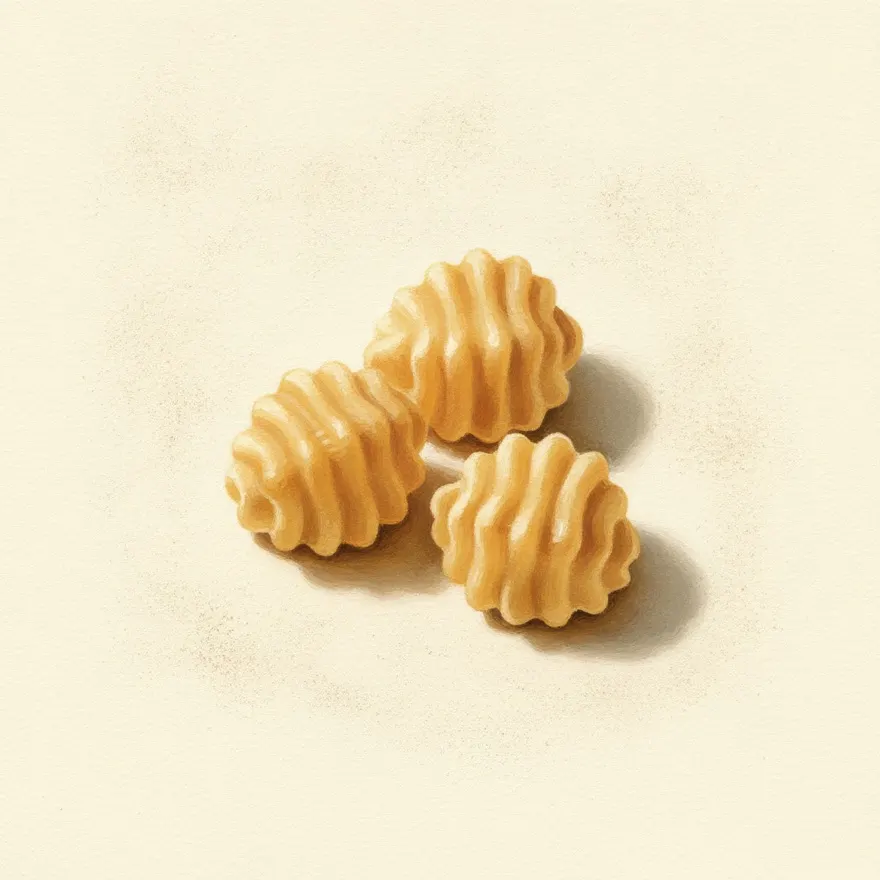
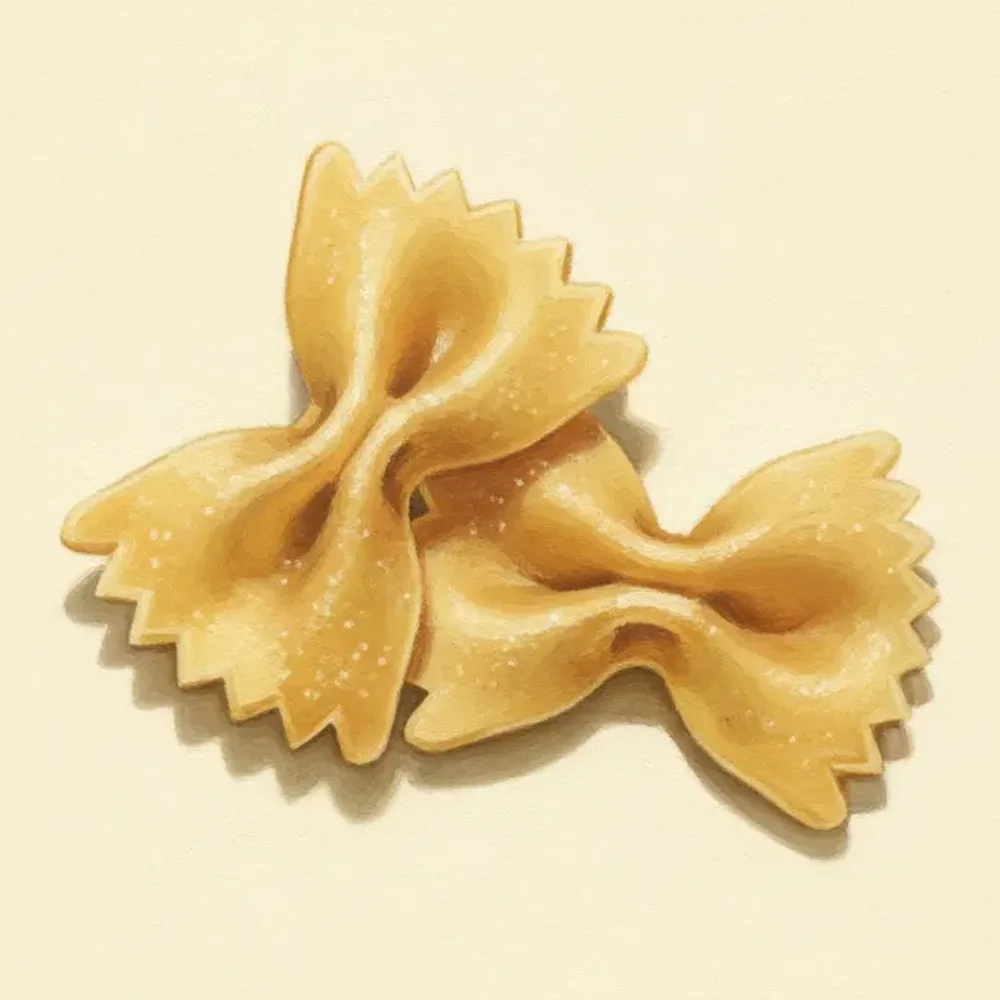
Closest swaps by sauce behavior, not by looks. The ones most easily confused with rotelle, and how they read.
Stay in the loop
From the Almanac
Updates from Pasta Almanac, when there is something worth sharing.