Foglie d'ulivo
FOH-lyeh doo-LEE-voh
Also known as olive leaves.
What it is
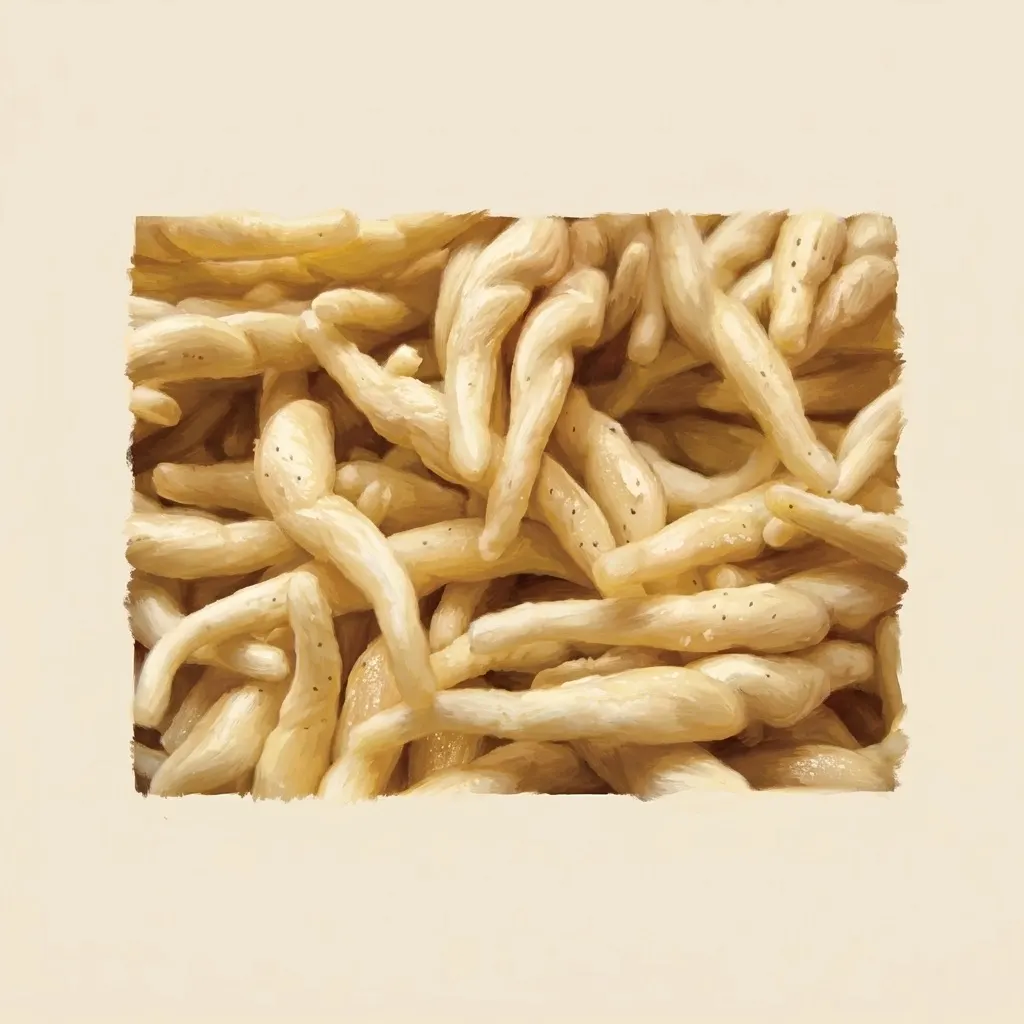
A pasta shaped to look like an olive leaf, made in both Puglia, in the Salento and around Brindisi, and Liguria, two olive-oil regions, with no single region documented as its origin. The memorable detail: a raised ridge runs down the center to mimic the leaf central vein, with slightly thicker curved sides. Most sources place its creation in the twentieth century, and one theory holds it began as poorly hollowed orecchiette stretched out so the dough would not be wasted, presented as theory rather than fact. It is often tinted green with spinach or chicory.
Italian for olive leaves. The shape imitates the leaf of the olive tree.
What sauce it wants, and why
The flat leaf body offers broad surface for a sauce to cling to, while the raised central ridge and slightly thicker curved edges give the strand structure and grip. This suits brothy, oil-based, and fresh tomato sauces that coat without weighing the thin pasta down, and chunky bits like cherry tomatoes and small seafood nest along the leaf's curve.
Classic plates: foglie d'ulivo with cherry tomatoes and burrata, foglie d'ulivo ai frutti di mare, foglie d'ulivo with pesto.
No foglie d'ulivo? Use these
Closest swaps by sauce behavior, not by looks. The ones most easily confused with foglie d'ulivo, and how they read.


Stay in the loop
From the Almanac
Updates from Pasta Almanac, when there is something worth sharing.