Calamarata
ka-la-ma-RAH-ta (IPA: /ka.la.maˈra.ta/)
Also known as mezzi paccheri.
What it is
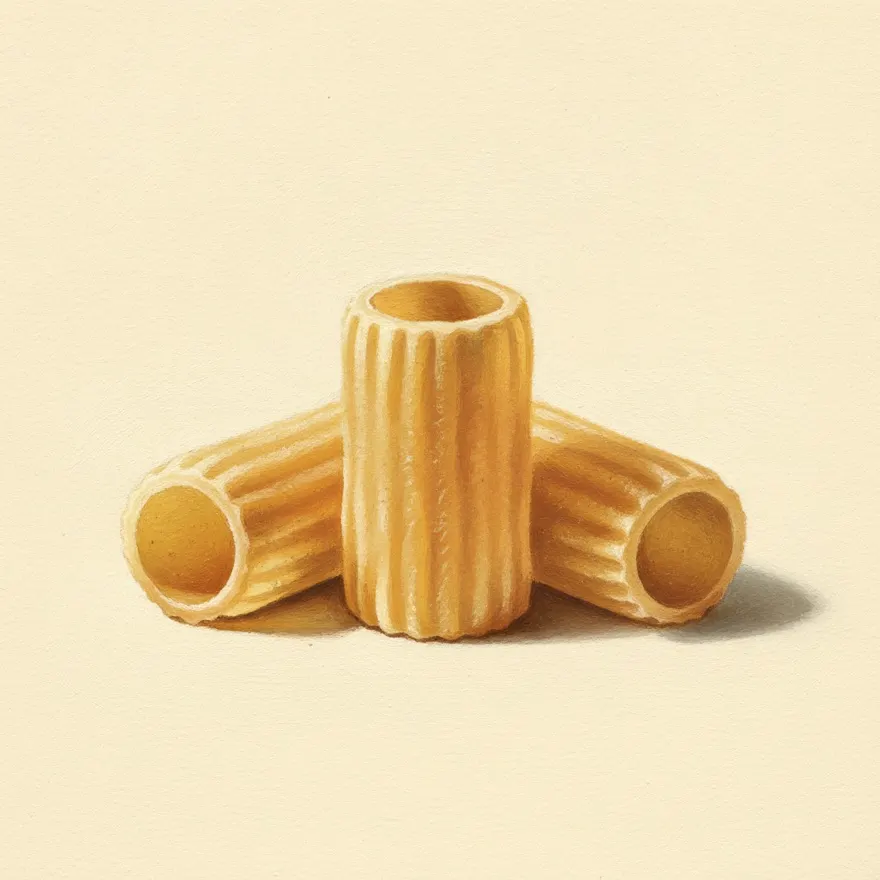
Cooked plain, a ring of calamarata is hard to tell from a ring of squid. That look-alike trick is the whole point. The shape belongs to the Neapolitan tradition of Campania, where it is treated as a festive cut, the kind brought out for Christmas, Easter and New Year lunches. It is an extruded pasta, pushed through bronze dies and dried slowly, so it cannot be rolled by hand at home. The canonical plate sets the pasta beside real squid. Cooks simmer fresh calamari or totani rings with cherry tomatoes, then fold in the pasta so the two kinds of ring sit together, matched in width and color. The eye cannot sort one from the other, which is why the dish carries the joke in its name.
The name comes from calamaro, the Italian word for squid, because the wide cut rings look like sliced squid rings. Calamaro is a non-Tuscan variant of calamaio and traces ultimately to Latin calamus, meaning reed or pen, by way of the squid's ink. So the pasta is named for the animal whose rings it imitates on the plate.
What sauce it wants, and why
The wide short ring wants seafood and a light tomato base, not heavy meat. Squid, mussels, clams, shrimp and a thin cherry tomato sauce slip through and around the rings. The cut is not the grippiest, so a loose, brothy seafood sauce suits it better than a thick cling. Above all it pairs with real calamari, where pasta rings and squid rings share one plate and the mimicry does the work.
Classic plates: calamarata con calamari, calamarata allo scoglio.
No calamarata? Use these
Closest swaps by sauce behavior, not by looks. The ones most easily confused with calamarata, and how they read.


Easy to confuse with
Wide smooth tubes. Paccheri is long and collapses into a flat oval under sauce, occhi di lupo is a short wide tube named for a wolf's eye, and calamarata is a short ring cut to resemble squid.

Stay in the loop
From the Almanac
Updates from Pasta Almanac, when there is something worth sharing.