Fettuccine
fet-uh-CHEE-nee
What it is
A solid gold fork and spoon anchor this story. Fettuccine were everyday Roman pasta long before Hollywood arrived, fresh egg ribbons cut from a rolled sheet and dressed with butter or slow beef and chicken ragu. The fame came from one cook. Around 1908 Alfredo di Lelio, working at his mother's restaurant in Rome's Piazza Rosa, stirred extra butter into fettuccine to coax his wife Ines to eat after a hard childbirth. He opened his own restaurant at Via della Scrofa 104 in 1914. Mary Pickford and Douglas Fairbanks ate there on their 1920 honeymoon and later gave Alfredo gold cutlery engraved To Alfredo the King of the Noodles, a gift sources date to 1920 or 1927. American kitchens added cream and built an industry on the dish. In Italy it stayed fettuccine al burro, a quiet home plate. Today two Roman restaurants, Alfredo alla Scrofa and Il Vero Alfredo, both claim the legacy.
From Italian fettuccine, plural of fettuccina, a diminutive of fettuccia, from fetta, a slice or ribbon, so the name means little ribbons. Etymonline records the word entering English in 1922.
What sauce it wants, and why
Butter and cheese emulsions need surface, not pockets. Each fettuccina is a wide flat blade, so every strand presents a broad face that a glossy emulsion can coat in a thin, even film. The egg dough matters too. Its slightly porous sheet takes up starchy pasta water, which keeps butter and Parmigiano bound instead of splitting into grease. The ribbon survives the tableside tossing that made Alfredo famous, yet stays thin enough that sauce leads each bite. Cream, porcini, and gentle ragu work the same way, clinging as a layer rather than needing to be trapped.
Classic plates: Fettuccine Alfredo, Fettuccine al burro, Fettuccine al ragu di pollo.
No fettuccine? Use these
Closest swaps by sauce behavior, not by looks. The ones most easily confused with fettuccine, and how they read.
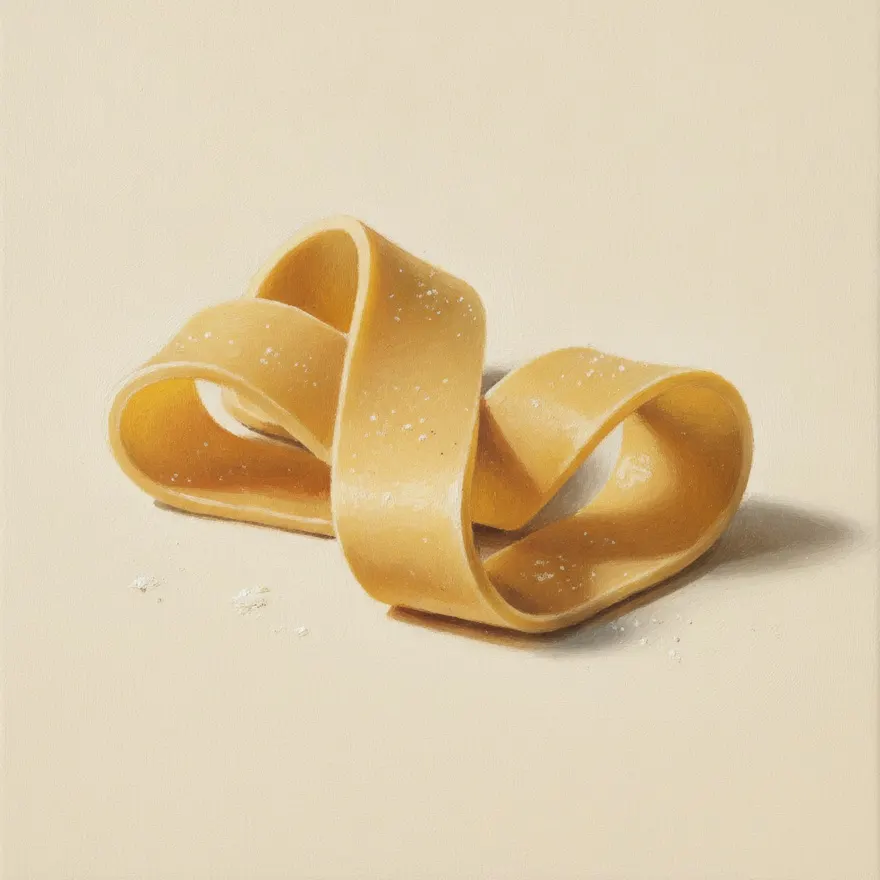

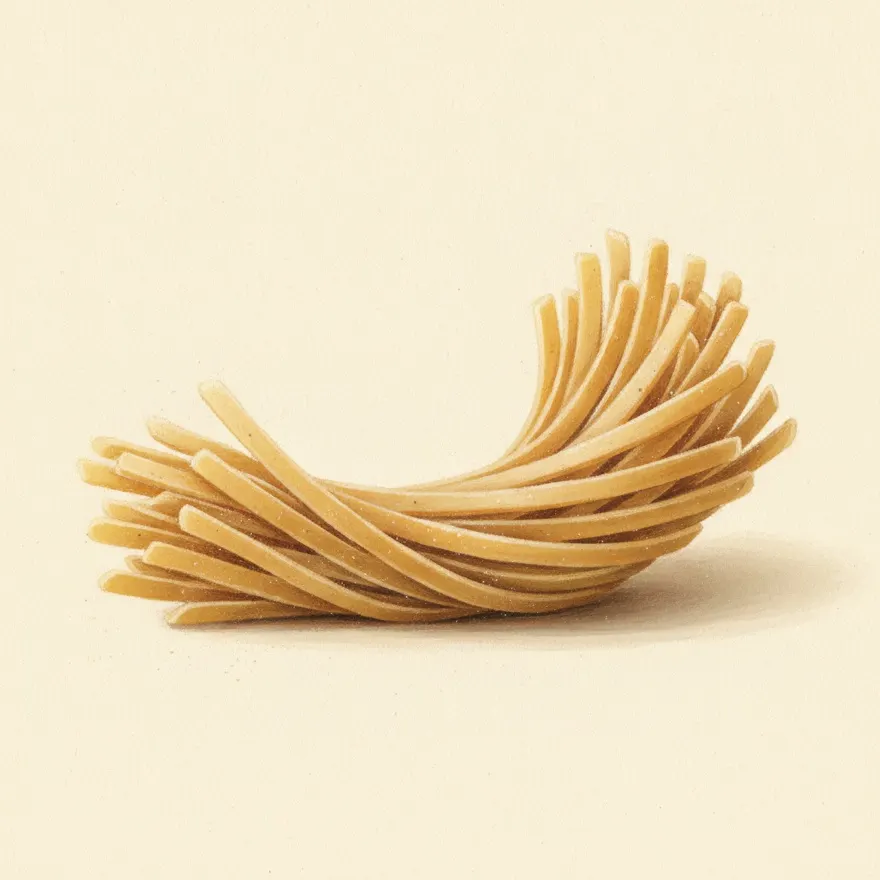
Fettuccine vs Tagliatelle·Fettuccine vs Linguine·Fettuccine vs Pappardelle·Fettuccine vs Mafaldine·Fettuccine vs Tagliolini
Easy to confuse with
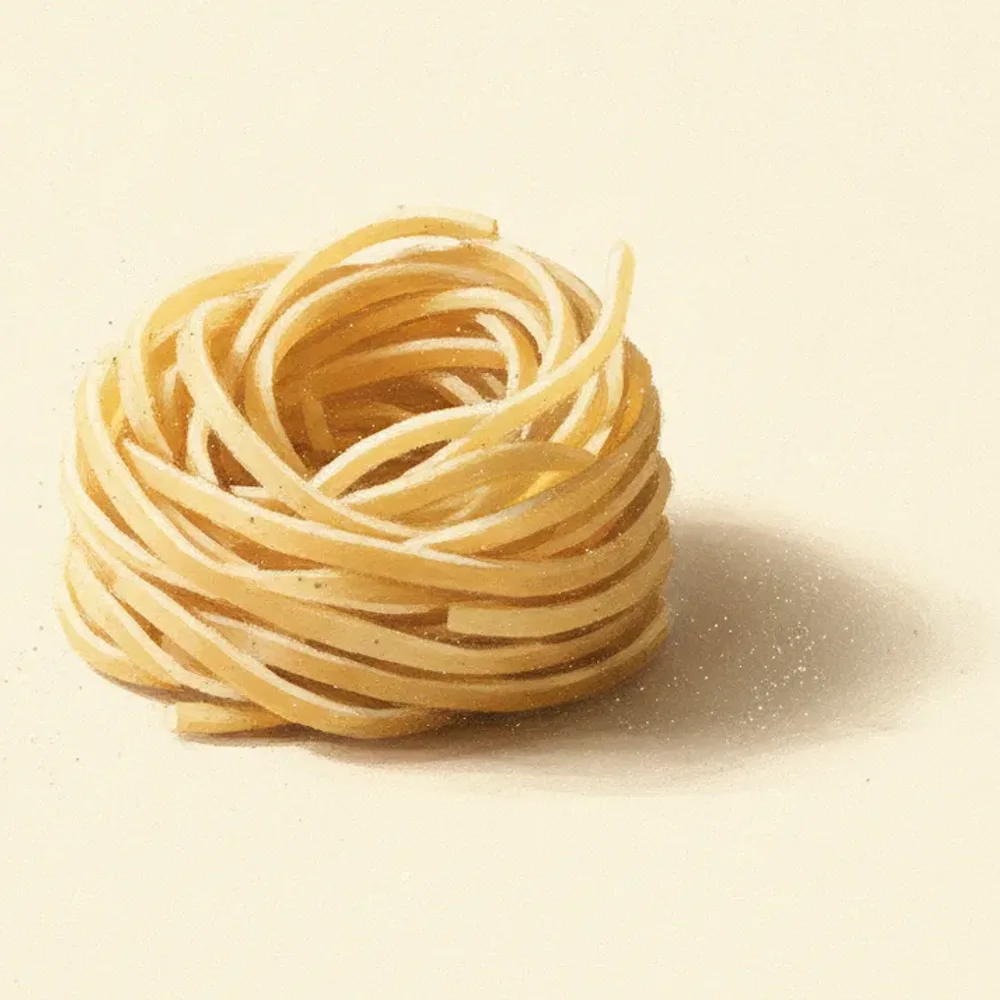
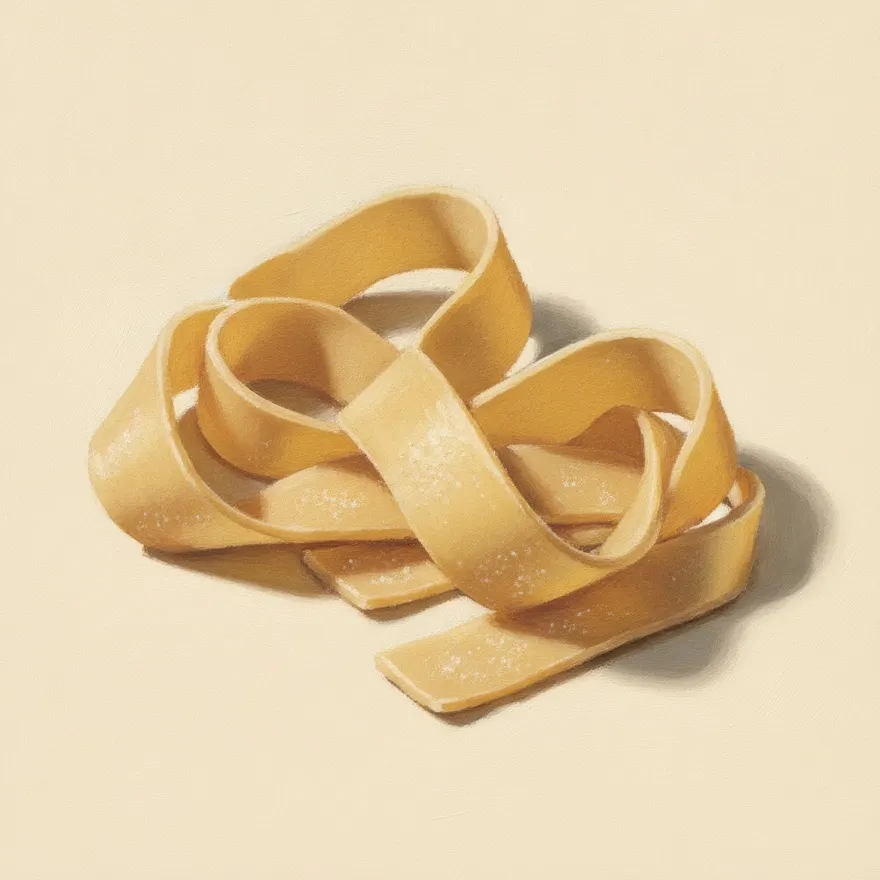
Flat ribbons told apart by width: maccheroncini di Campofilone is the finest, almost thread-thin, then tagliolini, with tagliatelle and fettuccine medium (tagliatelle Bolognese, fettuccine the slightly wider Roman cut) and pappardelle the broadest. Mafaldine is a medium ribbon with ruffled edges.
Stay in the loop
From the Almanac
Updates from Pasta Almanac, when there is something worth sharing.