Sedani
seh-DAH-nee
Also known as sedani rigati, sedani lisci, zanne d'elefante, denti di elefante.
What it is
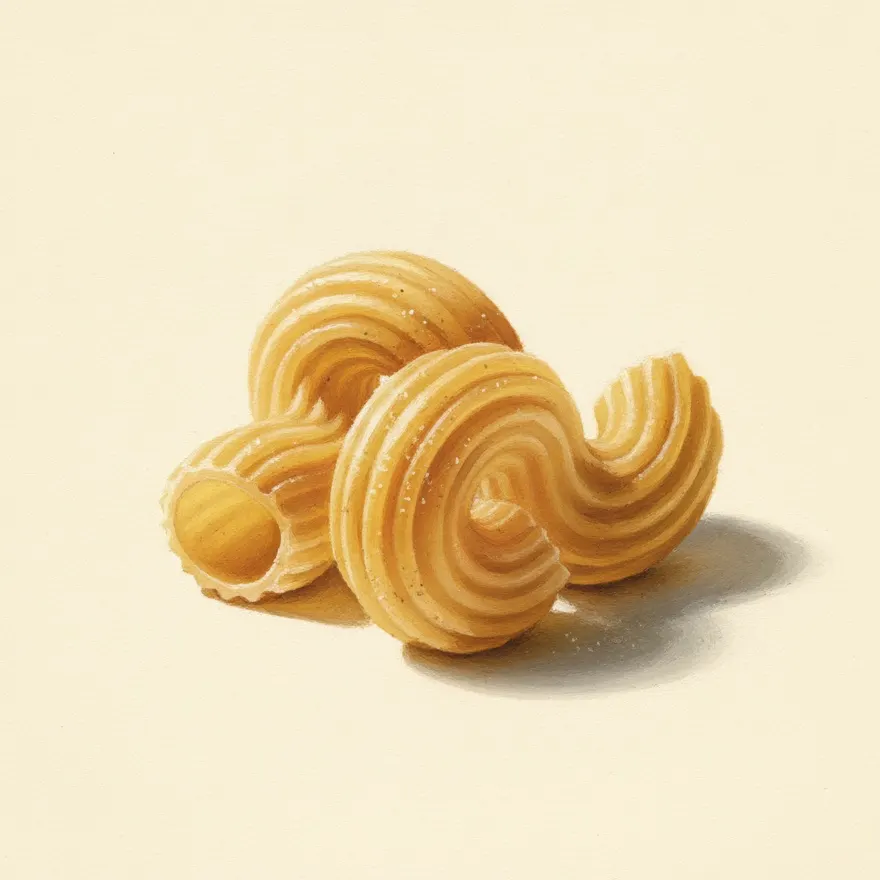
The shape started smooth and went by a different name. Early makers in Naples called it zanne d'elefante, or elephant tusks, for the pale curved tube. When ridges were added, the grooved surface looked like the strings on a celery stalk, so it took the name sedani, from sedano. De Cecco notes the smooth original was also called denti di elefante, elephant's tooth. The renaming is sometimes tied to the end of the ivory trade, which made tusk imagery less appealing. Today the ridged version, sedani rigati, is the common one, with a smooth sedani lisci still sold. A smaller cousin, sedanini, took the diminutive form. The shape remains an everyday southern tube, a workhorse for home kitchens across Campania and beyond.
The name comes from the Italian sedano, meaning celery. The word traces back to Ancient Greek selinon. The slightly curved tube carries lengthwise ridges that resemble the fibrous stalk of a celery rib, which is how the shape earned its name.
What sauce it wants, and why
This is a curved, ridged tube, and both traits do work. The grooves catch and hold thicker sauces, while the open bore traps small bits and pools liquid inside each piece. That makes it a good match for tomato ragu and meat or sausage sauces. The same structure holds up in baked dishes, where the tubes keep their bite and soak up sauce around the edges. It also handles a plain tomato and basil toss well.
Classic plates: baked pasta dishes (pasta al forno), sedani with meat and mushroom ragu, sedani with sausage ragu, sedani with tomato and basil, pasta salad.
No sedani? Use these
Closest swaps by sauce behavior, not by looks. The ones most easily confused with sedani, and how they read.

Sedani vs Rigatoni·Sedani vs Penne·Sedani vs Mezze maniche·Sedani vs Tortiglioni
Easy to confuse with
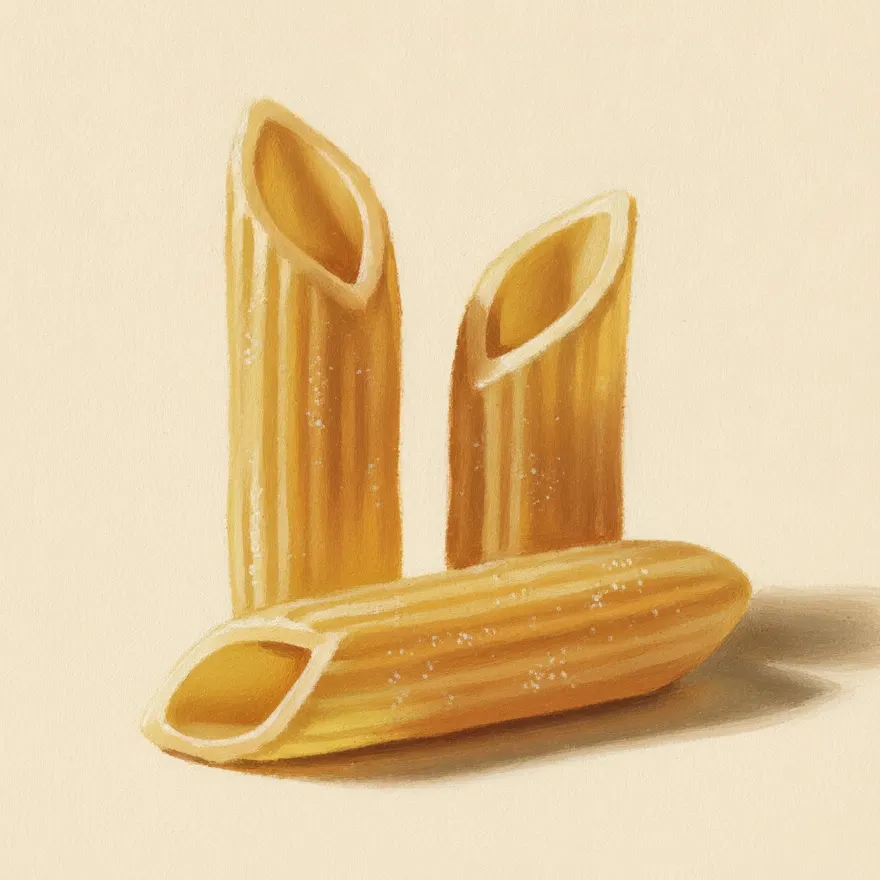
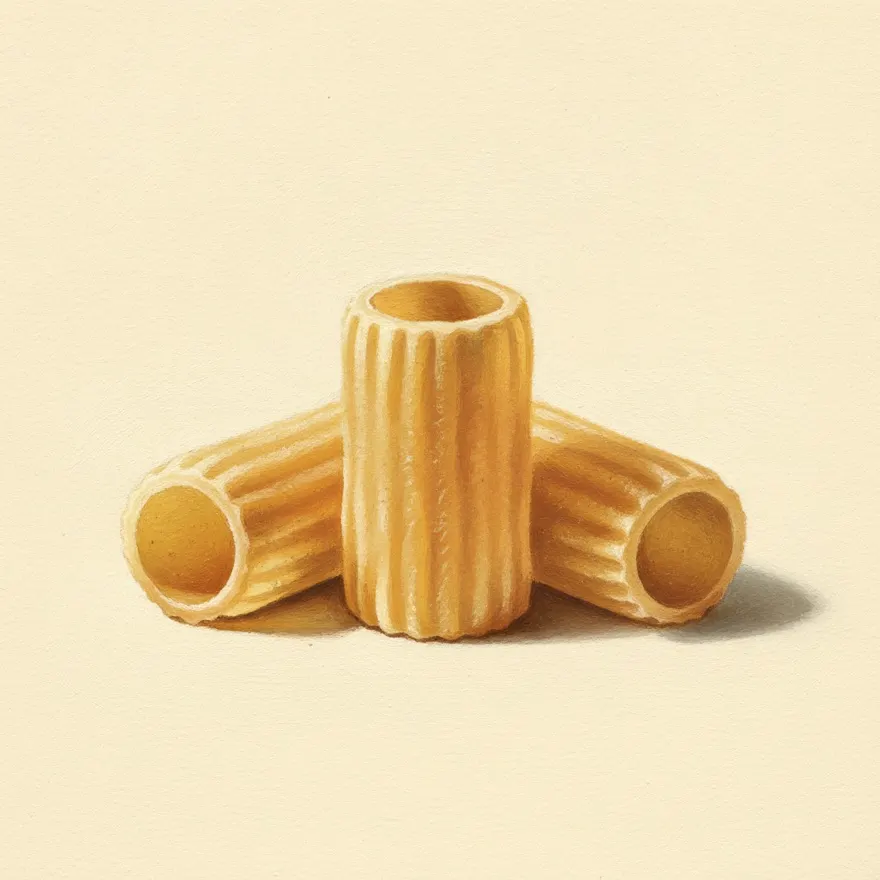
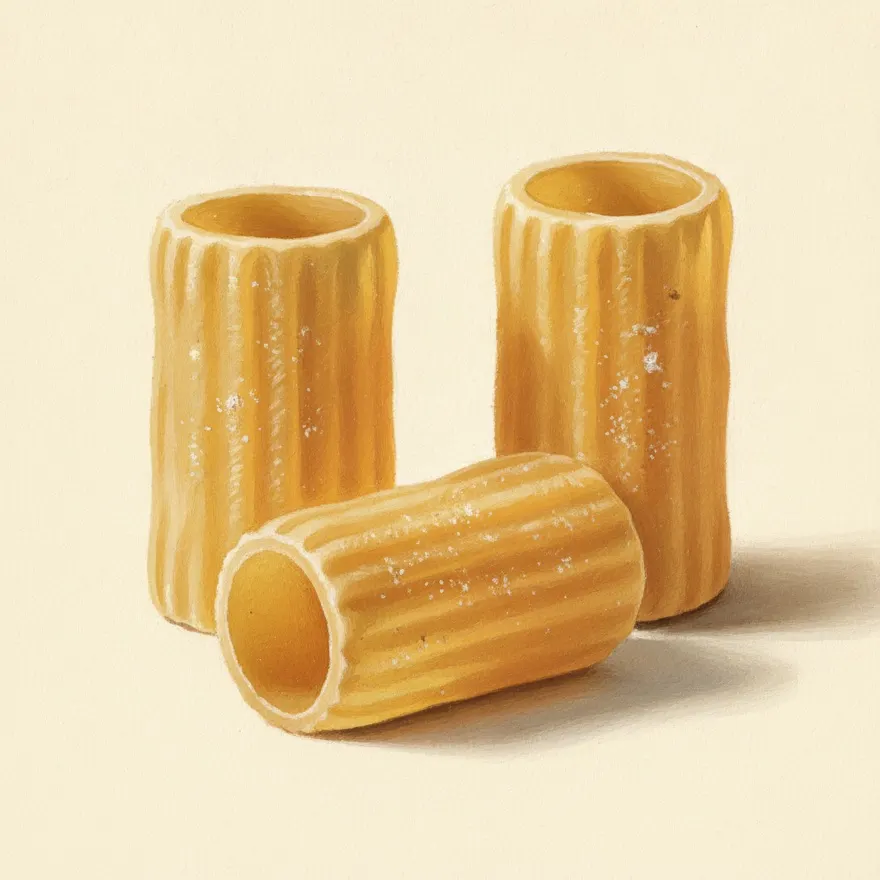
Ridged tubes. Rigatoni is wide and cut straight across, mezze maniche is a shorter rigatoni, tortiglioni carries spiraling ridges, sedani is slightly curved, and penne is cut on the diagonal to a point.
Stay in the loop
From the Almanac
Updates from Pasta Almanac, when there is something worth sharing.