Lumache
loo-MAH-keh
Also known as snails.
What it is
Each piece looks like a snail that has crawled out of its shell. Lumache belongs to the broad family of curved shell shapes that Italian factories made for catching sauce. Modern sources disagree on where it began. Some tie it to Piedmont, where cooks have a long habit of eating snails and even hold festivals for them. Others point to Gragnano in Campania, the dry pasta town working since the 16th century. The shape comes in a smooth lisce version and a grooved rigate version. Its larger cousin, lumaconi, grew into a stuffing pasta. Cooks pipe ricotta, meat, or spinach into the wide mouth, then bake the shells dry or under sauce. The pinched end holds the filling in place during baking.
The name comes from the Italian word lumaca, meaning snail. Wiktionary traces lumaca to Vulgar Latin limaca, from Latin limax, a slug or snail. The pasta took the name because each curved piece resembles a snail shell, with a single rounded opening and a tapered pinched tail.
What sauce it wants, and why
The cupped shell works like a small spoon. Sauce pools inside the wide opening and the curve carries it to the fork. The pinched tail acts as a stop, so chopped vegetables, peas, or crumbled meat lodge inside rather than slide off the plate. Ridged lumache hold thick ragu and chunky vegetable sauces best, while smooth lumache suit cream and cheese. The jumbo lumaconi size gets stuffed and baked instead of sauced.
Classic plates: baked stuffed lumaconi with ricotta and meat, lumache with sausage and broccoli rabe, pasta al forno.
No lumache? Use these
Closest swaps by sauce behavior, not by looks. The ones most easily confused with lumache, and how they read.
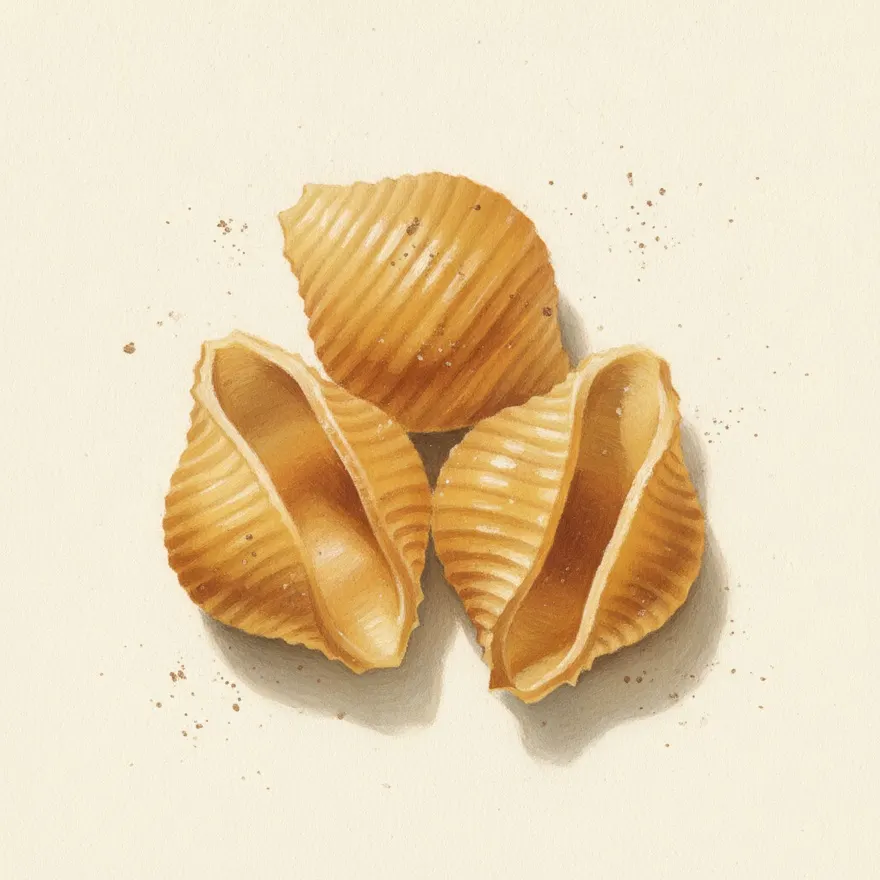
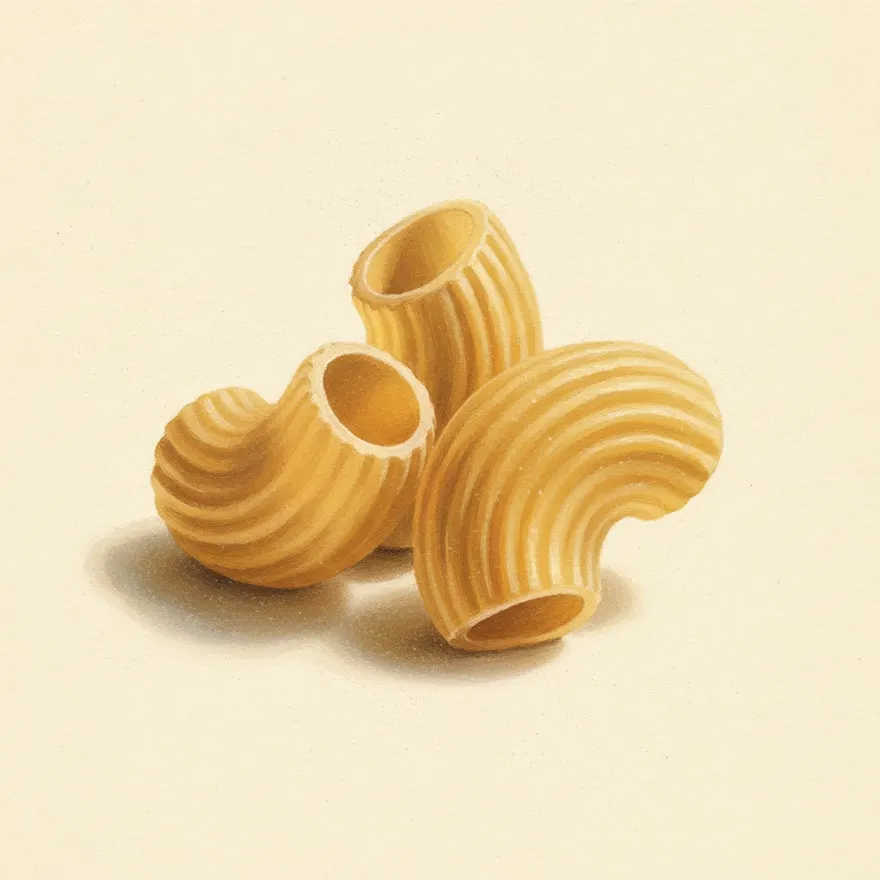

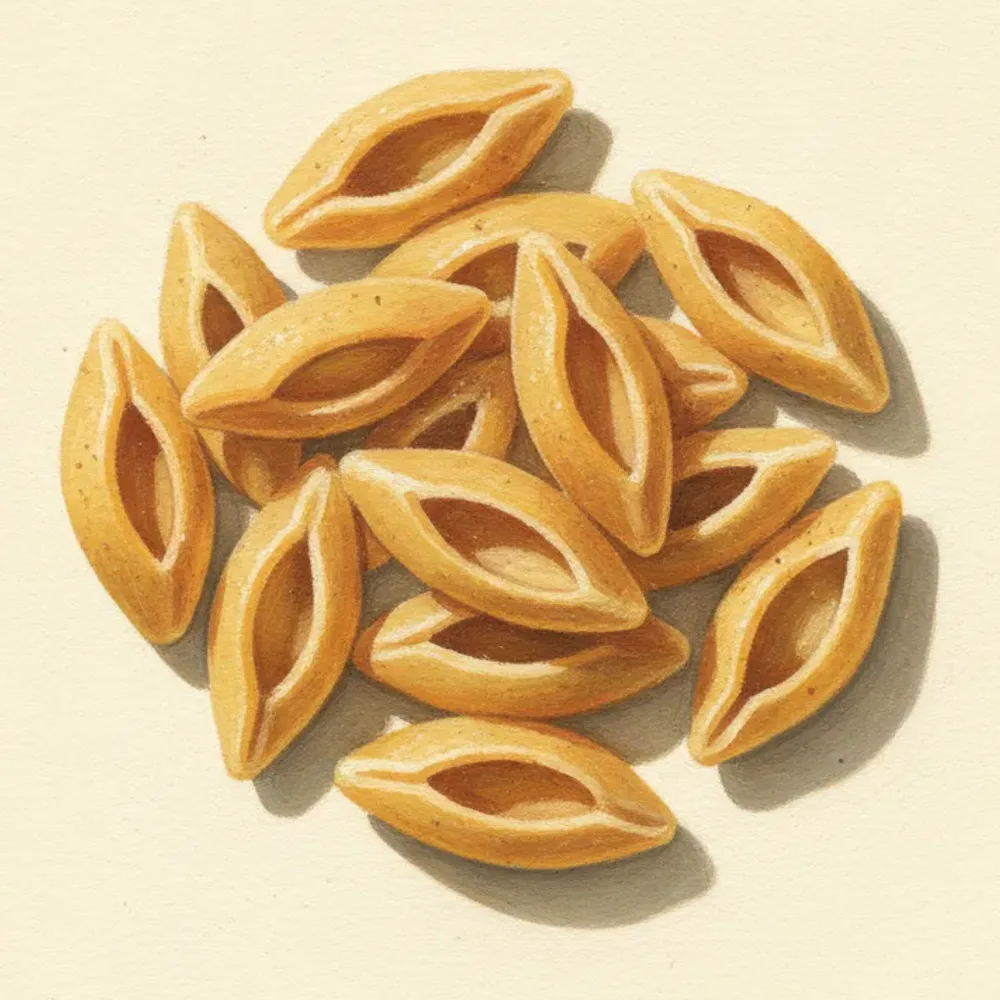
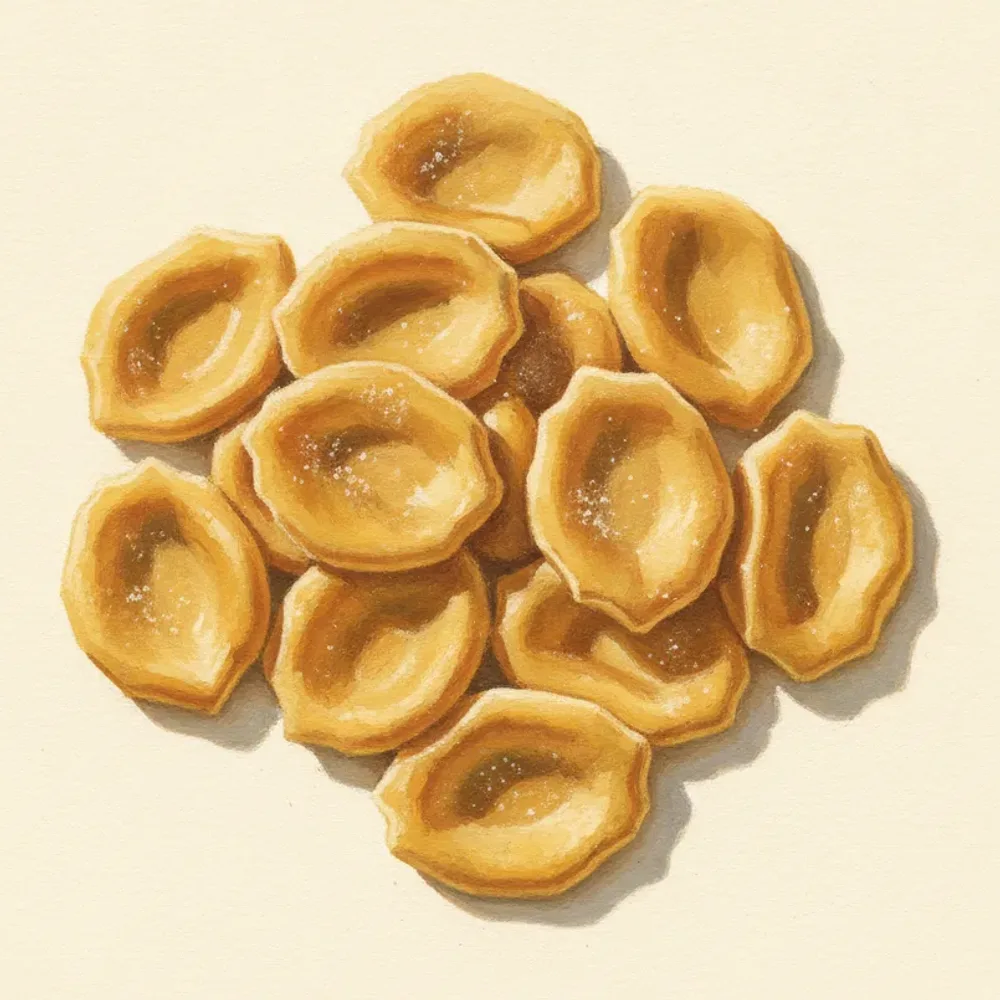
Lumache vs Conchiglie·Lumache vs Orecchiette·Lumache vs Cavatelli
Easy to confuse with
Cupped or dragged. Conchiglie is a ridged shell, lumache a snail with one opening, orecchiette a smooth concave ear, cavatelli a small rolled hull with a hollow, capunti a longer open pod dragged with several fingers, and strascinati a flat dragged oval.

Stay in the loop
From the Almanac
Updates from Pasta Almanac, when there is something worth sharing.