Fregola
FREH-go-la (Italian IPA: /ˈfre.ɡo.la/, per Wiktionary)
Also known as fregula, fregola sarda, sa fregula.
What it is
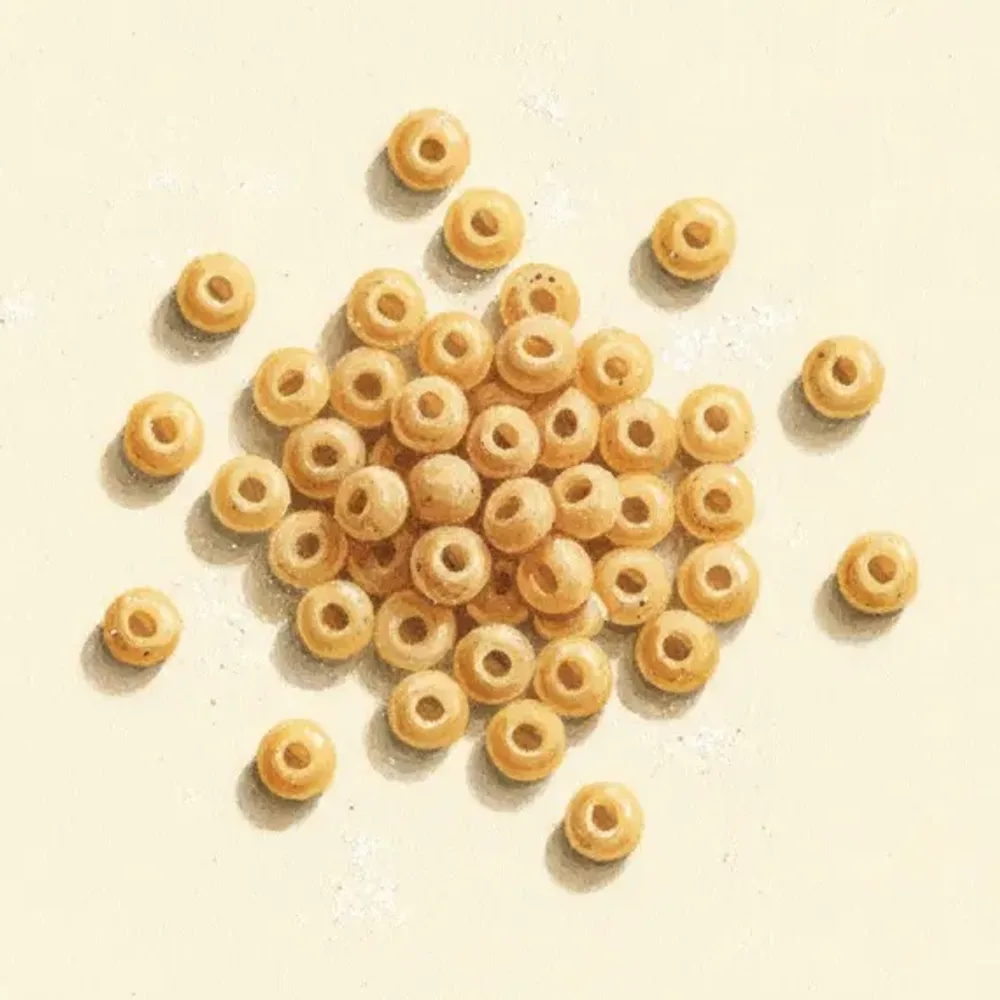
Fregula is Sardinia's bead pasta. Cooks rub coarse semolina with salted water in a wide terracotta basin called a scivedda. Their fingers roll the flour into irregular pellets. The beads dry on a cloth, then go into the oven. That toasting is the signature step. It browns the surface unevenly and gives the pasta a nutty, roasted taste no other pastina has. The earliest known document to name it is a fourteenth century statute of the millers of Tempio Pausania, which allowed fregula making only from Monday to Friday. The shape's deeper origins are argued over. Some food historians link it to couscous and credit Phoenician or Carthaginian traders with carrying the idea to Sardinia. Others hold that islanders worked it out on their own. The kinship is real either way. Fregula sits in the same Mediterranean family of rolled semolina as maftoul and moghrabieh, but it is boiled or simmered like pasta, never steamed.
The derivation is contested. The Pasta Project, Janas Food, and Sardinian producer La Casa del Grano trace fregula to Latin ferculum, glossed as crumb or fragment, while Wiktionary derives Italian fregola from the verb fregare, to rub, itself from Latin fricare, and Treccani likewise files fregola under fregare.
What sauce it wants, and why
Toasting changes how fregula behaves. The browned starch resists turning gluey, so the beads can simmer in liquid and drink it up the way rice does in risotto. Sardinian cooks add clam liquor and fish broth a ladle at a time until the beads swell and the liquid turns lightly creamy. Brothy treatments suit it best. Clams are the canonical partner, with tomato close behind. Mixed shellfish work for the same reason. Treat it as a hybrid: sauce it lightly like pasta, or cook it wet like a grain.
Shellfish and legumes·Broth·Tomato sauce·Mixed seafood
Classic plates: fregola con arselle.
No fregola? Use these
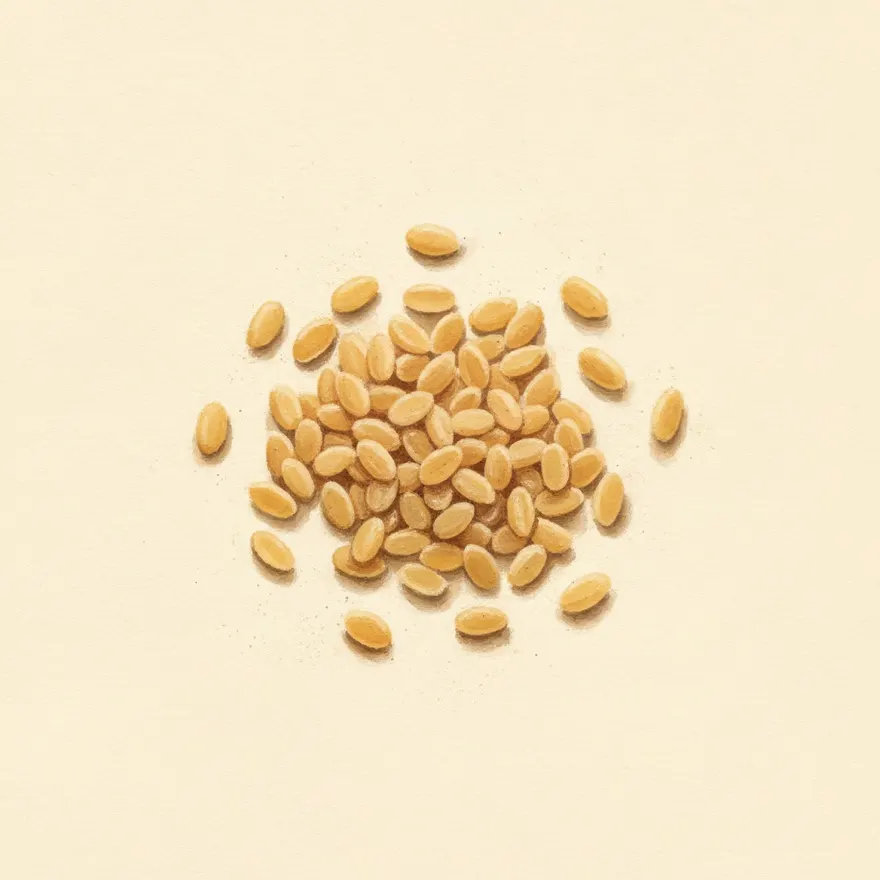
Closest swaps by sauce behavior, not by looks. The ones most easily confused with fregola, and how they read.
Stay in the loop
From the Almanac
Updates from Pasta Almanac, when there is something worth sharing.