Fileja
fee-LEH-yah
Also known as fileja, filej, fileja calabresi, maccaruni.
What it is
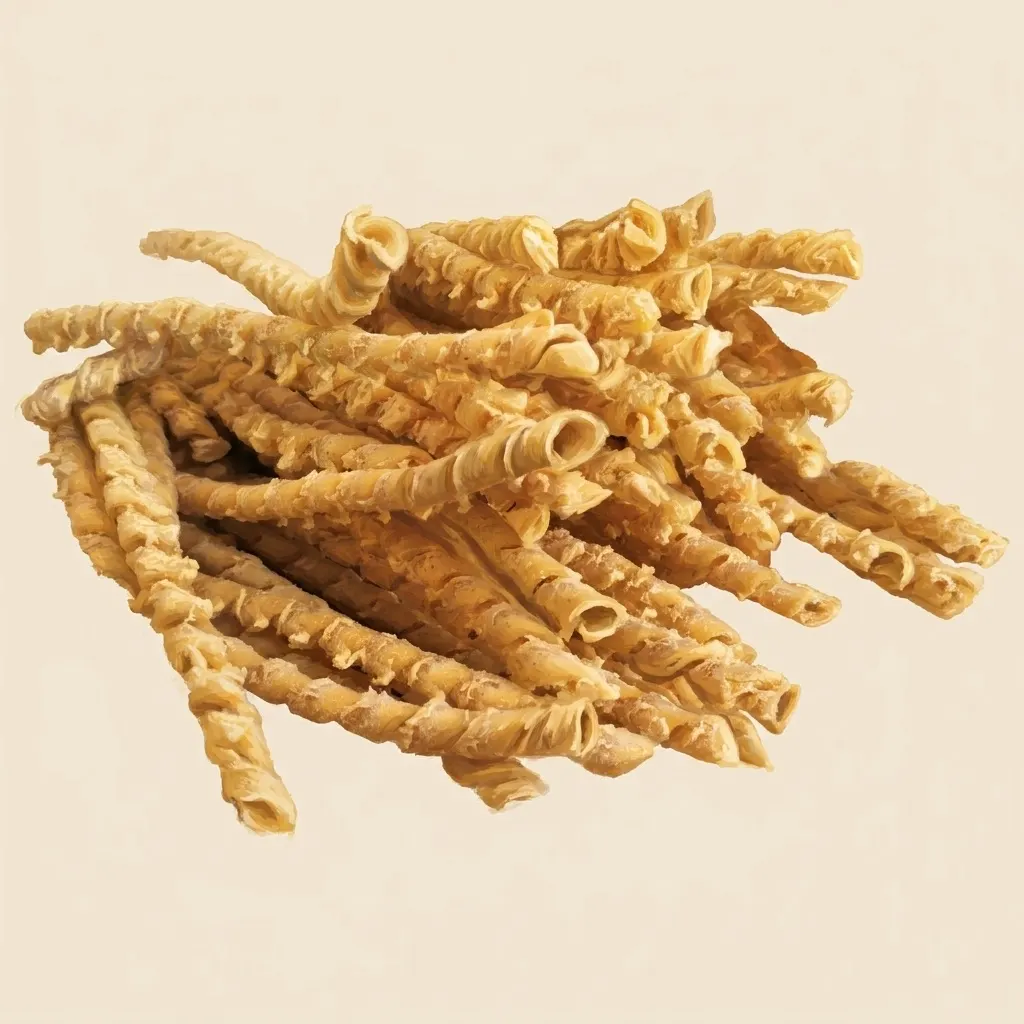
A thin metal rod or wooden skewer does the work: a rope of semolina dough is wound around it, rolled, then slid off as a twisted, hollow strand. Fileja comes from the province of Vibo Valentia in Calabria, around the town of Tropea, and the method has passed from one generation to the next. Cooks shaped it from poor ingredients, just durum wheat and water with no egg, the everyday pasta of Calabrian households. Local names include filej, maccaruni and fileja calabresi. The canonical pairing is with nduja, the soft spreadable spicy Calabrian sausage, often loosened into tomato, and with pork or sausage ragu. A lighter Tropea version, fileja alla tropeana, leans on the area's sweet red onions and vegetables. Most fileja is still made fresh by hand.
Sources tie the name to the Calabrian act of rolling and twisting the dough around a thin rod. The pasta is shaped by wrapping a strand around a cane called dinaculu (also written danaco or dinacolo), and the related Italian verb filare, inherited from Late Latin filare and built on filo (thread), means to spin or draw out thread, per Wiktionary. The form and name both point to a thin strand drawn out and twisted by hand.
What sauce it wants, and why
The twist and the open hollow channel give spicy nduja and pork ragu something to cling to, pulling the soft sausage and fat into and around each strand. The hand-rolled body is sturdy and a little rough, so it grips heavy meat sauces instead of letting them slide off. Each forkful holds sauce inside the channel and along the twist, which is why the shape suits the rich, fatty Calabrian sauces it grew up with.
Nduja·Ragu·Sausage ragu·Tomato sauce
Classic plates: fileja alla tropeana, fileja con nduja.
No fileja? Use these
Closest swaps by sauce behavior, not by looks. The ones most easily confused with fileja, and how they read.

Easy to confuse with
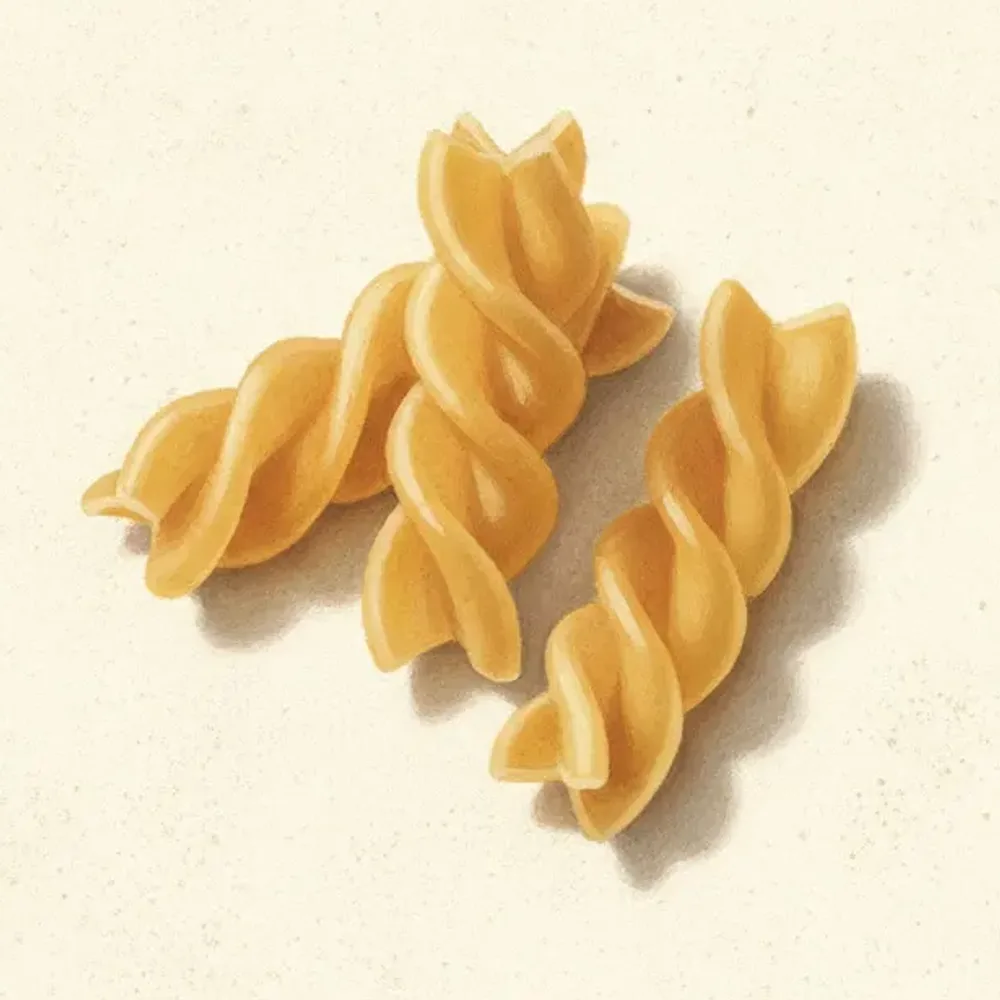
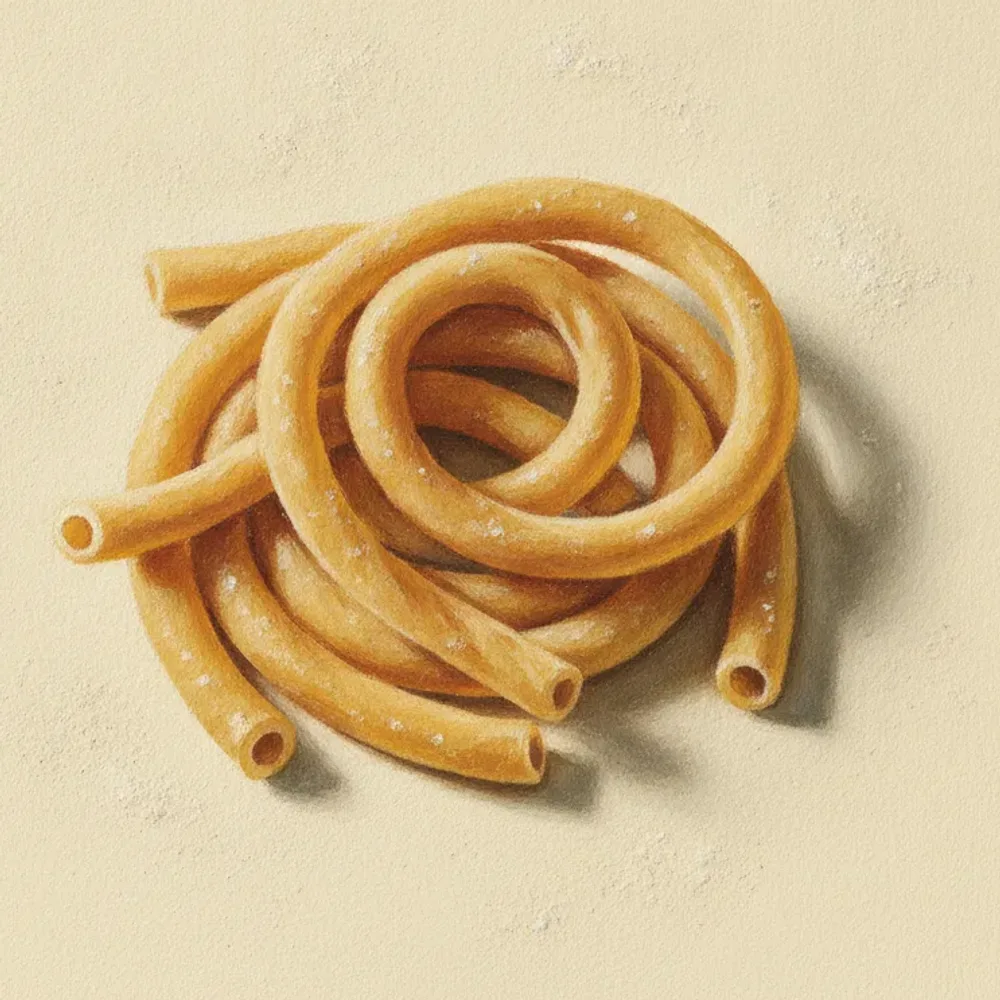
Strands formed around a thin iron rod, the ferretto. Maccheroni al ferretto is the umbrella shape, fileja the short Calabrian rolled spiral, and busiate the long Sicilian corkscrew coiled around a reed.
Stay in the loop
From the Almanac
Updates from Pasta Almanac, when there is something worth sharing.