Spaghetti
spah-GET-ee
Also known as spaghetto.
What it is
The first record of this kind of thin dried pasta comes from Trabia, near Palermo, where the geographer al-Idrisi described production in the twelfth century, with Sicilian farms making it at scale for export by the mid 1100s. The name came much later. Spaghetto is the diminutive of spago, Italian for string or twine, and De Cecco points to an 1819 dictionary entry for minestra di spaghetti, pasta the size of a long thin thread. Naples adopted the strands by the late Middle Ages, Gragnano grew large artisanal pasta works, and mechanized production began around Naples in the early 1800s. English borrowed the word by 1845, when Eliza Acton glossed it as Naples vermicelli. Tradition sometimes credits Marco Polo with bringing it from China. That story is debunked, born of a misread text and a fabricated 1929 trade journal article. Strands shortened in the late twentieth century, settling near 25 to 30 cm.
From Italian spaghetto, the diminutive of spago, meaning cord or twine, a word of uncertain origin, with the plural naming the dish. English borrowed it by 1845, when Eliza Acton's Modern Cookery defined it as Naples vermicelli.
What sauce it wants, and why
A solid round strand offers modest surface area for its weight, so it favors sauces that coat rather than chunk. Oil and emulsified fat wrap each strand in a thin film, which is why aglio e olio and carbonara cling so evenly. Smooth tomato sauces ride the tangle, held in the small gaps the nest of strands creates. Large chunks slide off because nothing on a slick cylinder can grip them. Bronze die versions add fine roughness that grabs a little more sauce, and a gauge near 2 mm keeps enough bite to stand up to guanciale and pecorino.
Classic plates: spaghetti al pomodoro, spaghetti alla carbonara, spaghetti aglio e olio, spaghetti all'amatriciana, spaghetti cacio e pepe.
No spaghetti? Use these
Closest swaps by sauce behavior, not by looks. The ones most easily confused with spaghetti, and how they read.
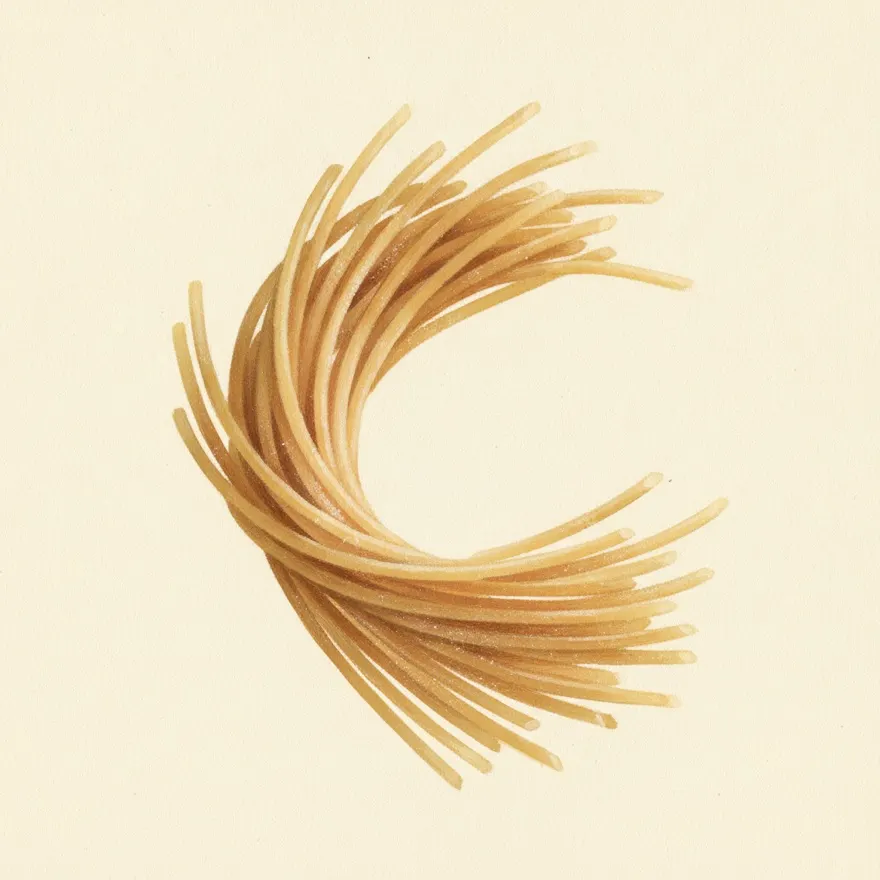
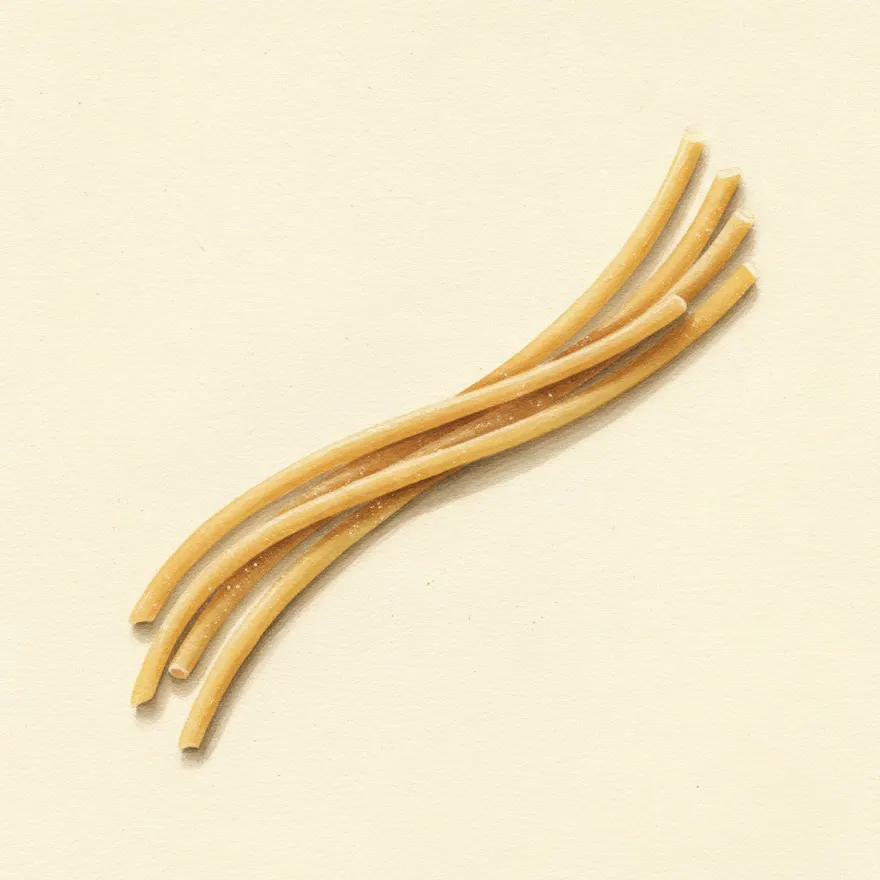
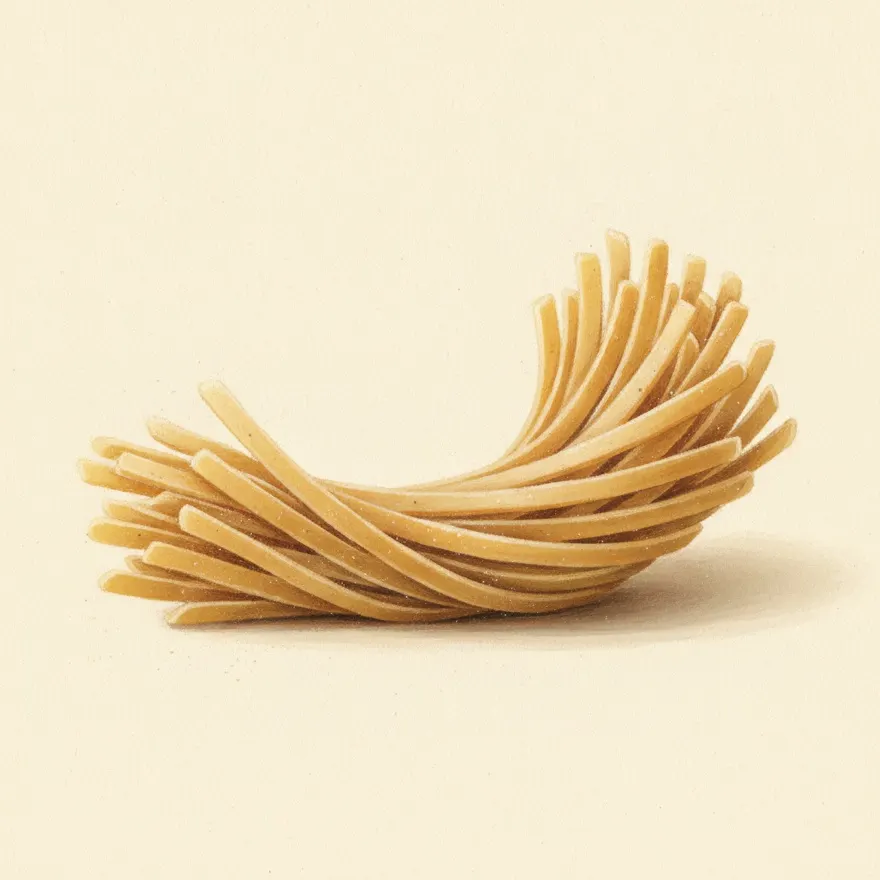
Spaghetti vs Linguine·Spaghetti vs Vermicelli·Spaghetti vs Bucatini·Spaghetti vs Capellini·Spaghetti vs Spaghettini·Spaghetti vs Spaghettoni·Spaghetti vs Tonnarelli
Easy to confuse with
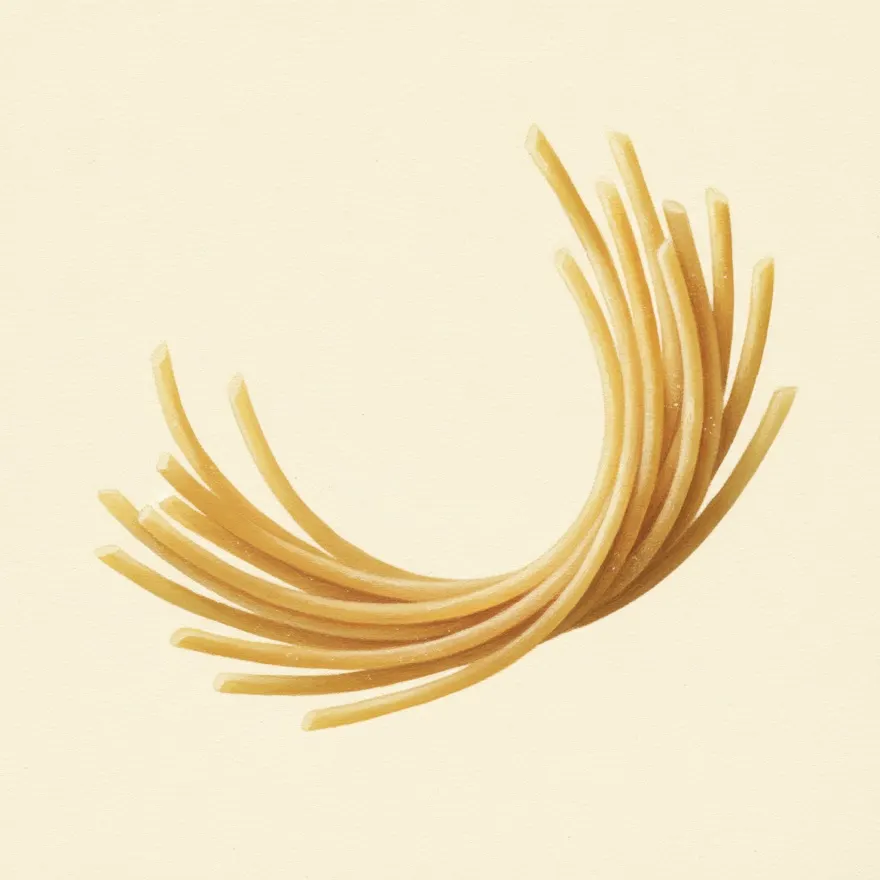
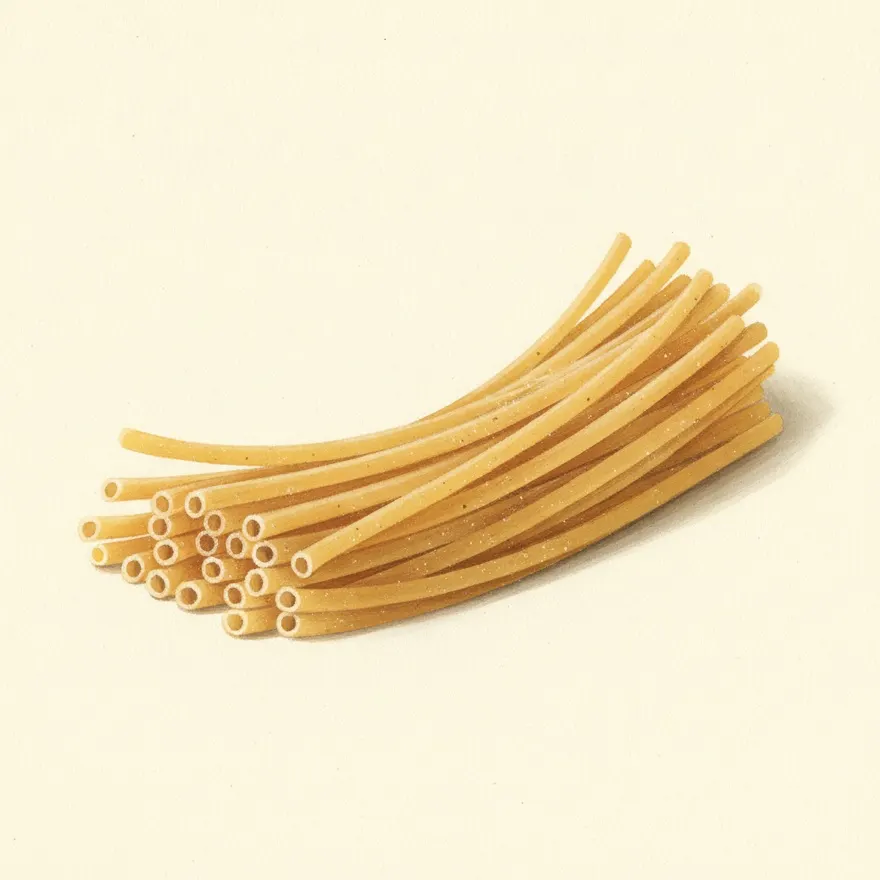
Solid round strands graded only by thickness: capellini (finest), spaghettini, spaghetti, then spaghettoni (thickest), with vermicelli sitting near spaghetti. Bucatini looks like a thick spaghetti but has a hole running through the center.
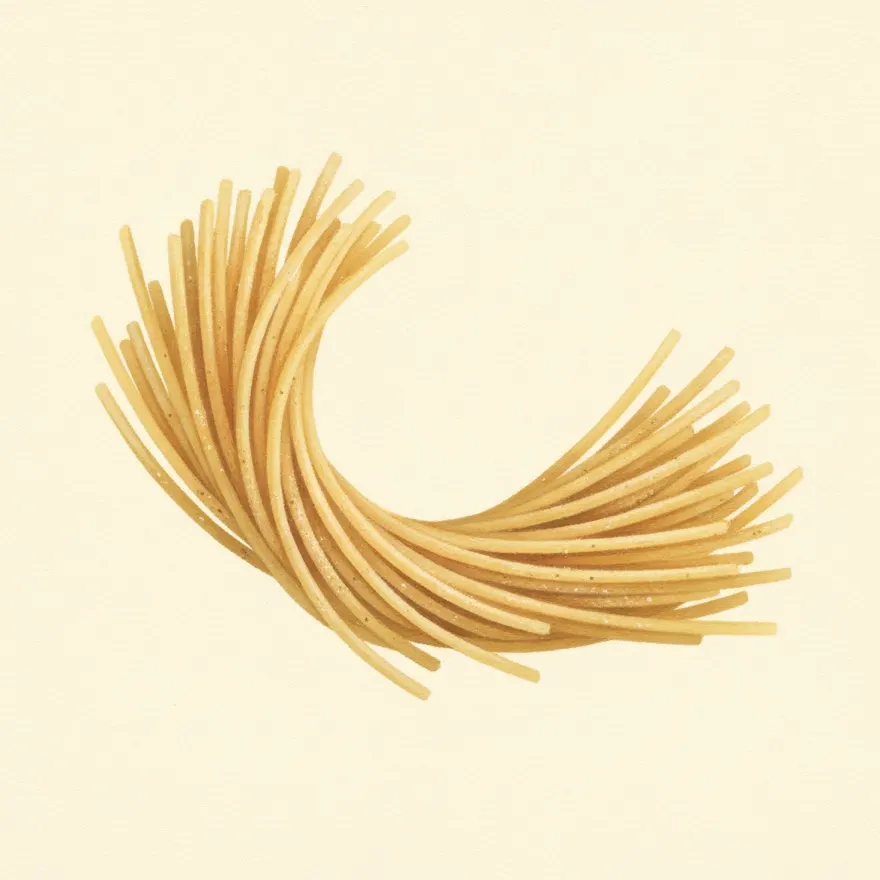
- How to read a pasta shapeEvery shape is a machine for holding sauce. Learn the four things to look at and you can predict what any pasta wants.
- The four Roman pasta saucesCacio e pepe, gricia, amatriciana, carbonara. Four dishes built on the same two ingredients, and the shapes they ride.
- Egg vs semolina: the two doughsAlmost every pasta is one of two recipes. The dough tells you the region, the texture, and the sauce.
- Why durum: the wheat that holds its biteThe gold color is the first clue. Durum is a different wheat from the one in bread, the hardest grown, and it is the reason good dried pasta keeps its bite in the water instead of going soft.
- Pasta myths, settledSix things everyone repeats about pasta, checked against the record. The pattern, once you see it, is that almost every myth gets the cause and effect backwards.
- A short history of pastaPasta is older than Marco Polo, Italian before it was American, and vegetarian before tomato ever touched it. The real timeline, in six turns.
Stay in the loop
From the Almanac
Updates from Pasta Almanac, when there is something worth sharing.