Paccheri
pahk-KEH-ree
Also known as schiaffoni.
What it is
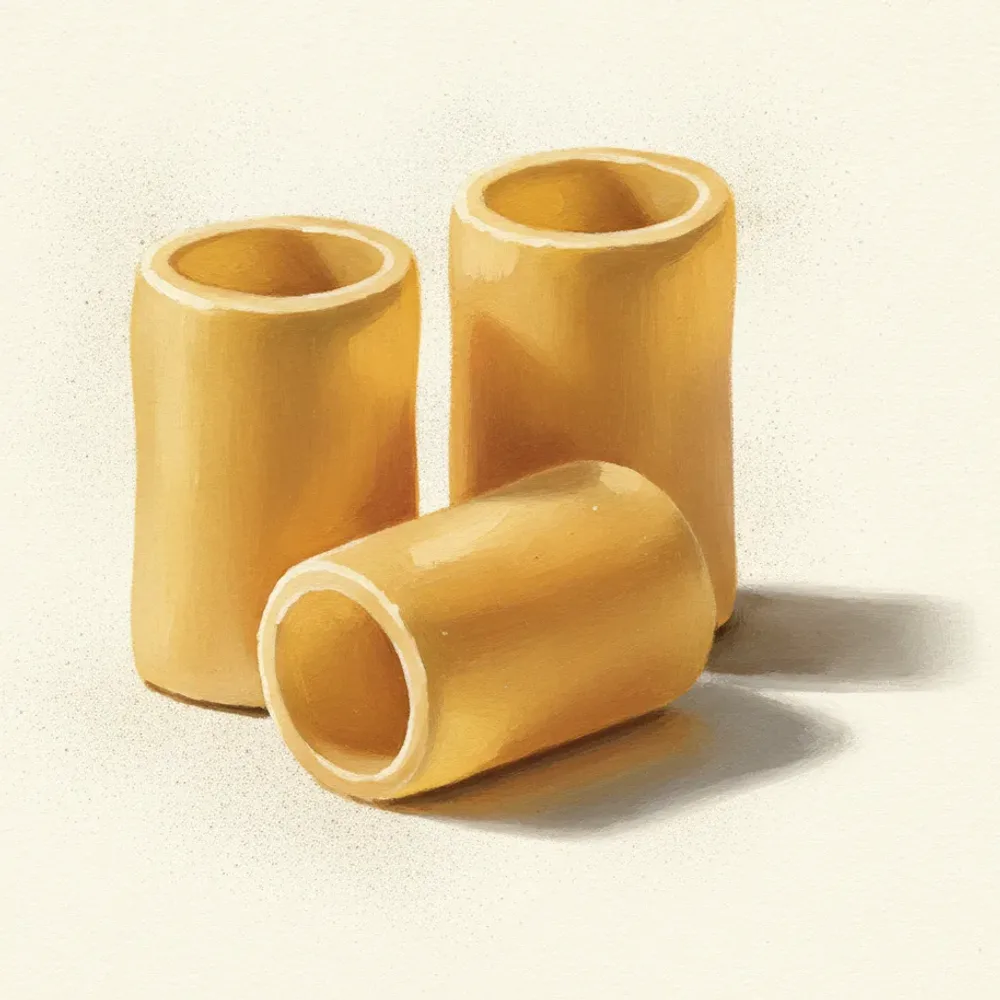
The name is a sound effect. A pacchero is a Neapolitan slap, and the pasta earns it: the huge tube lands on the plate with a soft smack. Treccani records the slap sense, and De Cecco glosses the dialect word paccaria the same way. The shape belongs to Campania, where it has long been the most popular large tube in Neapolitan cooking. One famous story travels with it. In the early 1600s, smugglers supposedly hid about four cloves of prized southern Italian garlic in each tube to beat an import ban across the Alps, a trade that allegedly ran until the early 1800s, when the foreign garlic industry collapsed. Food writers tell this as legend, some say Prussia, some say Austria, and no primary document has surfaced. The verifiable history sits in Gragnano, the pasta town above the Gulf of Naples, where Pasta di Gragnano IGP rules fix the recipe: local spring water, bronze dies, slow drying. Gragnano producers still sell the shape under both names, paccheri and schiaffoni, big slaps either way.
From Neapolitan pacchero, a slap. Treccani records the slap sense, Wiktionary marks the word as borrowed from Neapolitan, and Wikipedia derives the pasta name from paccharia, slaps, with a depreciative suffix. Most sources read it as onomatopoeia, the sound of the wide tube slapping the plate.
What sauce it wants, and why
A cooked pacchero rarely stays a cylinder. It collapses flat on the plate, and the fold is the point: each piece becomes a doubled sheet of pasta with sauce trapped in the crease. The bore is wide enough to swallow whole mussels, shrimp, and rings of squid, which is why seafood versions like allo scoglio work, and dense meat sauces, Neapolitan ragu or the onion-rich Genovese, seep inside every tube. Stood upright, the same cavity takes a piped ricotta filling and goes to the oven.
Classic plates: paccheri allo scoglio, paccheri ripieni.
No paccheri? Use these
Closest swaps by sauce behavior, not by looks. The ones most easily confused with paccheri, and how they read.

Paccheri vs Rigatoni·Paccheri vs Calamarata·Paccheri vs Occhi di Lupo
Easy to confuse with
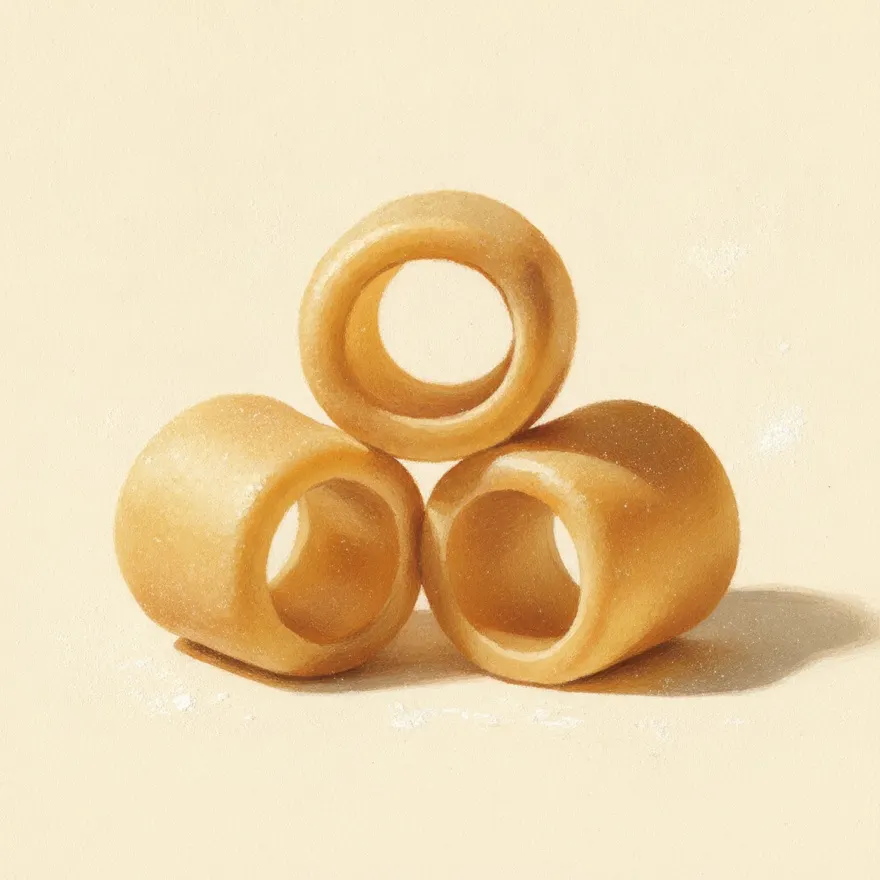
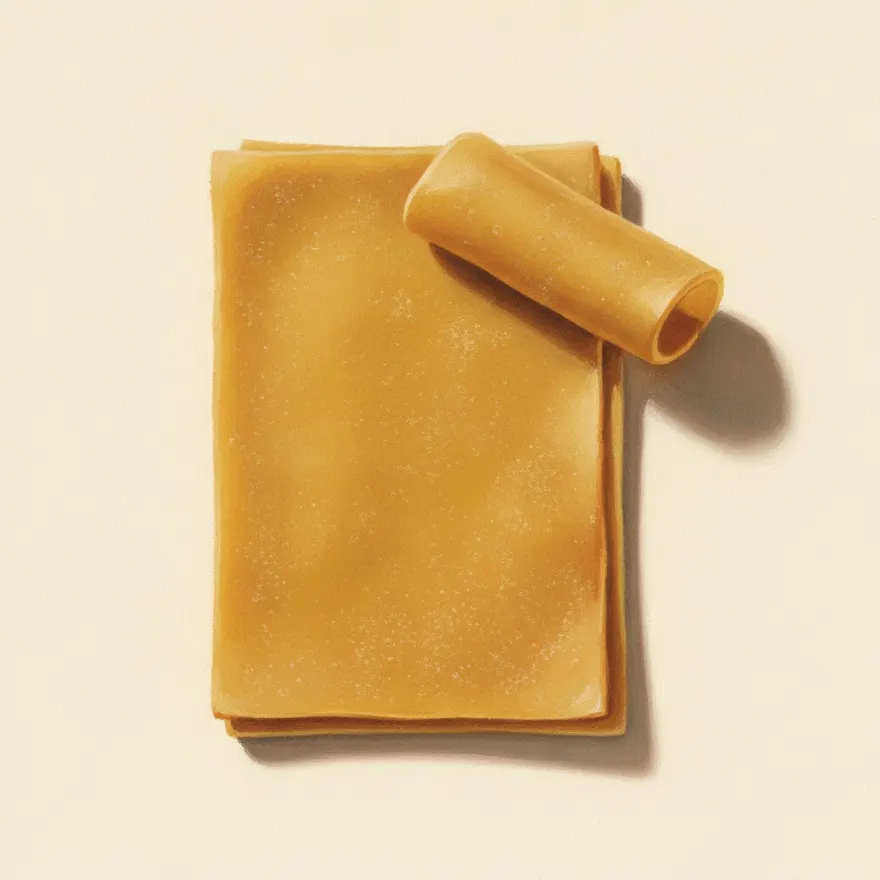
Wide smooth tubes. Paccheri is long and collapses into a flat oval under sauce, occhi di lupo is a short wide tube named for a wolf's eye, and calamarata is a short ring cut to resemble squid.
Stay in the loop
From the Almanac
Updates from Pasta Almanac, when there is something worth sharing.