Vesuvio
veh-SOO-vee-oh
Also known as vesuvio di gragnano, girelle.
What it is
Vesuvio is a short extruded pasta whose spiraled, peaked cone echoes the silhouette of Mount Vesuvius, the volcano above the Bay of Naples it is named for. It is a modern Campanian shape rather than an antique one, produced almost entirely by makers in and around Gragnano such as Afeltra, Gentile, and La Fabbrica della Pasta, who draw it through bronze dies for a rough, sauce-gripping surface. The body widens from a thin top to a broad, ridged base, and the same shape is sold under the name girelle. Several makers carry it as part of the Pasta di Gragnano IGP line.
Named for Mount Vesuvius, the volcano above the Bay of Naples, whose peaked, spiraled cone the shape is built to resemble. Makers and references agree the form is a direct homage to the volcano rather than a word with separate roots.
What sauce it wants, and why
The piece is built like a hollow swirl that climbs from a wide base to a thin peak, so sauce settles into the folds and the central cavity instead of sliding off. That structure suits hearty, chunky dressings, a sausage or meat ragu, a vegetable ragu, or a thick tomato sauce, where flecks of solids lodge in the curves. It holds up to baking as well, which is why it stands in for fusilli in oven dishes.
No vesuvio? Use these
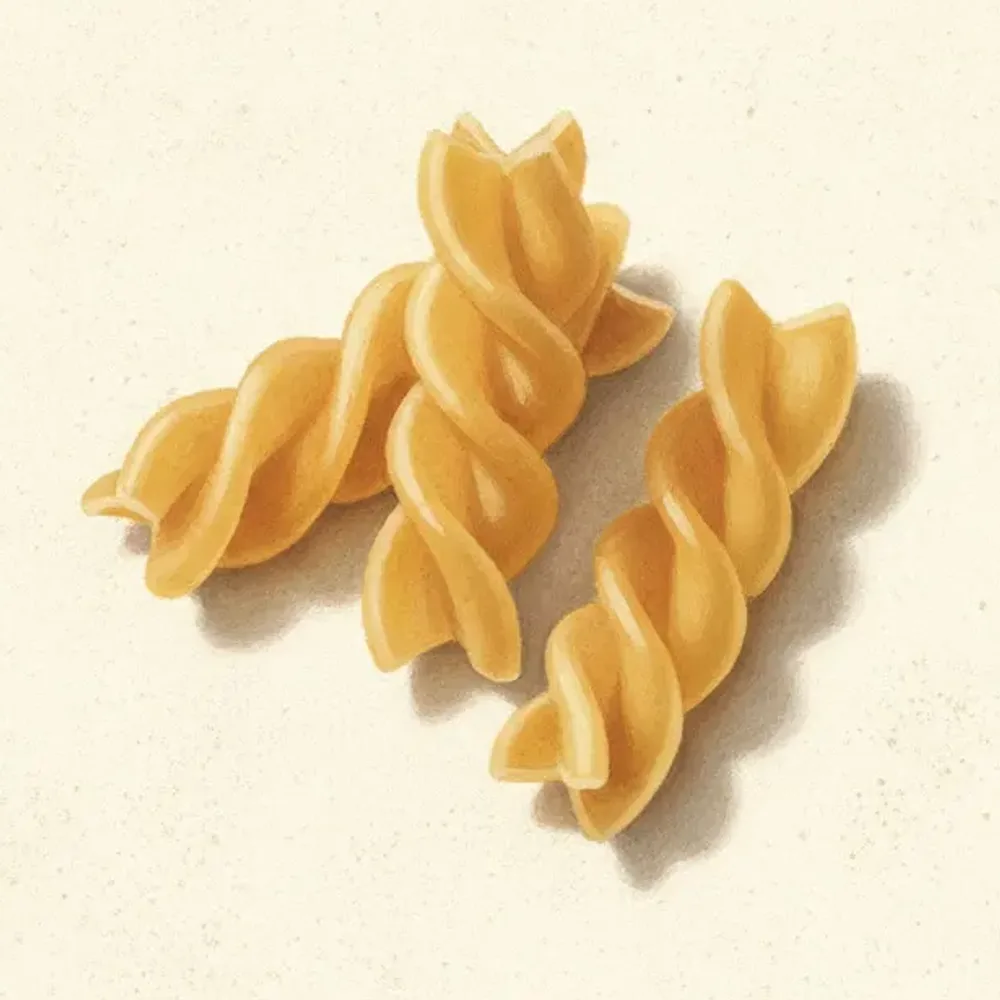
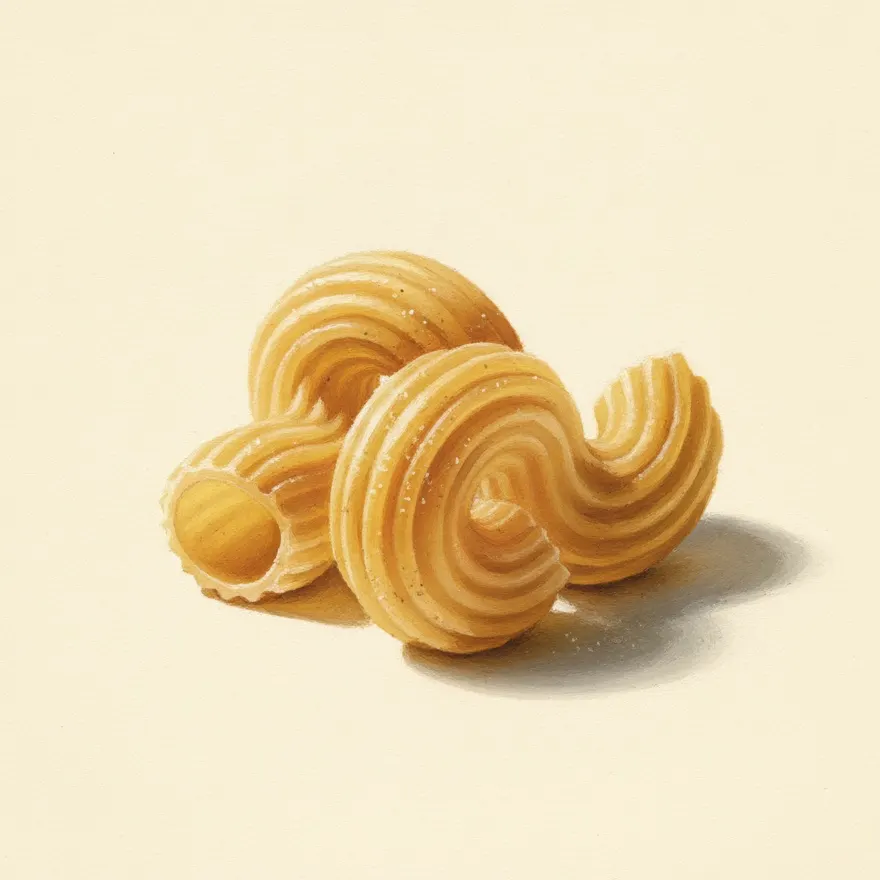
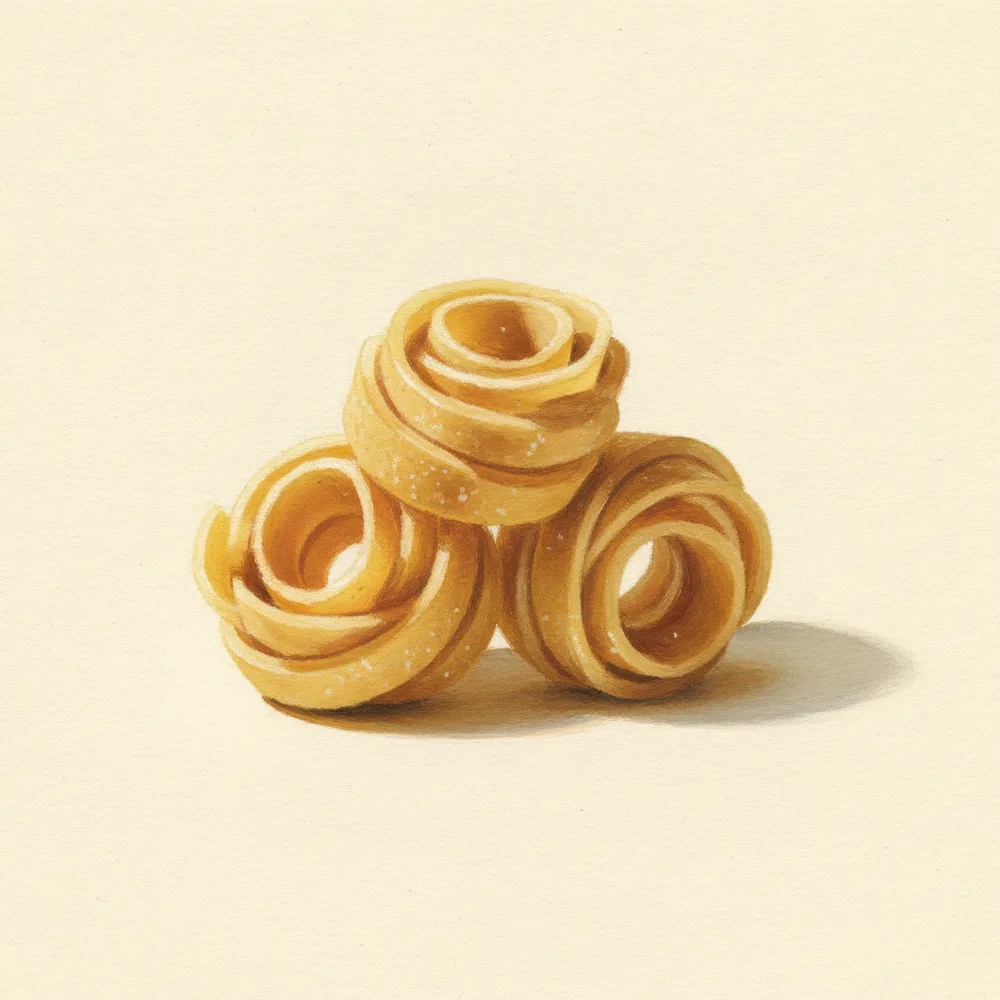
Closest swaps by sauce behavior, not by looks. The ones most easily confused with vesuvio, and how they read.
Newsletter
Pasta mail
A new shape now and then, plus whatever pasta rabbit hole we fell down lately. No spam, promise.