Agnolotti
ah-nyoh-LOT-tee (Italian [aɲɲoˈlɔtti]; Piedmontese [aɲʊˈlɔt])
Also known as agnellotti.
What it is
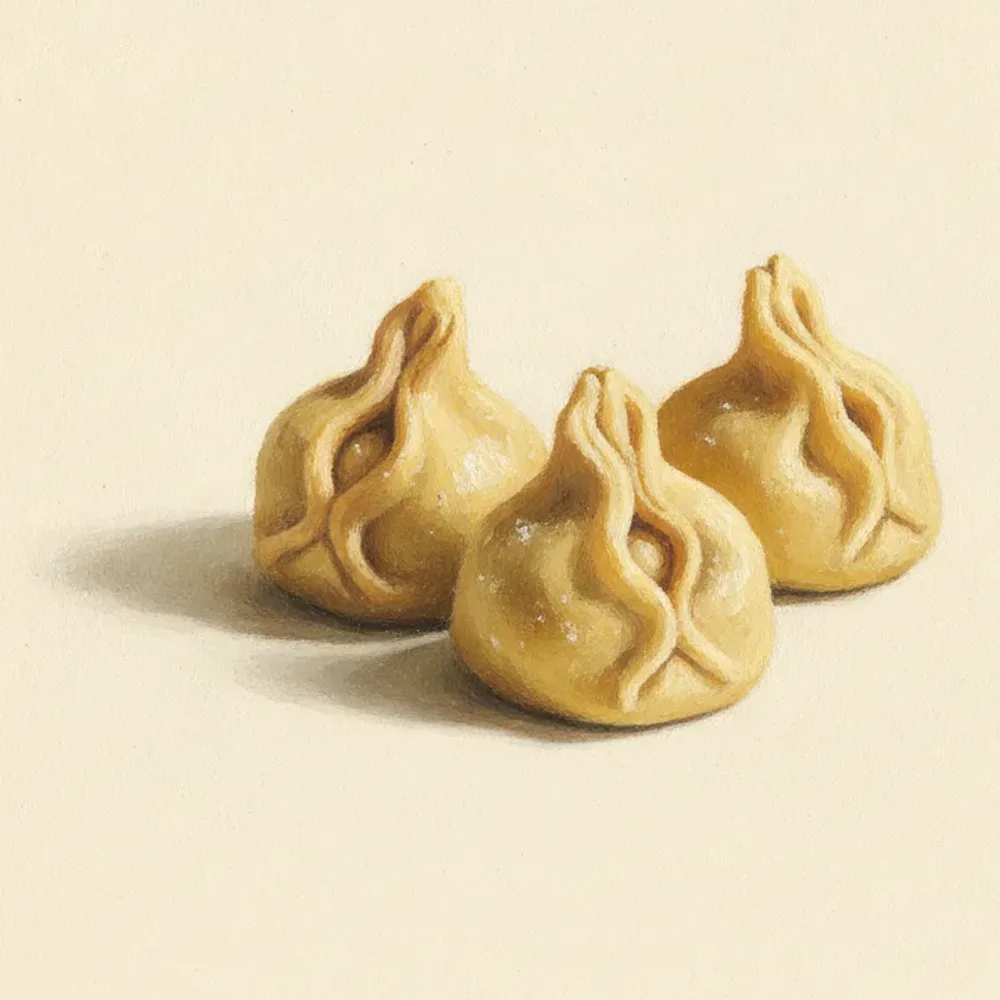
The filling started as thrift. Piedmontese cooks folded leftover spit-roasted meat and vegetables into thin egg dough, so Sunday's arrosto fed the table twice. Wikipedia records agnolotti as square parcels with sides of about one to two inches, served across Piedmont, with a smaller pinched form called agnolotti del plin. Plin is dialect for pinch: cooks press thumb and forefinger between each mound of filling to seal it. La Cucina Italiana describes the old service al tovagliolo, the cooked pasta laid in a napkin to hold its softness and eaten plain so the filling stands out. The same roast gave the dressing, since the meat juices, the sugo d'arrosto, sauced the pasta the meat had stuffed. The del plin form belongs to the Langhe and Monferrato.
Sources disagree. Treccani derives the word from anellotto, an augmentative of anello, meaning ring, pointing to the shape. Wiktionary gives the same root, most likely from anegliotto, built on anegli, an archaic plural of anello, plus the augmentative suffix -otto. A separate tradition, reported by Wikipedia and noted as an alternative by Wiktionary, attributes the name to a cook from Montferrat called Angiolino or Angelot who is said to have invented the recipe. Treccani and Wiktionary favor the ring derivation over the cook legend.
What sauce it wants, and why
The filling carries roasted meat, so the dressing stays quiet and lets it lead. The oldest version uses the sugo d'arrosto, the juices left from the roast that gave the filling, so meat meets meat. Butter melted with sage is the other classic, a fat that coats without crowding. The del plin pinch matters here: sealing each pouch by hand traps the filling's flavor and gives the pasta ridges and folds that catch the gravy or butter. Heavy sauces would bury the point.
Classic plates: agnolotti del plin, agnolotti al sugo d'arrosto.
No agnolotti? Use these
Closest swaps by sauce behavior, not by looks. The ones most easily confused with agnolotti, and how they read.
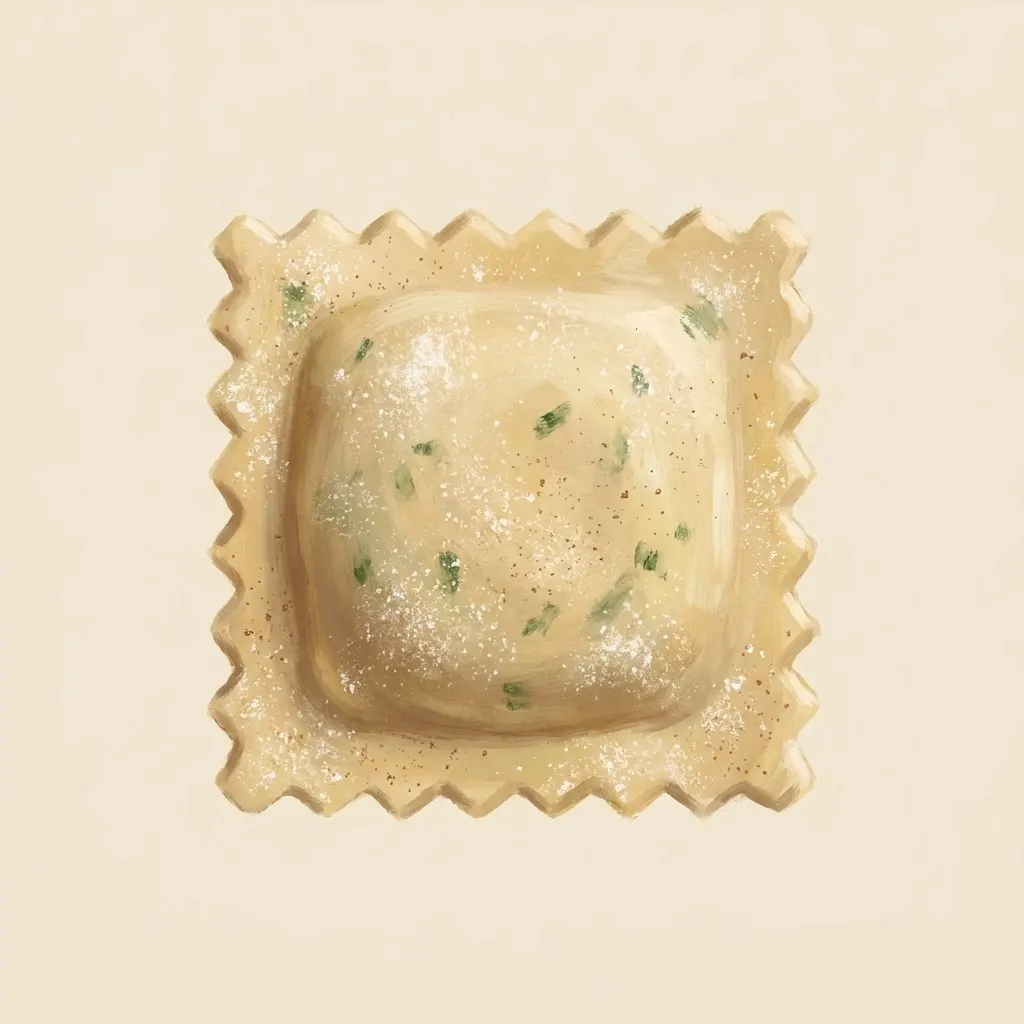 Ravioli
two sheets sealed around a filling, square or round
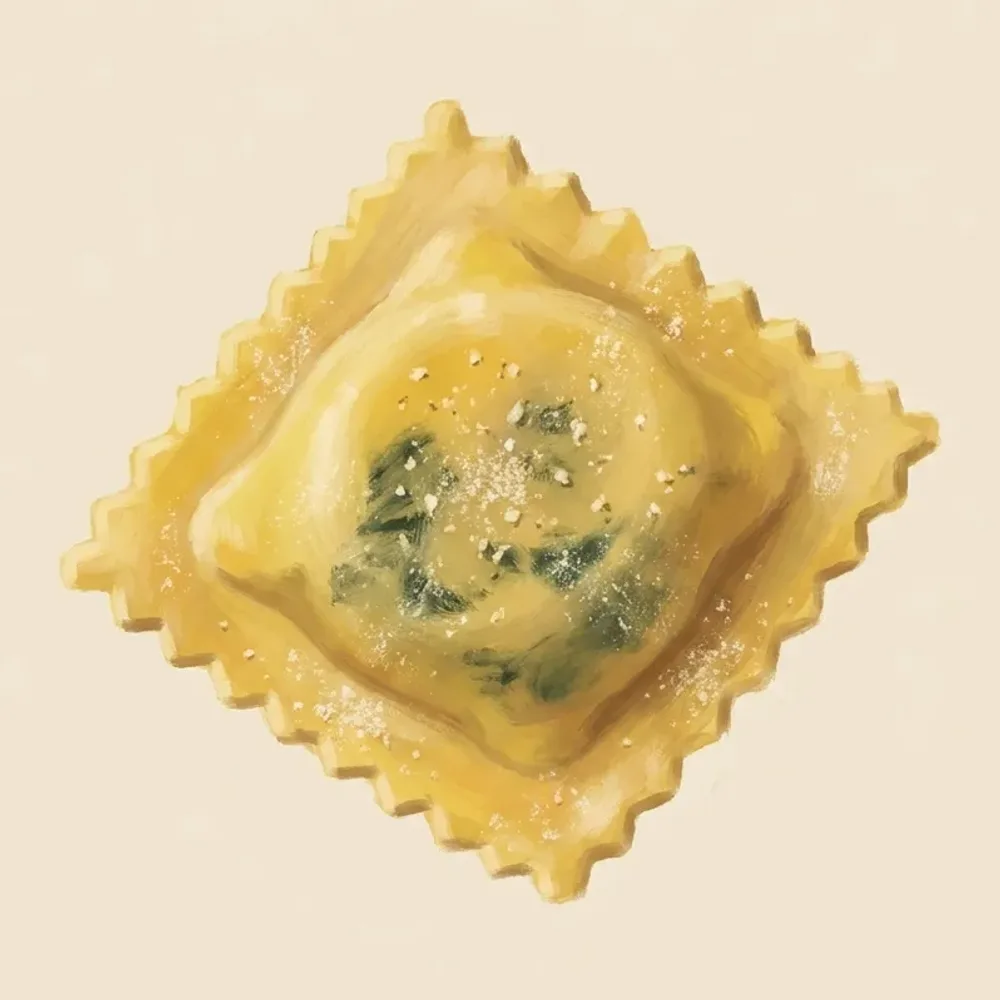 Tortelli
two sheets of egg sfoglia sealed around a filling into a flat square or rectangle, the regional fillings change but the flat sealed parcel does not
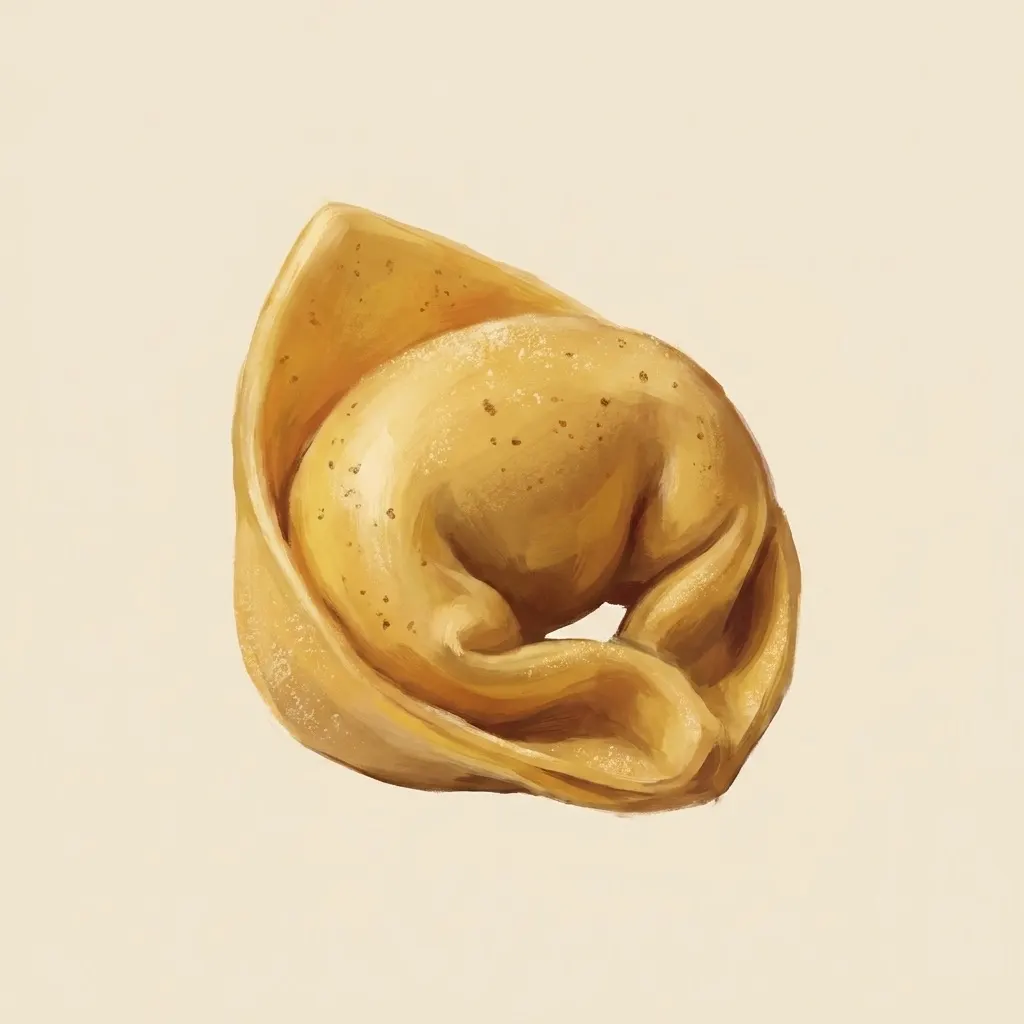 Tortellini
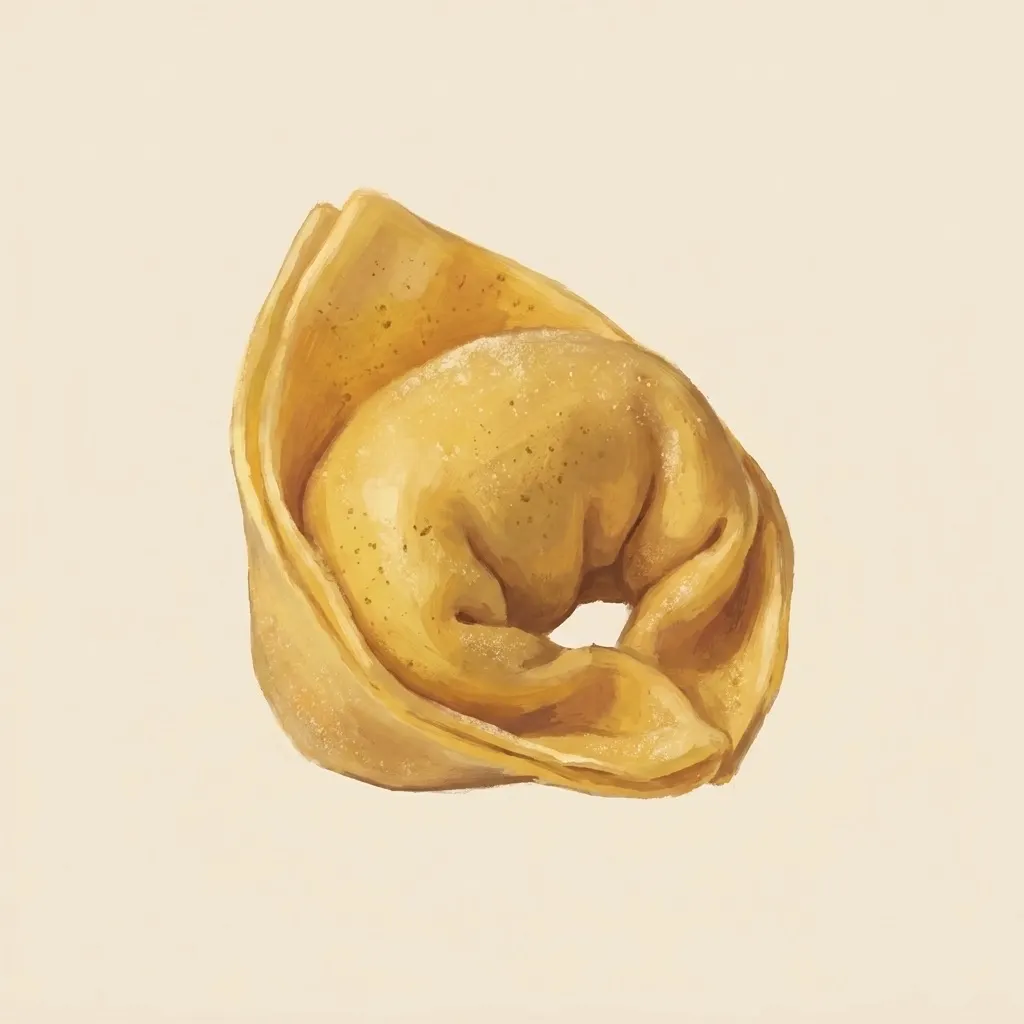
sealed ring, a square of sfoglia folded into a triangle over the filling, then wrapped around the finger and pinched closed
Agnolotti vs Ravioli·Agnolotti vs Tortellini·Agnolotti vs Cappelletti·Agnolotti vs Tortelloni
Easy to confuse with
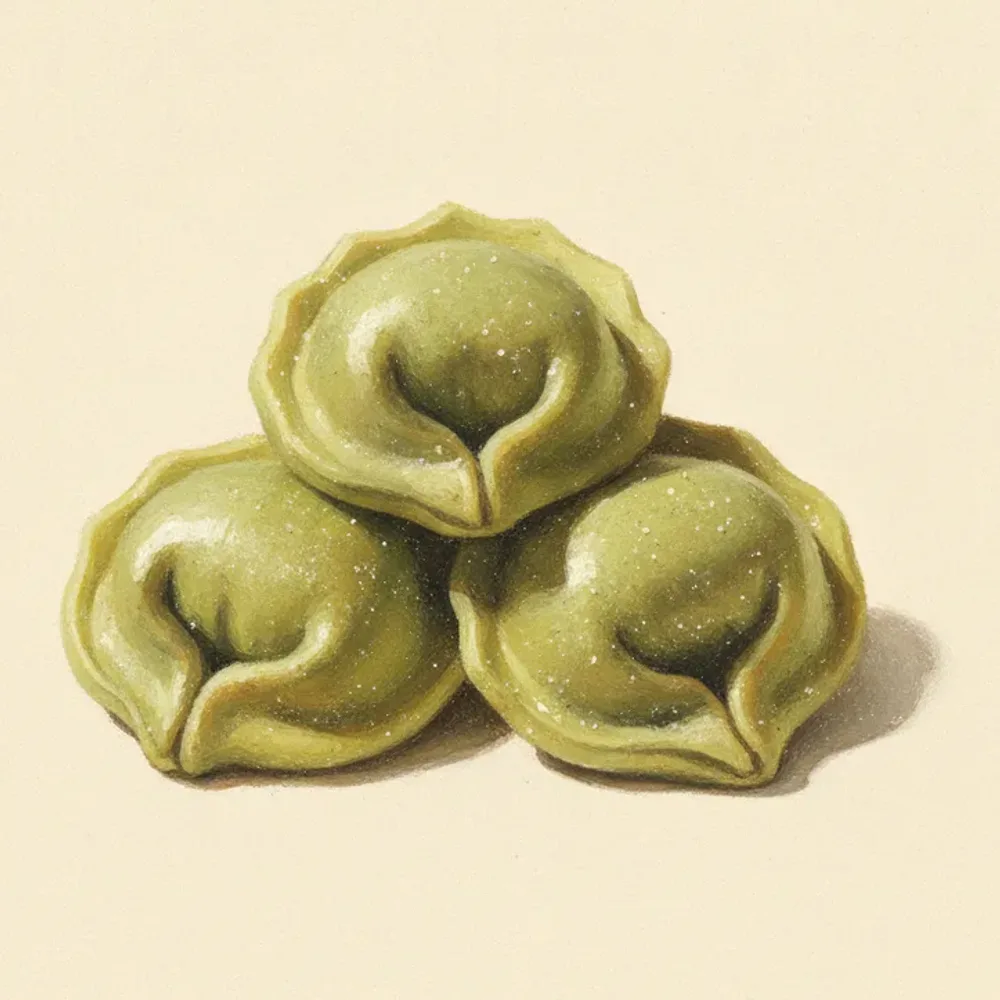
Filled parcels. Ravioli and tortelli are flat sealed pillows, agnolotti a smaller pinched one, while tortellini and cappelletti fold into rings around a fingertip (cappelletti peaked like a hat). Tortelloni is the big ring, balanzoni its green spinach-dough version, and cappellacci a larger peaked hat filled with squash.
Stay in the loop
From the Almanac
Updates from Pasta Almanac, when there is something worth sharing.