Troccoli
TROHK-koh-lee
Also known as troccolo, troccoli pugliesi, troccoli foggiani.
What it is
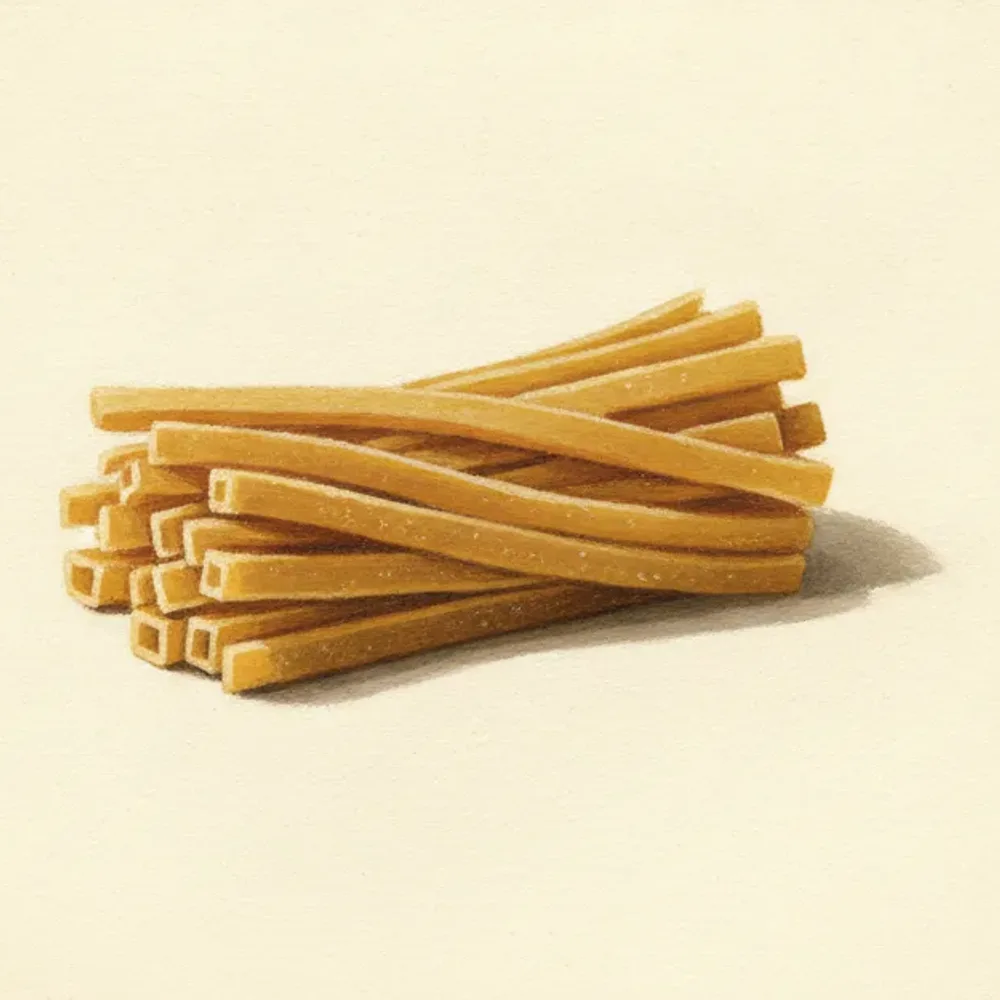
Troccoli is a thick fresh strand cut by rolling a grooved wooden pin called a troccolaturo, or troccolo, across a sheet of dough, which gives each strand a square or slightly oval section and a rough surface. The tool is old: Bartolomeo Scappi described a grooved metal pin as a ferro da maccheroni in his Opera dell'arte del cucinare of 1570, and over time the metal gave way to hardwoods such as beech. The shape belongs to the Daunia, the plain around Foggia in northern Puglia, and to parts of neighboring Basilicata. It is a cousin of spaghetti alla chitarra by result, a square strand, but the method is the point of difference: troccoli is cut with the rolling troccolo, not pressed through the wire frame of a chitarra.
The name traces to the troccolo, the grooved rolling pin that cuts the strands. That word comes from the Latin torculum (Italian torchio, a press), from the verb torquere, to twist or press. A folk reading also hears the troc-troc sound the tool makes rolling across the dough, but the documented root is the press.
What sauce it wants, and why
A thick rough square strand carries weight and clings to dense sauces, so the traditional dressings are hearty. In and around Foggia the Sunday format is a meat ragu. In autumn the strands take local mushroom sauces, and along the Gargano coast they are dressed with seafood.
Classic plates: troccoli al ragu, troccoli con funghi cardoncelli, troccoli ai frutti di mare.
No troccoli? Use these
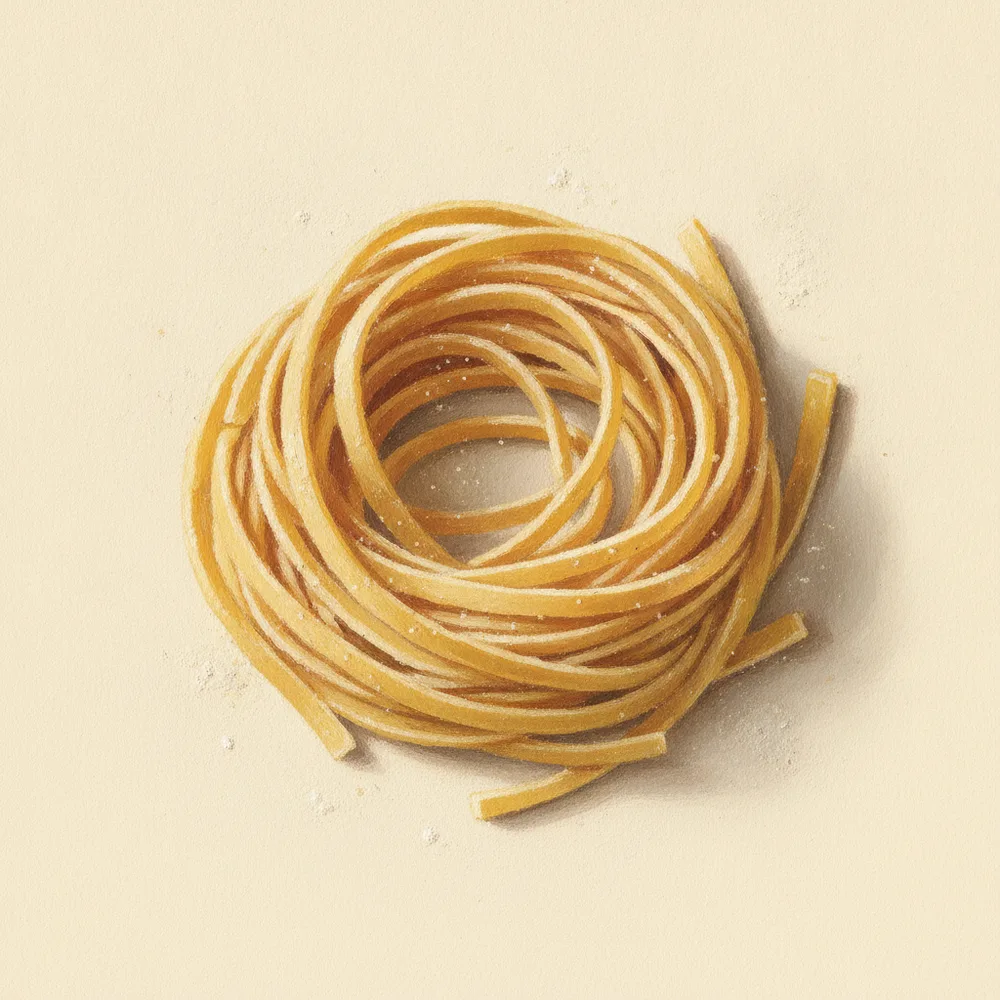
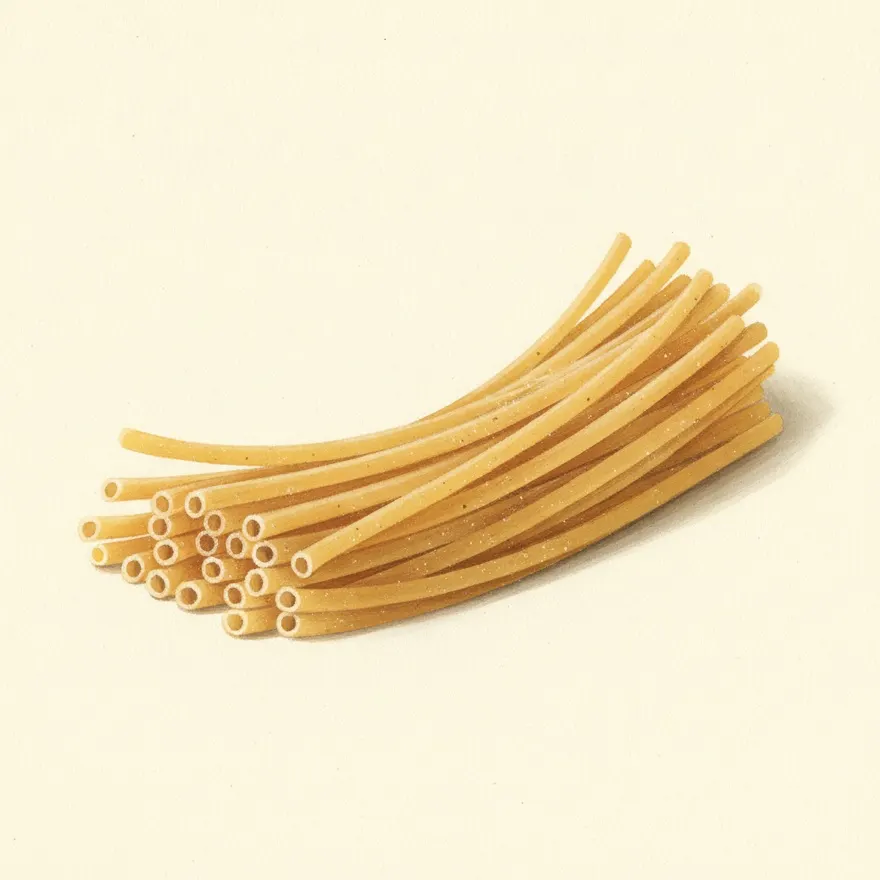
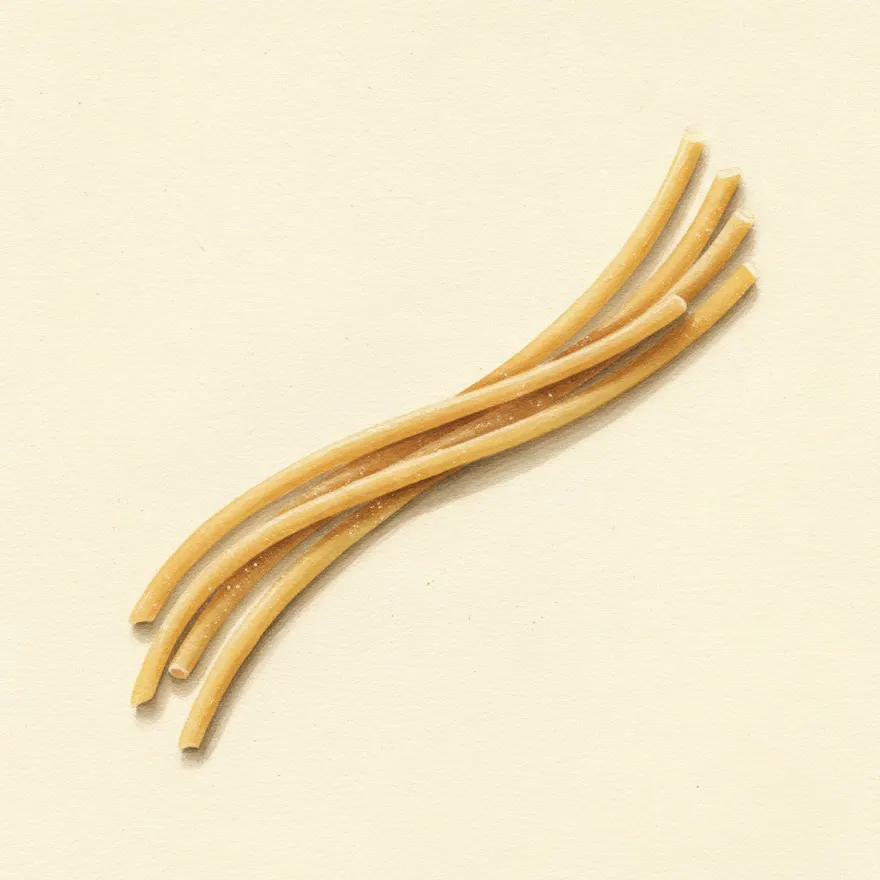
Closest swaps by sauce behavior, not by looks. The ones most easily confused with troccoli, and how they read.
Easy to confuse with
Square-section strands. Tonnarelli is the Roman and Abruzzese chitarra strand pressed through a wire frame, troccoli the Pugliese one cut with a grooved rolling pin, and stringozzi the Umbrian hand-rolled shoelace.
Newsletter
Pasta mail
A new shape now and then, plus whatever pasta rabbit hole we fell down lately. No spam, promise.