Lagane
lah-GAH-neh
Also known as lagana, laganelle.
What it is
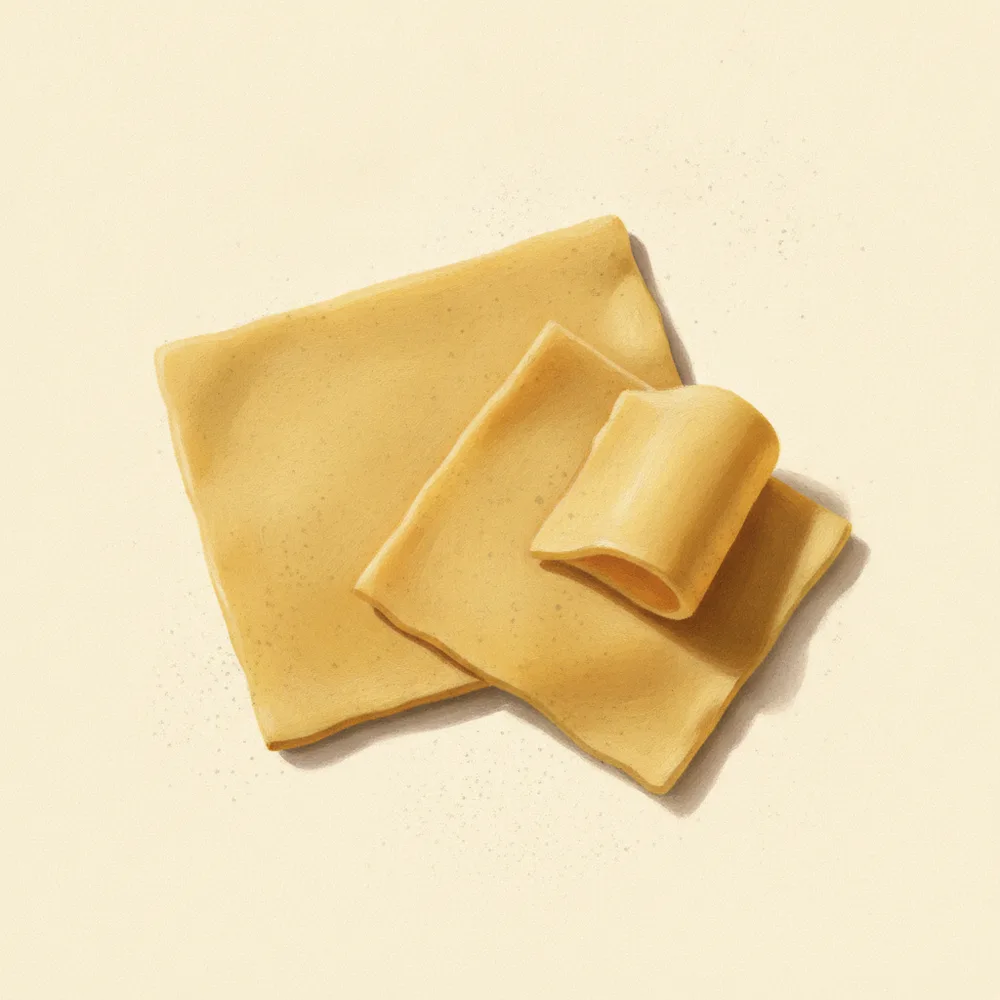
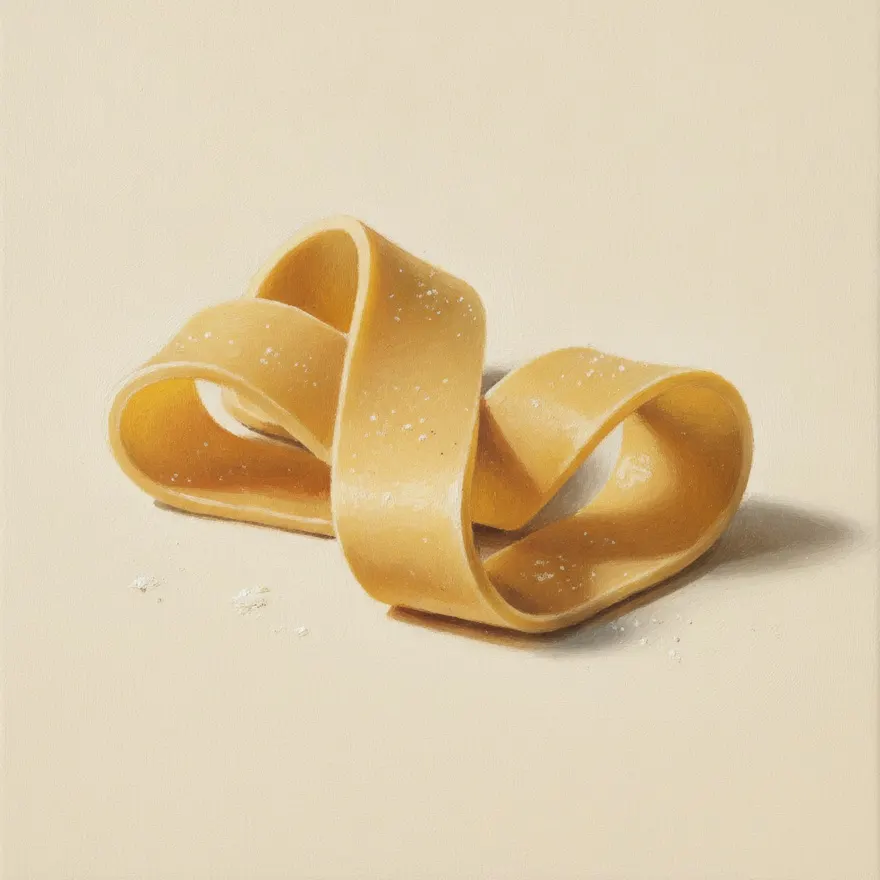
Lagane are broad short ribbons of eggless durum wheat pasta from the Italian south, and their signature partner is chickpeas, the dish lagane e ceci. Wider and thicker than tagliatelle but cut shorter and rougher than a lasagna sheet, they are boiled and tossed rather than layered and baked, which sets them apart from lasagne despite the shared root. The name descends through Latin laganum from the Greek laganon, a thin sheet of dough. Horace mentions laganum alongside leeks and chickpeas in his Satires, and Apicius lists it in De re coquinaria, though period sources describe laganum as a fried or baked sheet of dough, so these are early mentions of the word, not proof that lagane have passed down unchanged. The shape stays common as home and trattoria cooking across Basilicata, Calabria, Campania, and Puglia.
From the Italian lagana, from Latin laganum, itself from Ancient Greek laganon, a thin sheet of dough. Wiktionary defines laganum as a flatbread, usually fried in olive oil, and the modern pasta sense kept the strip-of-dough meaning.
What sauce it wants, and why
A broad rough surface and an eggless dough that cooks up firm let lagane grip a thick legume sauce, which is why the classic treatment is chickpeas stewed with garlic, rosemary, and olive oil. The short strips sit well in a soupy pasta e fagioli style bowl, where they carry broth and beans together. A simple tomato dressing also suits the rustic ribbon.
Classic plates: Lagane e ceci.
No lagane? Use these
Closest swaps by sauce behavior, not by looks. The ones most easily confused with lagane, and how they read.

Newsletter
Pasta mail
A new shape now and then, plus whatever pasta rabbit hole we fell down lately. No spam, promise.