The best shapes for ragu
The umbrella term for a long-simmered meat sauce, covering several regional traditions that differ more than the shared name suggests. What they have in common structurally is weight and a load of solid pieces that have to go somewhere.
The generic long-simmered meat sauce. Heavy and chunky, it needs wide bores, deep cups, or broad ribbons. Thin strands shed it.
Umbrella entry, see ragu-bolognese, ragu-napoletano, sausage-ragu for the specific traditions.
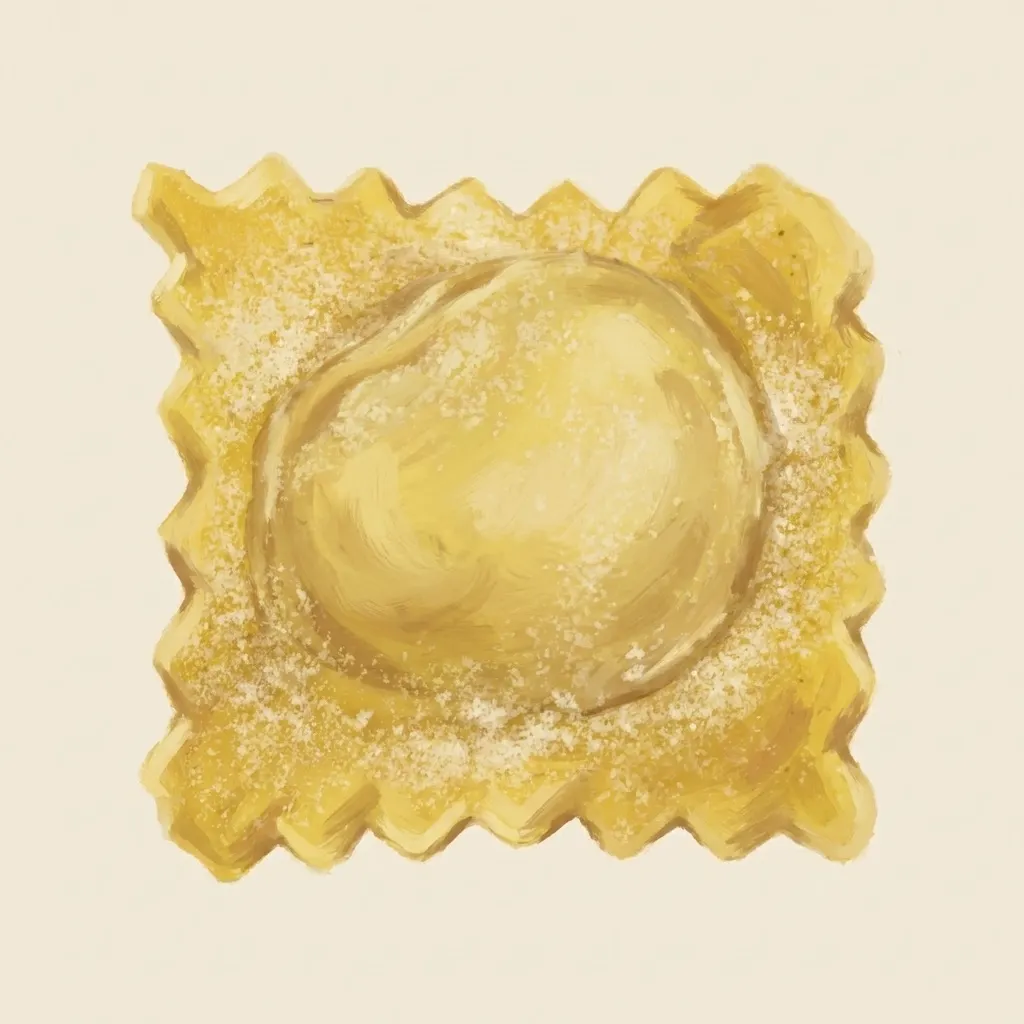
The filling carries roasted meat, so the dressing stays quiet and lets it lead.
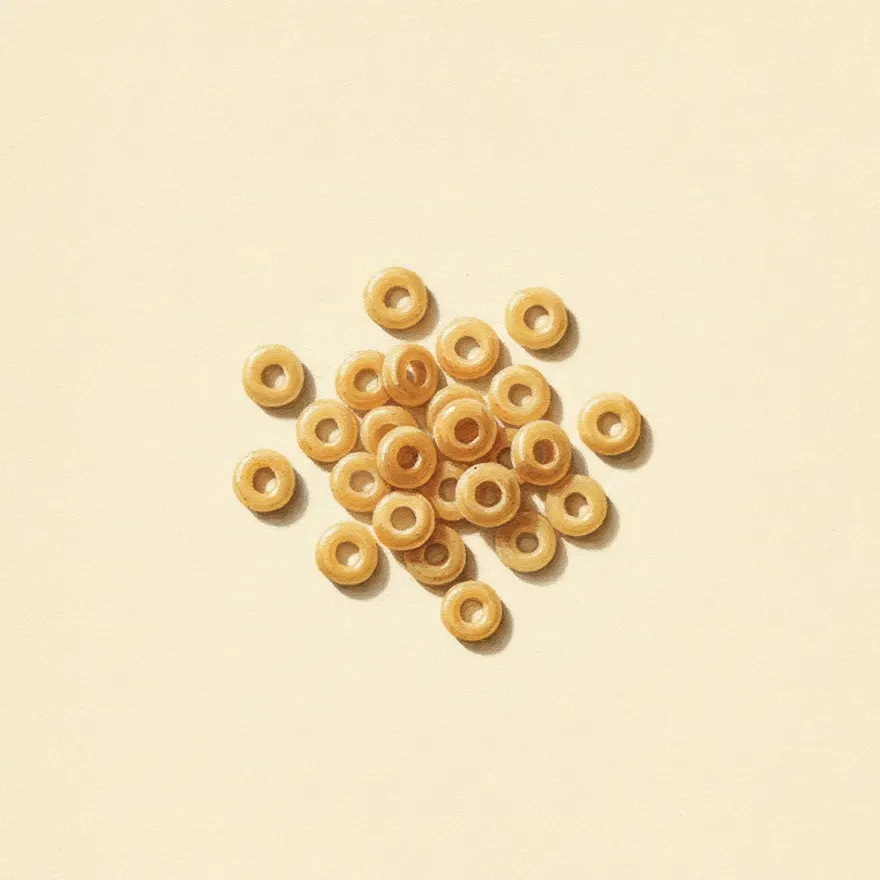
The rings are a binding shape, not a plating shape.
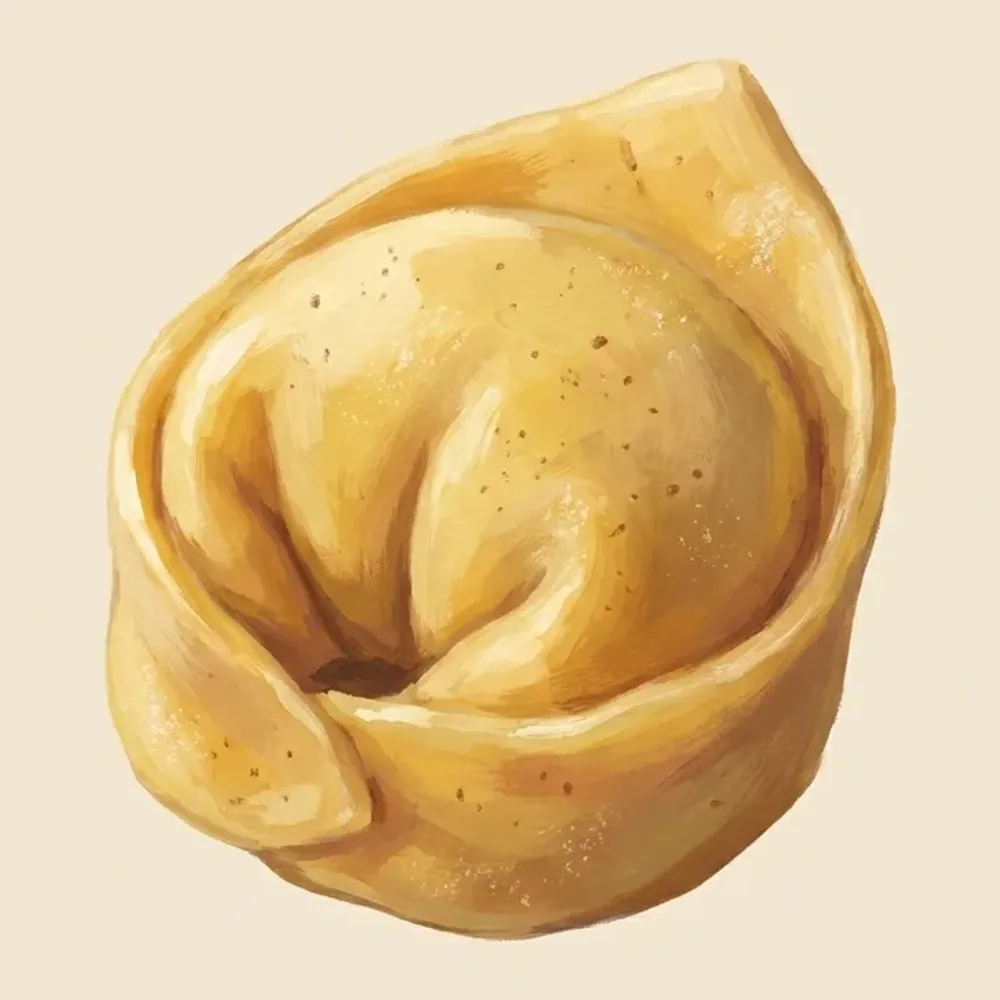
Anolini are tiny and made to be cooked and served in broth, not coated.
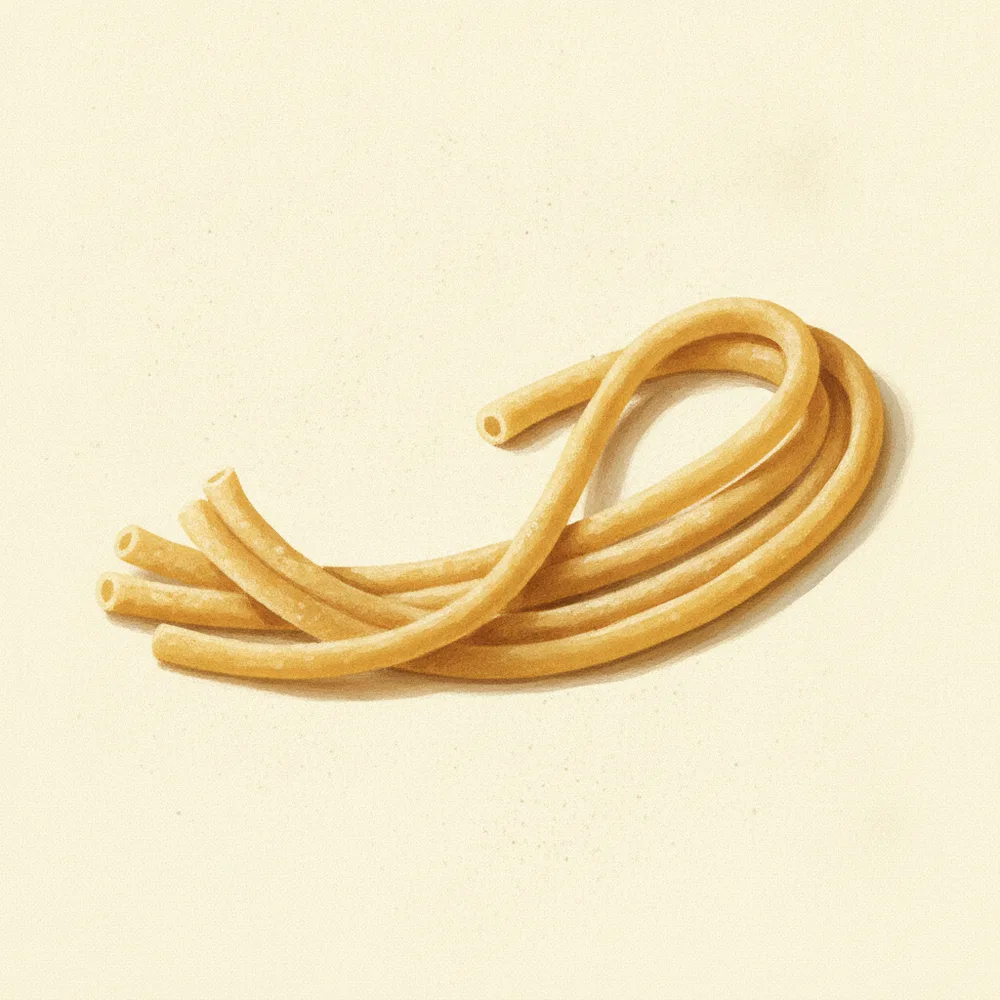
The rough bronze-drawn surface and porous whole-grain body grab and hold thick, fatty sauces far better than smooth spaghetti.
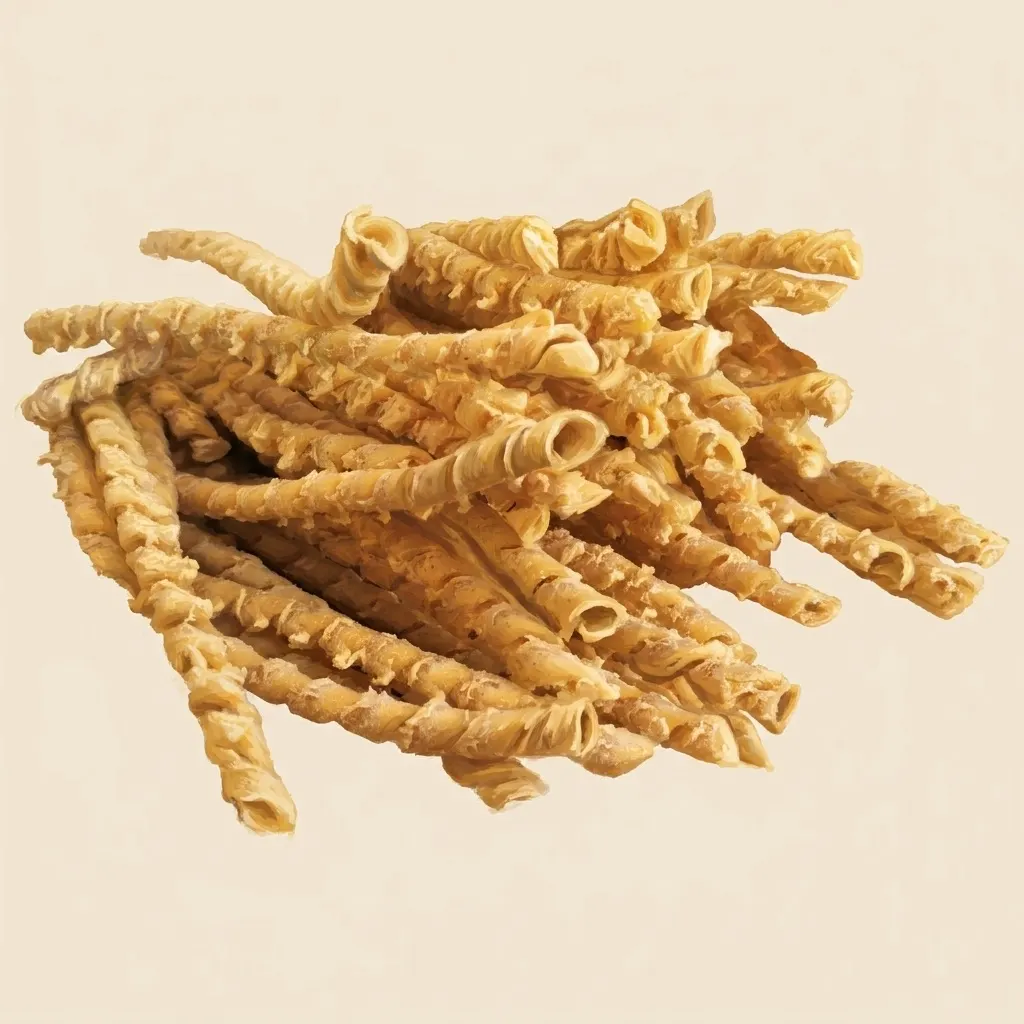
The long twist works like a spring.
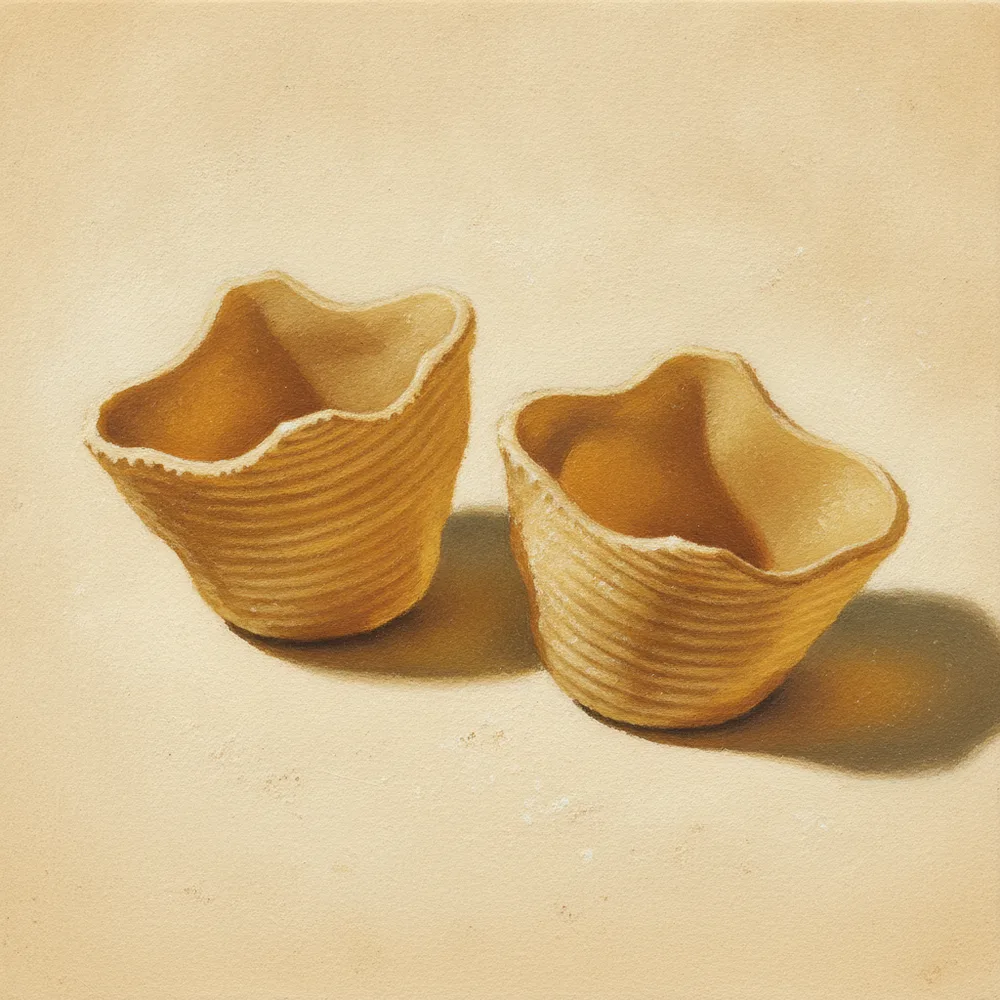
Caccavelle work as a single giant cup, parboiled and then stuffed and finished in the oven.
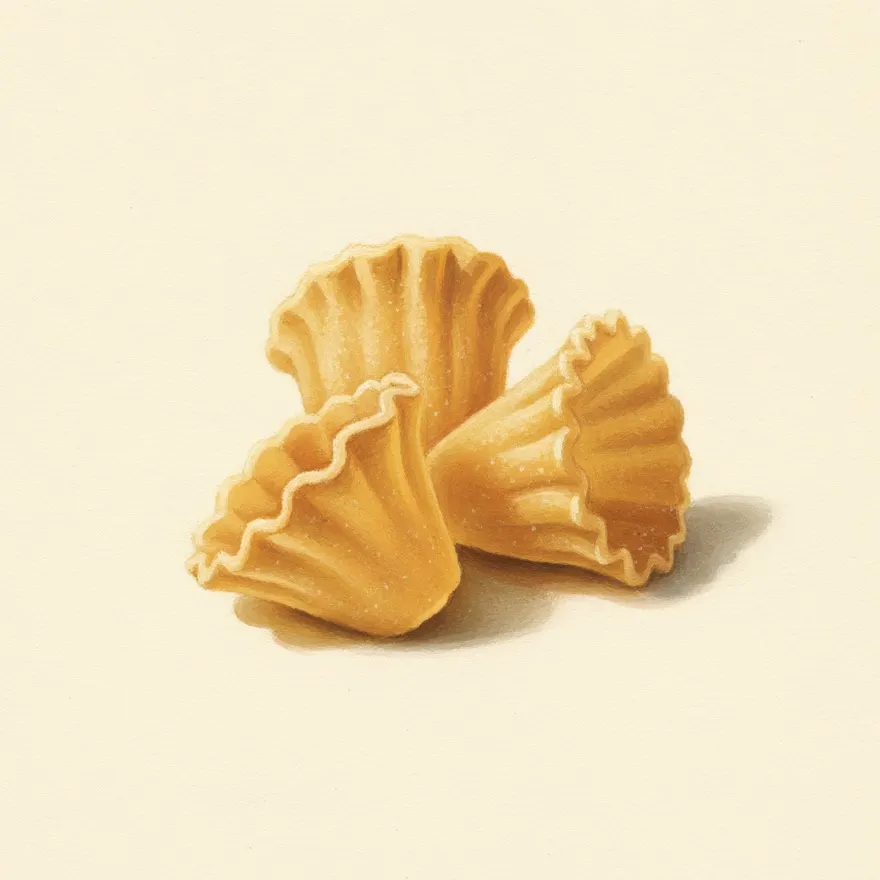
Campanelle works like a scoop with a grip.
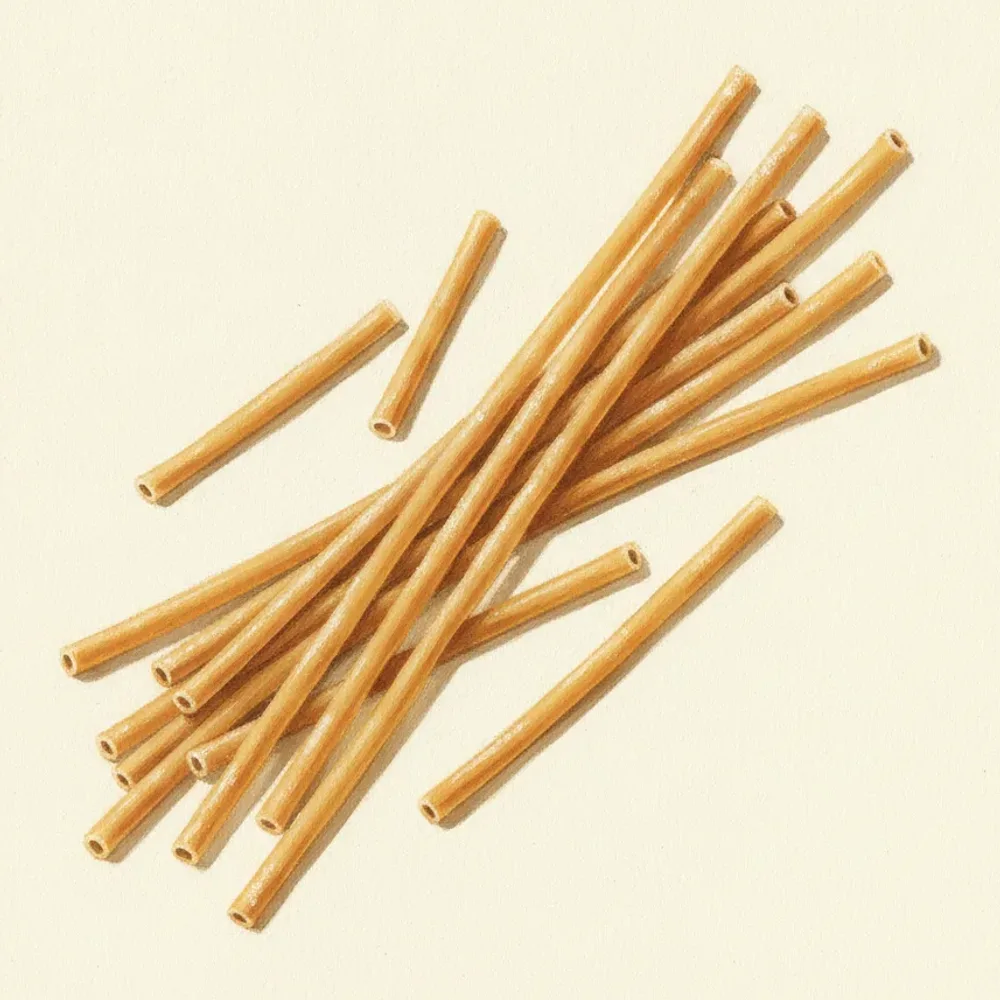
The wide round bore is the whole point.
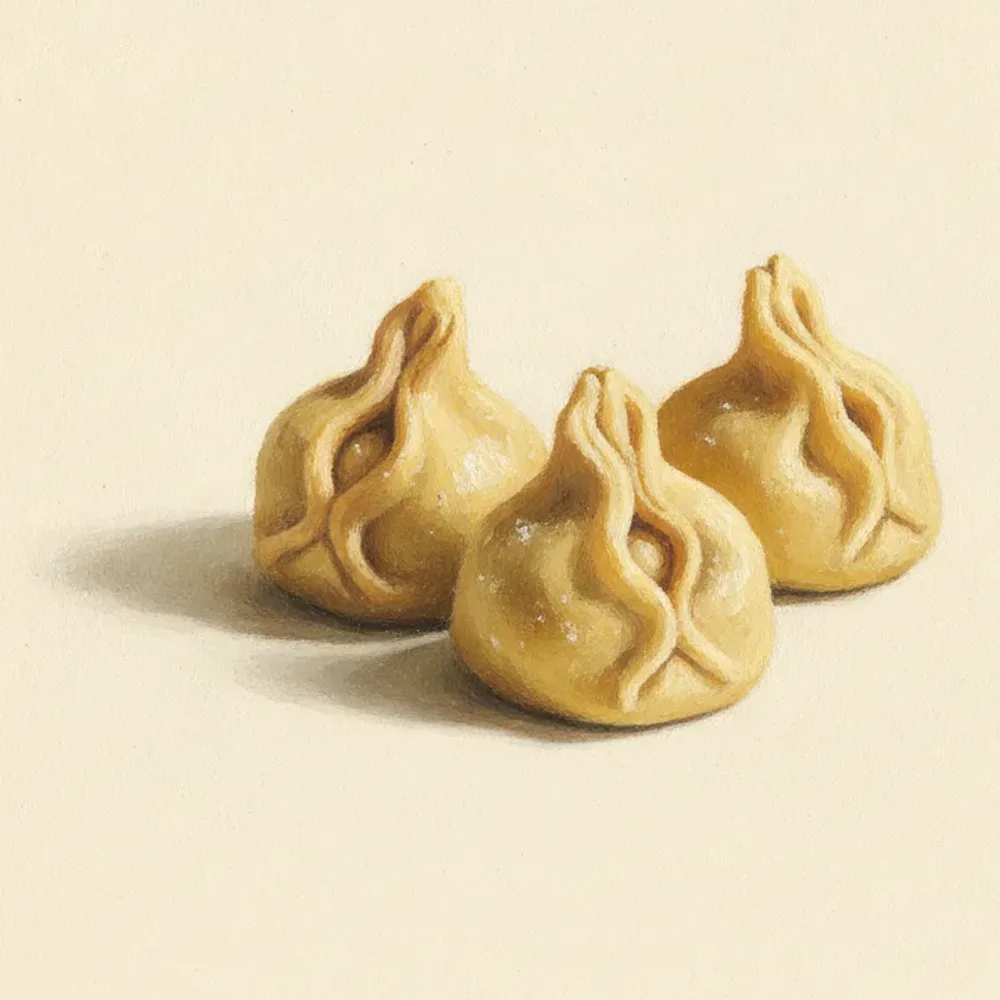
The filling is sweet and soft, built on cooked squash and cheese, so the dressing stays light and lets it lead.
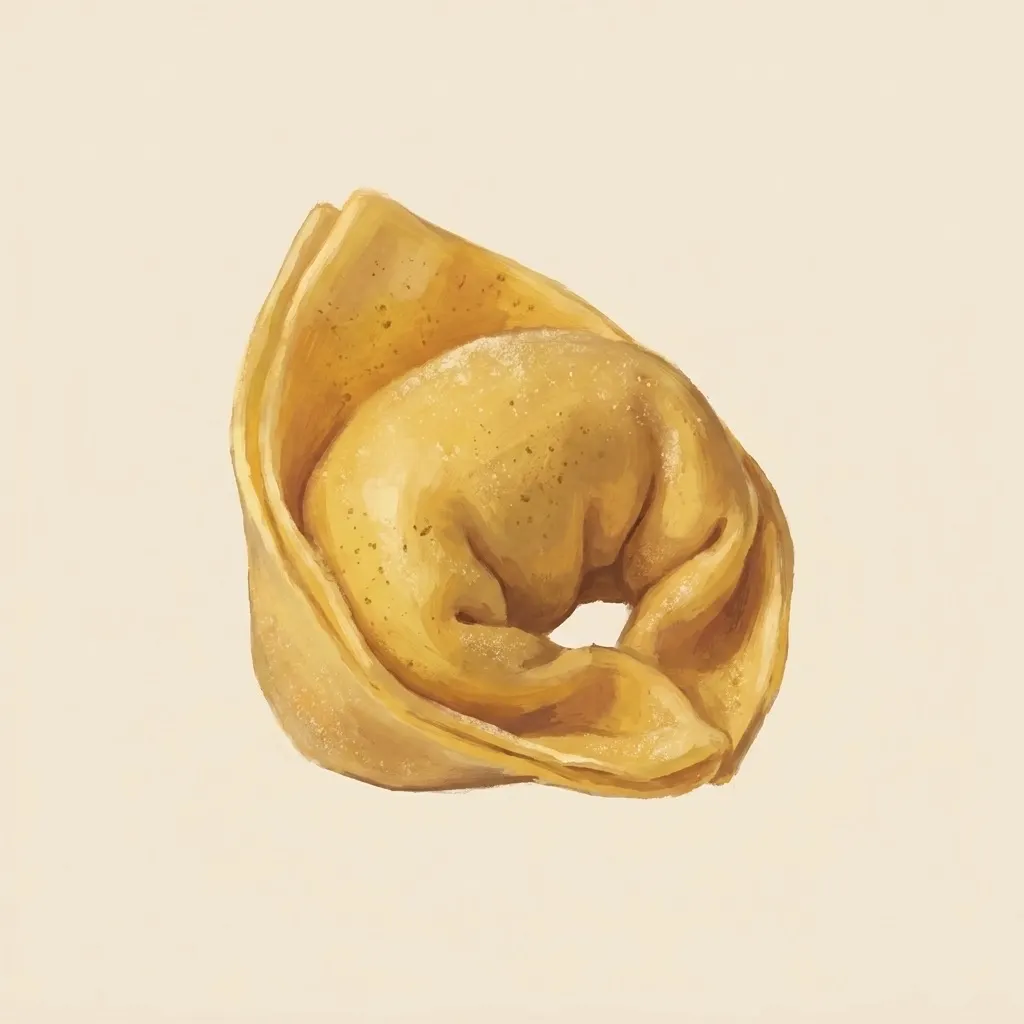
This is a filled hat, so the sauce works from the inside out.
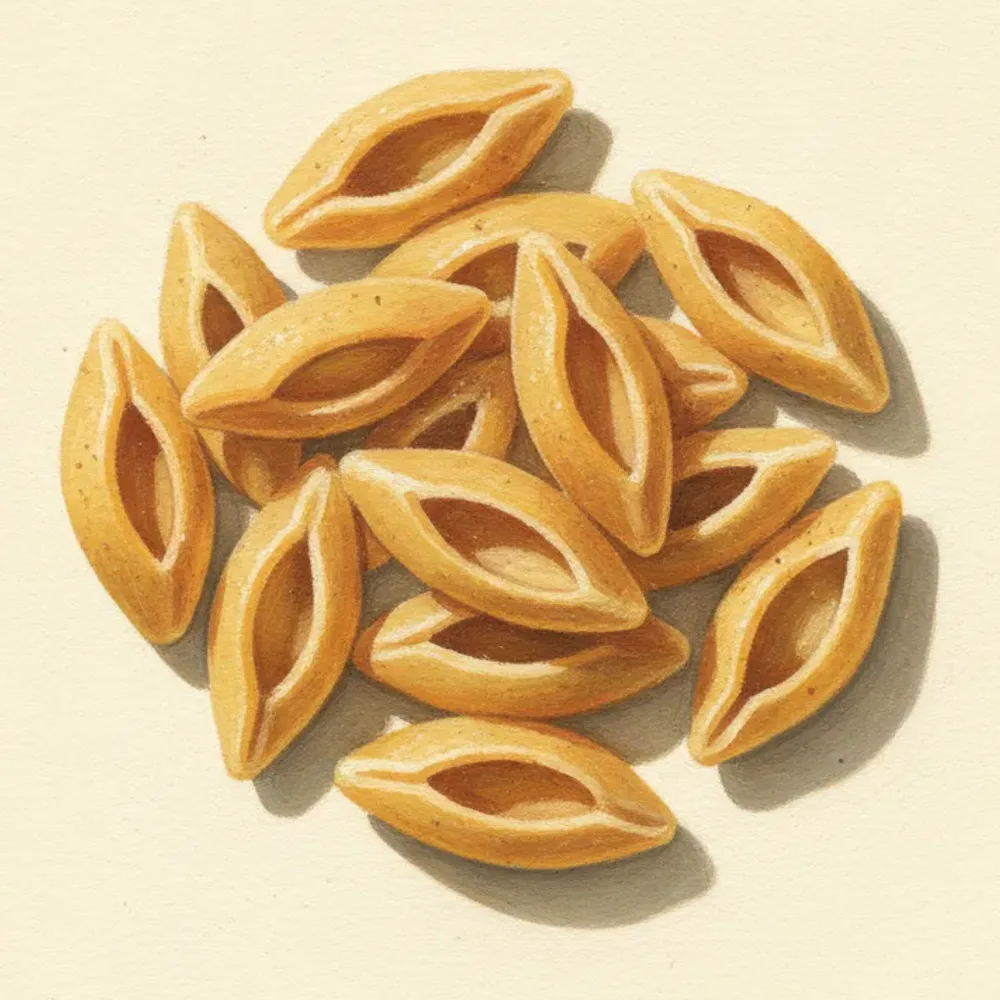
The long open hollow and the dragged-rough surface catch chunky sauce along the whole piece rather than just in a single curl.

Each piece is a narrow ribbon rolled in on itself, so the cut carries an open channel down its length and a loose s curve at the ends.
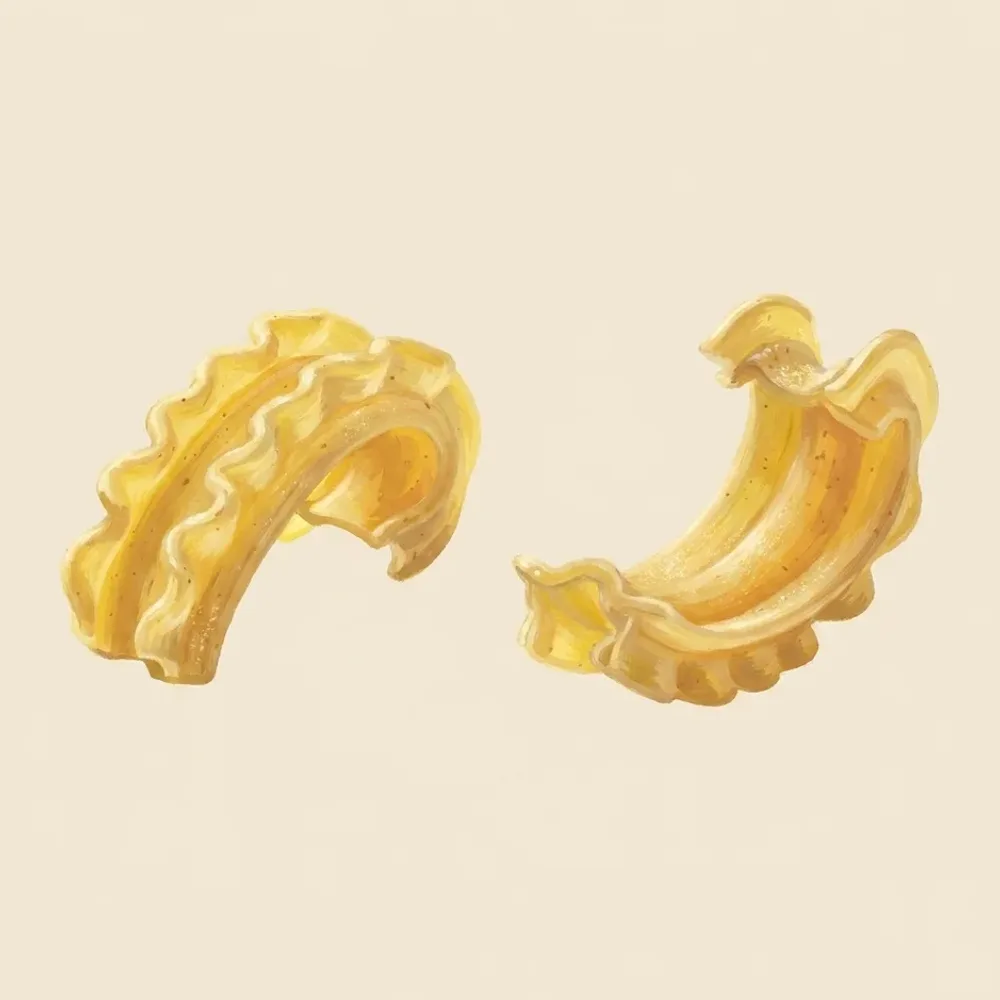
The geometry is built around catching sauce.
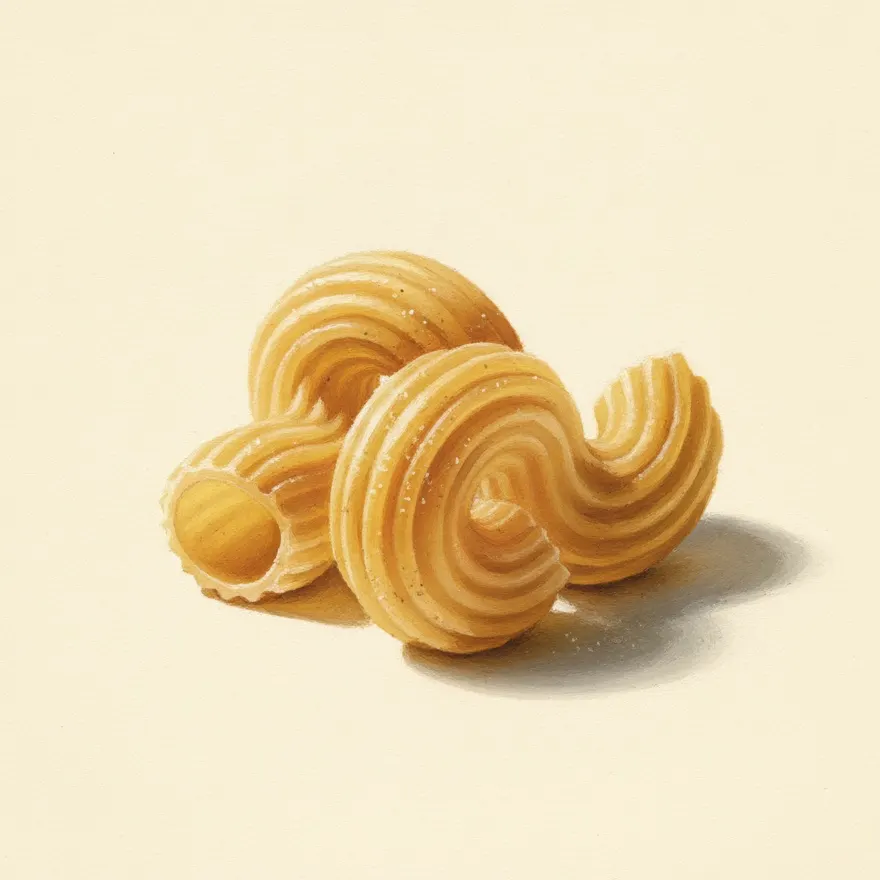
Cavatappi grips sauce three ways at once.
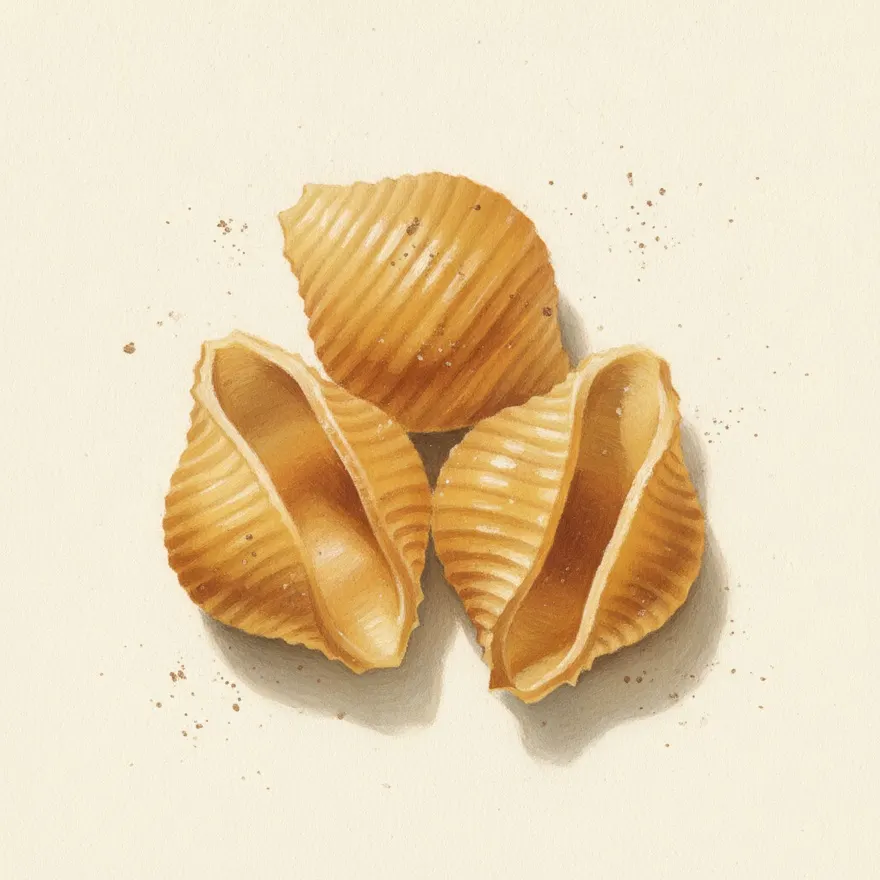
A shell is a scoop.
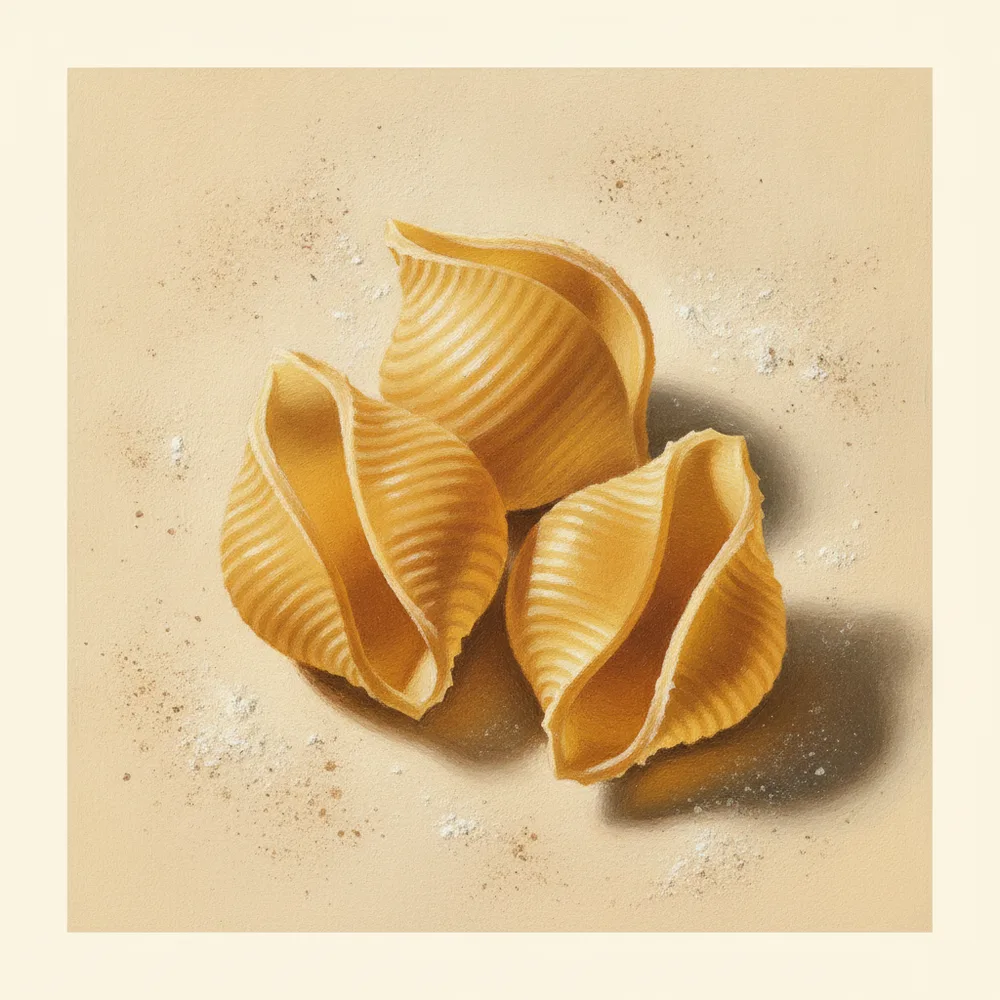
Conchiglioni are built to be stuffed and baked rather than tossed.
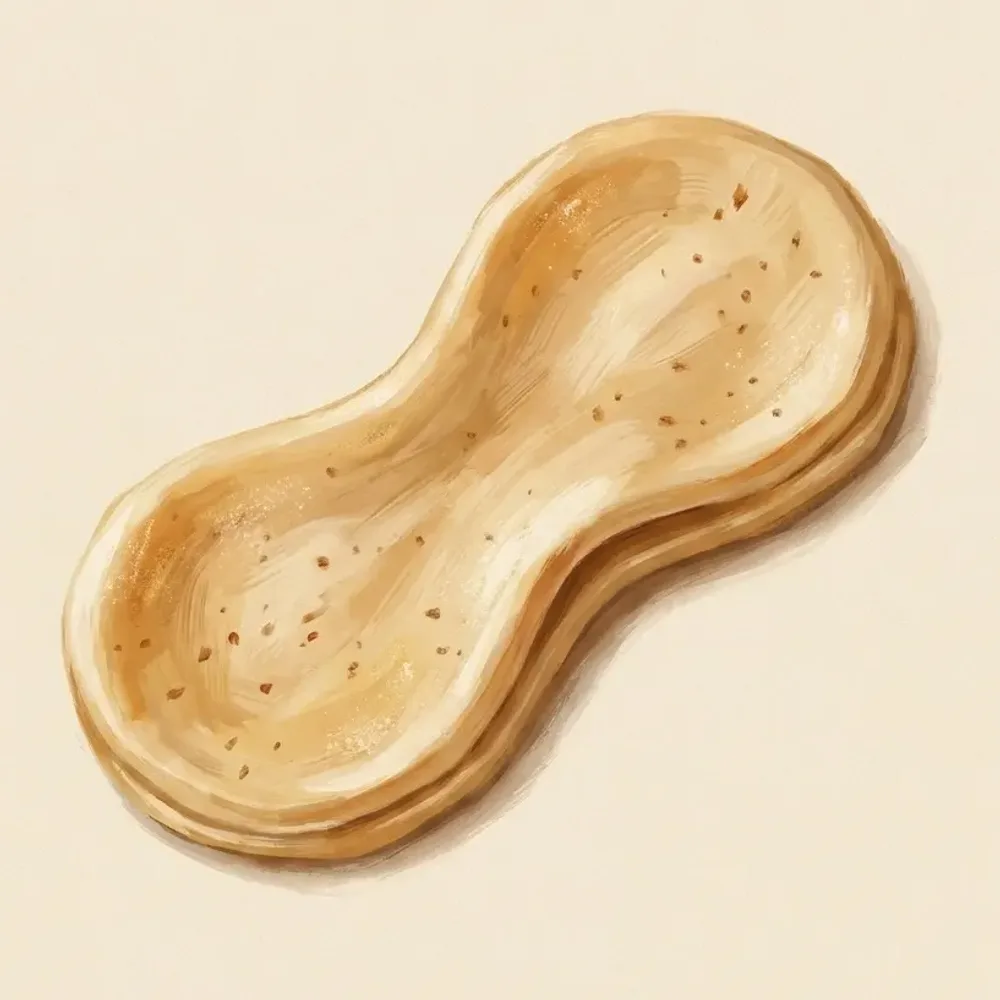
The embossed relief is the point.
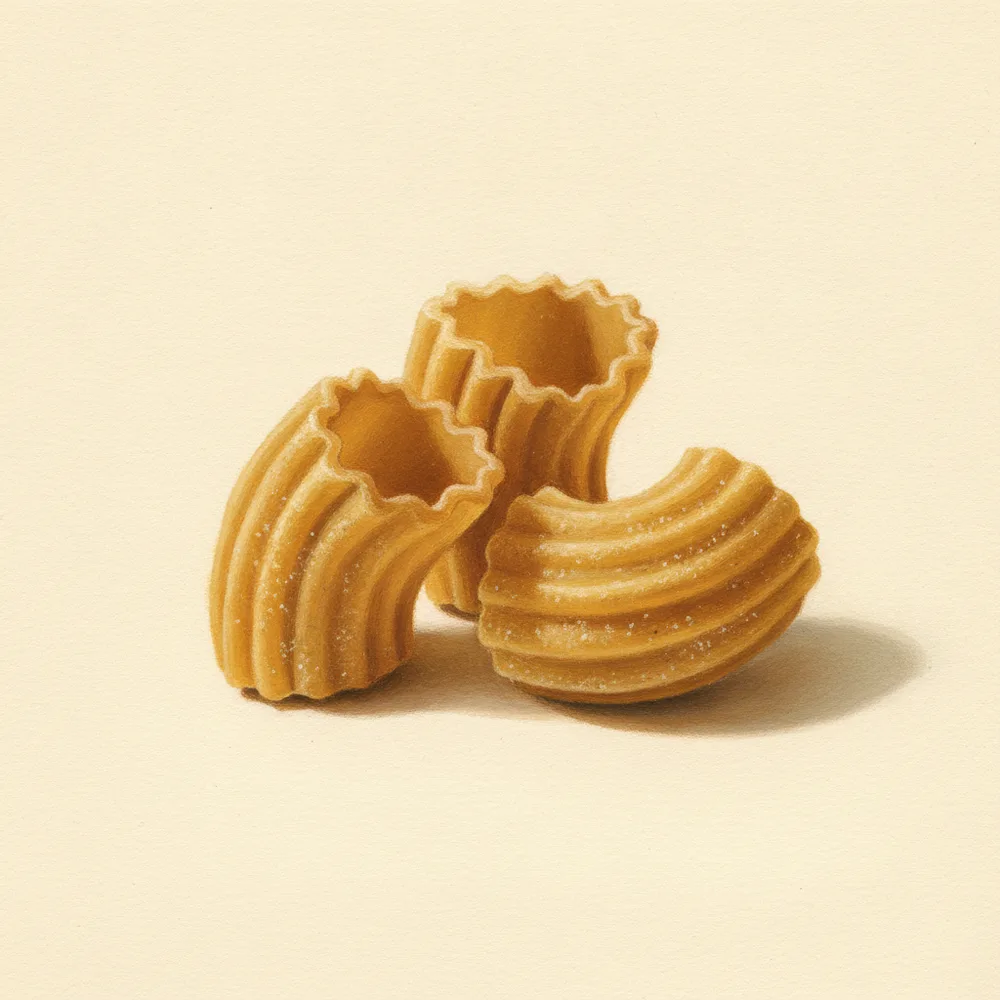
The hollow inner curve scoops and holds sauce while the ruffled crest and light ridges along the outside catch whatever coats them.
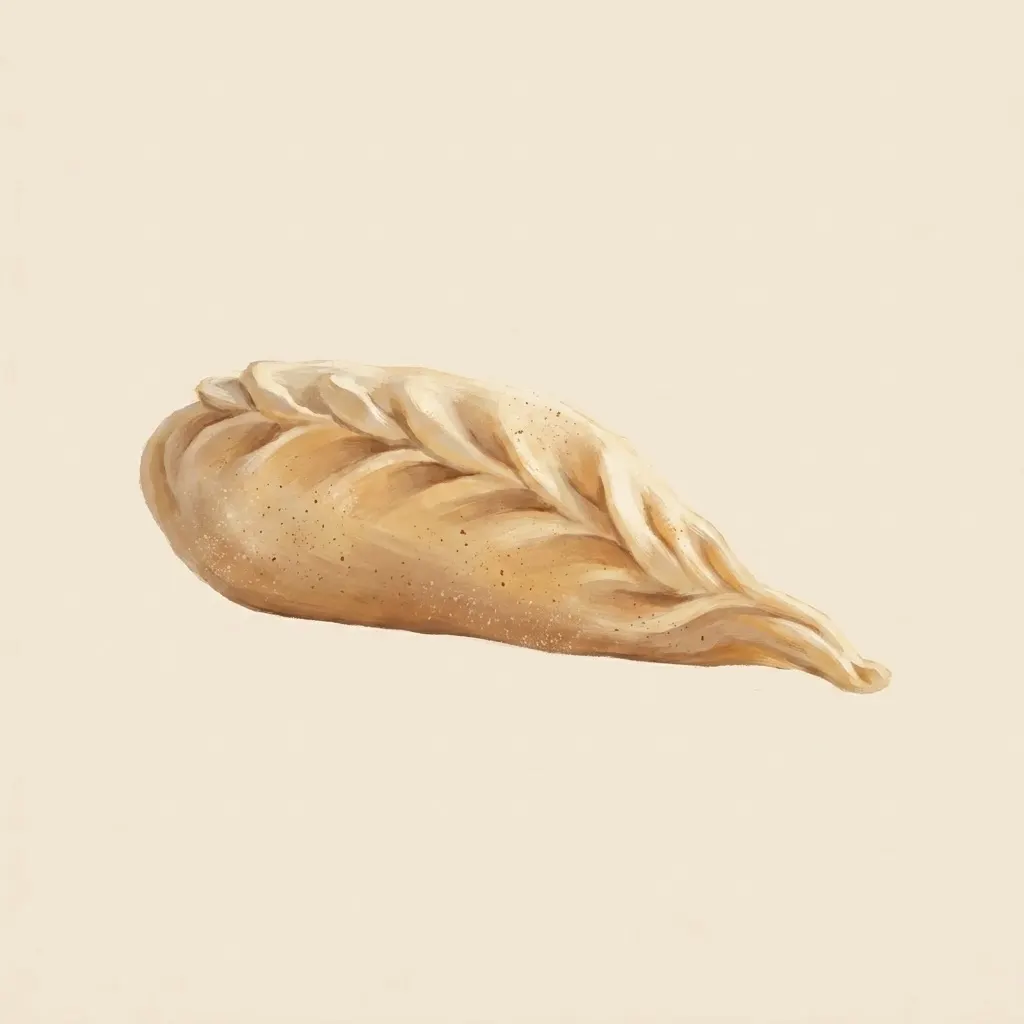
The filling carries the dish, so the dressing stays quiet.
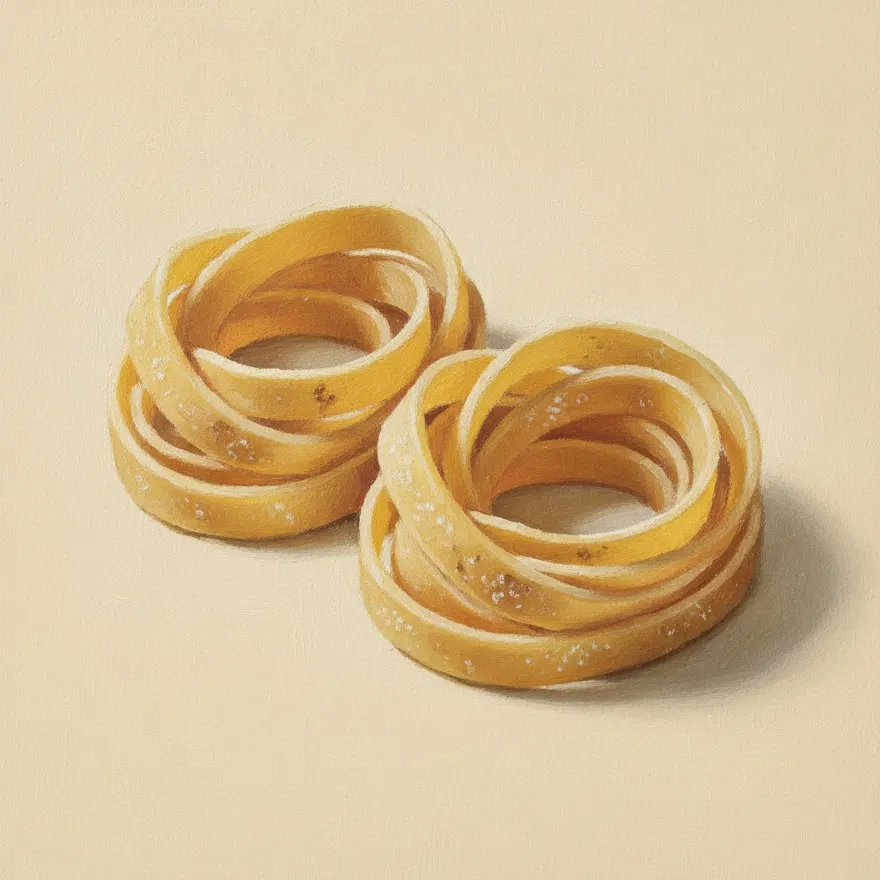
Butter and cheese emulsions need surface, not pockets.
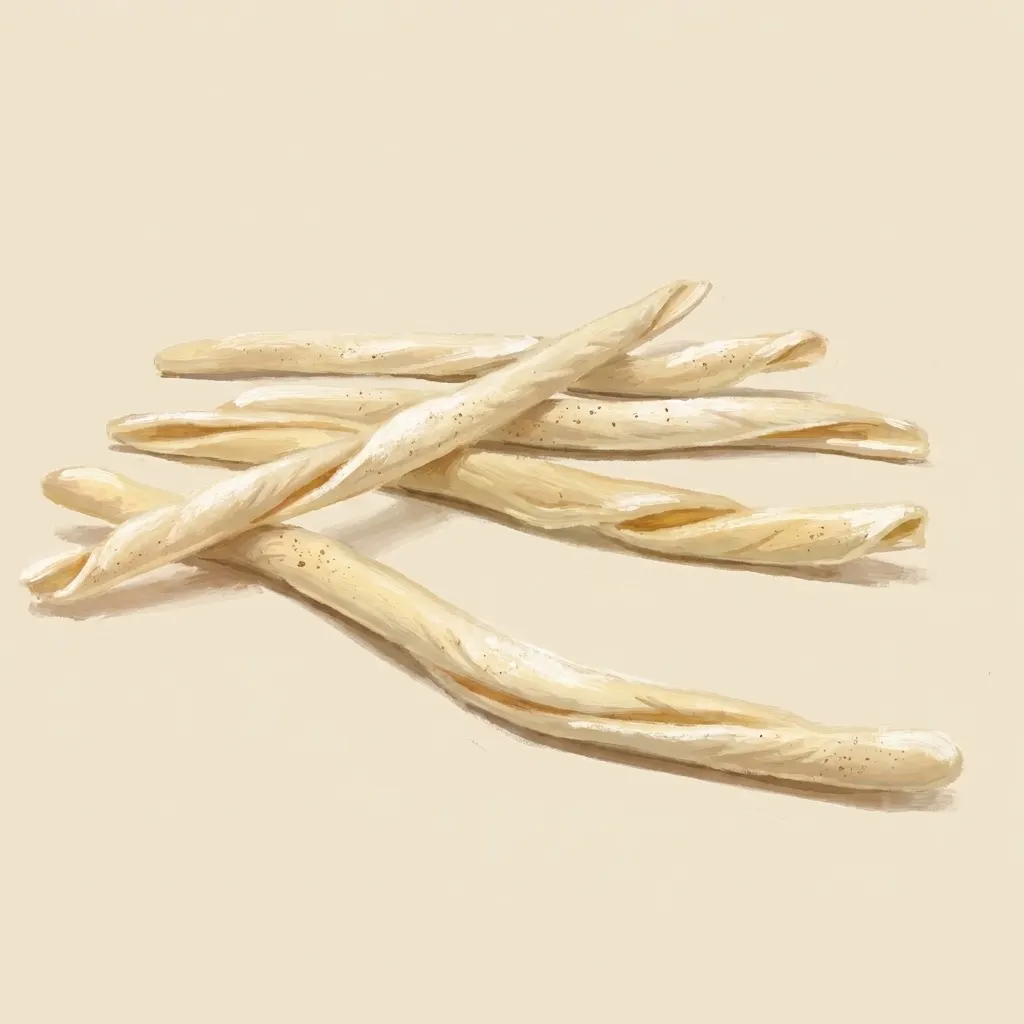
The twist and the open hollow channel give spicy nduja and pork ragu something to cling to, pulling the soft sausage and fat into and around each strand.
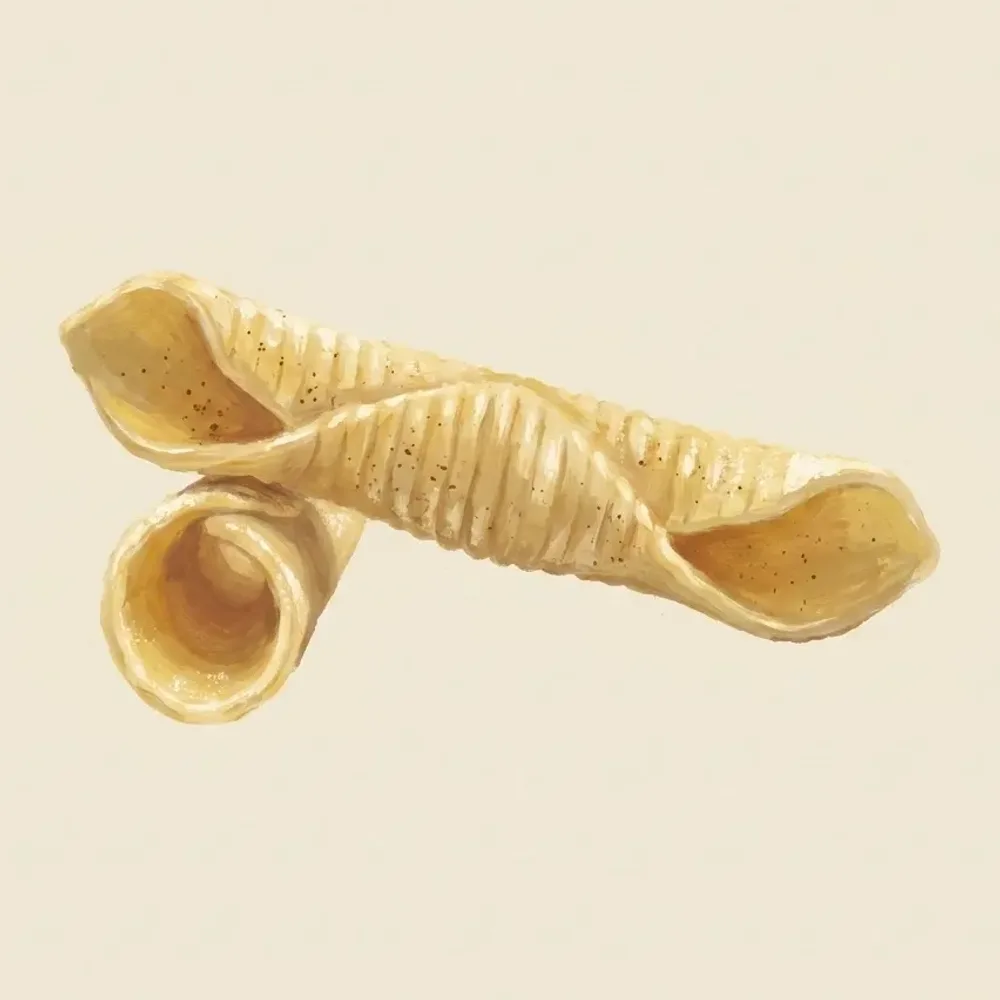
The shape works two ways at once.
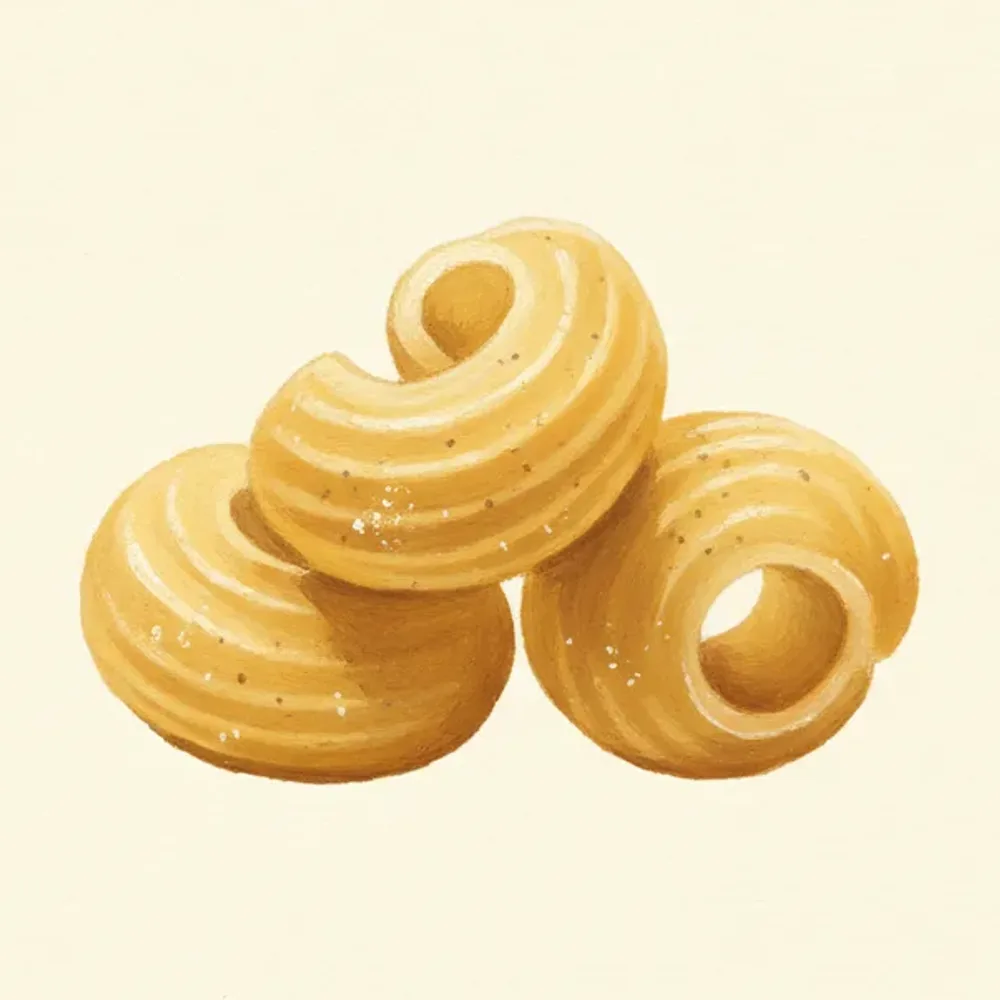
The tight curl and open tube give a chunky sausage ragu many edges to grab, so crumbled meat lodges in the bends instead of sliding off.
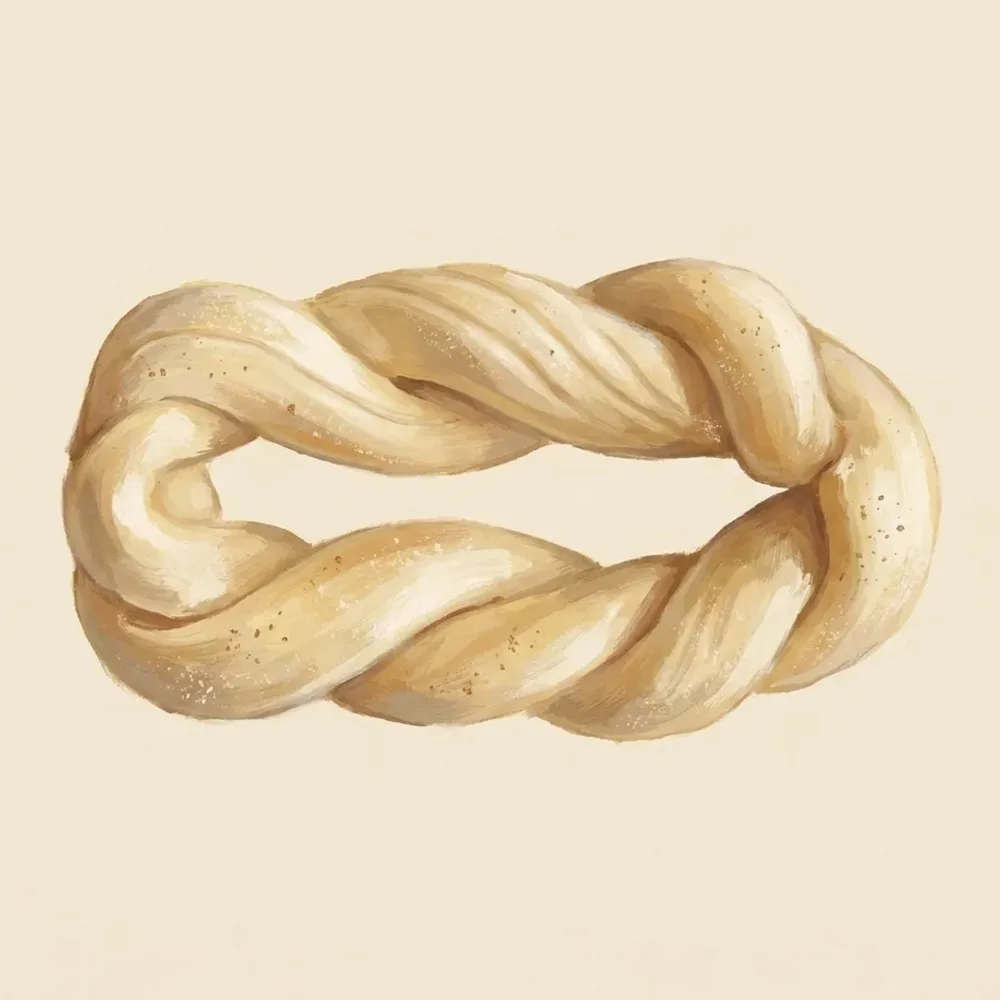
The braided twist gives the ring a ridged, grooved surface that traps sauce along the plait, and the open center lets a brothy or oily sauce pool through.
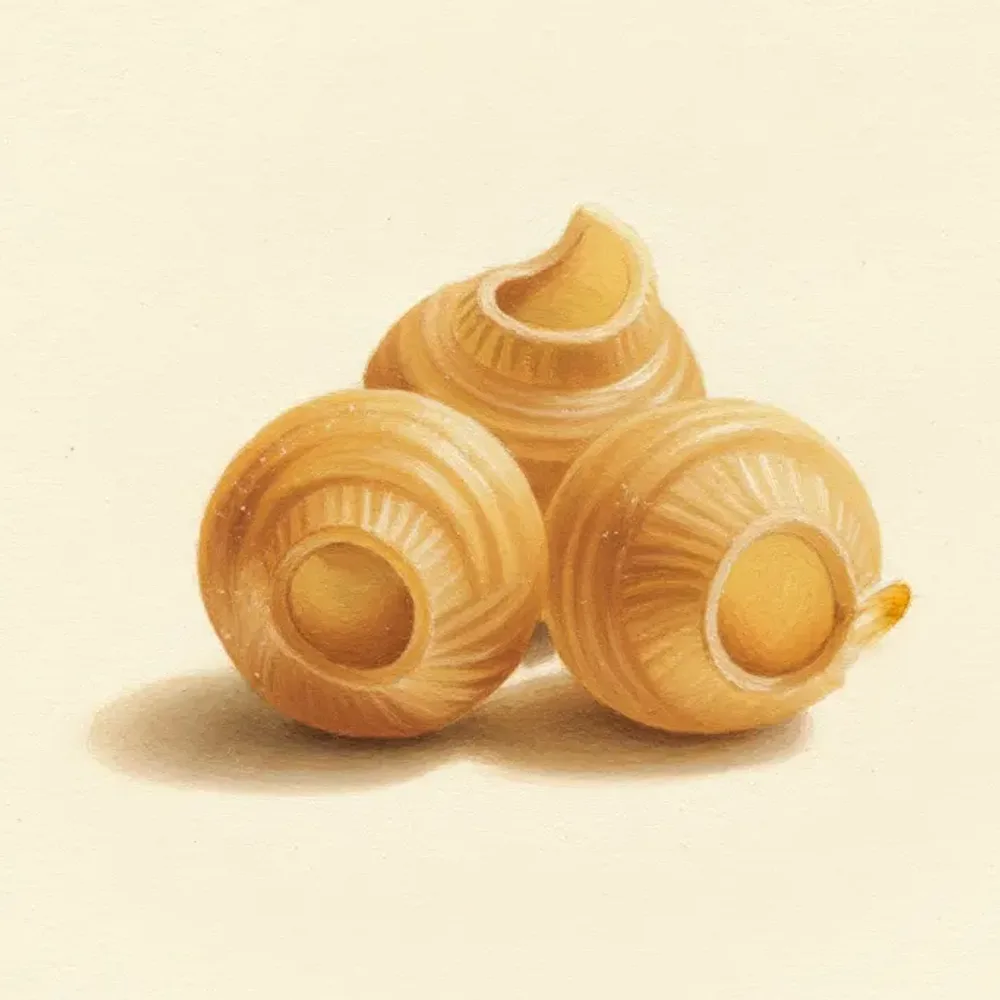
The cupped shell works like a small spoon.
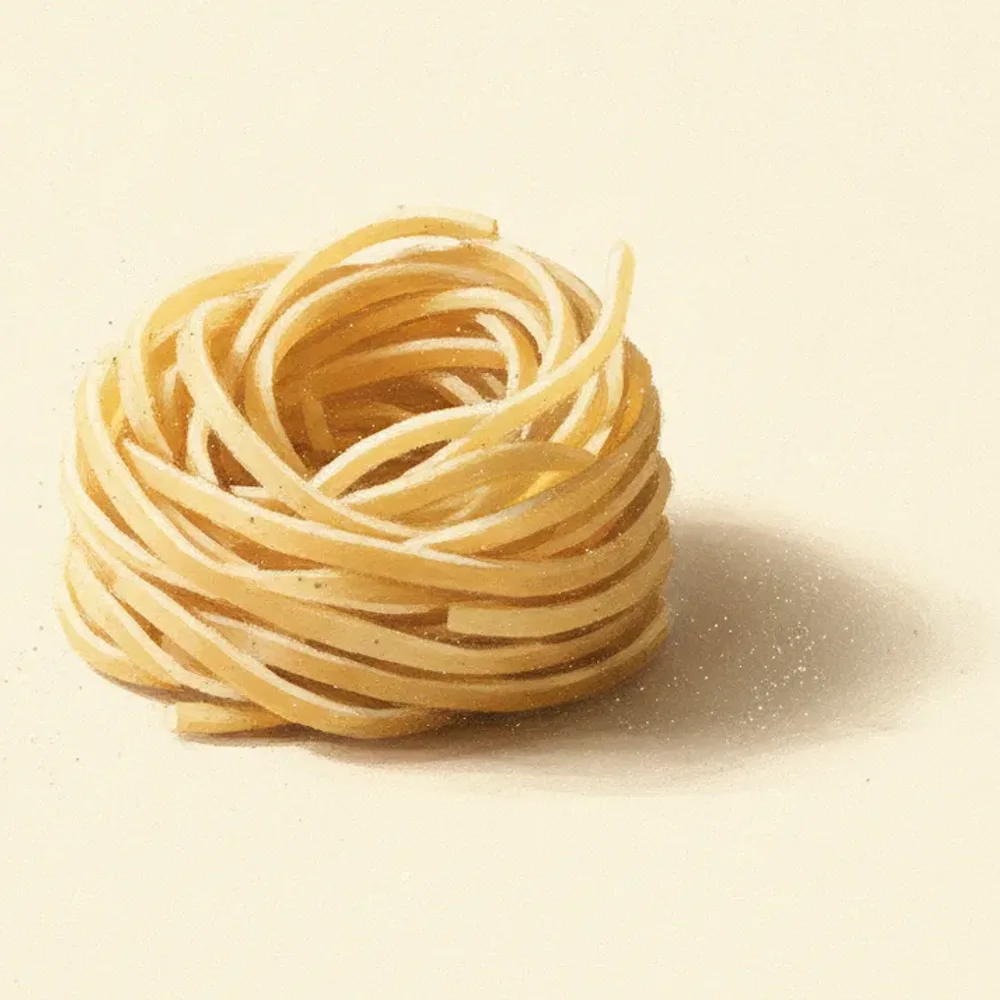
This is a very fine, porous all-egg ribbon, so it drinks up a light meat sauce rather than carrying a heavy one.
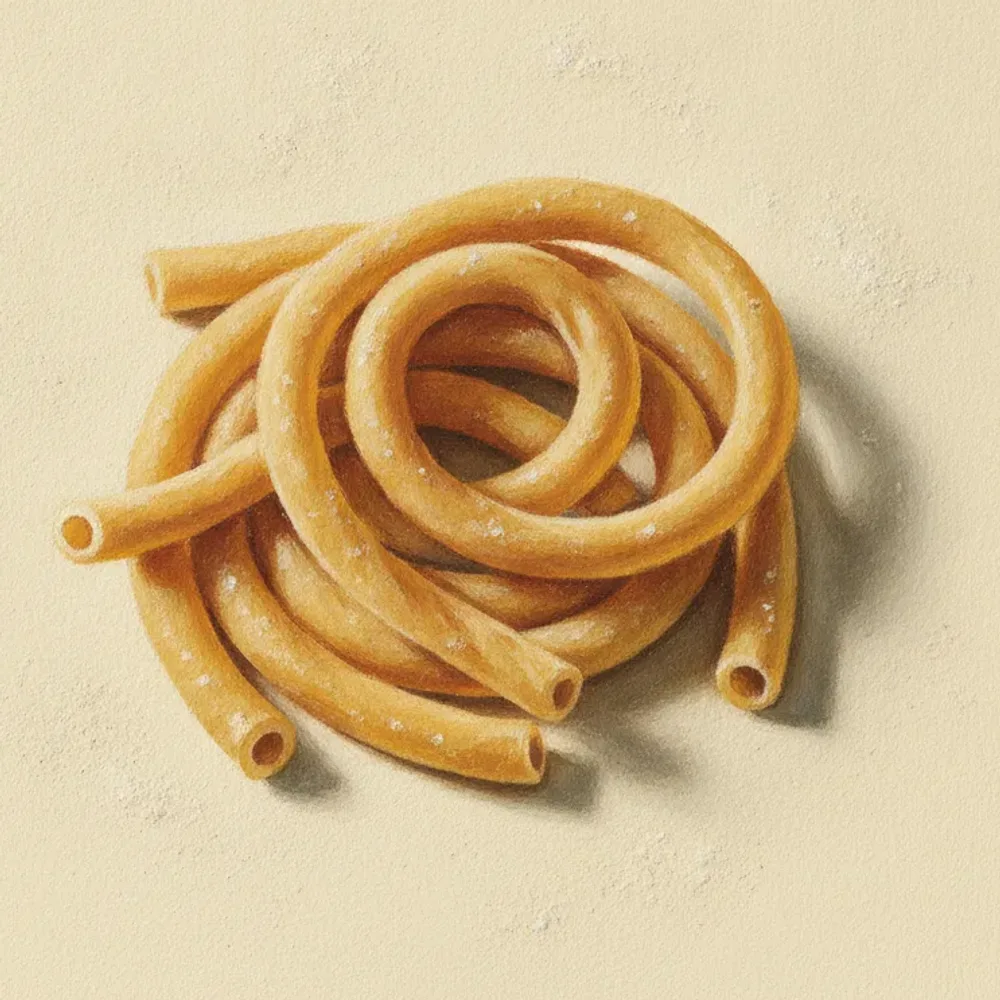
The hollow bore and the rod-pressed groove are built to trap heavy, clinging sauces, which is why the southern tradition pairs it with long-cooked meat ragu.
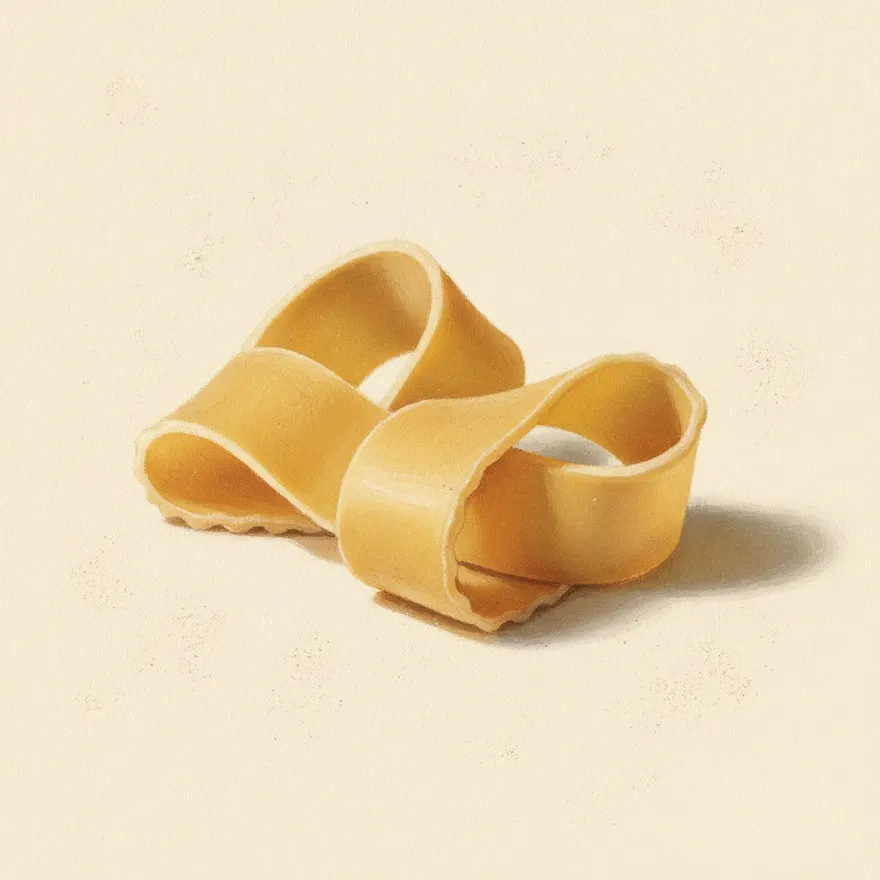
The build is a contrast machine.
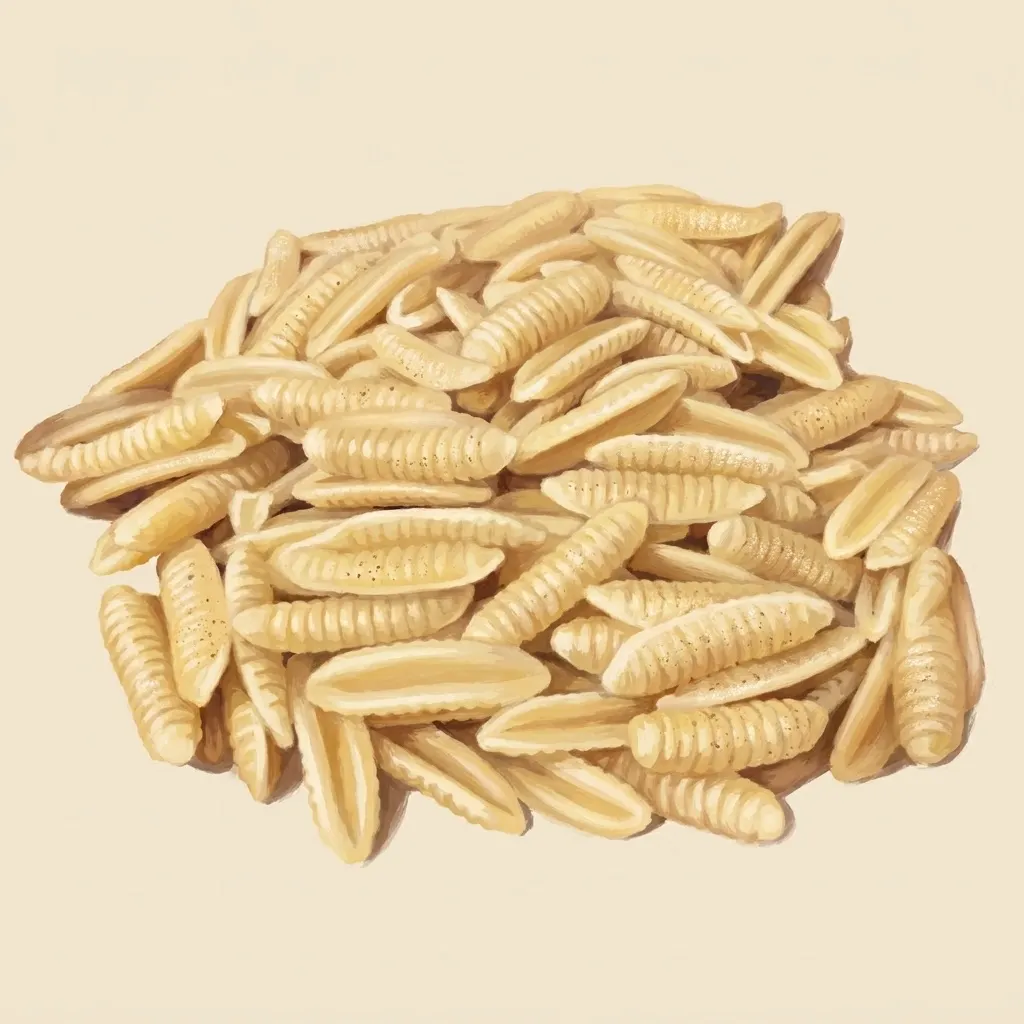
The ridged back and hollow belly catch and hold a thick sauce, which is why the canonical pairing is malloreddus alla campidanese: a ragu of crumbled Sardinian fennel sausage, tomato and saffron, finished with grated pecorino sardo.
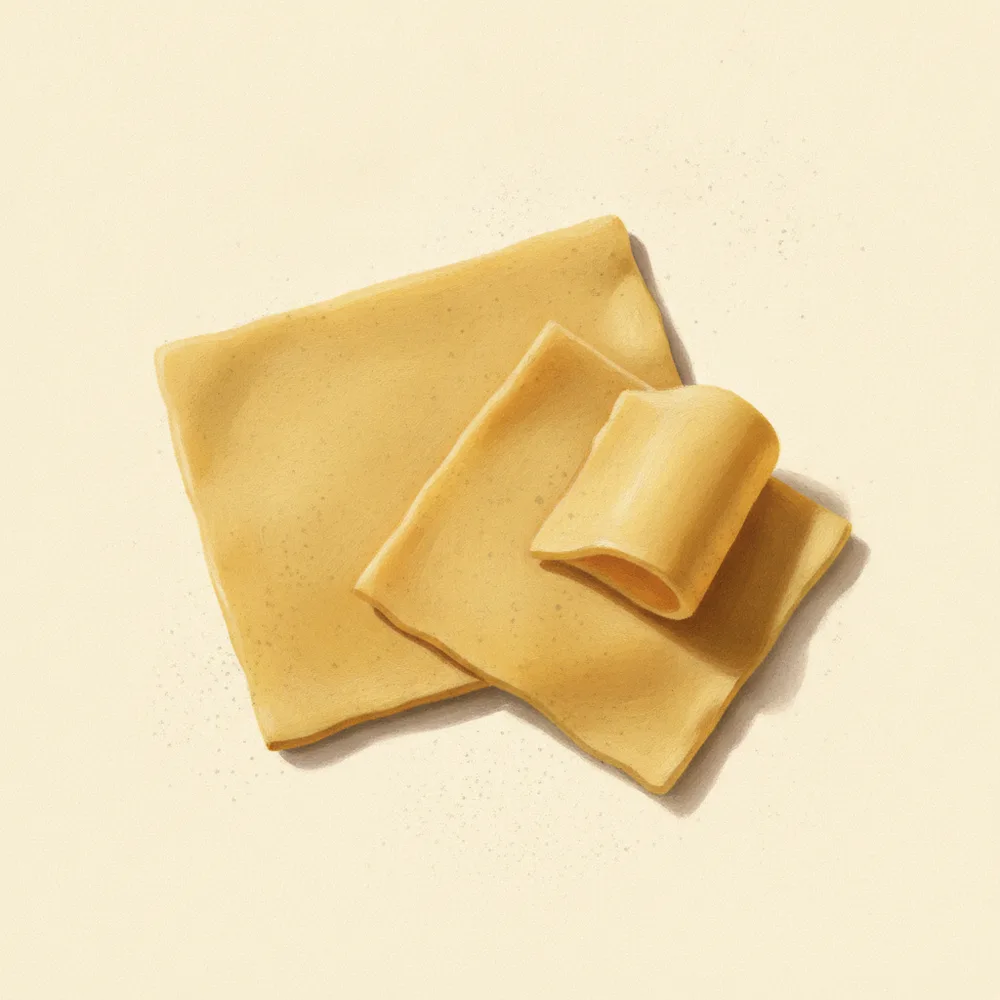
Because the pieces are flat, thin, and uneven, they cook fast and behave differently across their varied thicknesses, which suits them to broths and brothy bean or chickpea soups where the pasta thickens the liquid.
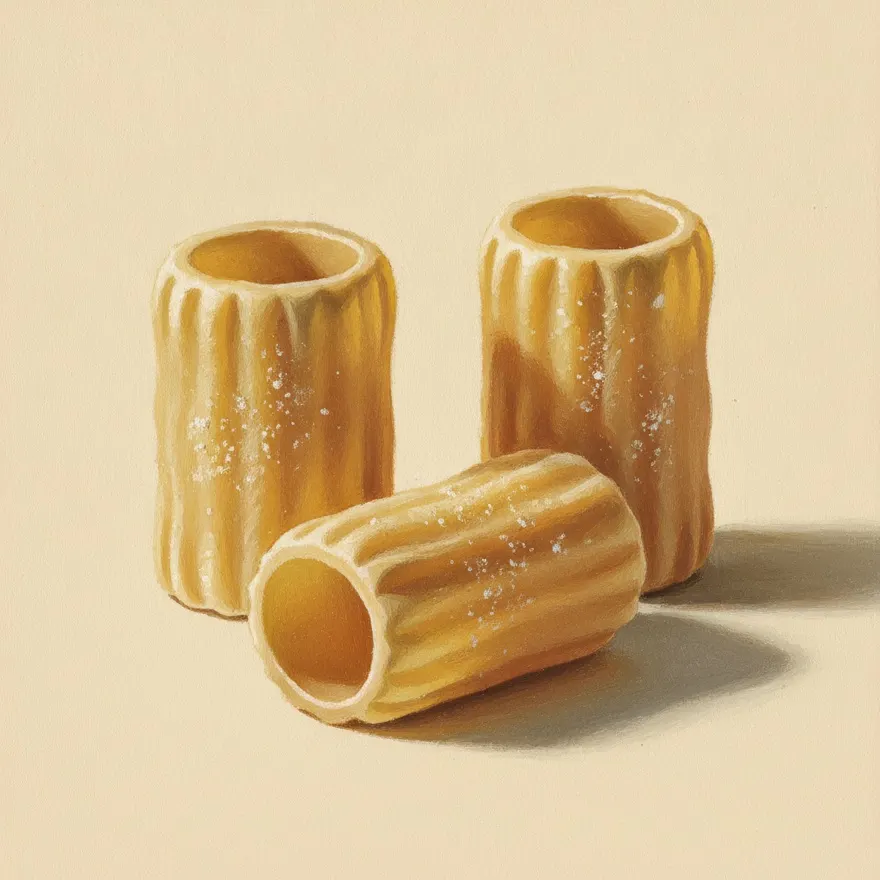
Manicotti works as a container first and a noodle second.
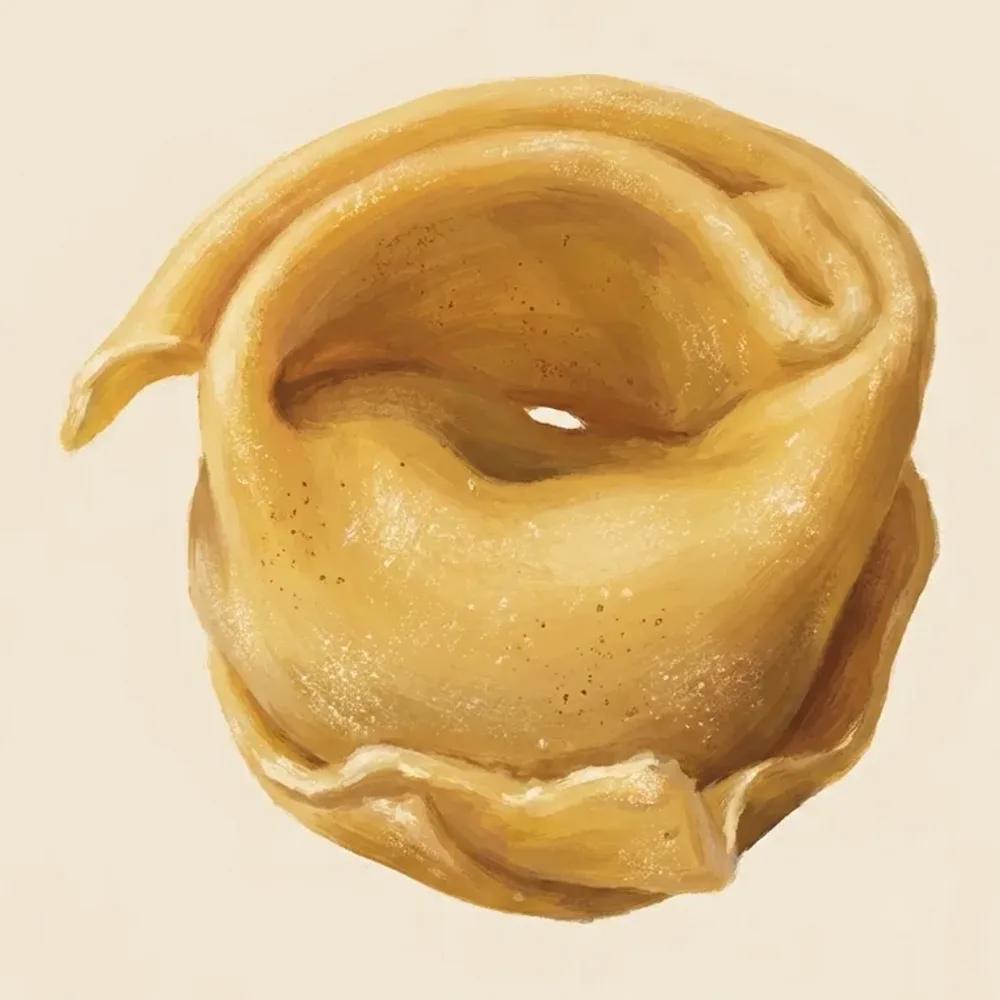
Marubini are a brodo pasta before they are anything else.
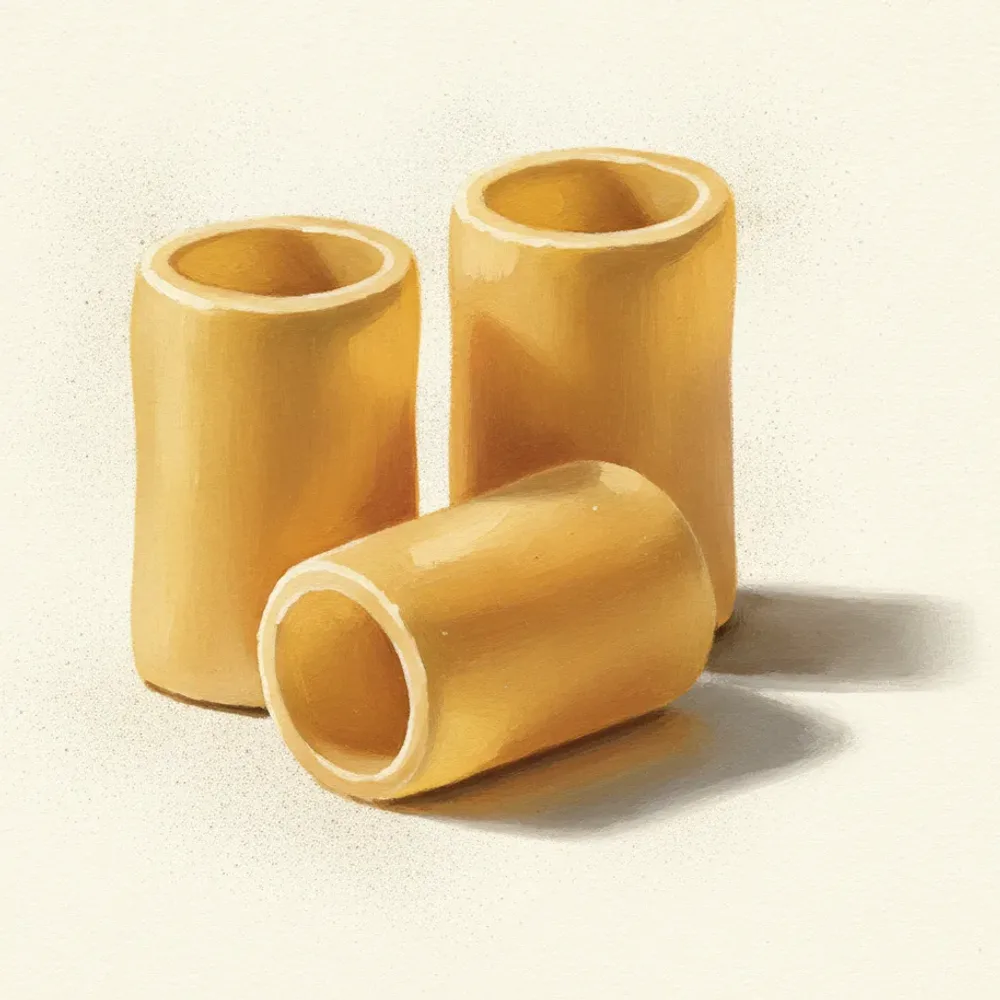
The wide bore is the working feature.
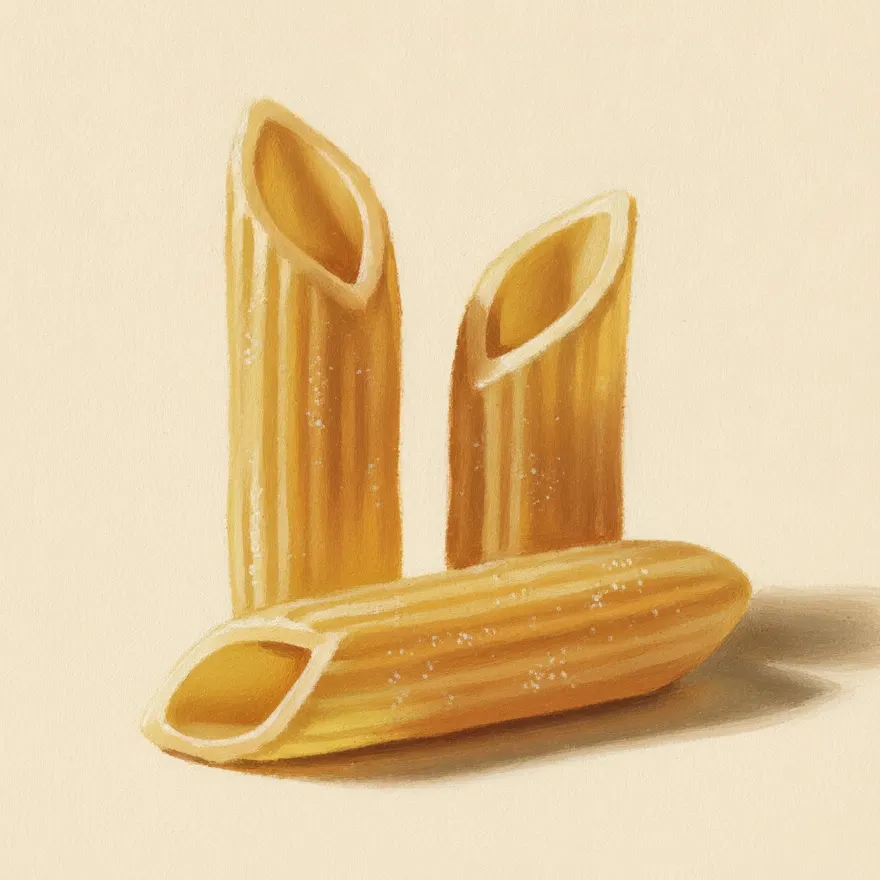
The diagonal cut is functional, not decorative.
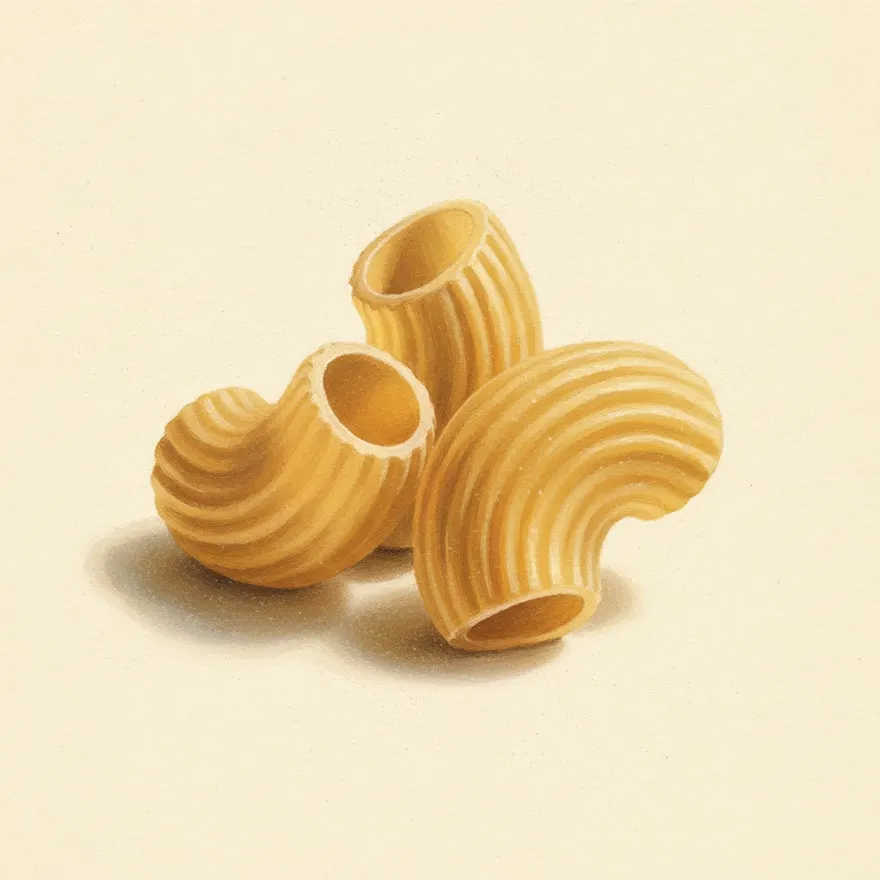
The curl of the body and the pinched closed end work like a scoop.
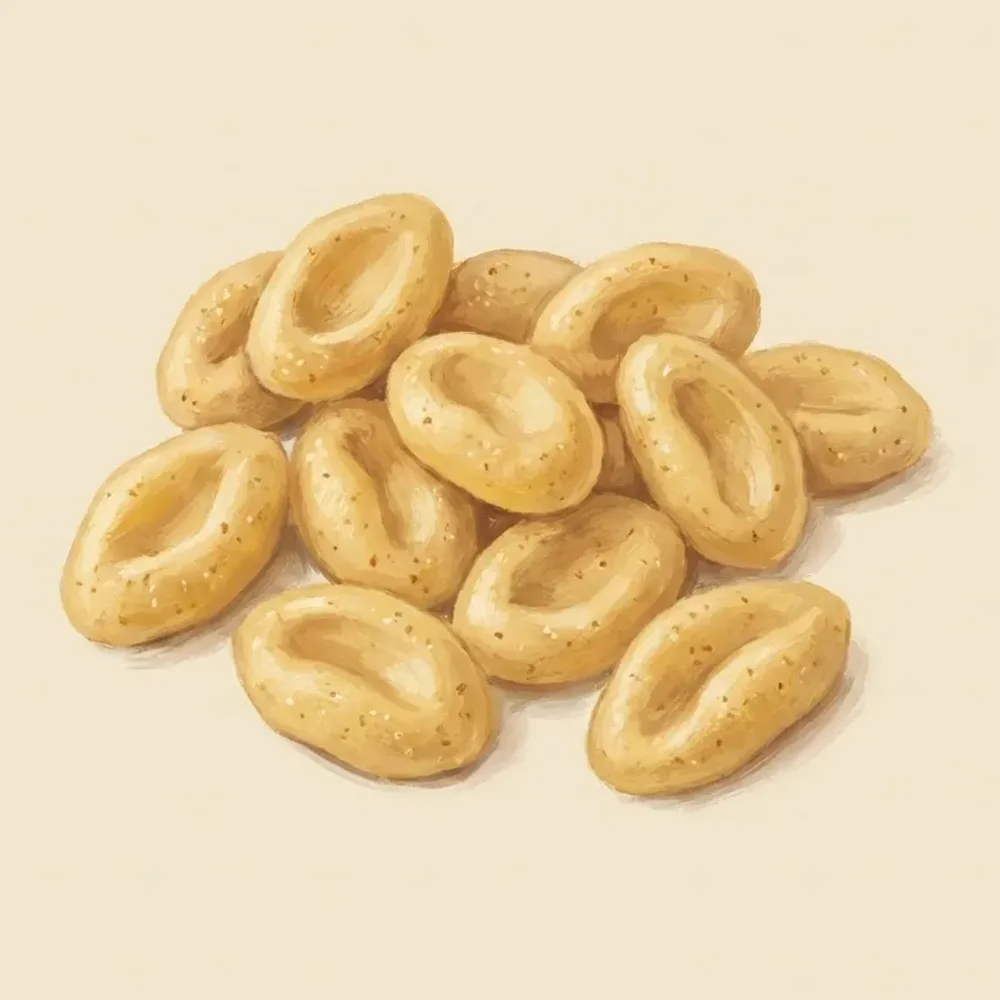
Each piece is pressed with the thumb into a little concavity, and that hollow plus the rough breadcrumb surface catches a chunky sauce.
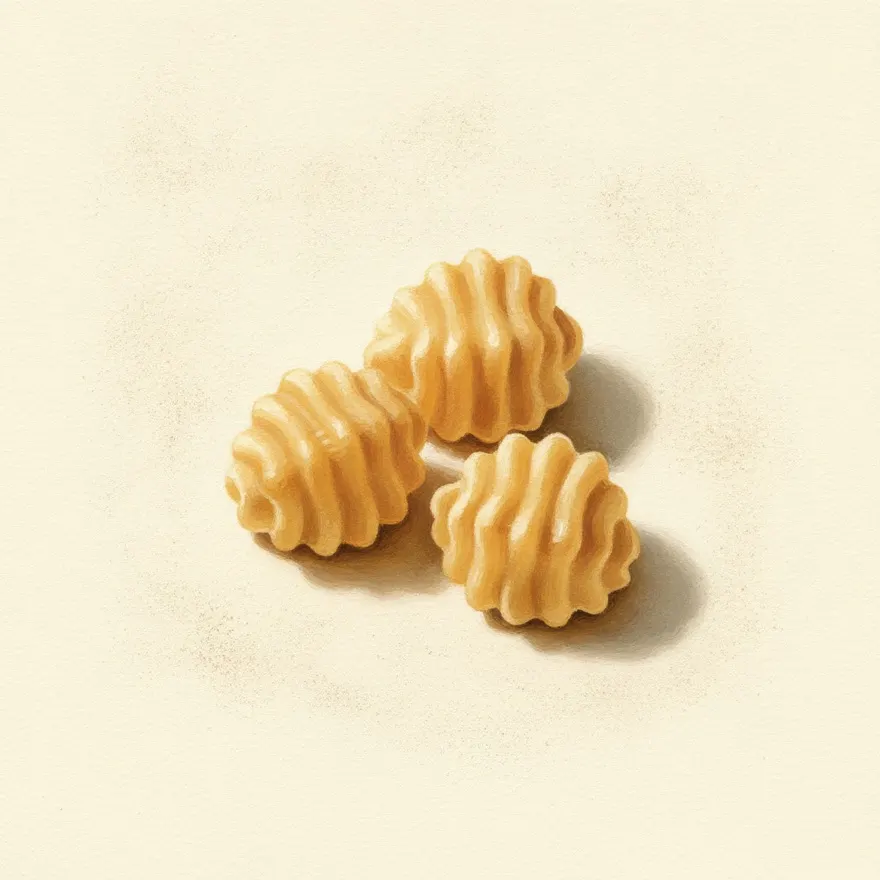
The fins and ruffled ridges are the whole point.
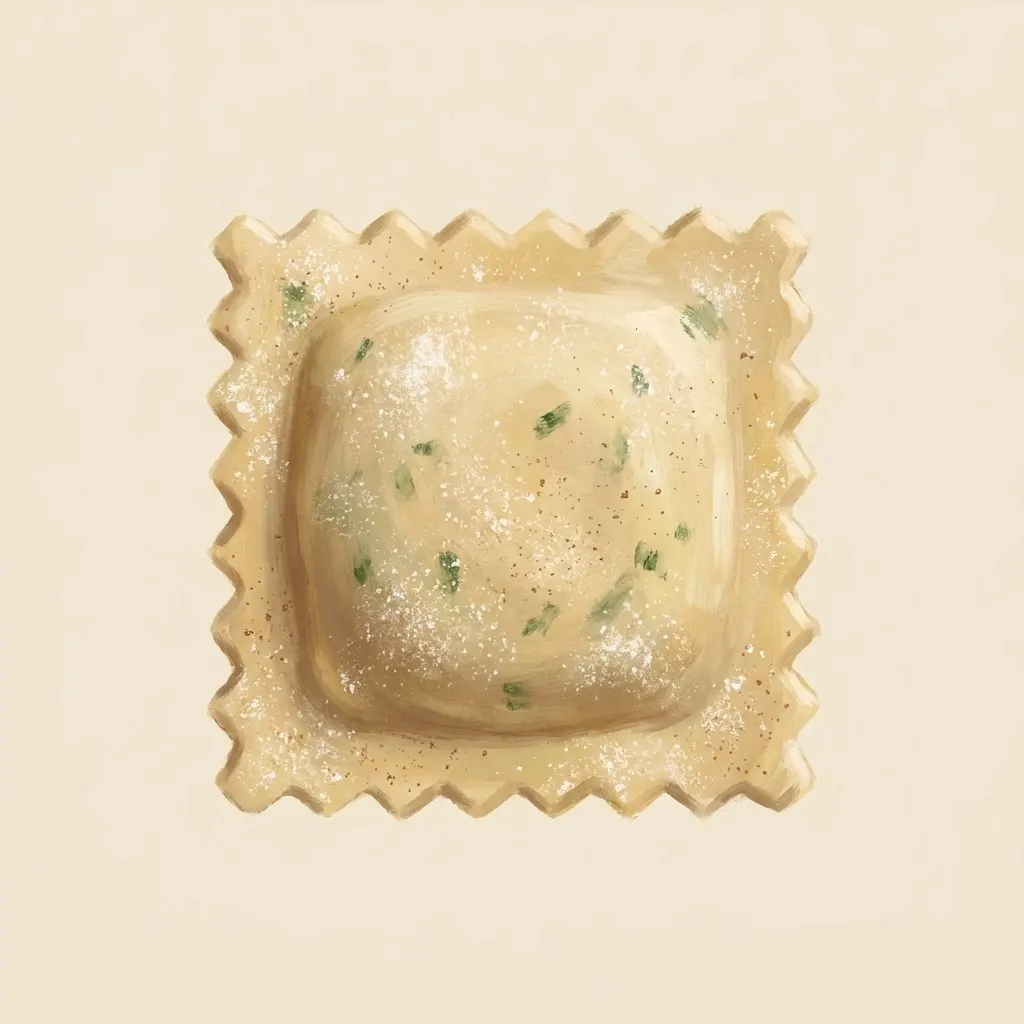
The filling carries the flavor, so the sauce's job is to coat, not compete.

Rigatoni is built for sauces with solids in them.
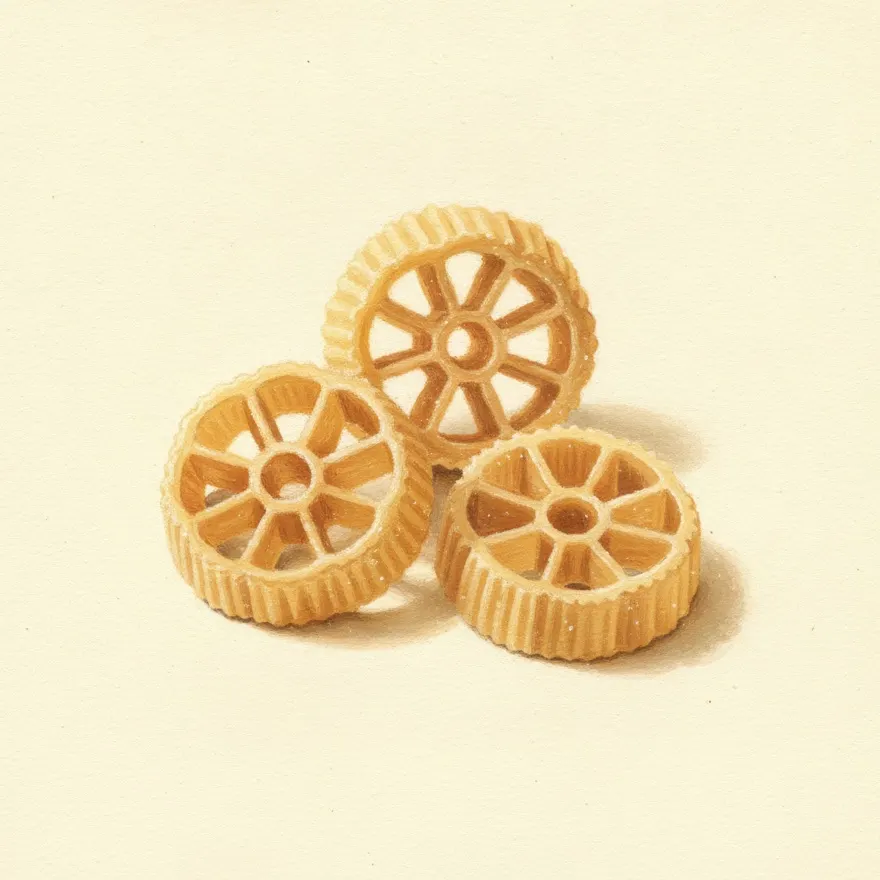
The wheel works like a small net.
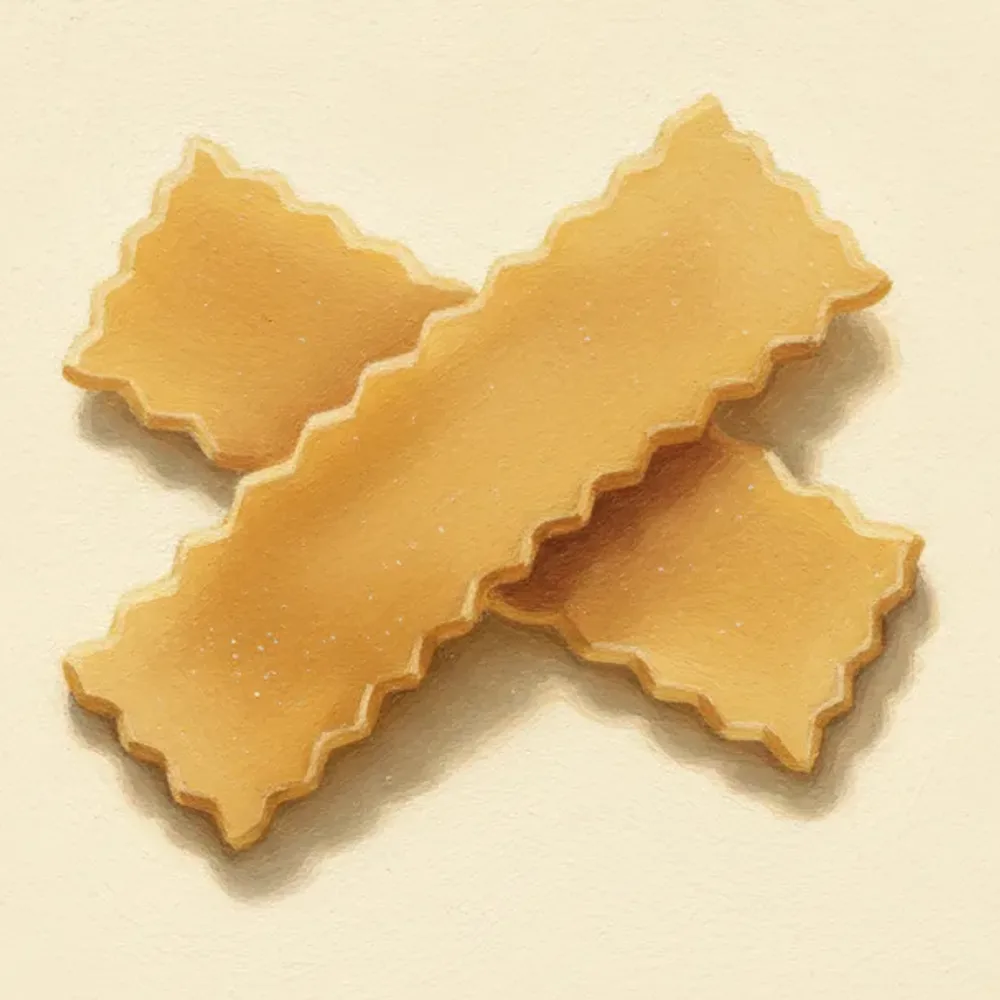
The fluted, crimped border and broad flat face give a meaty or creamy sauce many edges to cling to.
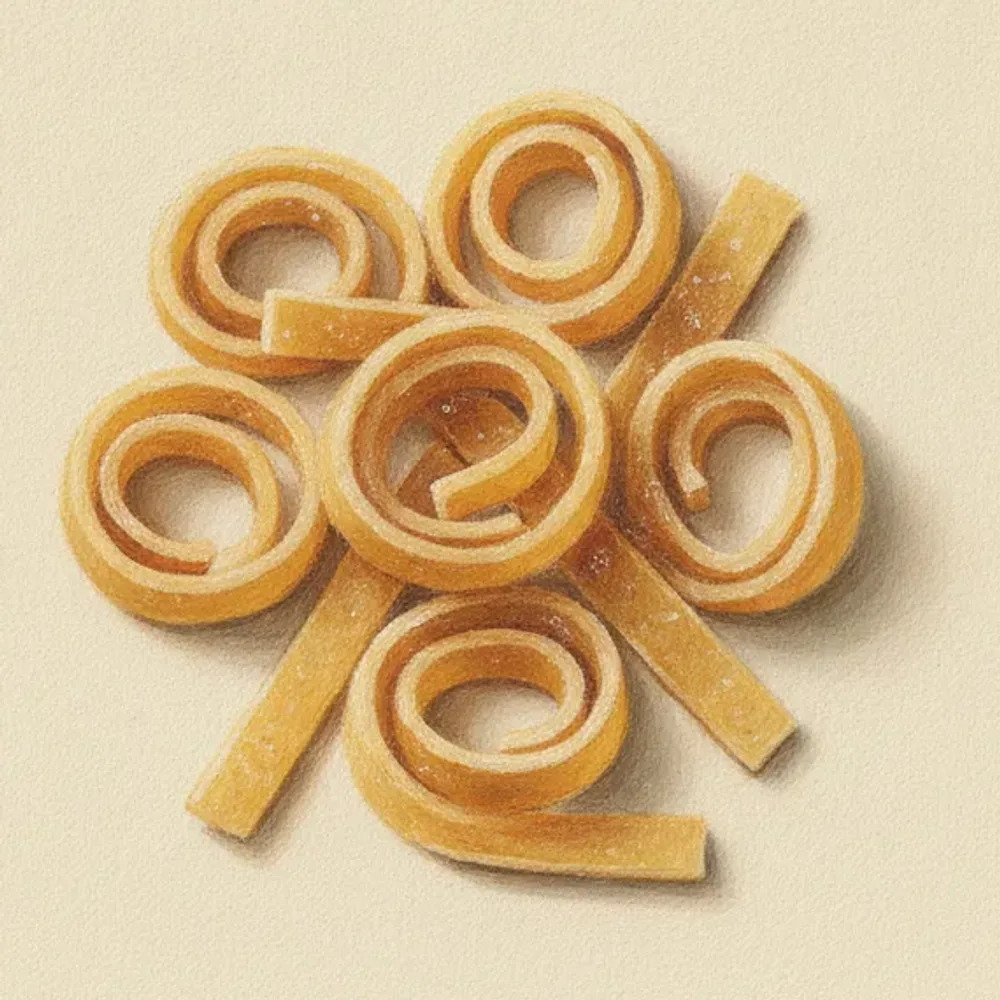
The open twist and the rough hand-rolled surface of the semolina ribbon catch and hold sauce in their folds.
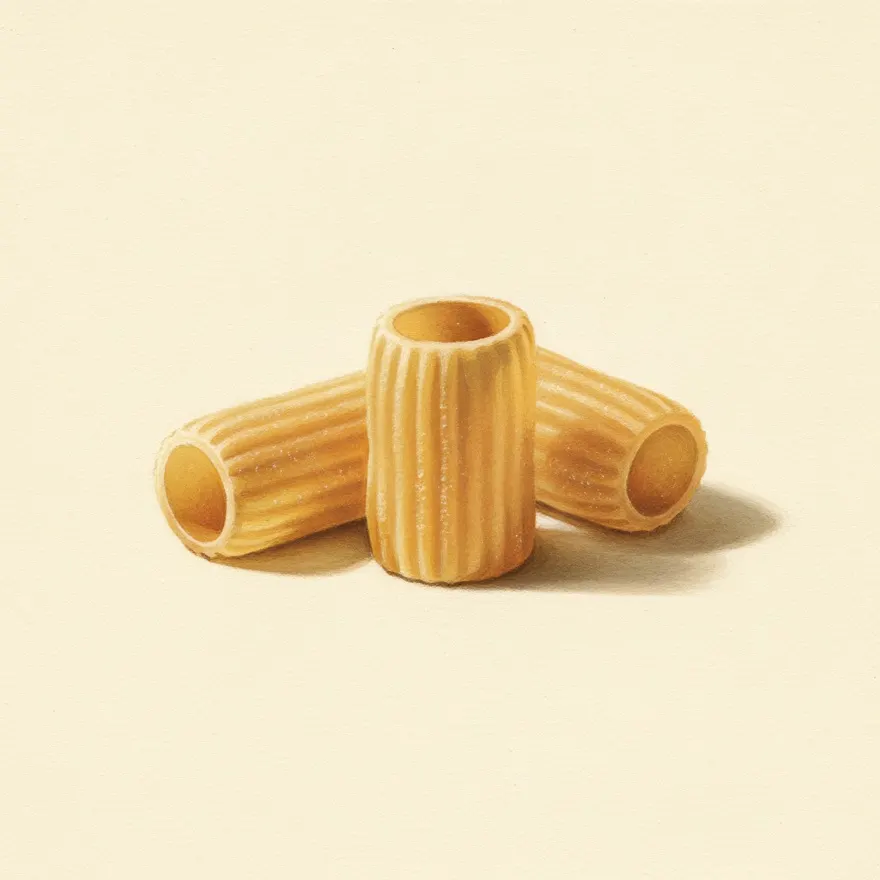
This is a curved, ridged tube, and both traits do work.
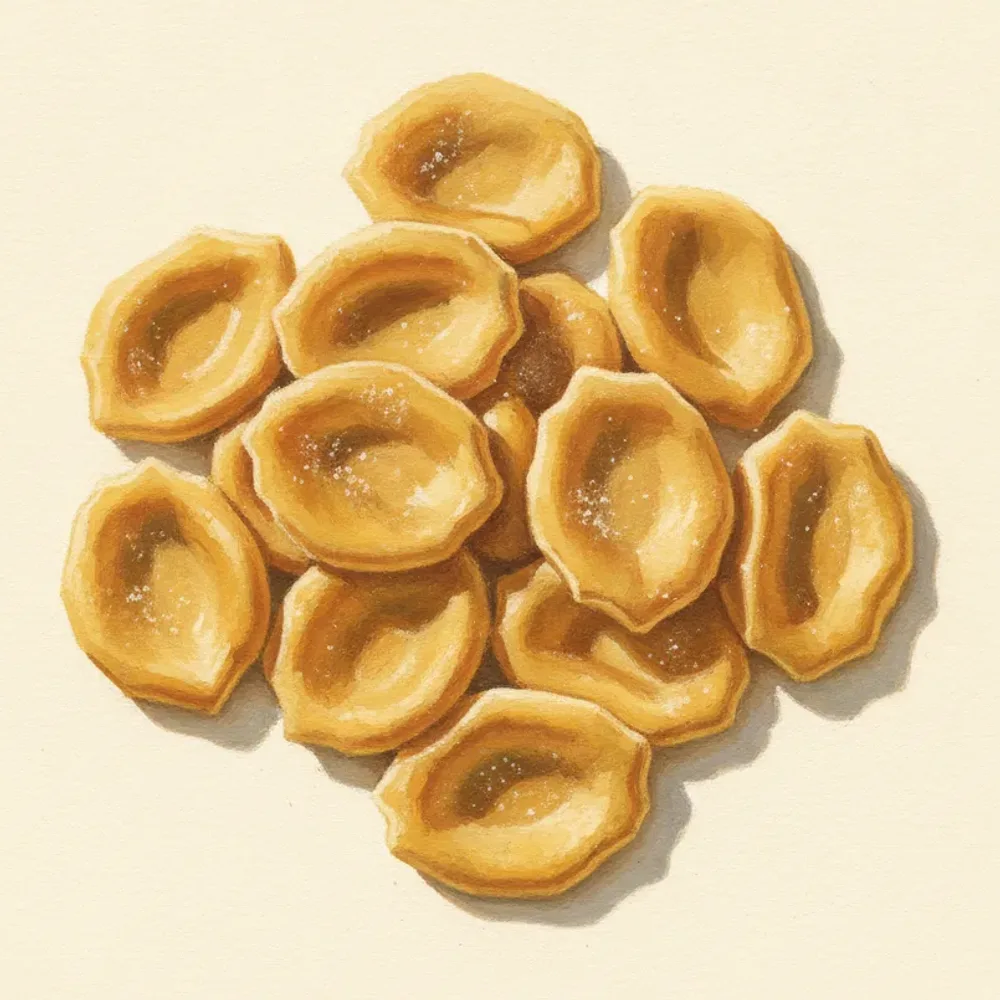
The rough, dragged face and slightly cupped form catch and hold loose, rustic dressings.
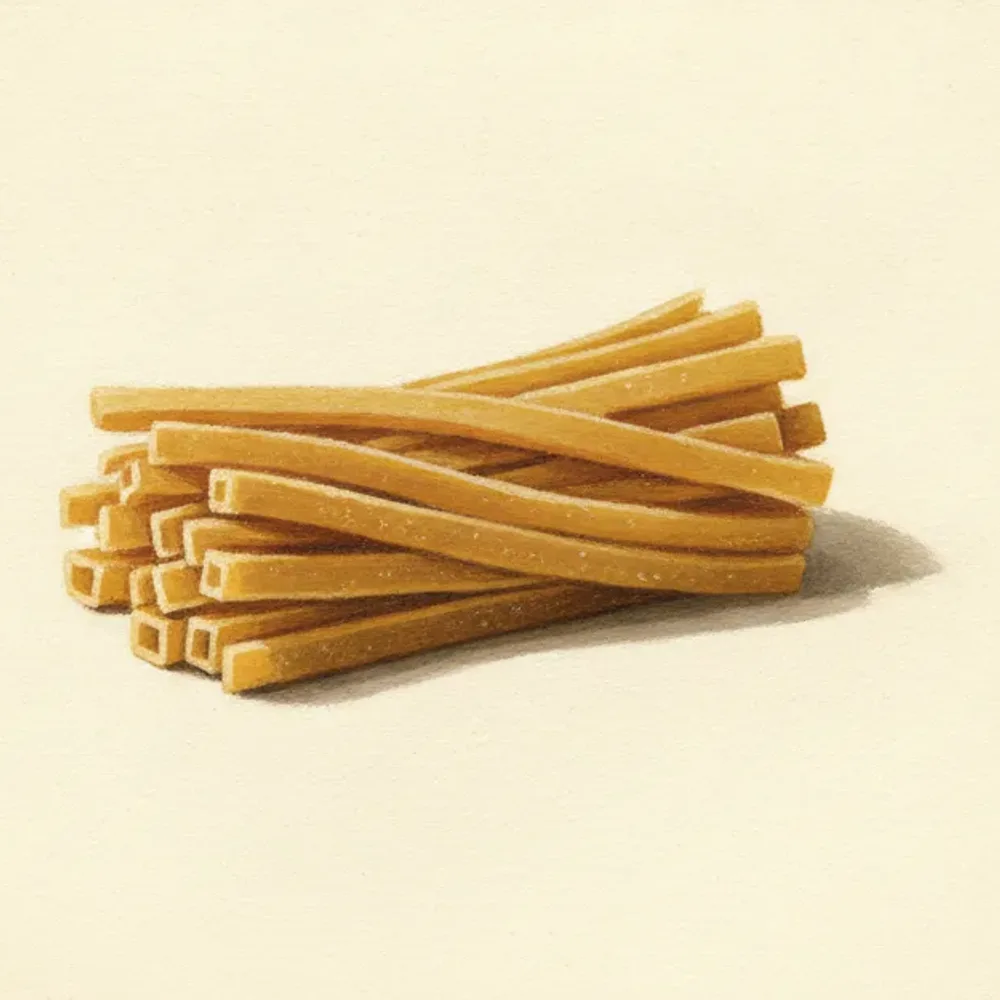
A long strand with a squarish, slightly rough section holds a clinging sauce along its length.
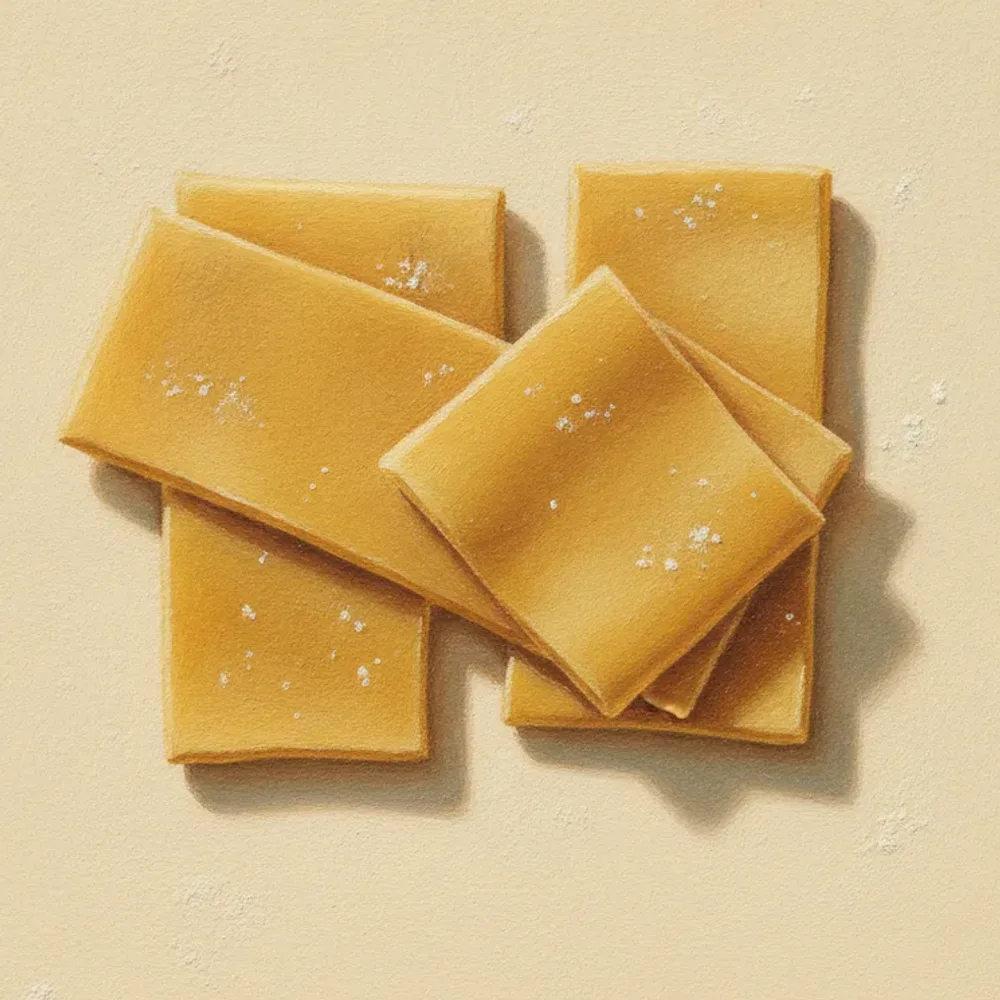
A flat patch of dough catches sauce on its broad faces and sits well in brothy legume dishes, which is its oldest home.
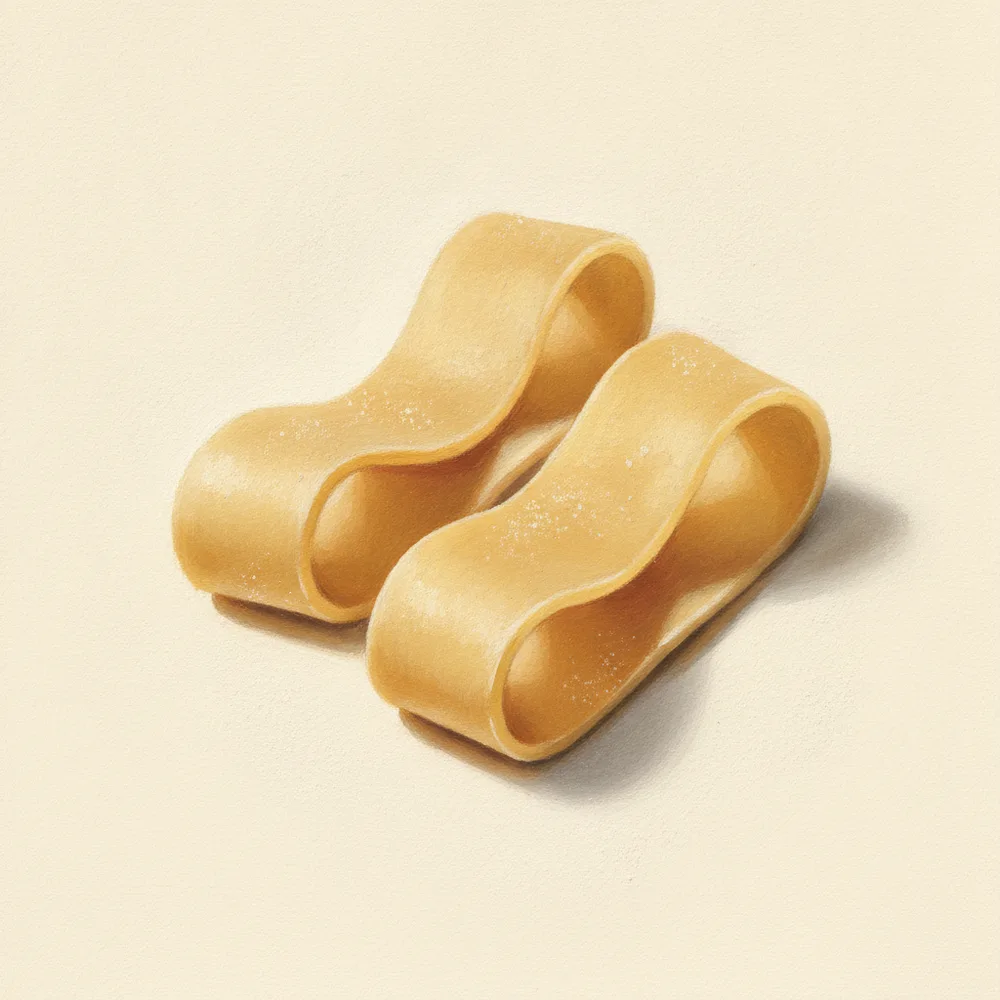
This is a very thin, yolk-rich flat ribbon, so it wants light fat-based dressings that cling to the fine strands without burying them.
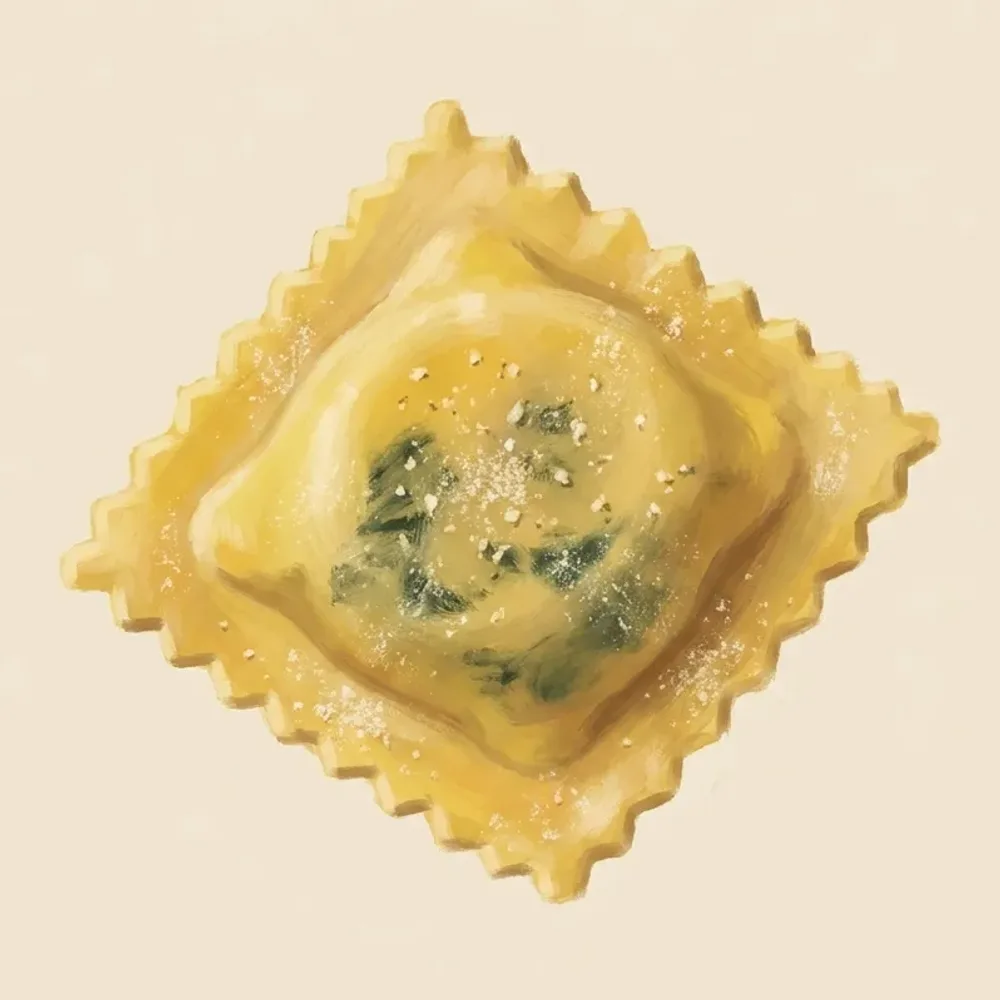
The filling leads and the dressing stays light.
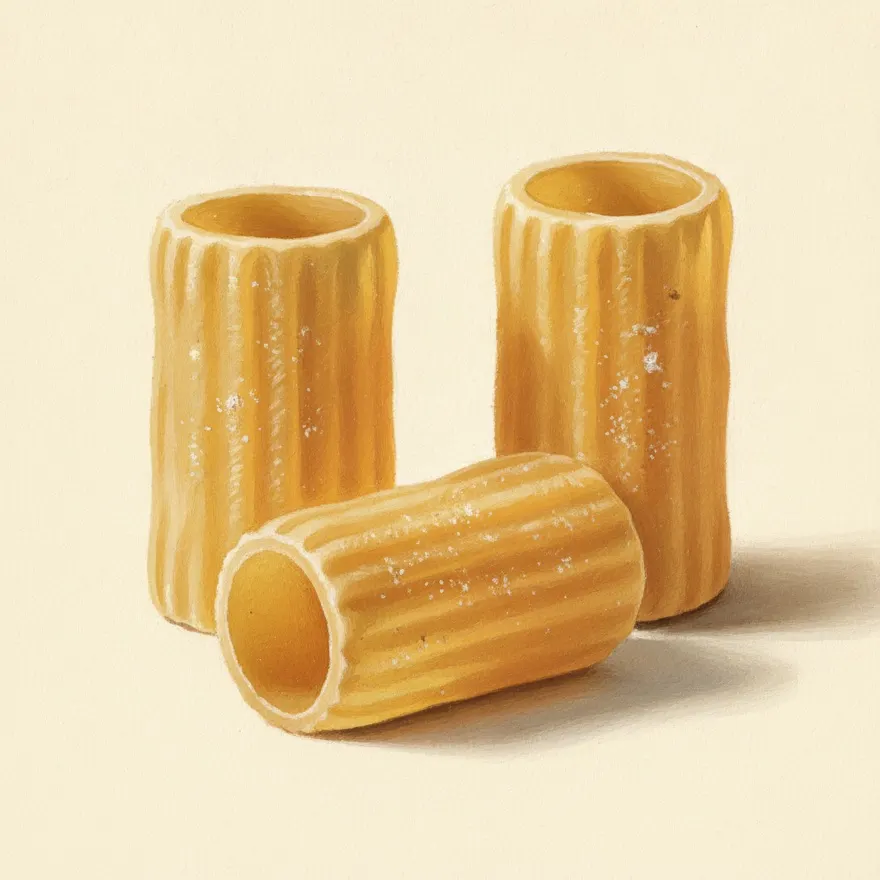
The spiral ridges do real work.
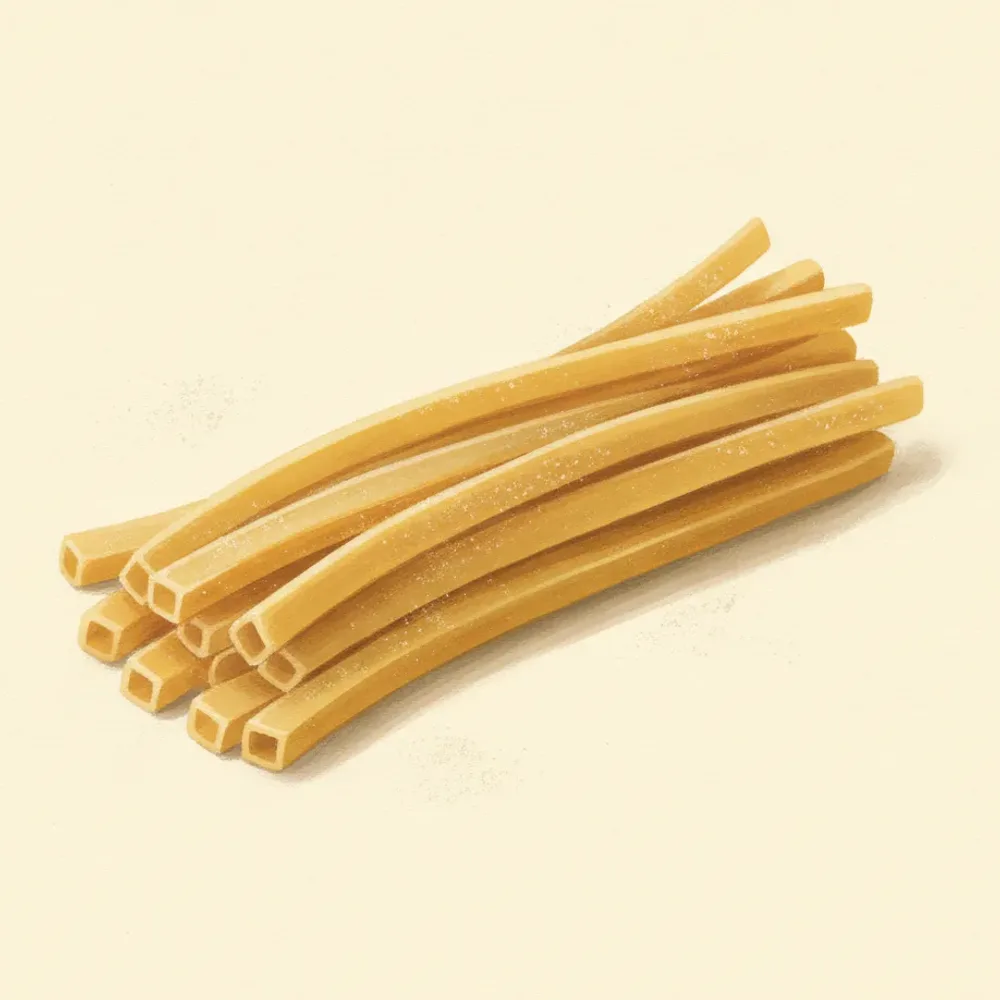
A thick rough square strand carries weight and clings to dense sauces, so the traditional dressings are hearty.
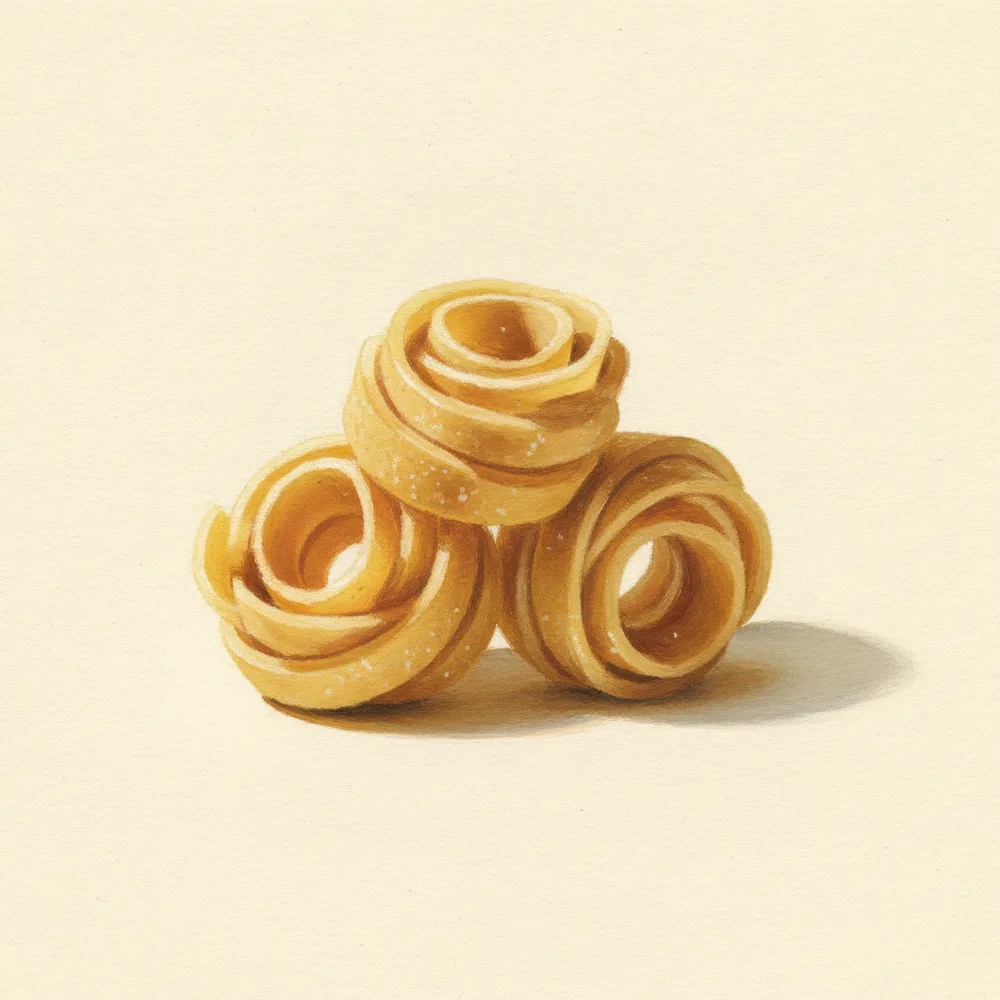
The broad spiralling ruffle and circular folds create deep pockets that trap thick, chunky sauce against the central core.
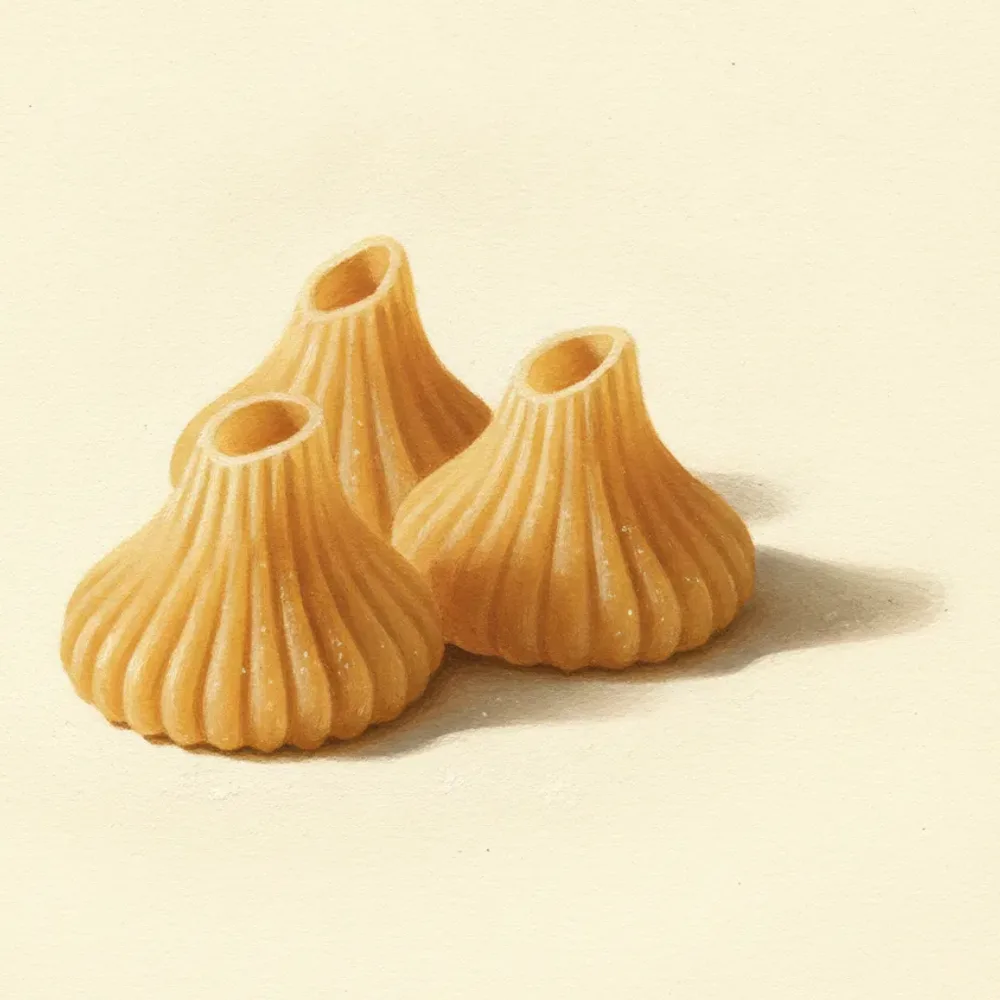
The piece is built like a hollow swirl that climbs from a wide base to a thin peak, so sauce settles into the folds and the central cavity instead of sliding off.
What we would not put it on
Thin smooth strands. They shed the meat completely, leaving dressed pasta in the bowl and the sauce in the pan.
Want it the other way around? Start from a shape in the Pairing Finder.
Stay in the loop
From the Almanac
Updates from Pasta Almanac, when there is something worth sharing.