Bigoli
Also known as bigoi.
What it is
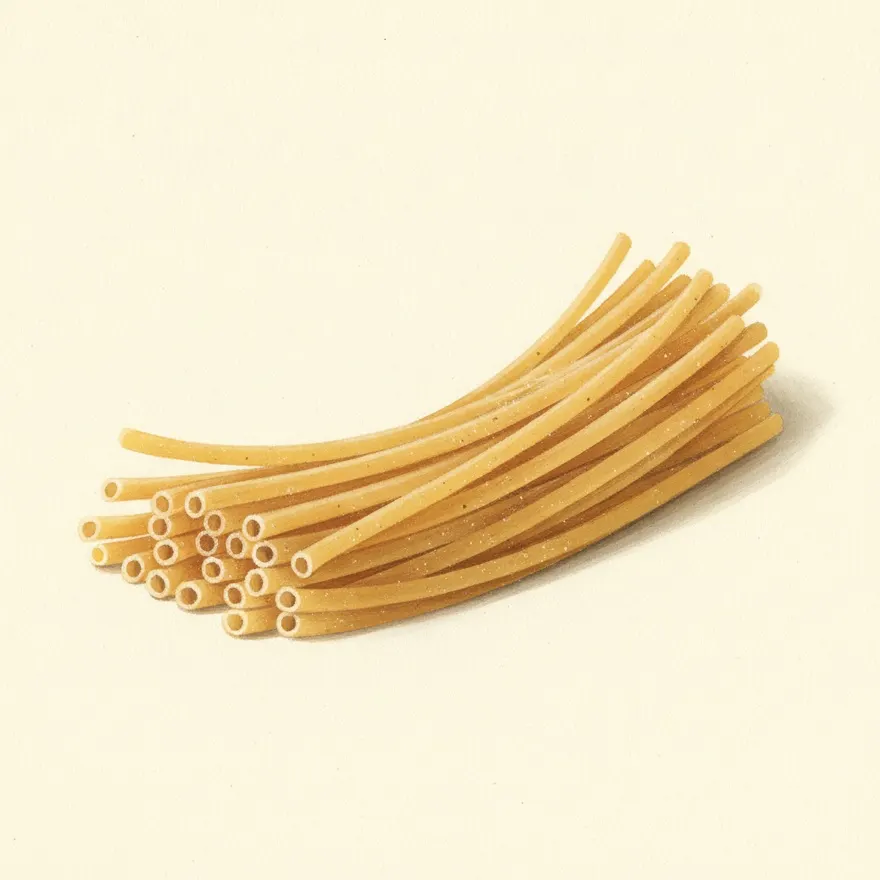
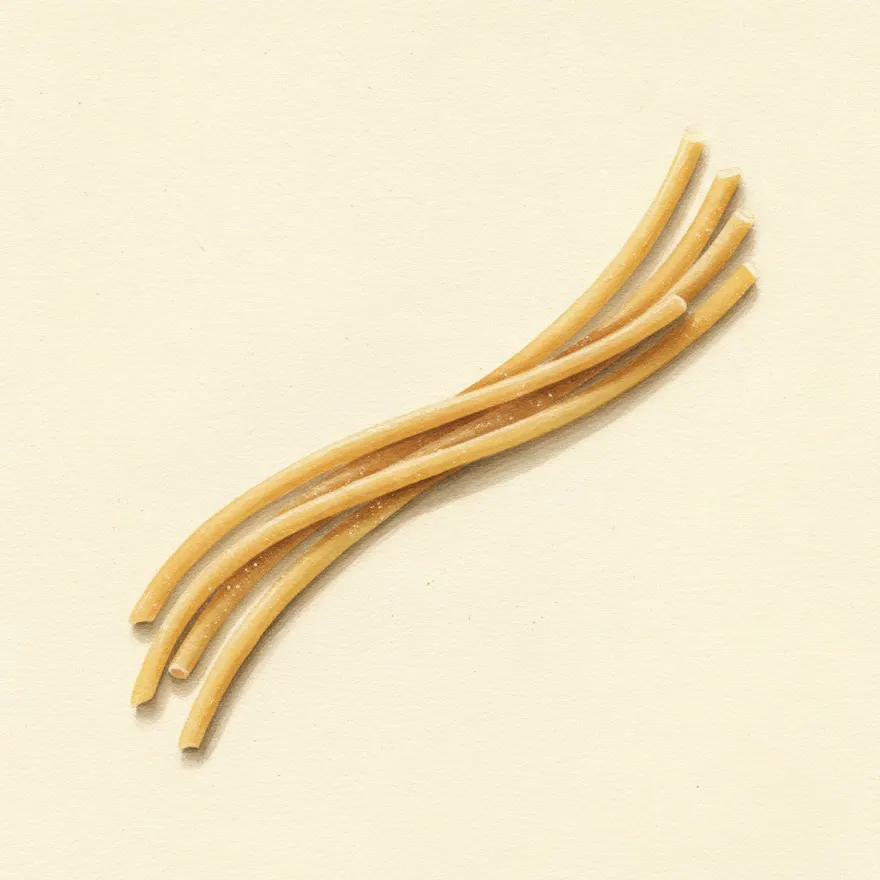
An extruded long thick strand from the Veneto, distinct for its rough whole-grain body. Popular tradition credits the Paduan pasta maker Bartolomio Veronese, nicknamed Abbondanza, with patenting a press for bigoli in 1604, which spread the format. Earlier origin stories tied to the fourteenth-century Venetian wars against the Turks, mixing scarce durum with soft wheat, are recounted as legend rather than documented fact.
From the Venetian dialect bigolo. Treccani derives the related bigolone from Venetian bigoli meaning spaghetti. Popular accounts also tie the name to dialect words for a worm or caterpillar, and the pasta is named for the bigolaro, the press the dough is forced through.
What sauce it wants, and why
The rough bronze-drawn surface and porous whole-grain body grab and hold thick, fatty sauces far better than smooth spaghetti. The strand is thick enough to stand up to assertive, oily dressings like melted anchovy and onion or duck ragu without going limp. That heft and grip is why bigoli is matched to rich, rustic sauces rather than light ones.
Classic plates: bigoli in salsa, bigoli con l'anatra.
No bigoli? Use these
Closest swaps by sauce behavior, not by looks. The ones most easily confused with bigoli, and how they read.
Stay in the loop
From the Almanac
Updates from Pasta Almanac, when there is something worth sharing.