Casarecce
kah-sah-RET-cheh
Also known as casareccia.
What it is
Casarecce is a Sicilian shape that crossed over to factory production with unusual ease. The name comes from casereccio, homemade, and the original method was domestic. Cooks cut fresh semolina dough into small squares, then rolled each piece around a thin rod called a ferro, leaving a loose curl with an open seam. De Cecco's product history traces the shape to busiata, a pasta attributed to Arab influence in Sicily, where dough was wound around dried plant stems. That is manufacturer lore, though the rod technique itself is widely documented. The curl proved simple to reproduce with an extruder die, and the authors of The Geometry of Pasta point out the irony of a homemade name on an industrial cut. Today it is a standard catalog item across southern Italy and abroad. Garofalo extrudes it in Gragnano under the PGI seal, De Cecco numbers it cut 88, and importers like DeLallo sell bronze-die versions in the United States.
From Italian casereccio, meaning homemade, formed from casa, house, plus the suffix -ereccio. The pasta name is the feminine plural form, and Wiktionary glosses casarecce literally as homemade.
What sauce it wants, and why
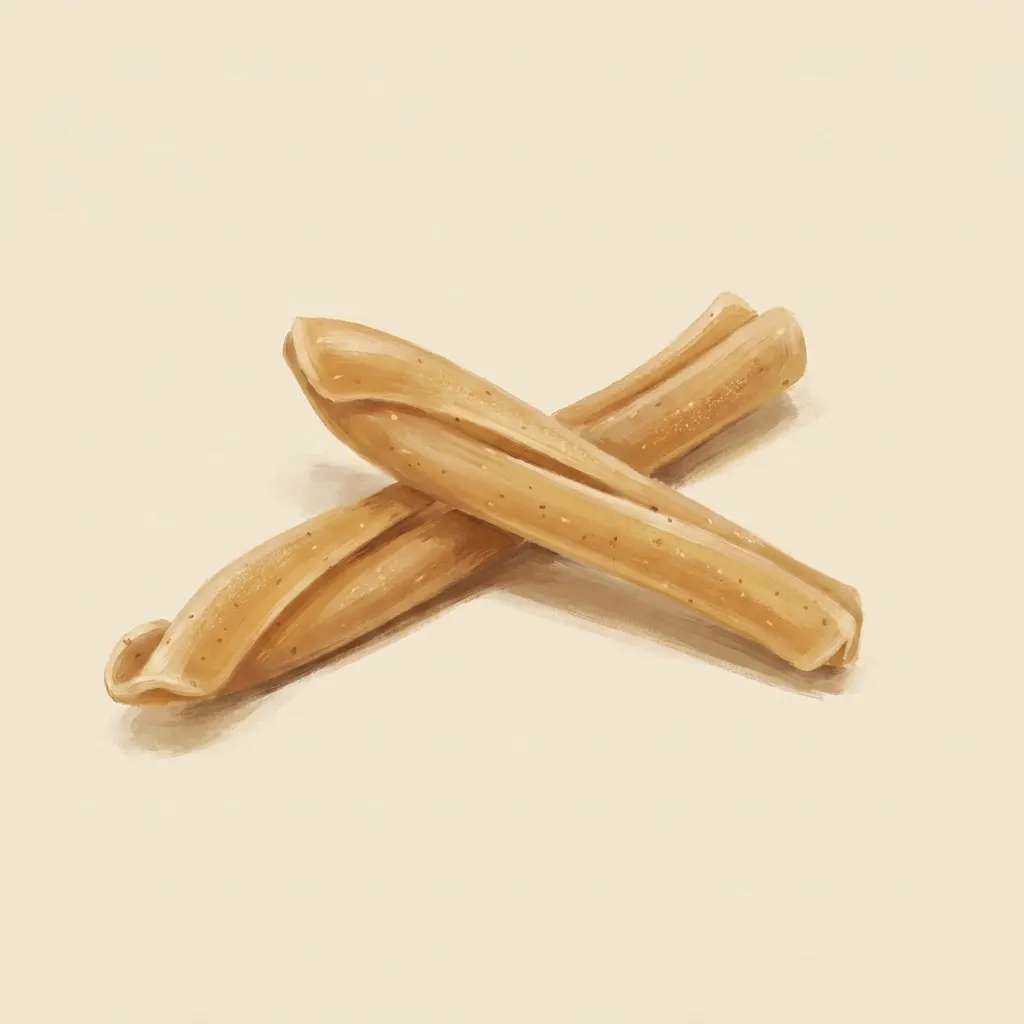
Each piece is a narrow ribbon rolled in on itself, so the cut carries an open channel down its length and a loose s curve at the ends. Thick sauces lodge inside that channel instead of sliding off. Chunky vegetable sauces work the same way, since cubes of eggplant or pepper catch in the folds as you toss. Crushed pestos cling along the groove, which is why Sicilian pairings like trapanese and pistachio pesto recur across sources. Bronze-die versions add a rough skin that grips even thin tomato sauce.
Pesto Trapanese·Norma·Pistachio pesto·Ragu
Classic plates: Pasta alla Norma, Casarecce al pesto trapanese, Casarecce al pesto di pistacchio.
No casarecce? Use these
Closest swaps by sauce behavior, not by looks. The ones most easily confused with casarecce, and how they read.
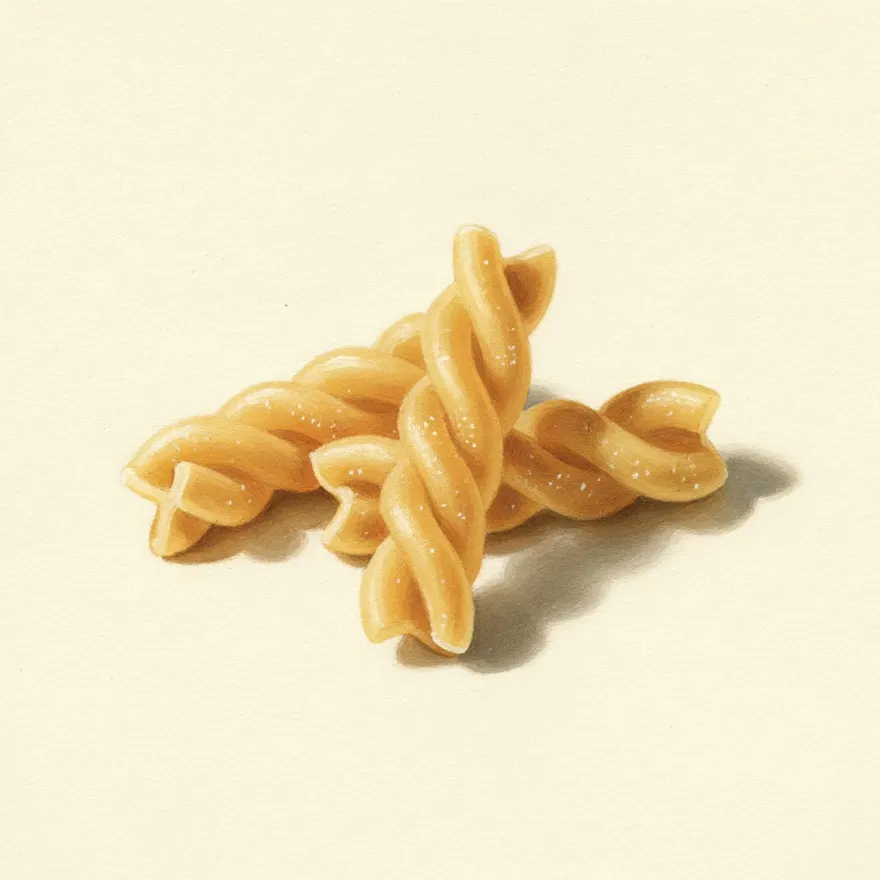
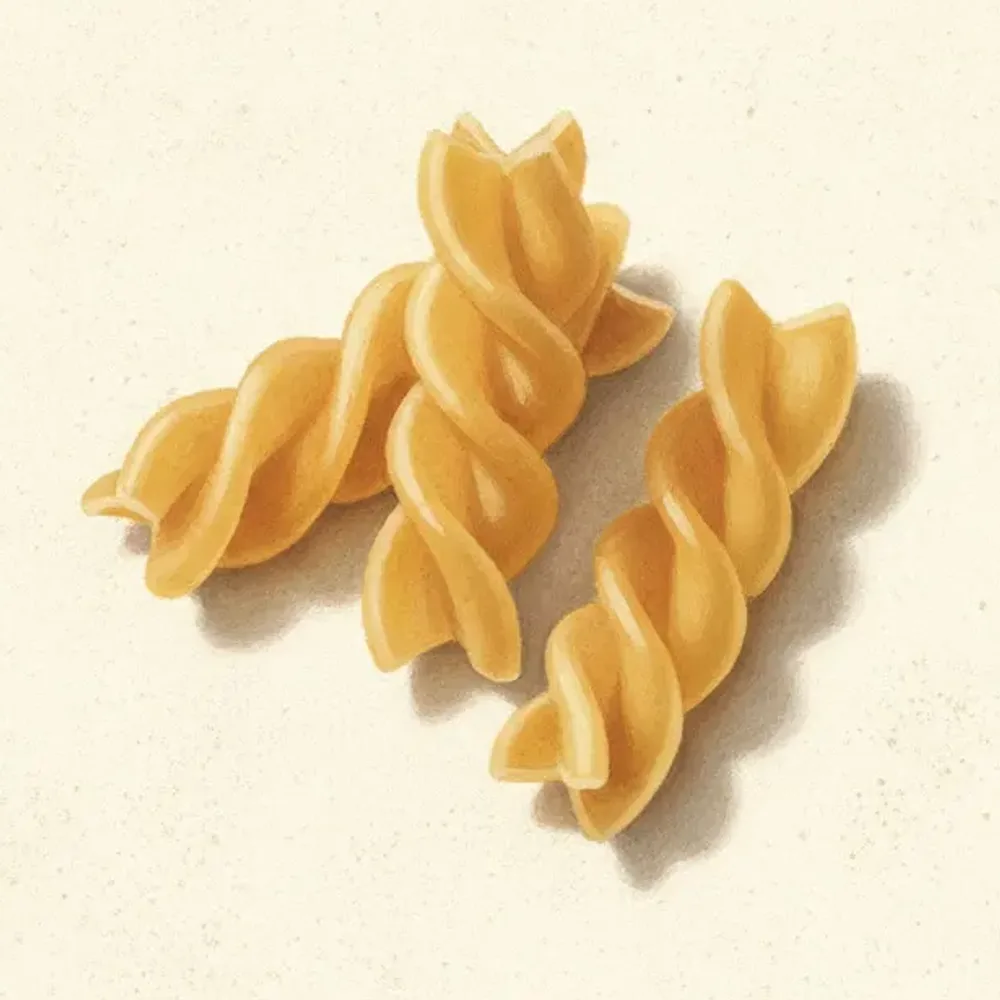
Casarecce vs Gemelli·Casarecce vs Fusilli·Casarecce vs Strozzapreti·Casarecce vs Trofie·Casarecce vs Spaccatella
Easy to confuse with
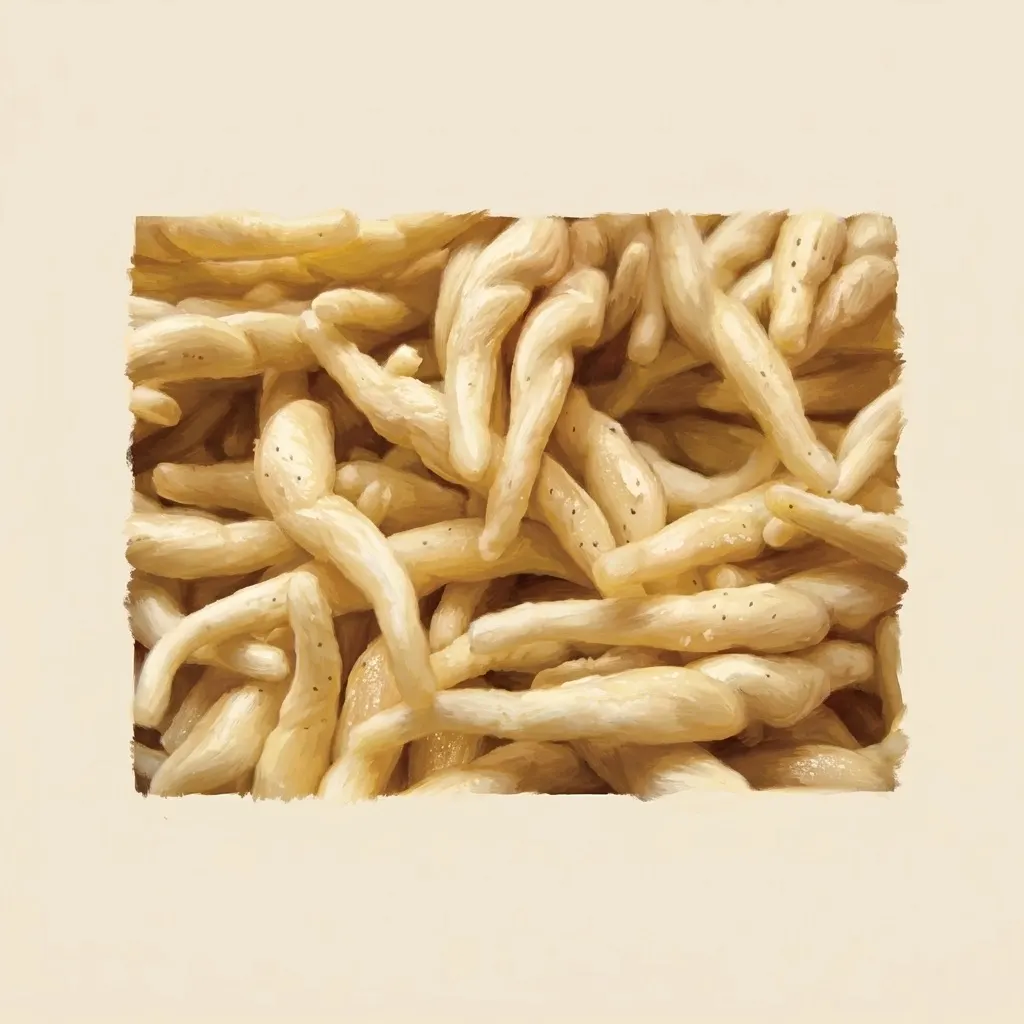
All are twists. Fusilli is a true corkscrew helix, gemelli looks like two strands wound together but is one S-strand twisted on itself, casarecce is a flat ribbon rolled into an open S-channel, and strozzapreti and trofie are hand-rolled and deliberately irregular.
Stay in the loop
From the Almanac
Updates from Pasta Almanac, when there is something worth sharing.