Candele
kahn-DEH-leh
Also known as candele lunghe, candele di Gragnano.
What it is
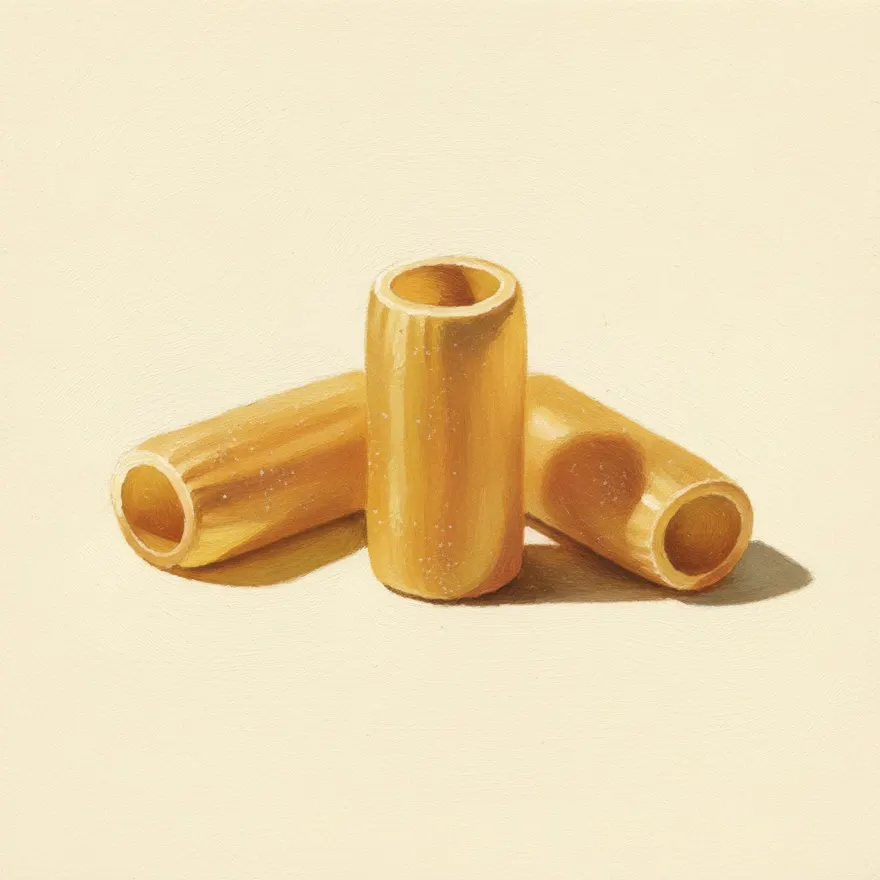
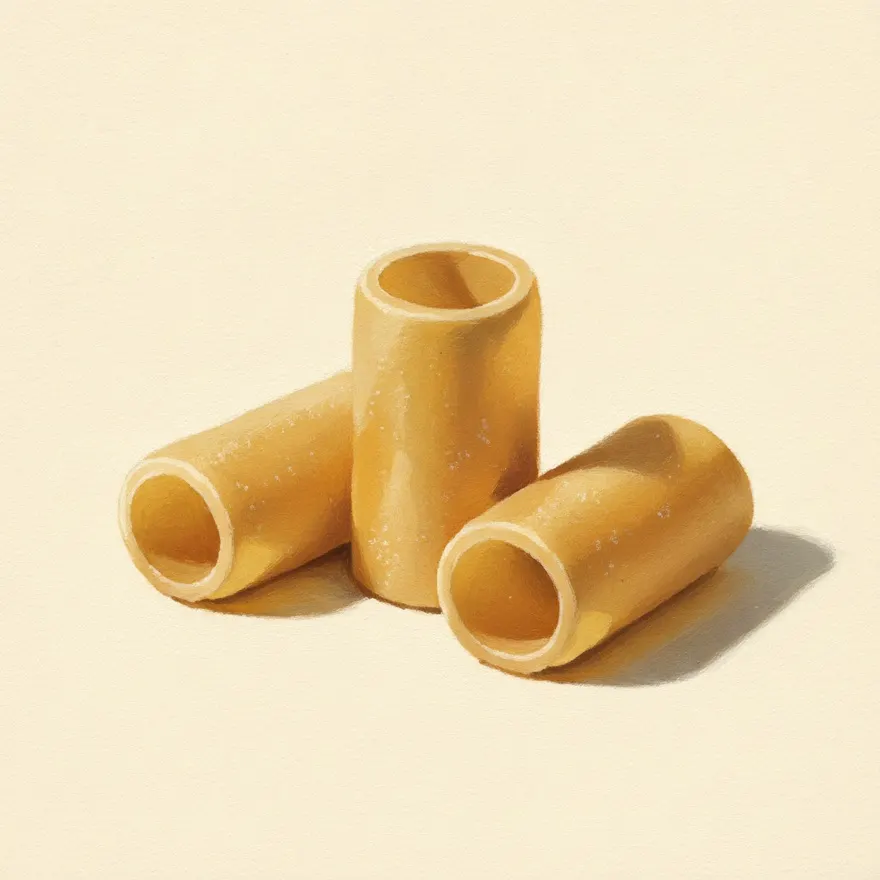
Candele are snapped by hand into short pieces before they ever reach the pot, a habit older than any box on the shelf. They are one of the defining long shapes of the Gragnano tradition in Campania, near Naples, where they were once sold loose and wrapped by hand in blue sugar paper. The name follows the form, a long smooth tube that recalls the tall candles of church processions. In Naples the broken pieces are dressed with the heaviest sauces in the repertoire, above all La Genovese, the slow onion and beef sauce, and ragu napoletano. Makers in Gragnano still produce them bronze drawn and slow dried over roughly 60 to 70 hours.
Candele is the plural of the Italian candela, meaning candle, from the Latin candela, itself from candere, to shine or be white. The name and the shape come from the long thin wax candles carried in religious ceremonies and processions.
What sauce it wants, and why
The wide round bore is the whole point. A long candele tube, once snapped into rough lengths, swallows a thick onion and meat sauce so each piece carries sauce inside and out. That makes it the classic vehicle for La Genovese, where sweet long cooked onions and beef cling to the smooth interior, and for the dense ragu napoletano. The same generous tube holds up to baking, so broken candele also turn up in baked dishes.
Classic plates: candele alla genovese, candele al ragu napoletano.
No candele? Use these
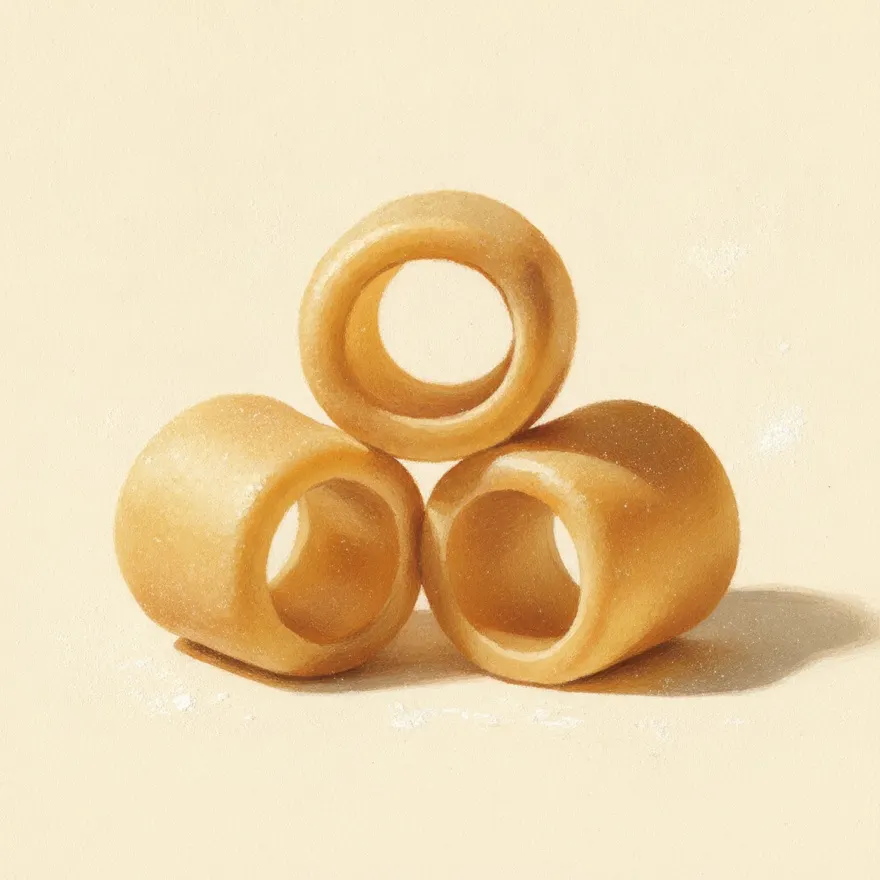
Closest swaps by sauce behavior, not by looks. The ones most easily confused with candele, and how they read.
Newsletter
Pasta mail
A new shape now and then, plus whatever pasta rabbit hole we fell down lately. No spam, promise.