Cappellacci
kap-pel-LAH-chee
Also known as cappellacci di zucca, cappellacci di zucca ferraresi, caplaz.
What it is
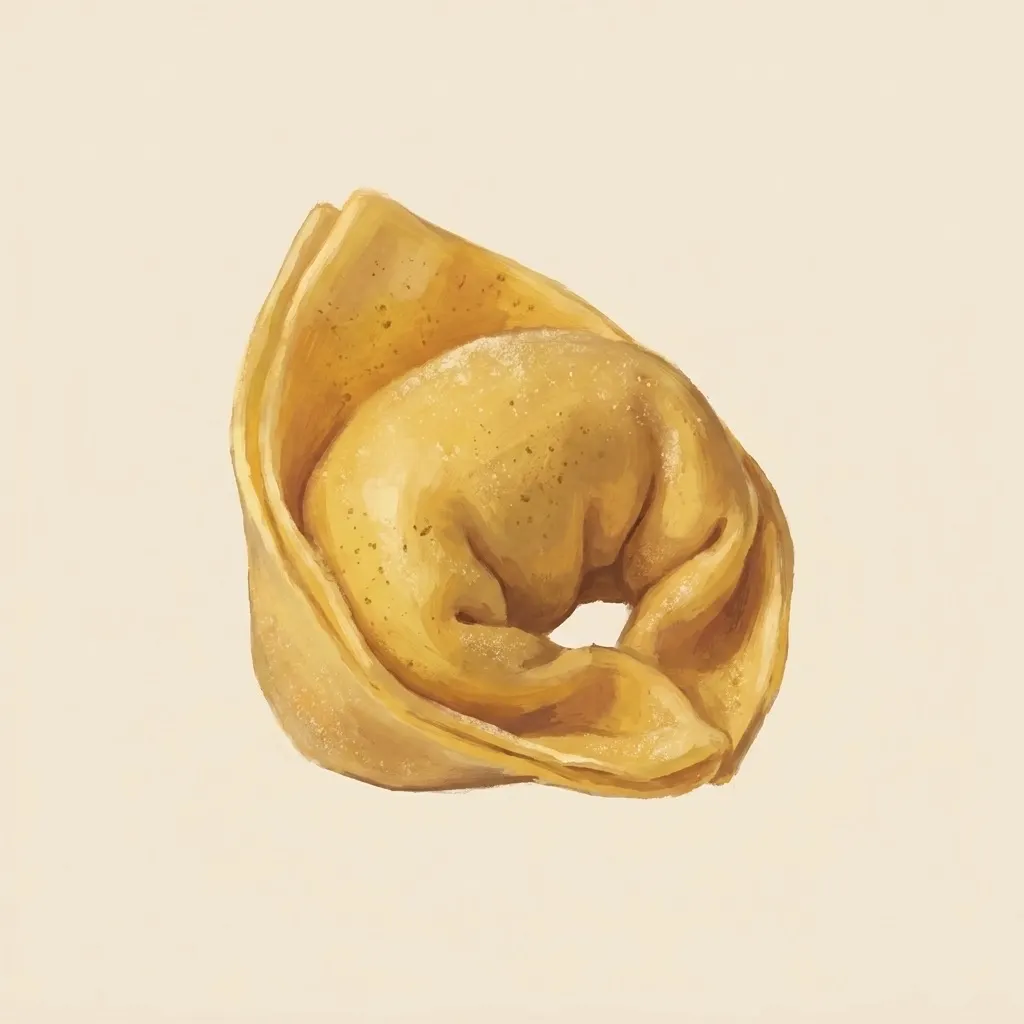
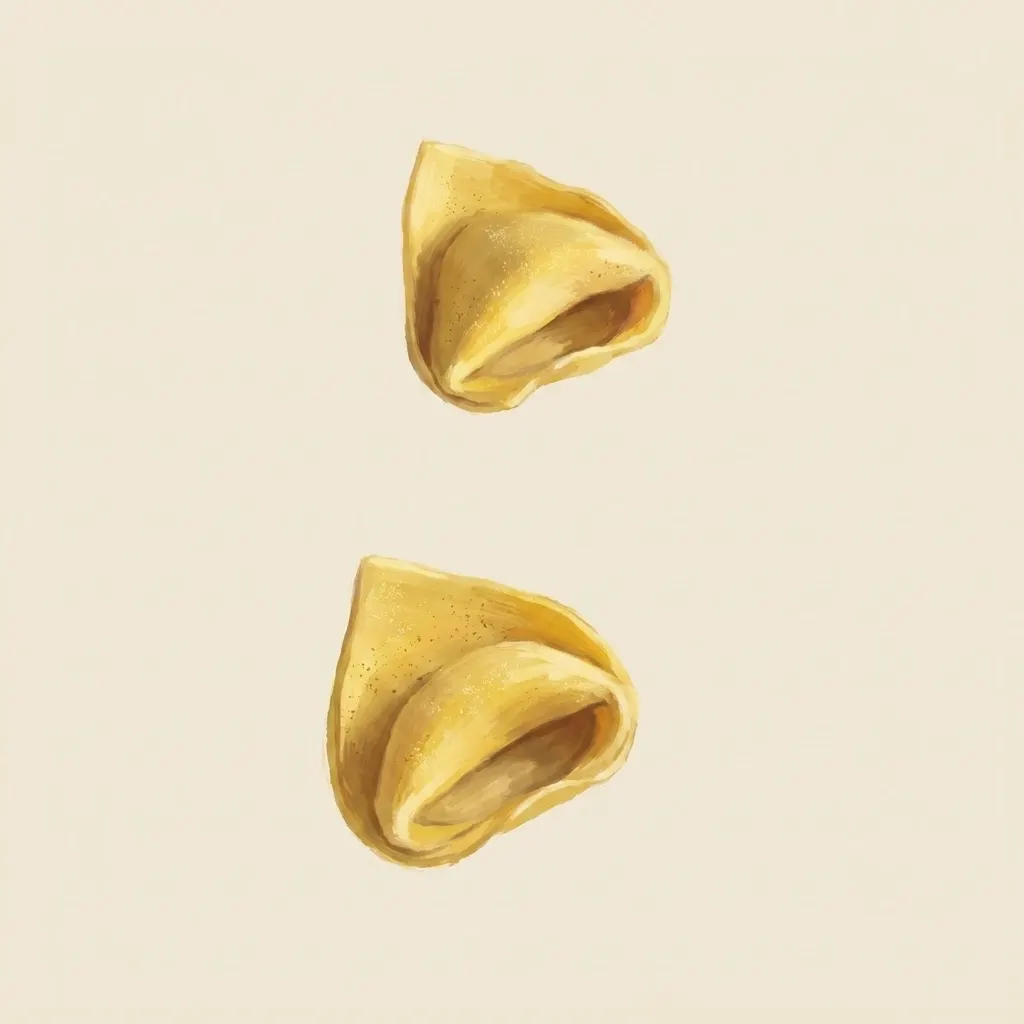
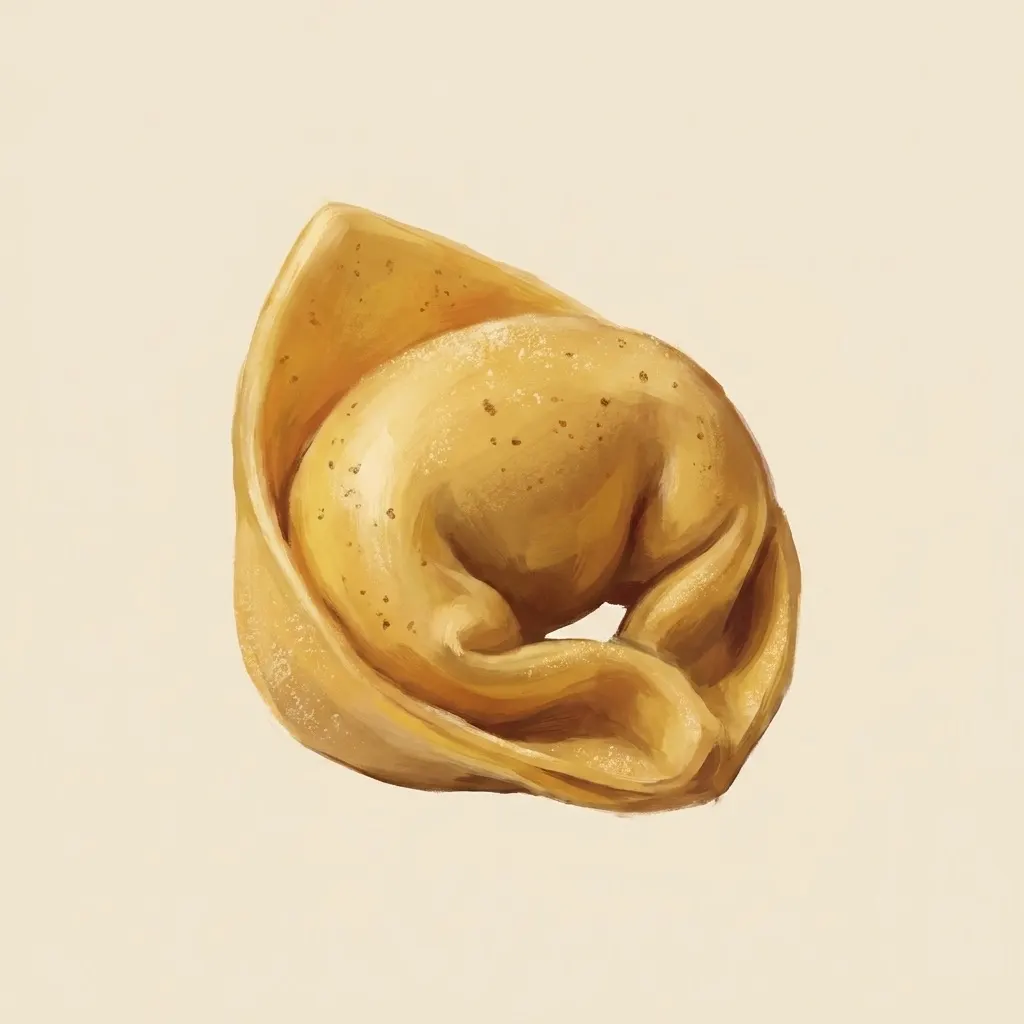
The first written recipe for cappellacci di zucca appears in 1584, set down by Giovanni Battista Rossetti, a cook at the Ferrara court of Duke Alfonso II d'Este. The parcels are squares of egg sfoglia folded over a filling of Violina squash, grated cheese, and nutmeg, then pinched into a peaked shape that local dialect calls caplaz, an old straw hat. They are larger and coarser than cappelletti, the smaller meat-filled cousin from the same region. In 2016 the European Union registered Cappellacci di Zucca Ferraresi as a Protected Geographical Indication tied to the province of Ferrara.
From cappellaccio, formed from cappello (hat) plus the suffix accio, a pejorative that marks something coarse or roughly made, so the word reads as a battered or ugly hat. Treccani records the plural cappellacci as sfoglia parcels larger than cappelletti, filled with squash or ricotta, a specialty of the province of Ferrara. Local tradition holds that the peaked shape recalls the caplaz, the straw hat once worn by Ferrarese farmers.
What sauce it wants, and why
The filling is sweet and soft, built on cooked squash and cheese, so the dressing stays light and lets it lead. Melted butter and sage is the classic match, often finished with grated Parmigiano Reggiano. A simple meat ragu is the other traditional choice. Heavy or sharp sauces would bury the squash, so they are avoided.
Classic plates: cappellacci di zucca al burro e salvia, cappellacci di zucca al ragu.
No cappellacci? Use these
Closest swaps by sauce behavior, not by looks. The ones most easily confused with cappellacci, and how they read.
Easy to confuse with
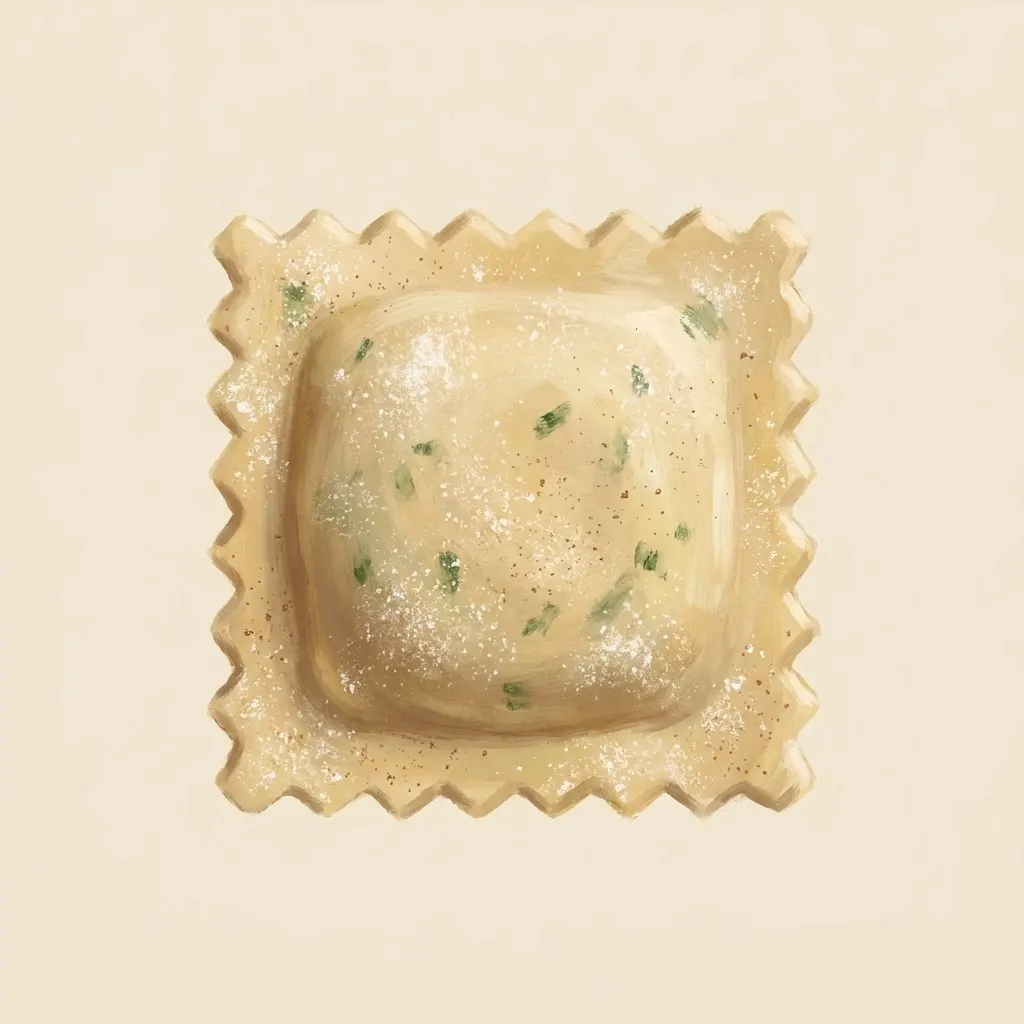
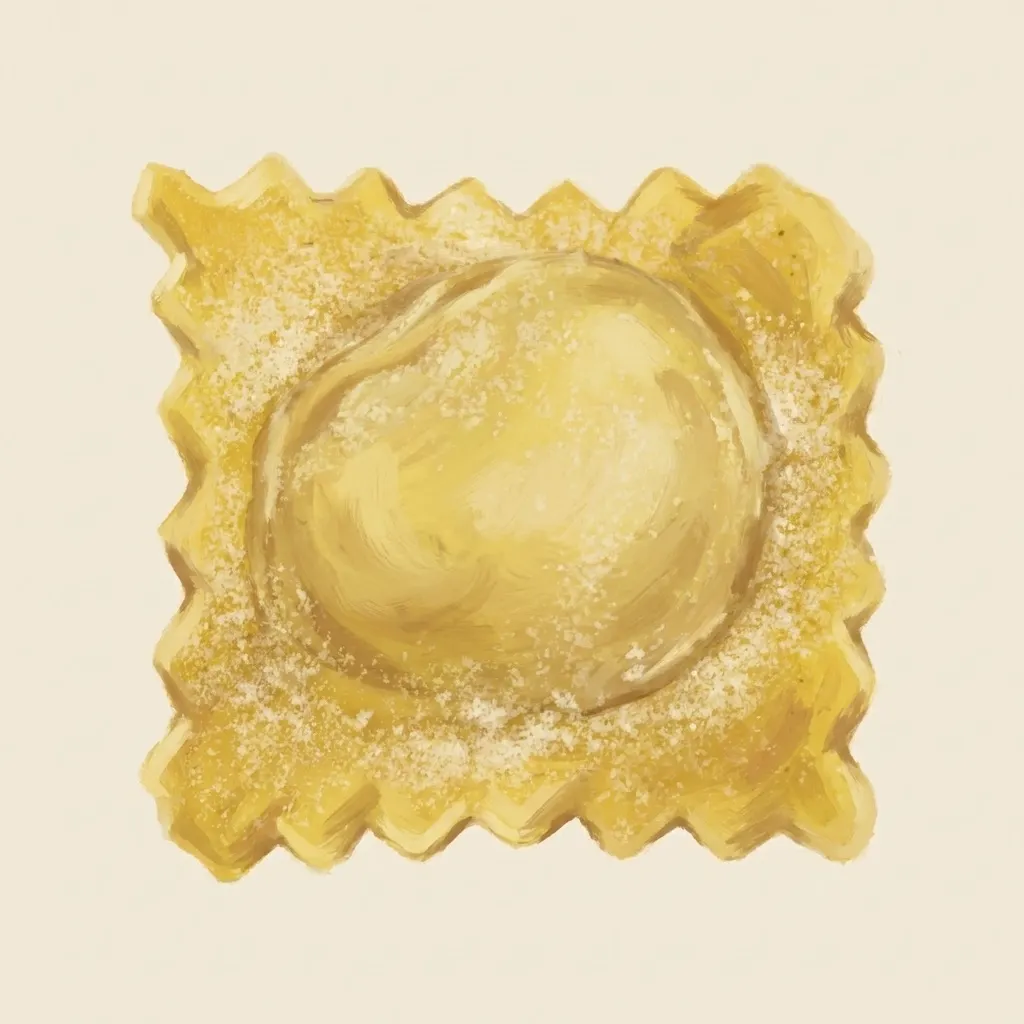
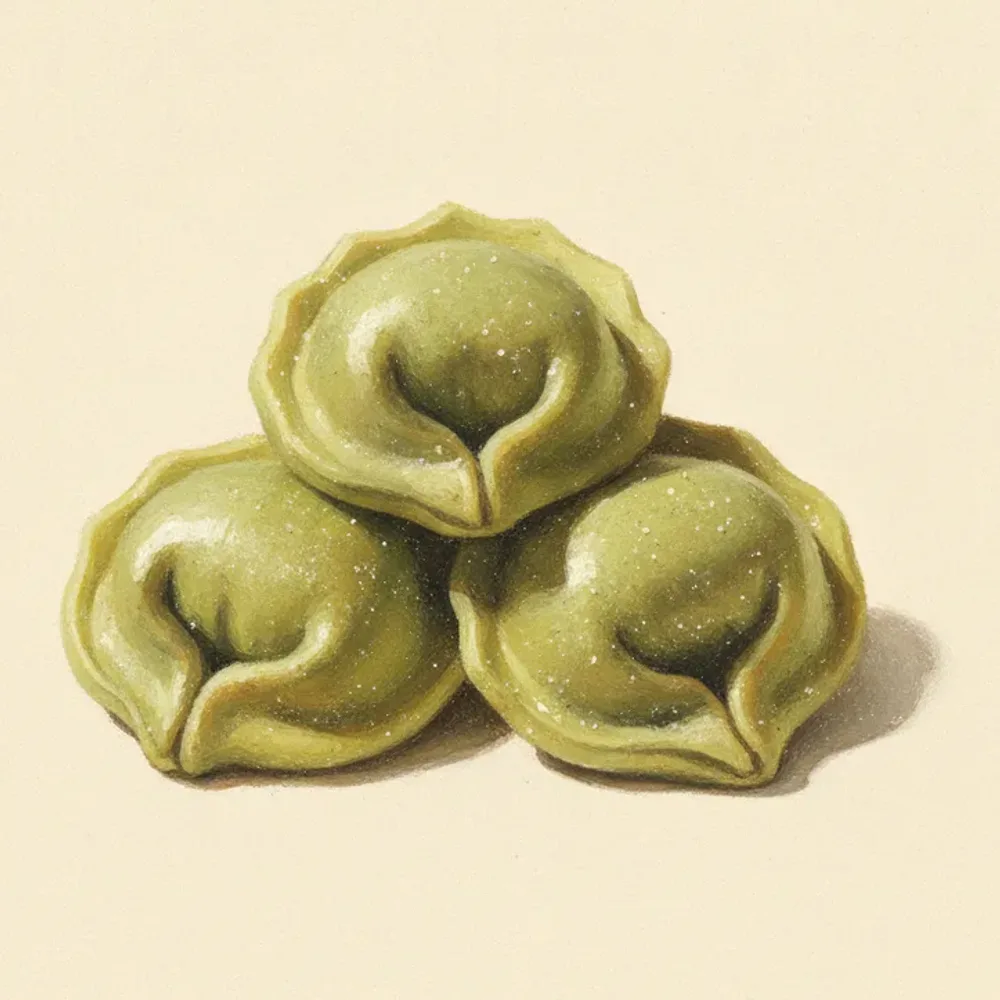
Filled parcels. Ravioli and tortelli are flat sealed pillows, agnolotti a smaller pinched one, while tortellini and cappelletti fold into rings around a fingertip (cappelletti peaked like a hat). Tortelloni is the big ring, balanzoni its green spinach-dough version, and cappellacci a larger peaked hat filled with squash.
Newsletter
Pasta mail
A new shape now and then, plus whatever pasta rabbit hole we fell down lately. No spam, promise.