Rigatoni
ree-gah-TOH-nee
What it is
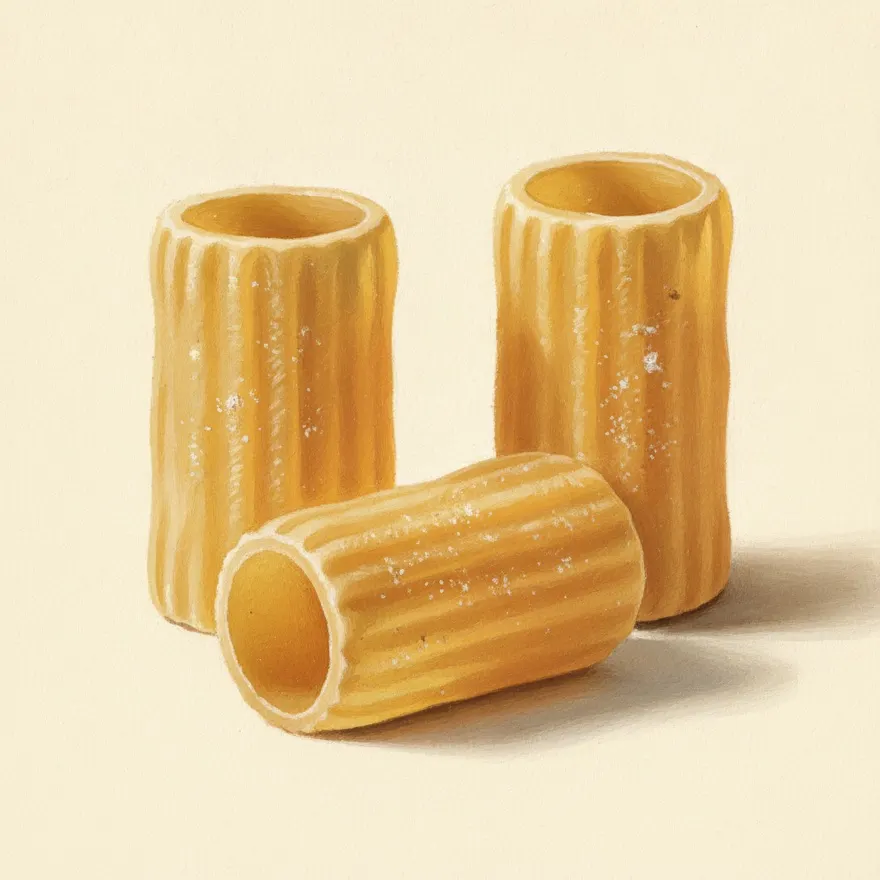
Rigatoni is a child of the extruded pasta industry of central and southern Italy. The ridges that give the shape its name are a machine-made feature. The Pasta Project notes that grooved pasta surfaces spread only after production industrialized in the nineteenth century, since traditional hand-shaped pasta lacks them. Rome claims the shape most firmly. De Cecco's own product page calls rigatoni a typical traditional pasta from Rome, and the city gave it a signature dish. Rigatoni con la pajata pairs the wide tubes with the intestines of a milk-fed calf, a fixture of Roman offal cooking. The shape is just as loved farther south. Wikipedia describes rigatoni as a particular favorite in southern Italy, especially Sicily, where it anchors rigatoni alla Norma, the eggplant and tomato dish that tradition links to Bellini's opera. Whatever the kitchen, the brief stays constant. A big sturdy tube, cut square at the ends, built to carry heavy sauce.
From Italian rigato, meaning lined or scored, the past participle of rigare, to draw lines, with the augmentative plural suffix -oni. The name reads roughly as big ridged ones.
What sauce it wants, and why
Rigatoni is built for sauces with solids in them. The bore is wide enough that nubs of sausage, braised meat, or eggplant ride inside the tube instead of sliding off it. The ridges do the outside work, holding a film of sauce and grated cheese against every surface. The ends are cut square, not on the bias like penne, so the tube scoops rather than spears, and the blunt openings stay open under a heavy ragu. Thin oil-based dressings drain straight through. Give it amatriciana, a slow meat sauce, or a baked dish.
Classic plates: Rigatoni con la pajata, Rigatoni alla zozzona, Rigatoni alla Norma, Rigatoni al forno.
No rigatoni? Use these
Closest swaps by sauce behavior, not by looks. The ones most easily confused with rigatoni, and how they read.
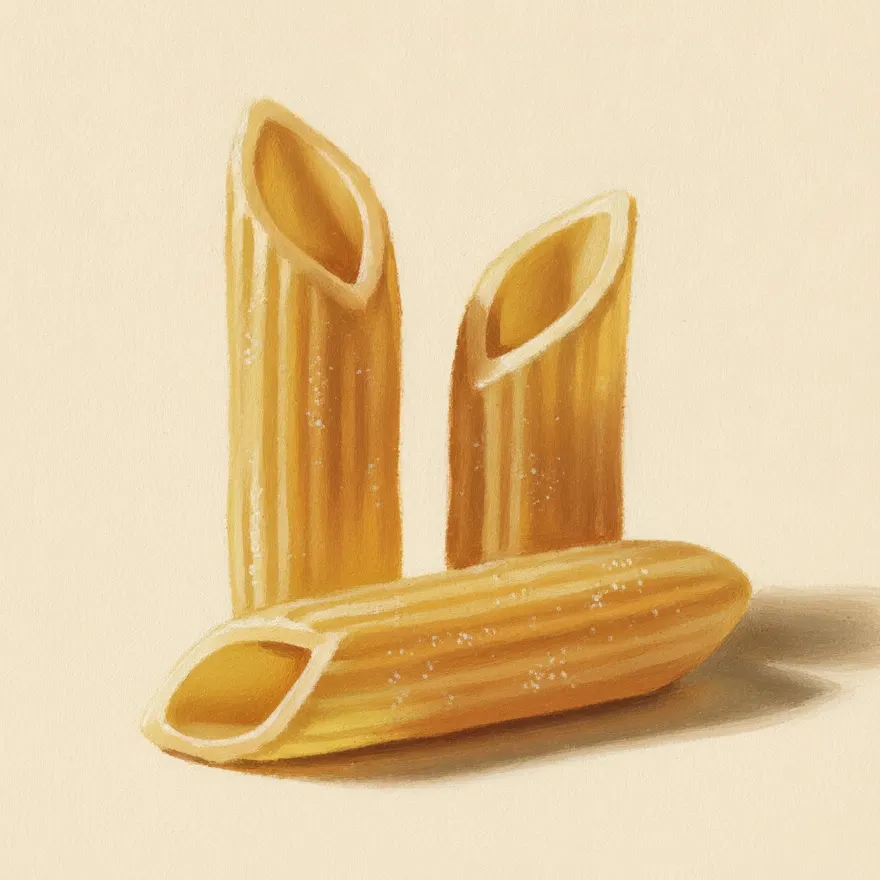
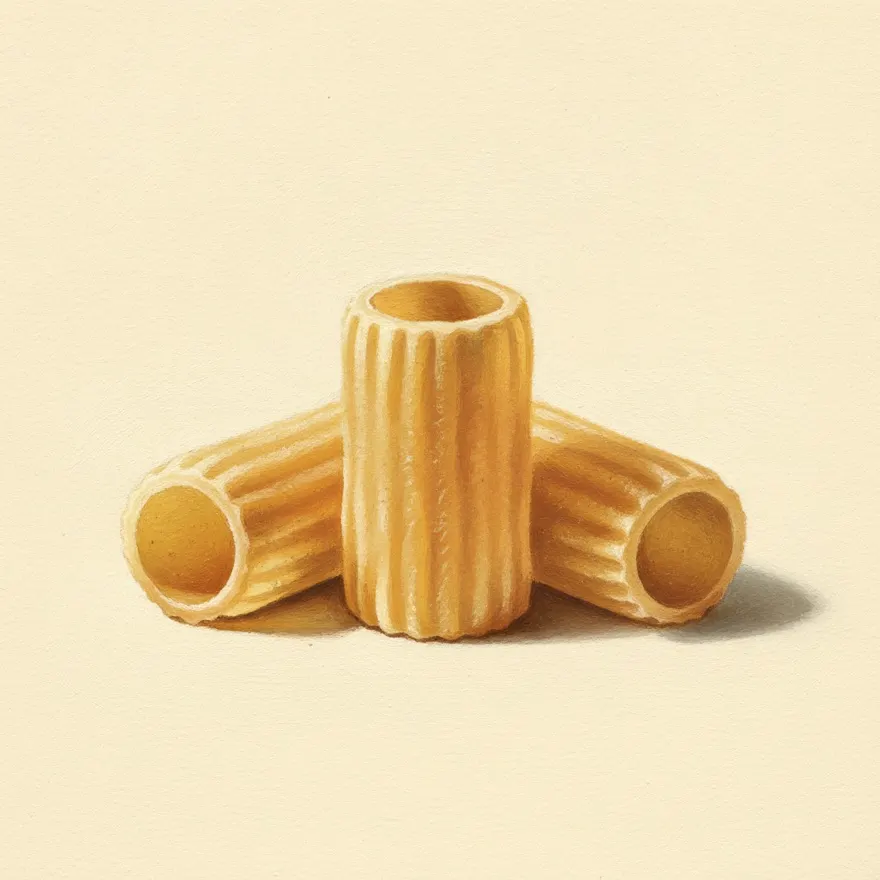
Rigatoni vs Penne·Rigatoni vs Ziti·Rigatoni vs Mezze maniche·Rigatoni vs Paccheri·Rigatoni vs Tortiglioni·Rigatoni vs Sedani
Easy to confuse with
Ridged tubes. Rigatoni is wide and cut straight across, mezze maniche is a shorter rigatoni, tortiglioni carries spiraling ridges, sedani is slightly curved, and penne is cut on the diagonal to a point.
- How to read a pasta shapeEvery shape is a machine for holding sauce. Learn the four things to look at and you can predict what any pasta wants.
- The four Roman pasta saucesCacio e pepe, gricia, amatriciana, carbonara. Four dishes built on the same two ingredients, and the shapes they ride.
- Egg vs semolina: the two doughsAlmost every pasta is one of two recipes. The dough tells you the region, the texture, and the sauce.
- Pasta for baking: the al forno shapesNot every shape survives the oven. The ones that do are big, sturdy, and built to hold a filling or a sauce.
- Why durum: the wheat that holds its biteThe gold color is the first clue. Durum is a different wheat from the one in bread, the hardest grown, and it is the reason good dried pasta keeps its bite in the water instead of going soft.
Stay in the loop
From the Almanac
Updates from Pasta Almanac, when there is something worth sharing.