Bucatini
boo-kah-TEE-nee
Also known as perciatelli.
What it is
A strand of bucatini cannot be rolled by hand. The hole at its center must be extruded, with dough forced through a perforated die so each strand emerges as a long tube, which means the shape has always depended on a press rather than a rolling pin. Made from durum wheat and water, it is common across Lazio and closely tied to Rome, where it anchors amatriciana and gricia. Around Naples the same shape goes by perciatelli, from a dialect word for pierced, and De Cecco's own product page credits Naples as its birthplace, an attribution worth noting rather than settling. The shape had a strange brush with fame in late 2020, when it vanished from American shelves. Reporting traced the shortage to pandemic demand, producers cutting the shape to prioritize bestsellers, and an FDA import alert that held De Cecco bucatini at the border over low iron content.
Italian, a diminutive plural built on buco, hole, so the name means something like little holed ones. The synonym perciatelli comes from perciato, a Neapolitan word for pierced.
What sauce it wants, and why
The hole changes the math of sauce delivery. A solid strand carries sauce only on its outside. Bucatini adds an inner channel, roughly 1.5 to 2 mm wide, that pulls liquid in as the pasta cooks and as you twirl it, so each bite delivers sauce inside and out. The thicker wall also gives more chew than spaghetti, which lets it stand up to guanciale fat and reduced tomato without going limp. Bronze-die versions add a rough surface that grips emulsified sauces.
Amatriciana·Gricia·Cacio e pepe·Carbonara
Classic plates: Bucatini all'Amatriciana, Bucatini alla gricia, Bucatini cacio e pepe, Bucatini alla carbonara.
No bucatini? Use these
Closest swaps by sauce behavior, not by looks. The ones most easily confused with bucatini, and how they read.

Easy to confuse with
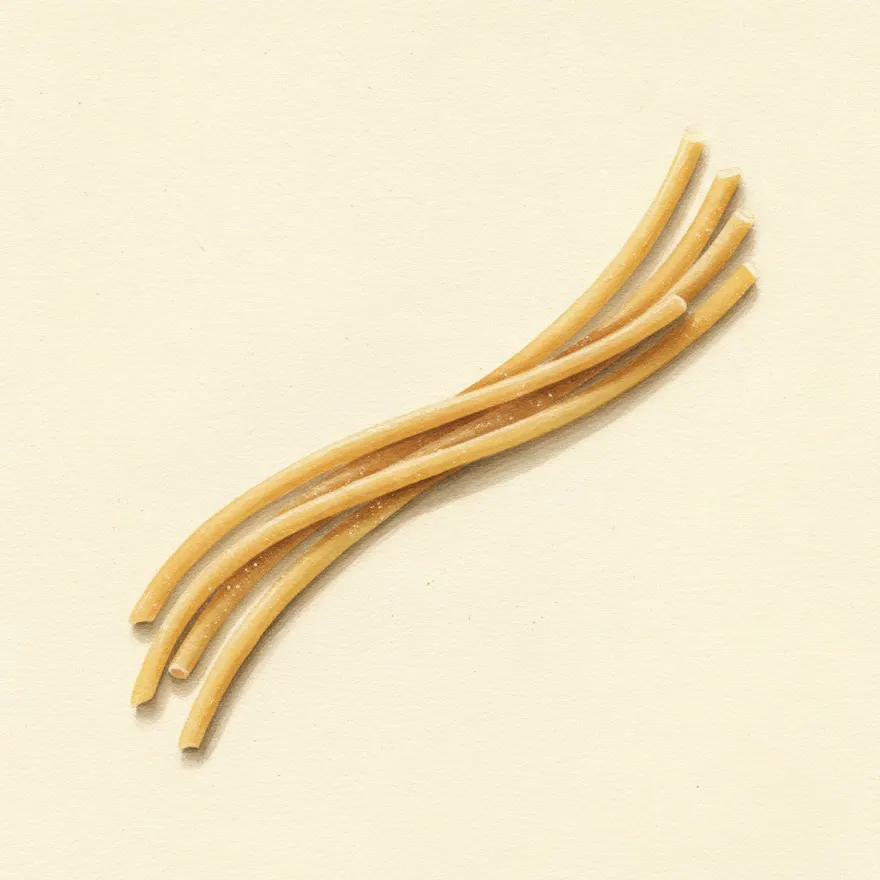
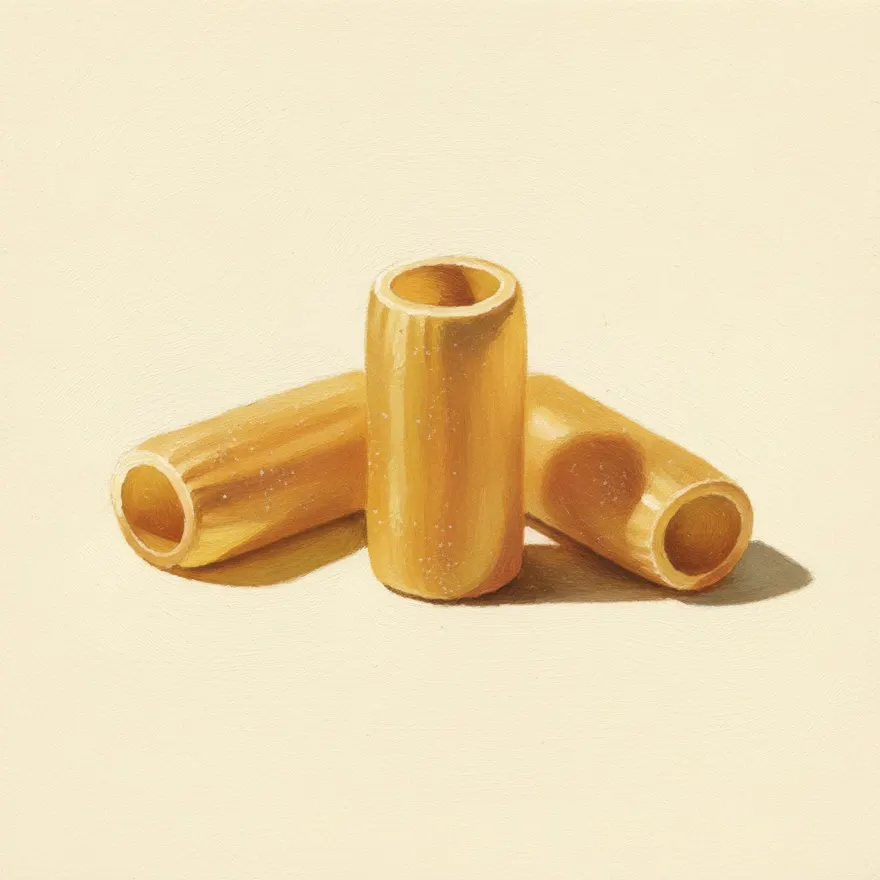
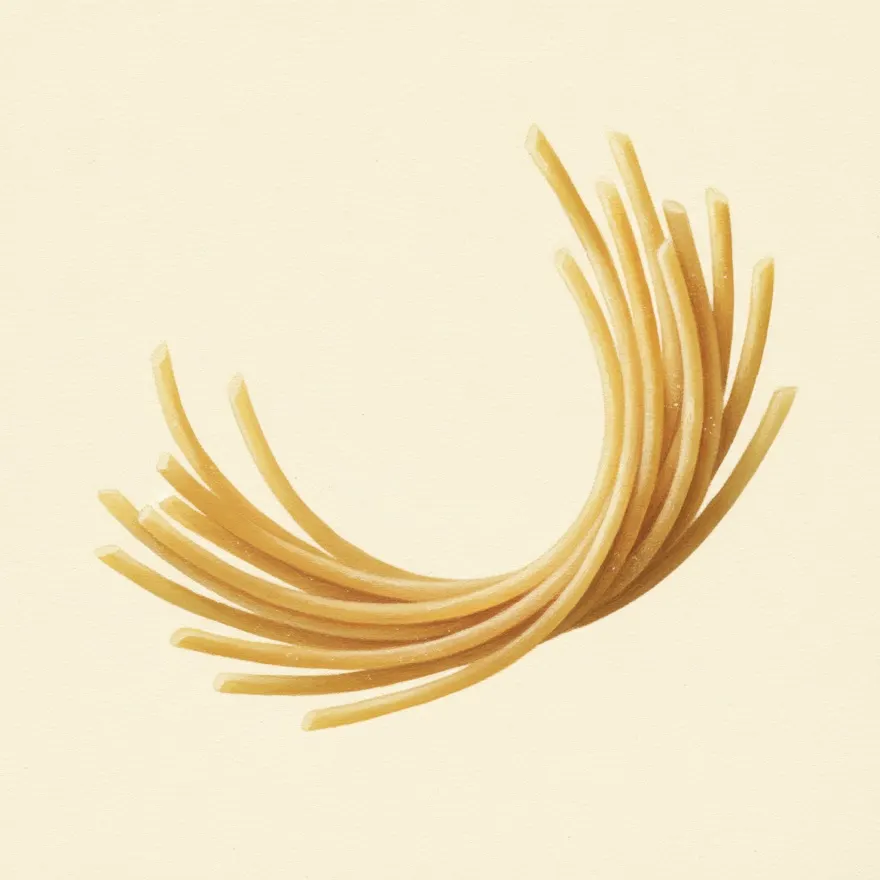
Solid round strands graded only by thickness: capellini (finest), spaghettini, spaghetti, then spaghettoni (thickest), with vermicelli sitting near spaghetti. Bucatini looks like a thick spaghetti but has a hole running through the center.
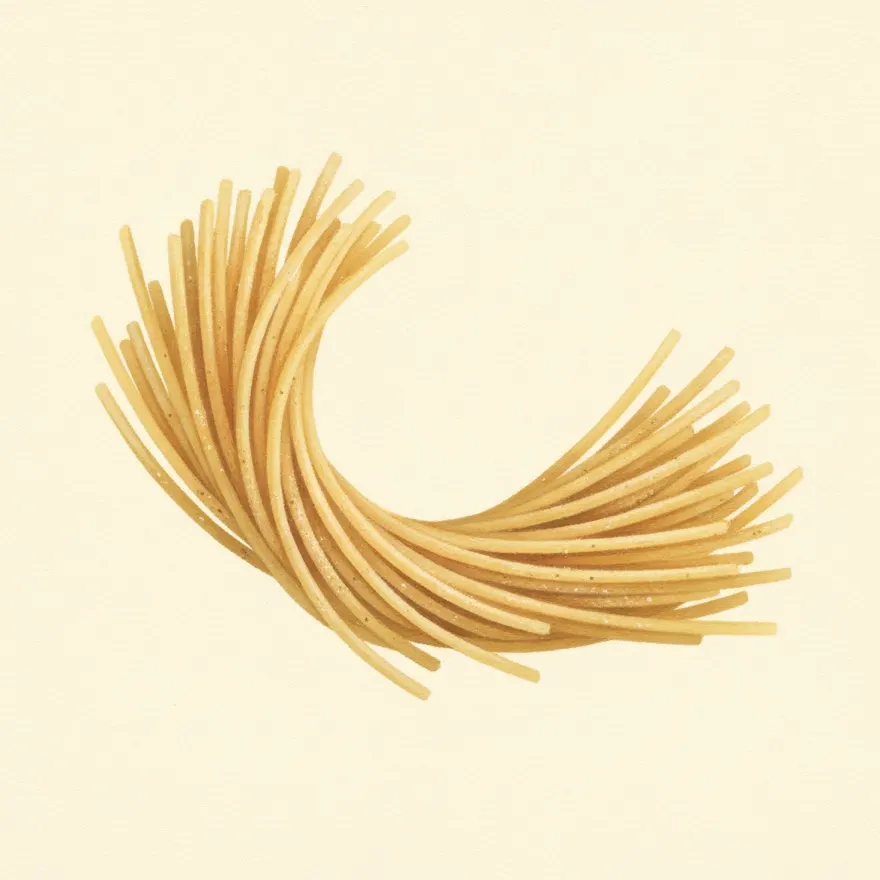
- How to read a pasta shapeEvery shape is a machine for holding sauce. Learn the four things to look at and you can predict what any pasta wants.
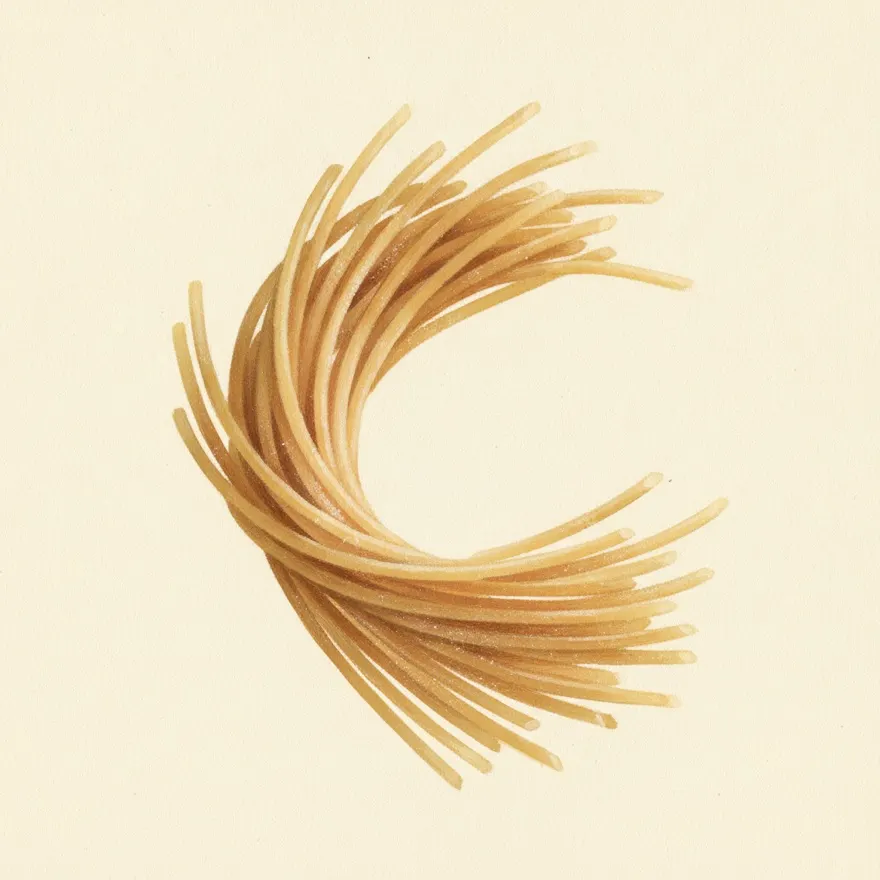
- The four Roman pasta saucesCacio e pepe, gricia, amatriciana, carbonara. Four dishes built on the same two ingredients, and the shapes they ride.
- Why durum: the wheat that holds its biteThe gold color is the first clue. Durum is a different wheat from the one in bread, the hardest grown, and it is the reason good dried pasta keeps its bite in the water instead of going soft.
Stay in the loop
From the Almanac
Updates from Pasta Almanac, when there is something worth sharing.