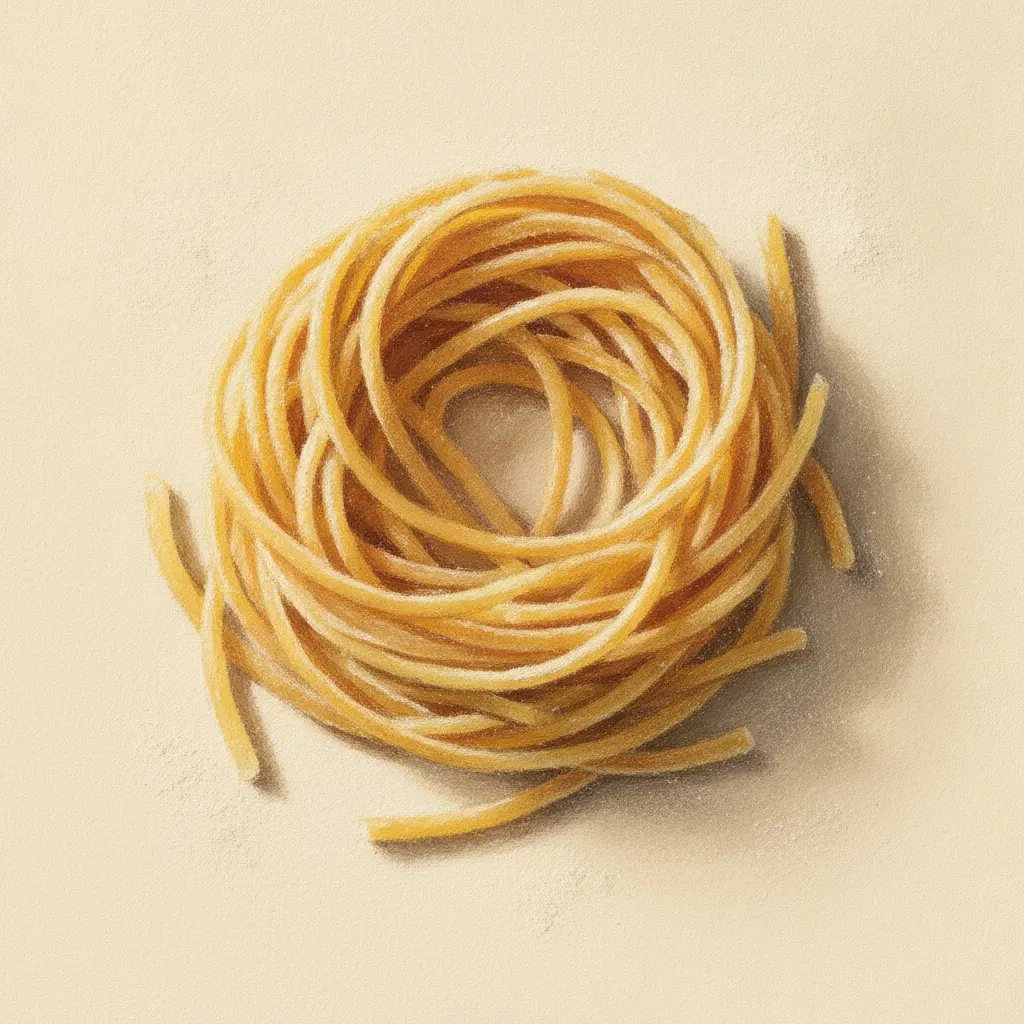
Long strands
A strand is pasta reduced to a single variable: the cross section. Everything a long noodle does follows from the gauge and the geometry of that little circle or oval. Thin strands carry oil films and light emulsions. Thick strands stand up to guanciale fat and reduced tomato. Pierce the middle and you get bucatini, which delivers sauce through the center. Flatten it slightly and the strand lays a face against the sauce instead of a tangent line. The family is eaten by the twirl, so its sauces must survive the fork: films, emulsions, and smooth coats, never chunks. Chunks fall off a cylinder. That is not a rule of taste, it is friction.
Compare the family
| Shape | Section | Cook (min) | Surface |
|---|---|---|---|
| Bigoli | thick round strand | 22 | textured |
| Bucatini | round pierced strand, like a thick spaghetti with a narrow channel of roughly 1.5 to 2 mm running its full length | 7-11 | smooth |
| Capellini | very fine round strand | 2-4 | smooth |
| Linguine | flattened oval strand | 10-12 | smooth |
| Spaghetti | solid circular strand, no hole | 9-12 | smooth |
| Spaghettini | thin round strand | 6-9 | smooth |
| Spaghettoni | thick round strand | 11-16 | smooth |
| Tonnarelli | square-section egg strand, about 2 to 3 mm per side | 6-13 | textured |
| Troccoli | thick square or slightly oval section strand, about 3 to 5 mm per side, cut with a grooved rolling pin | n/a | textured |
| Vermicelli | round strand | 12-14 | smooth |
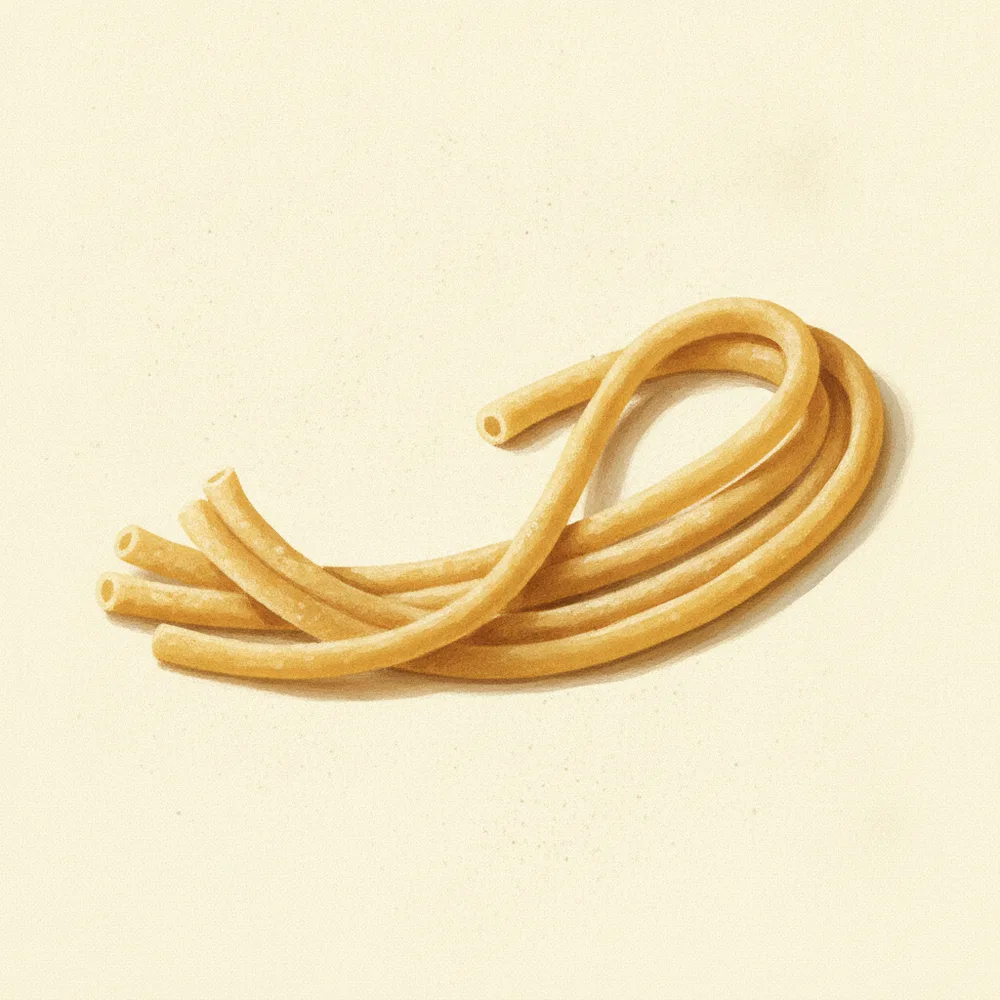
Bigoli
Long strands
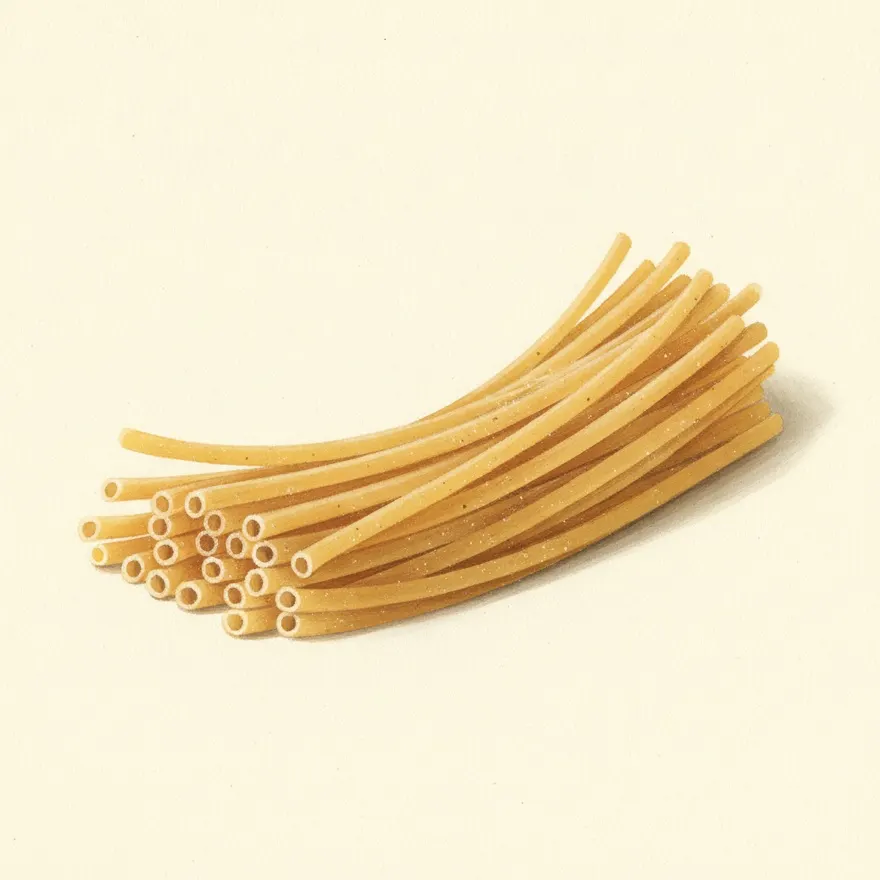
Bucatini
boo-kah-TEE-nee
Long strands
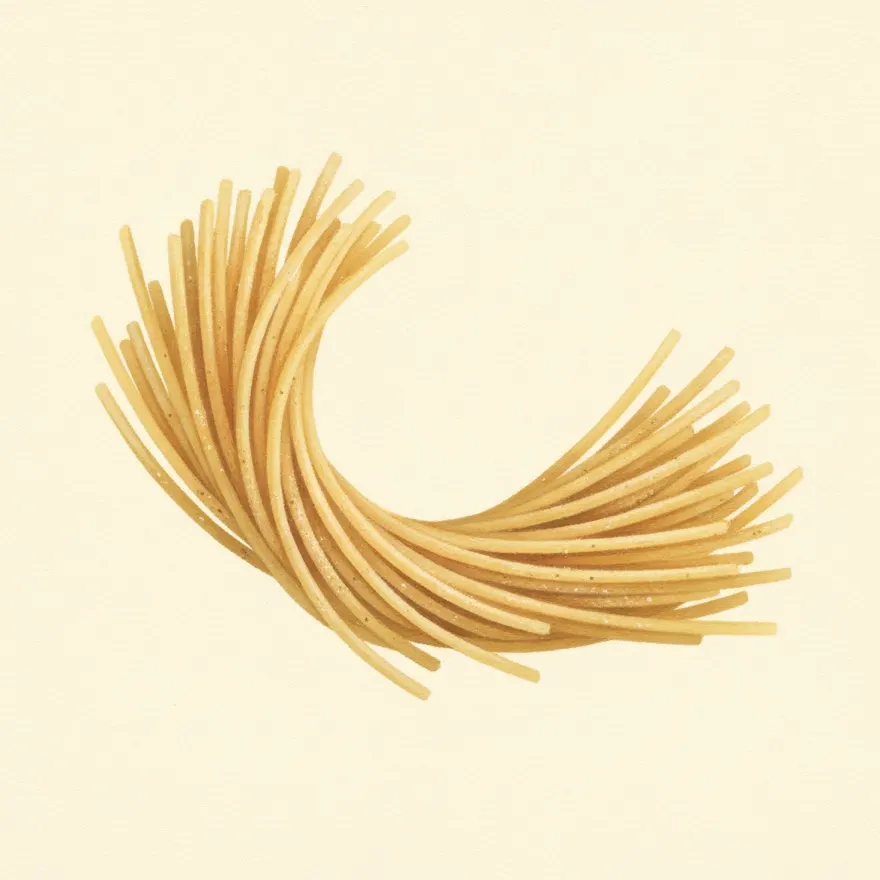
Capellini
kah-peh-LEE-nee
Long strands
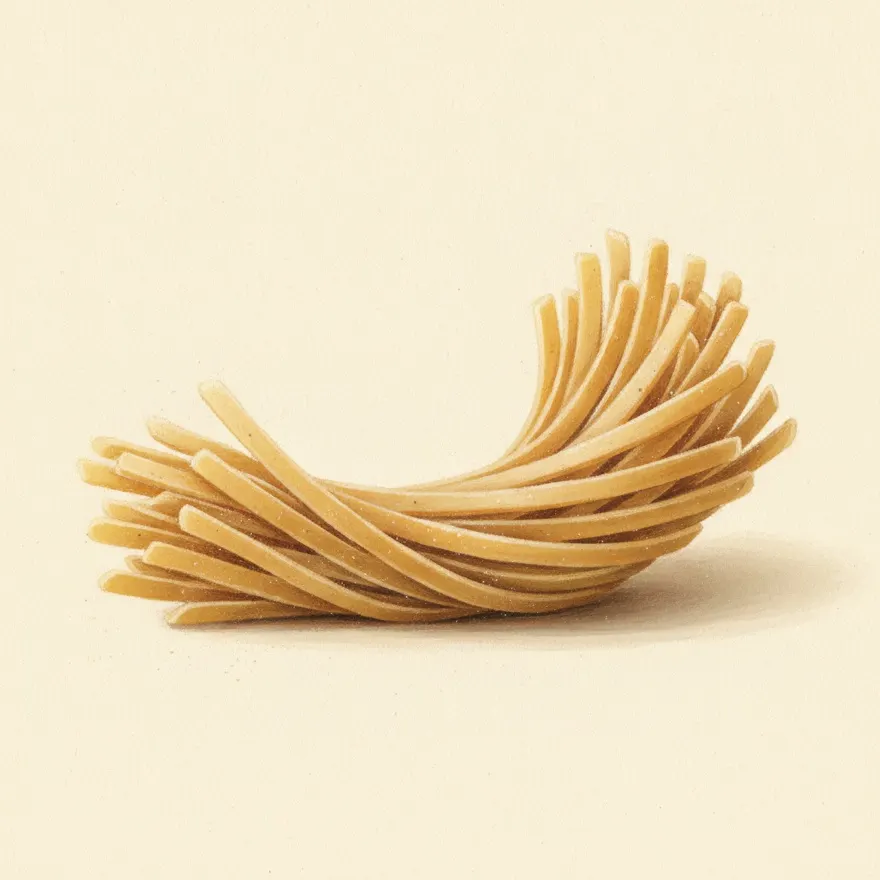
Linguine
lin-GWEE-nee
Long strands

Spaghetti
spah-GET-ee
Long strands
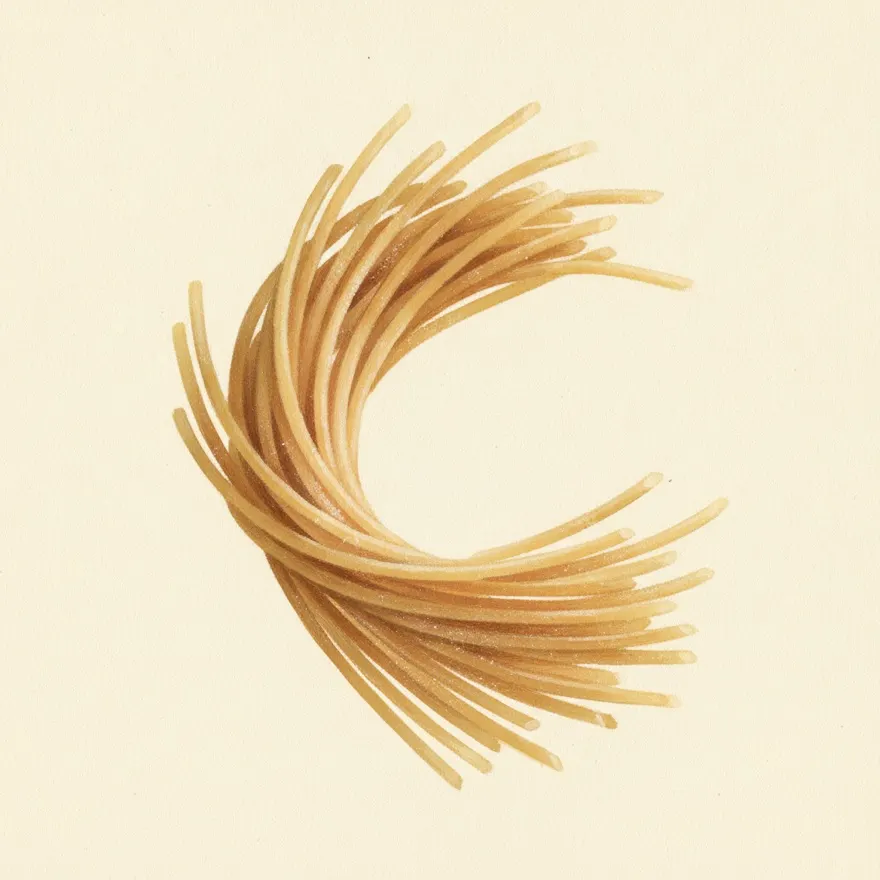
Spaghettini
spah-geh-TEE-nee
Long strands
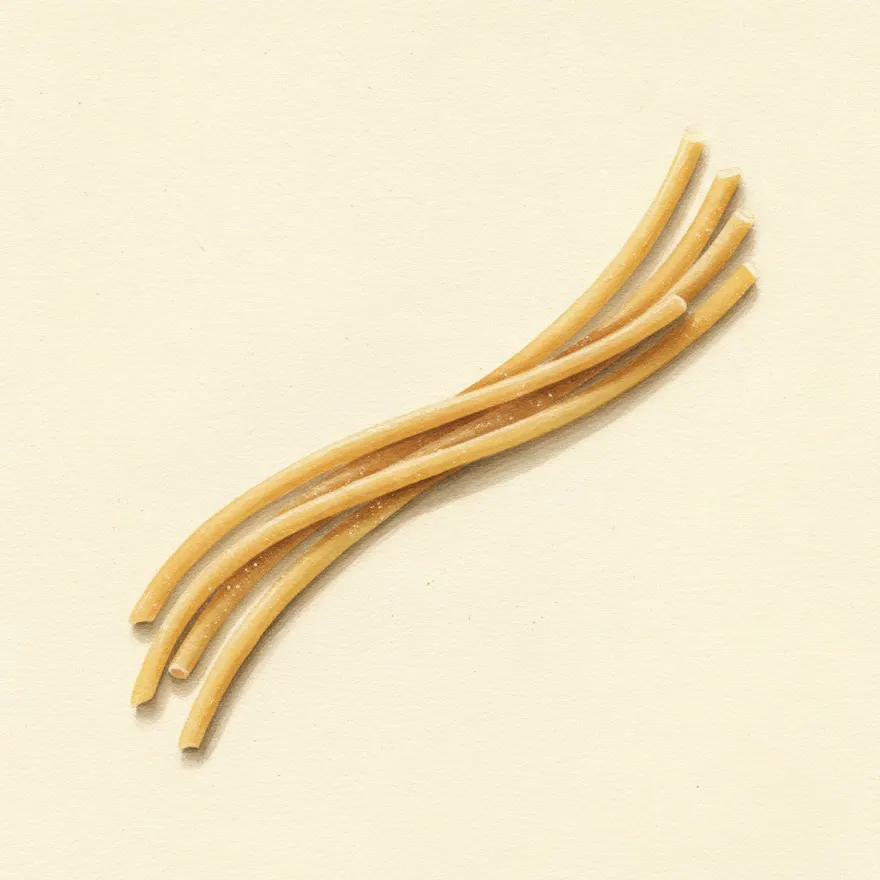
Spaghettoni
spah-geht-TOH-nee
Long strands
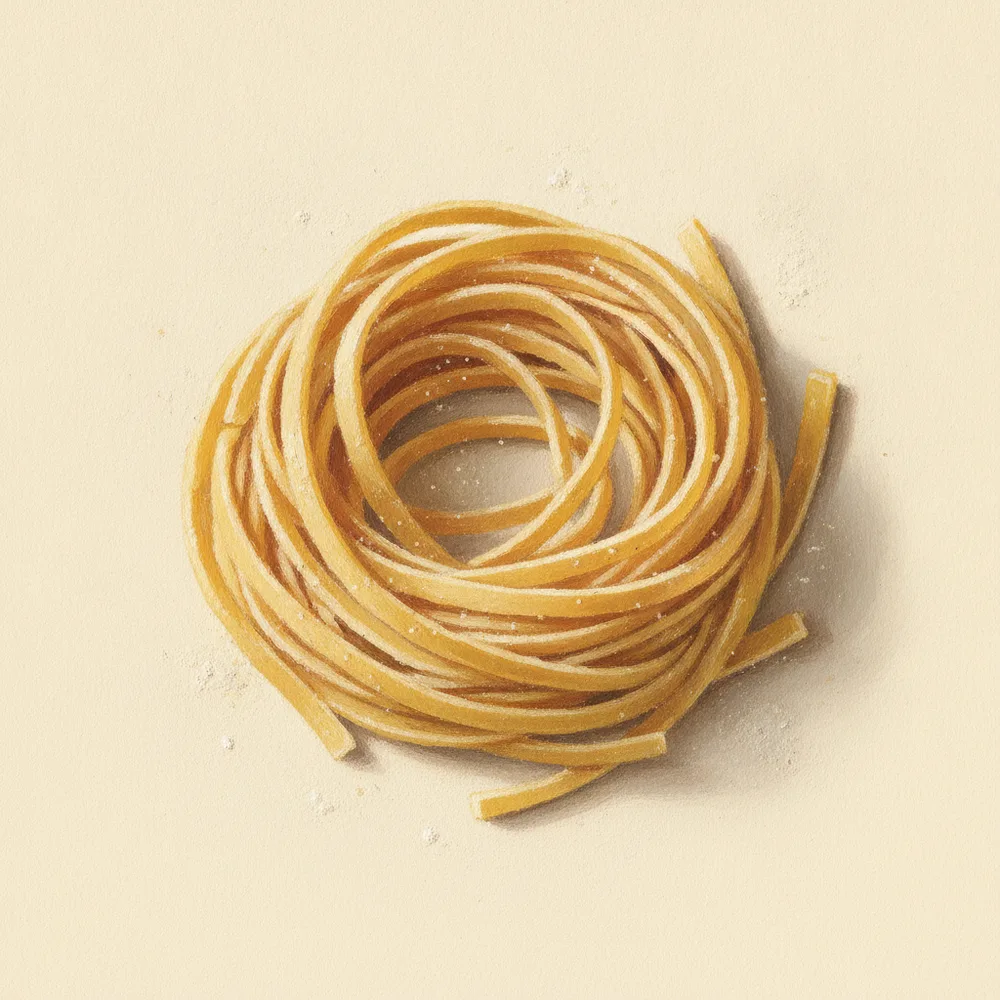
Tonnarelli
toh-nah-REL-lee
Long strands
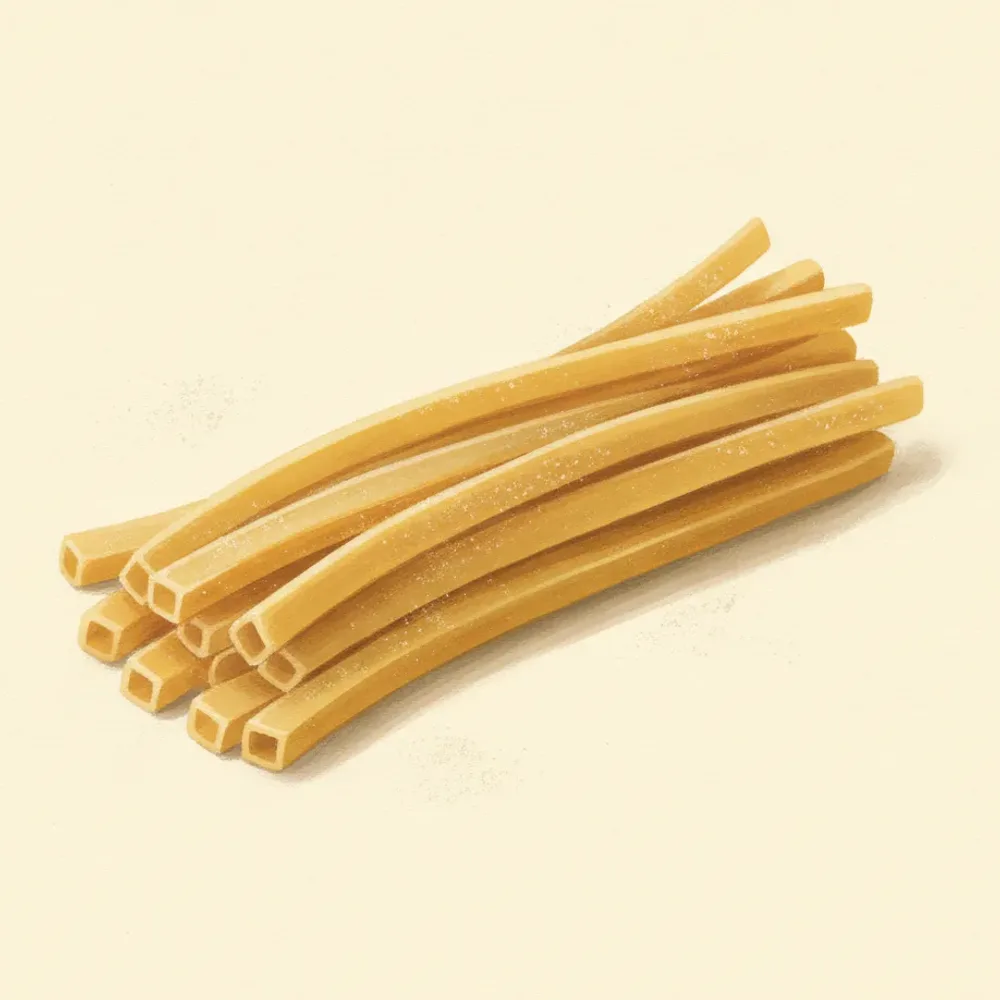
Troccoli
TROHK-koh-lee
Long strands
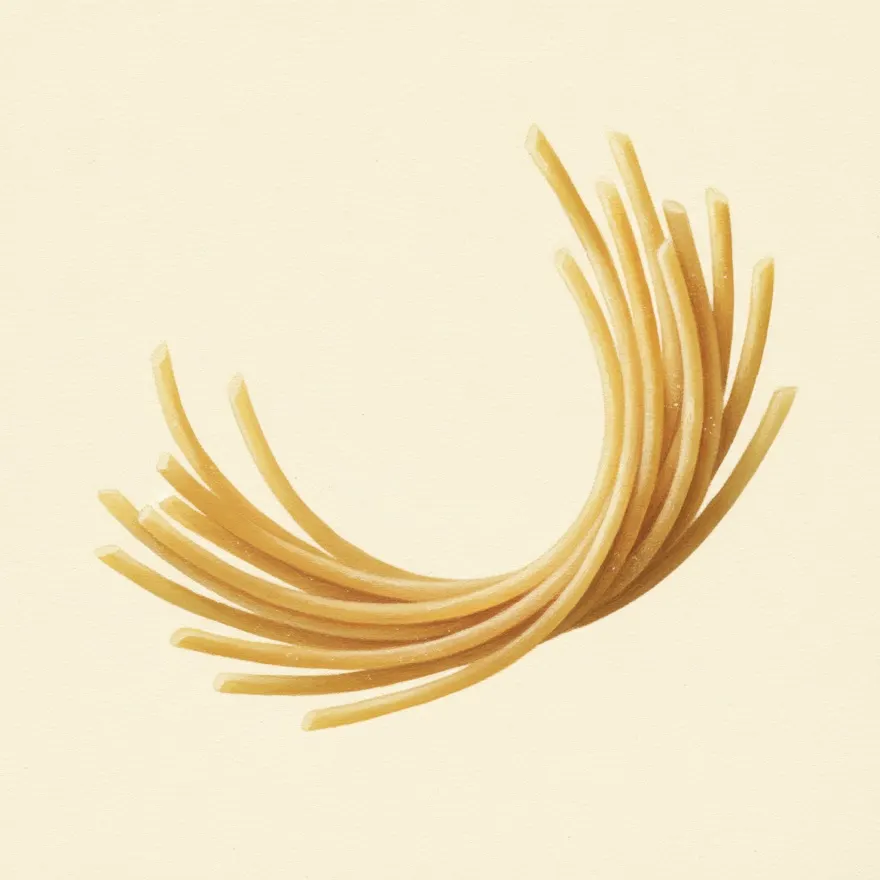
Vermicelli
vur-mih-CHEL-ee
Long strands