The best shapes for amatriciana
Guanciale rendered slowly until its fat runs clear, tomato cooked down into that fat, pecorino romano stirred through at the end. The cured pork fat is the body of the sauce and the tomato is only the medium carrying it. The guanciale strips stay whole and need carrying too.
Tomato sharpened with guanciale fat and pecorino. The rendered fat coats strands, the guanciale strips want a sturdy carrier, bucatini in Rome, rigatoni close behind.
Canonical: bucatini.
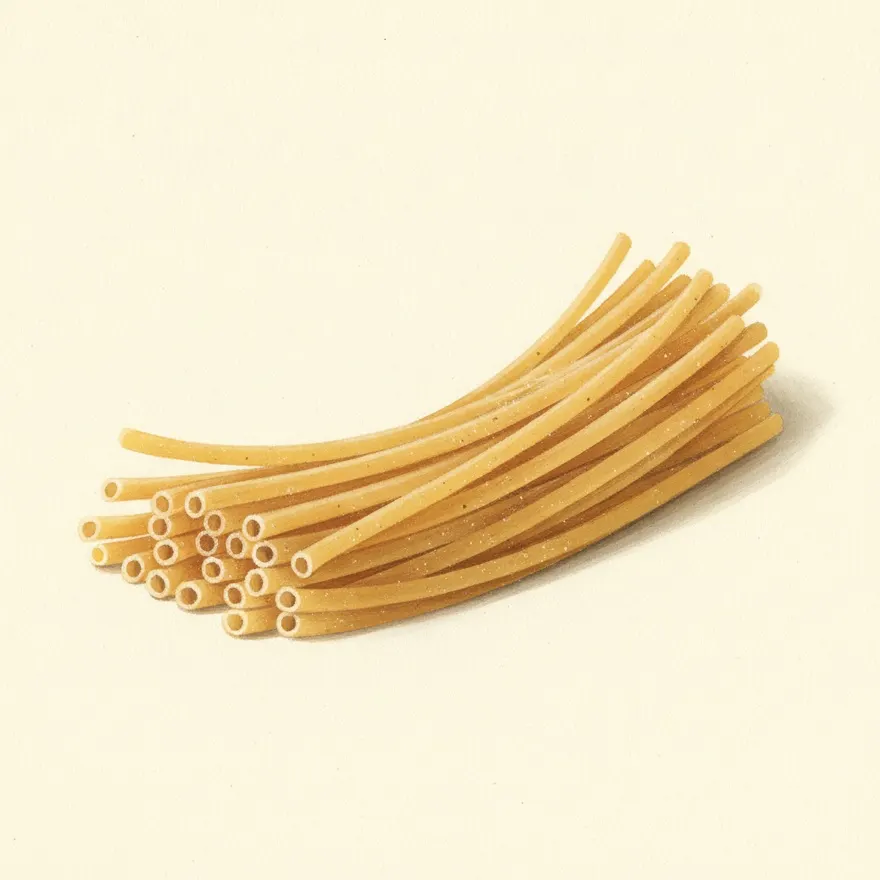
The hole changes the math of sauce delivery.
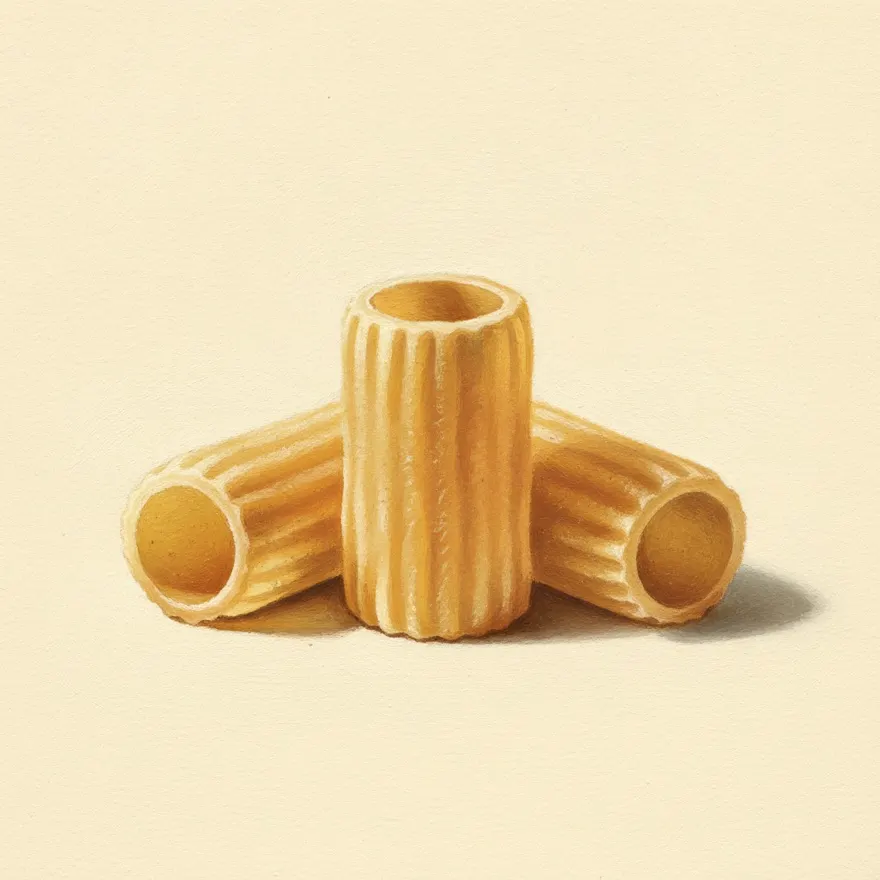
Think of it as a short rigatoni.

Rigatoni is built for sauces with solids in them.
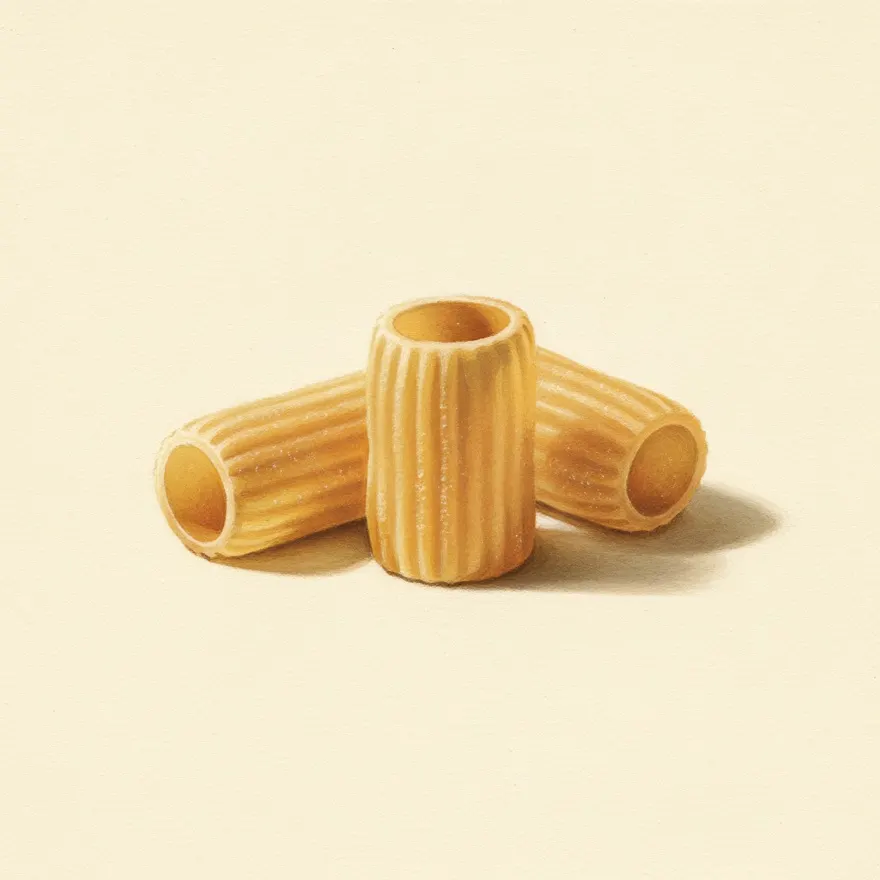
This is a curved, ridged tube, and both traits do work.

A solid round strand offers modest surface area for its weight, so it favors sauces that coat rather than chunk.
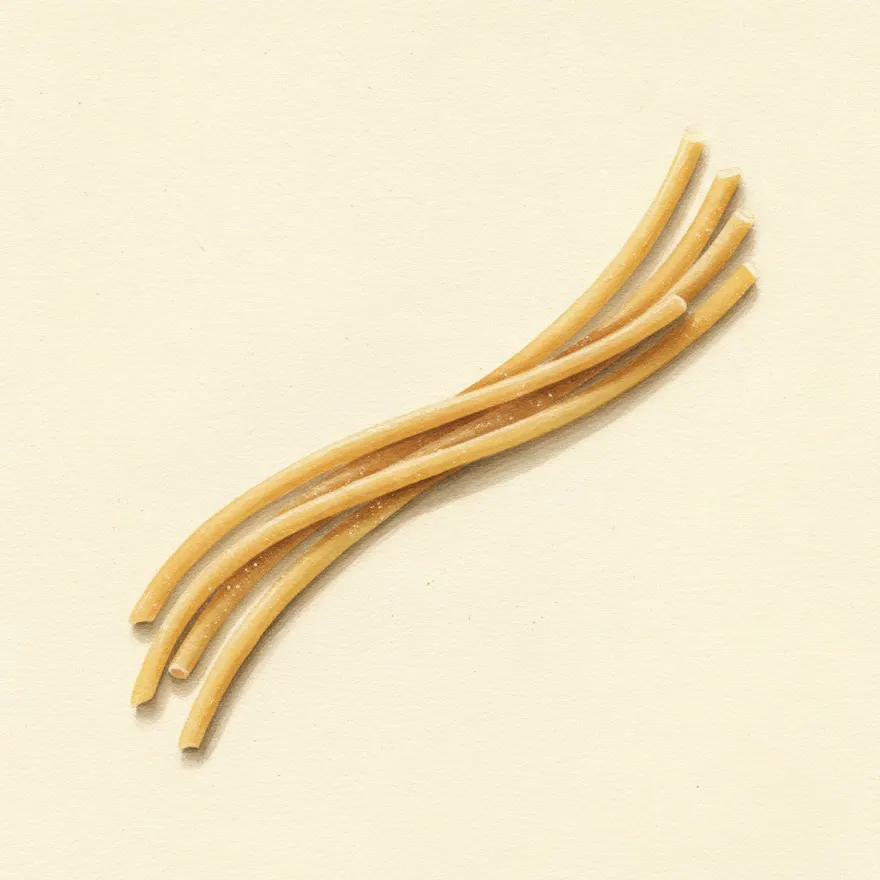
The extra mass is the whole point.
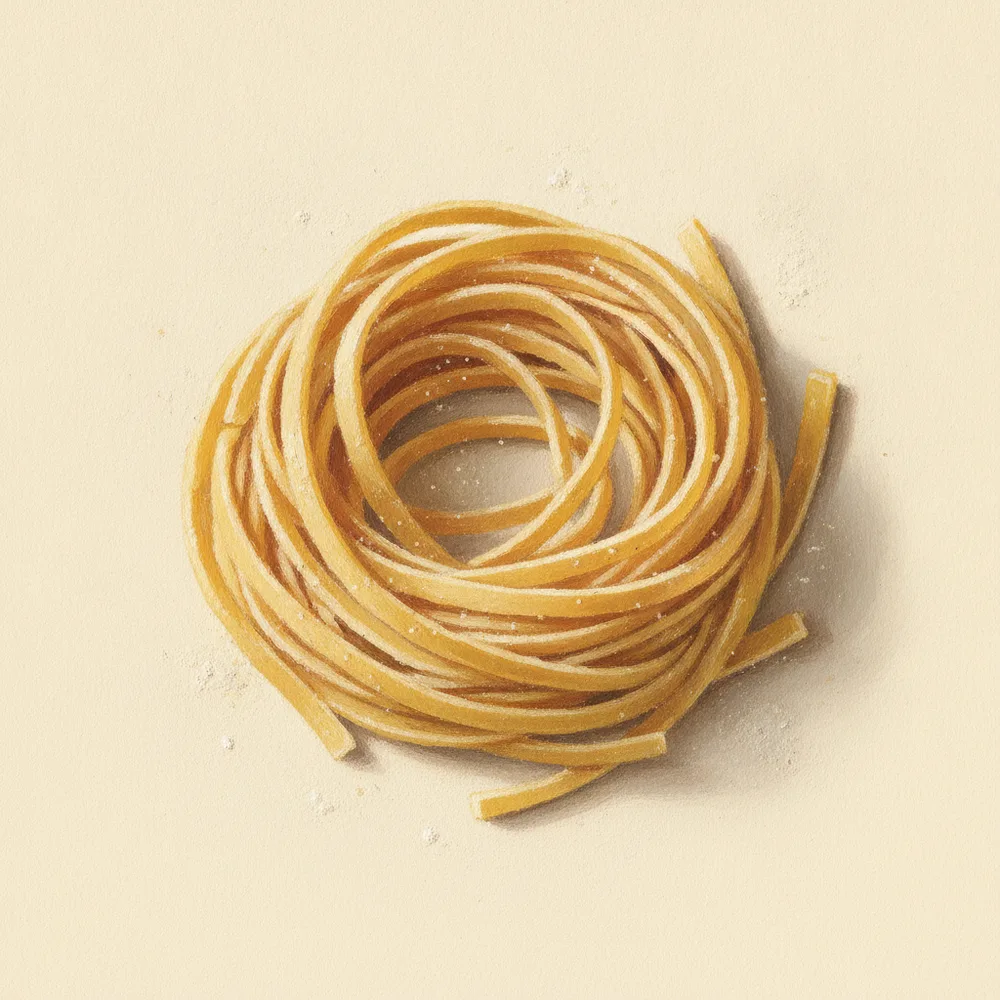
The square cross section gives more flat surface and edges than a round strand, and the chitarra leaves the pasta slightly rough and porous, so sauce clings to it well.
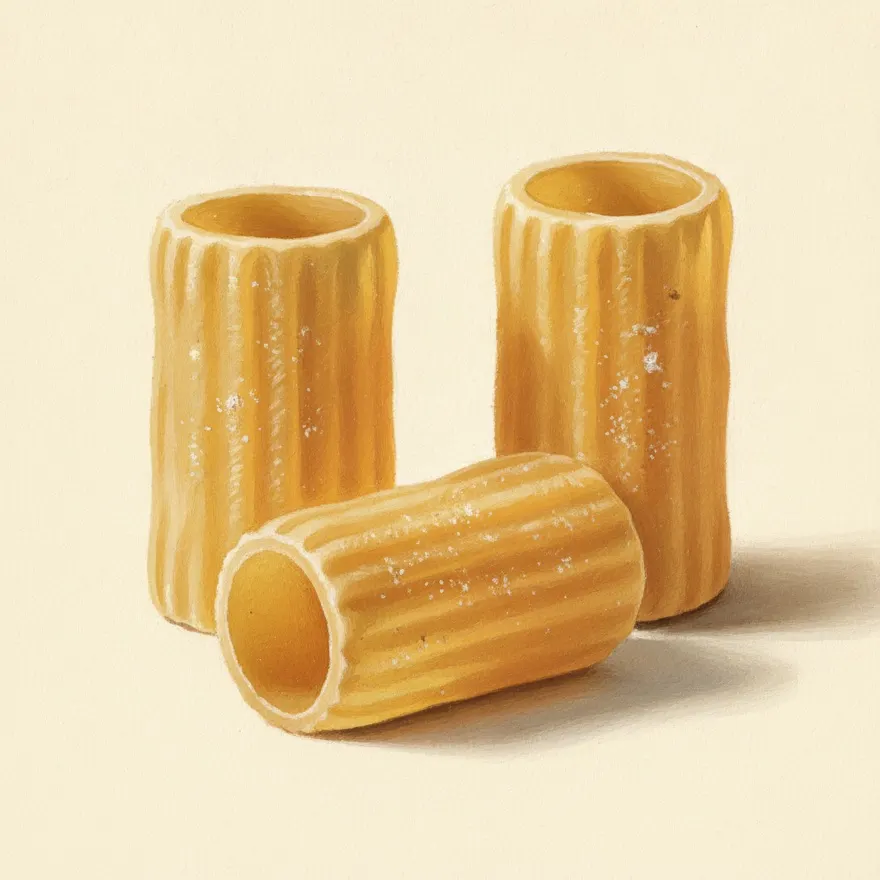
The spiral ridges do real work.
What we would not put it on
Fine pastina. The guanciale strips are larger than the pasta itself, so the dish separates into pork on one side and thin tomato soup on the other.
Want it the other way around? Start from a shape in the Pairing Finder.
Stay in the loop
From the Almanac
Updates from Pasta Almanac, when there is something worth sharing.