The best shapes for chunky vegetable sauce
Diced vegetables cooked in oil or tomato until tender but still holding their edges. The dice size is the whole design question: cut small it behaves like a sauce, cut large it behaves like a stew that pasta happens to be in.
Diced vegetables in tomato or oil. Pieces want pockets, shells, curls, and wide tubes all work, strands do not.
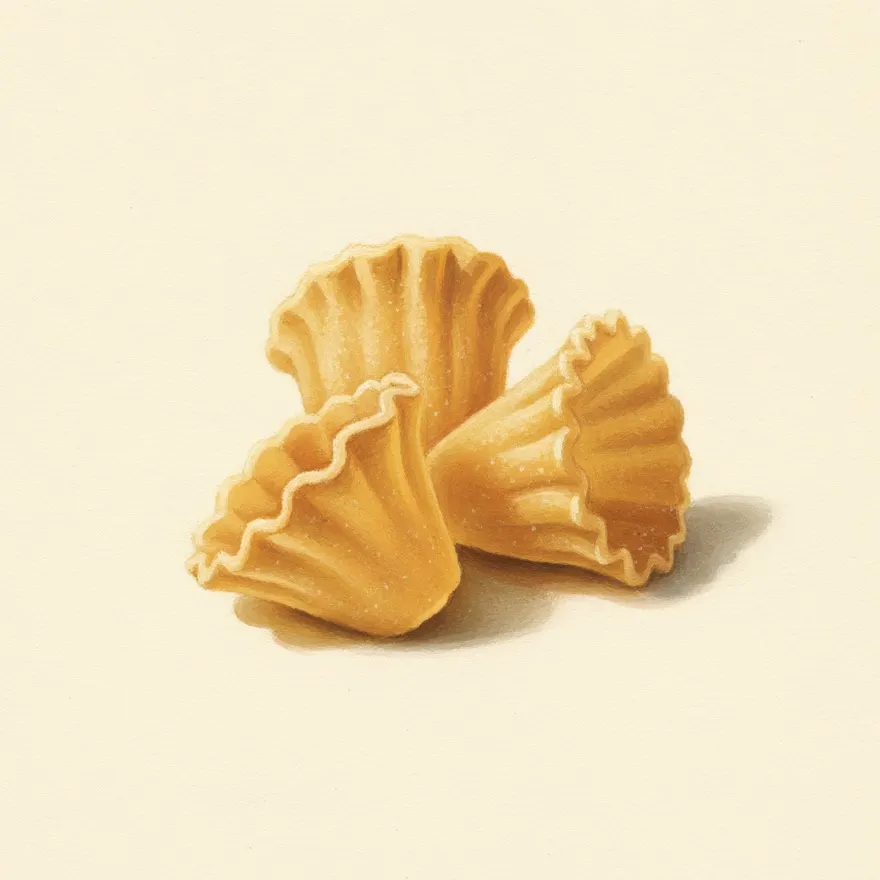
Campanelle works like a scoop with a grip.
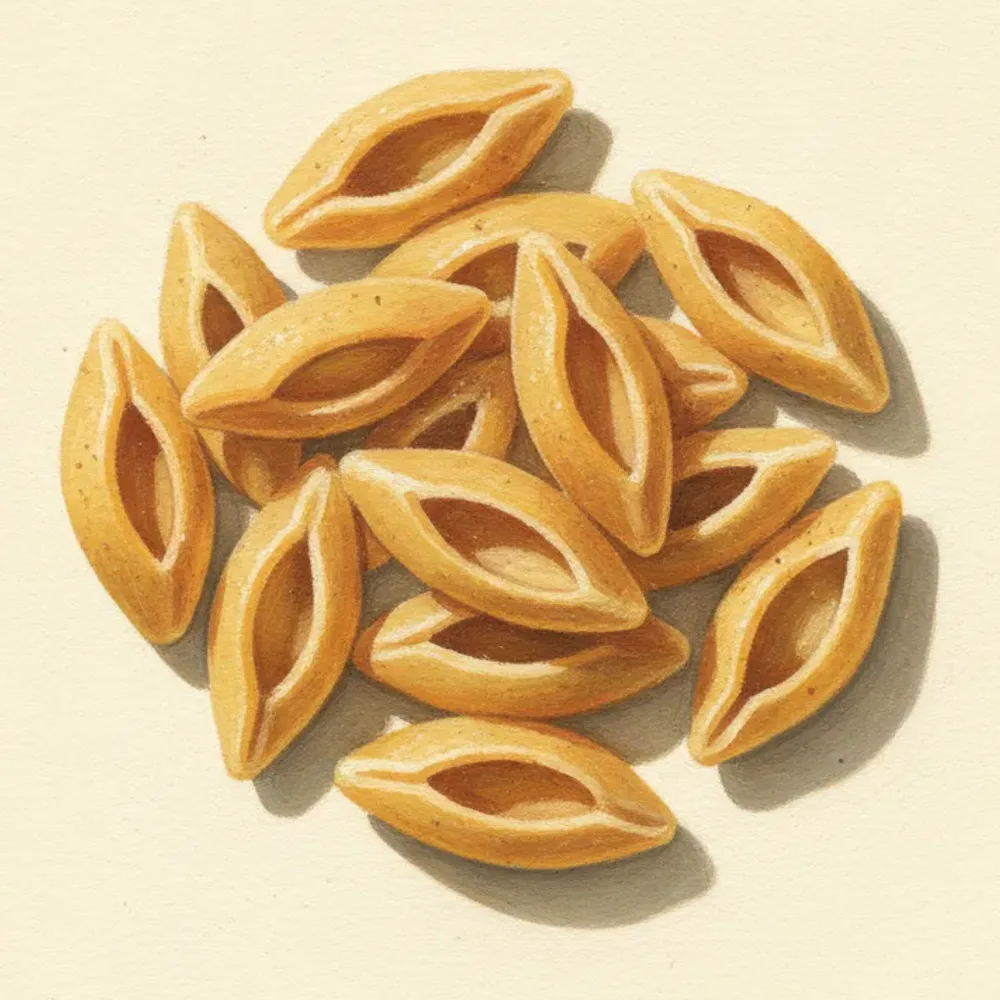
The long open hollow and the dragged-rough surface catch chunky sauce along the whole piece rather than just in a single curl.
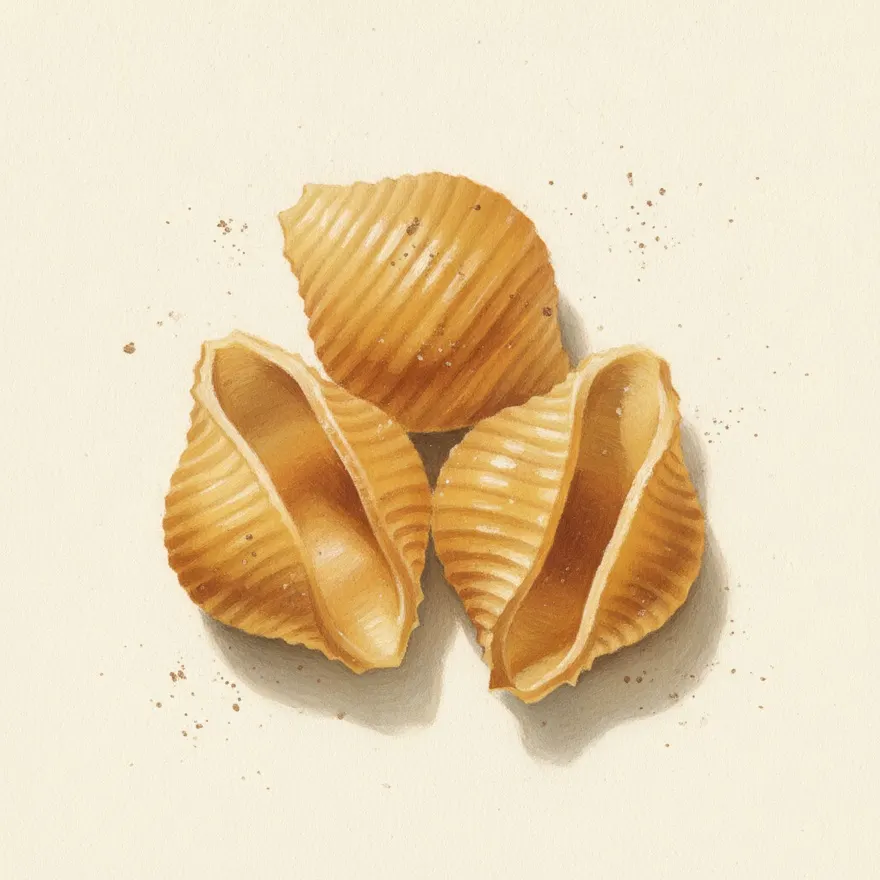
A shell is a scoop.
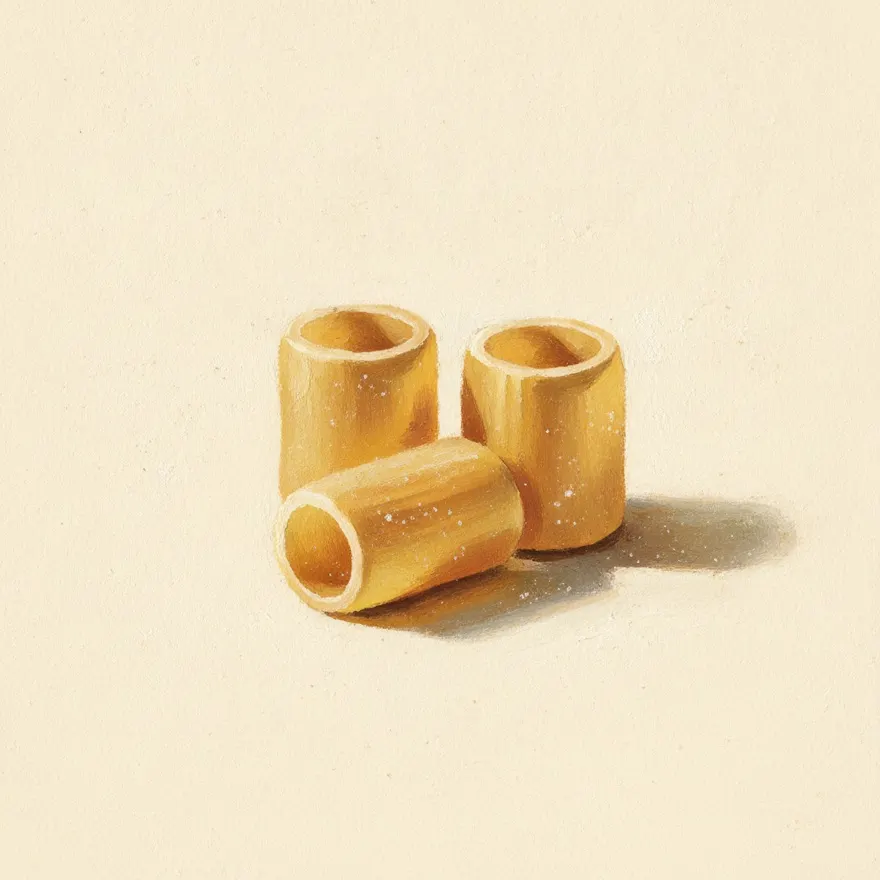
This is a spoon shape.
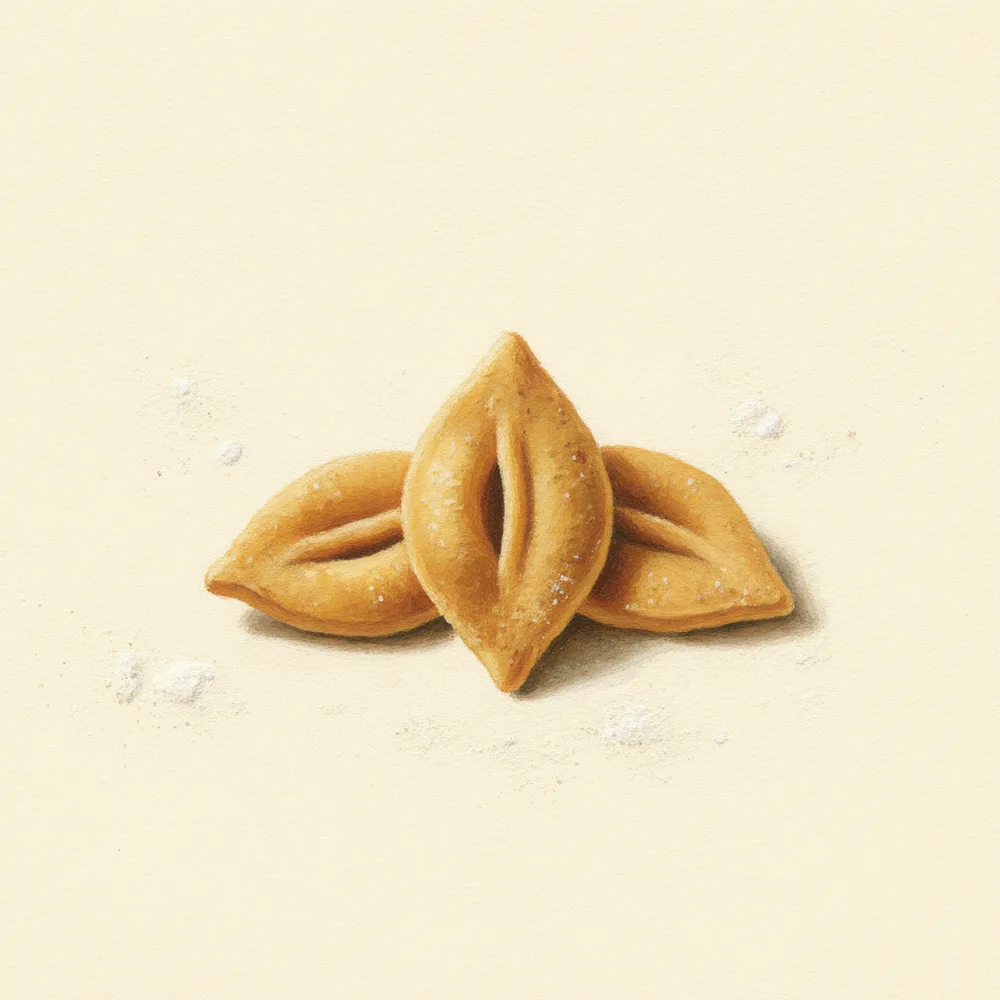
The flat leaf body offers broad surface for a sauce to cling to, while the raised central ridge and slightly thicker curved edges give the strand structure and grip.
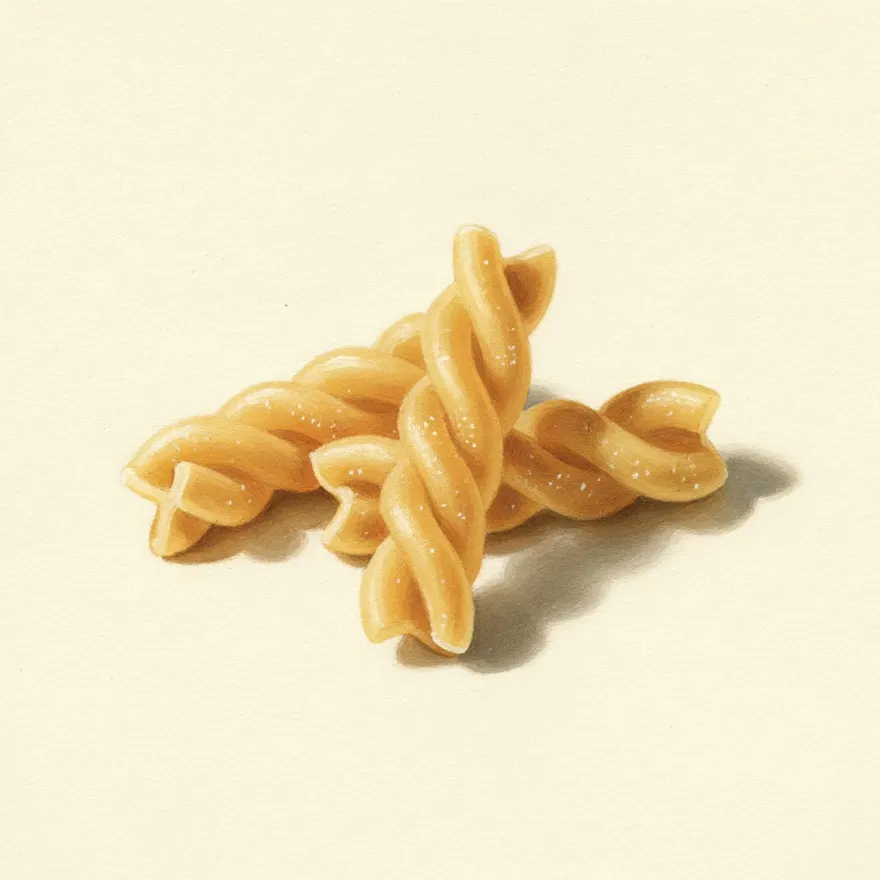
The helix works like fusilli with the volume turned down.
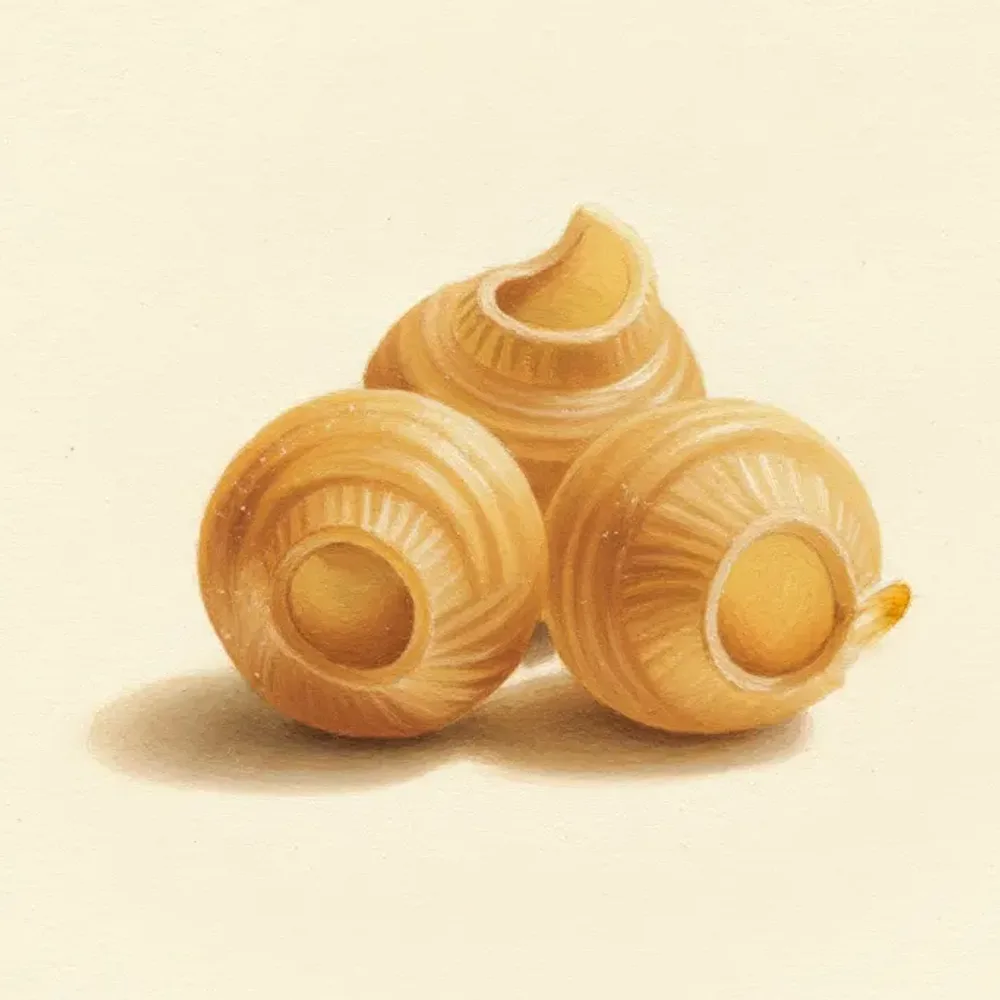
The cupped shell works like a small spoon.

Each piece is a small cup with a thin center and a thicker rim, so one bite carries two textures.
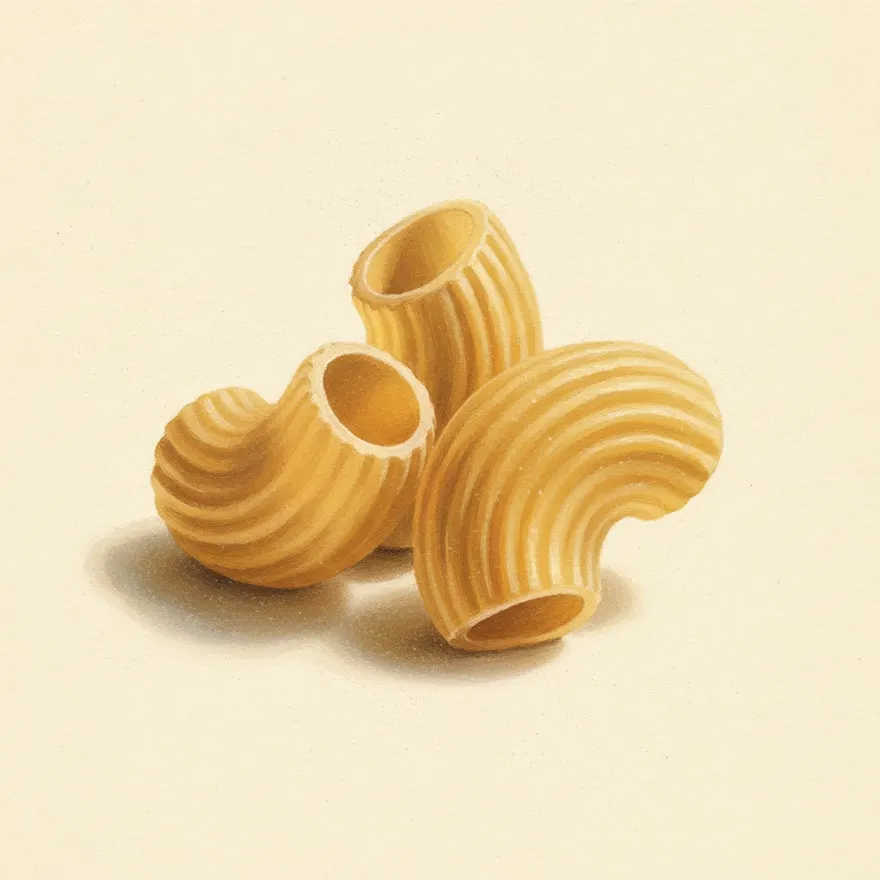
The curl of the body and the pinched closed end work like a scoop.
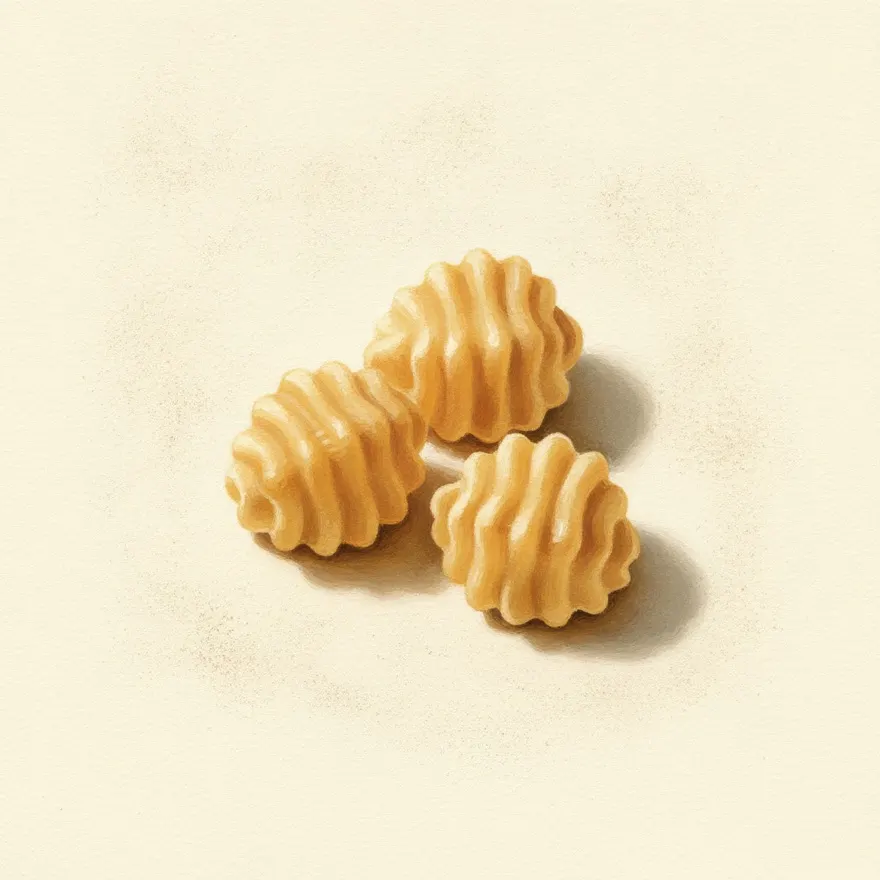
The fins and ruffled ridges are the whole point.
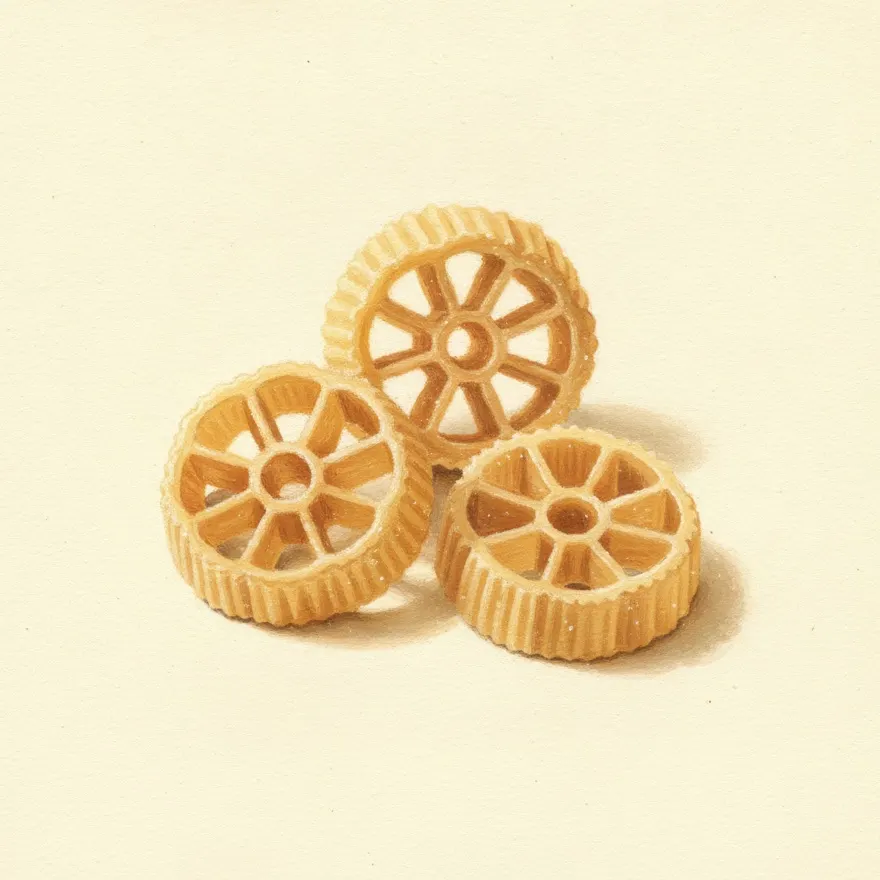
The wheel works like a small net.
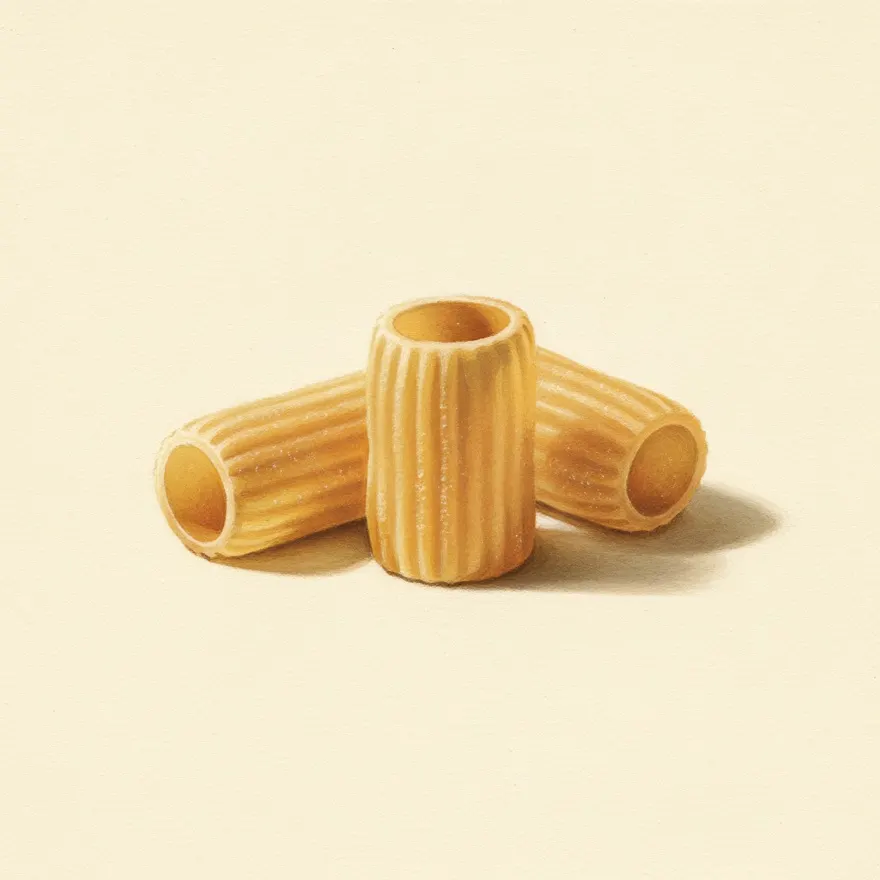
This is a curved, ridged tube, and both traits do work.
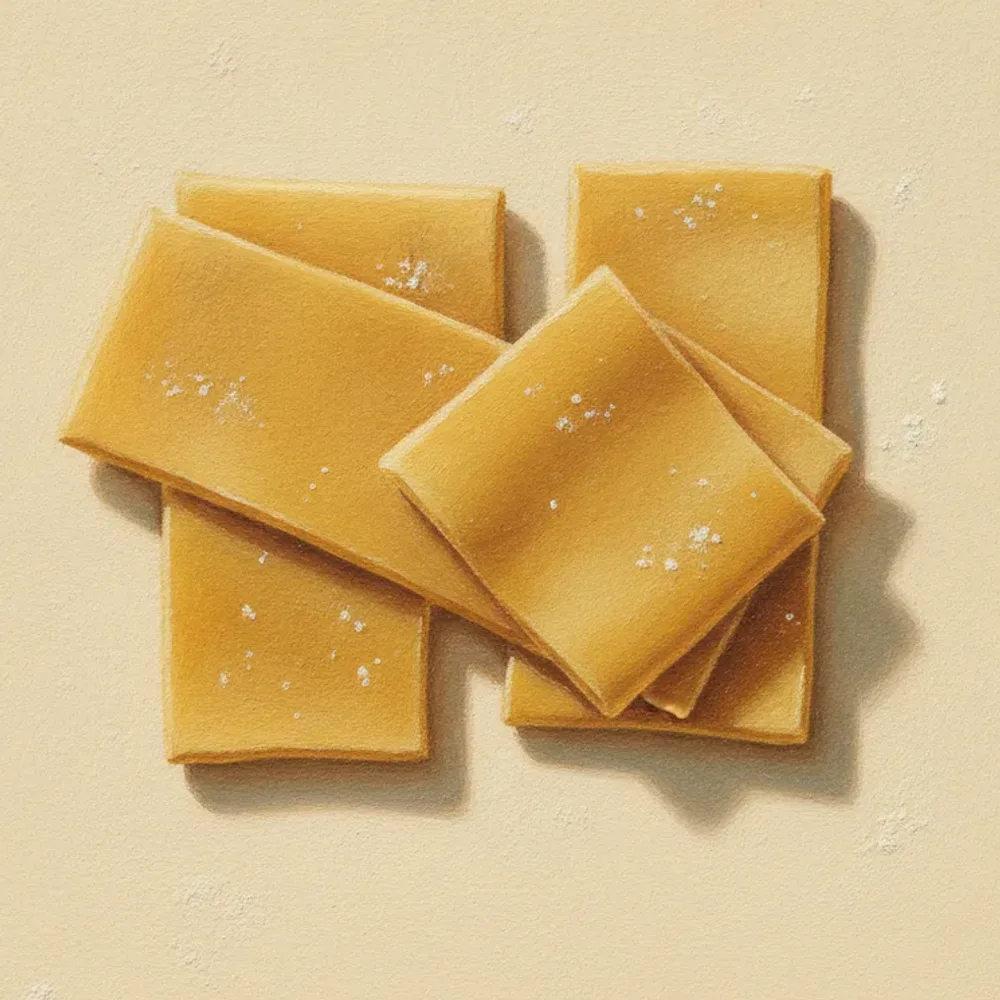
A flat patch of dough catches sauce on its broad faces and sits well in brothy legume dishes, which is its oldest home.
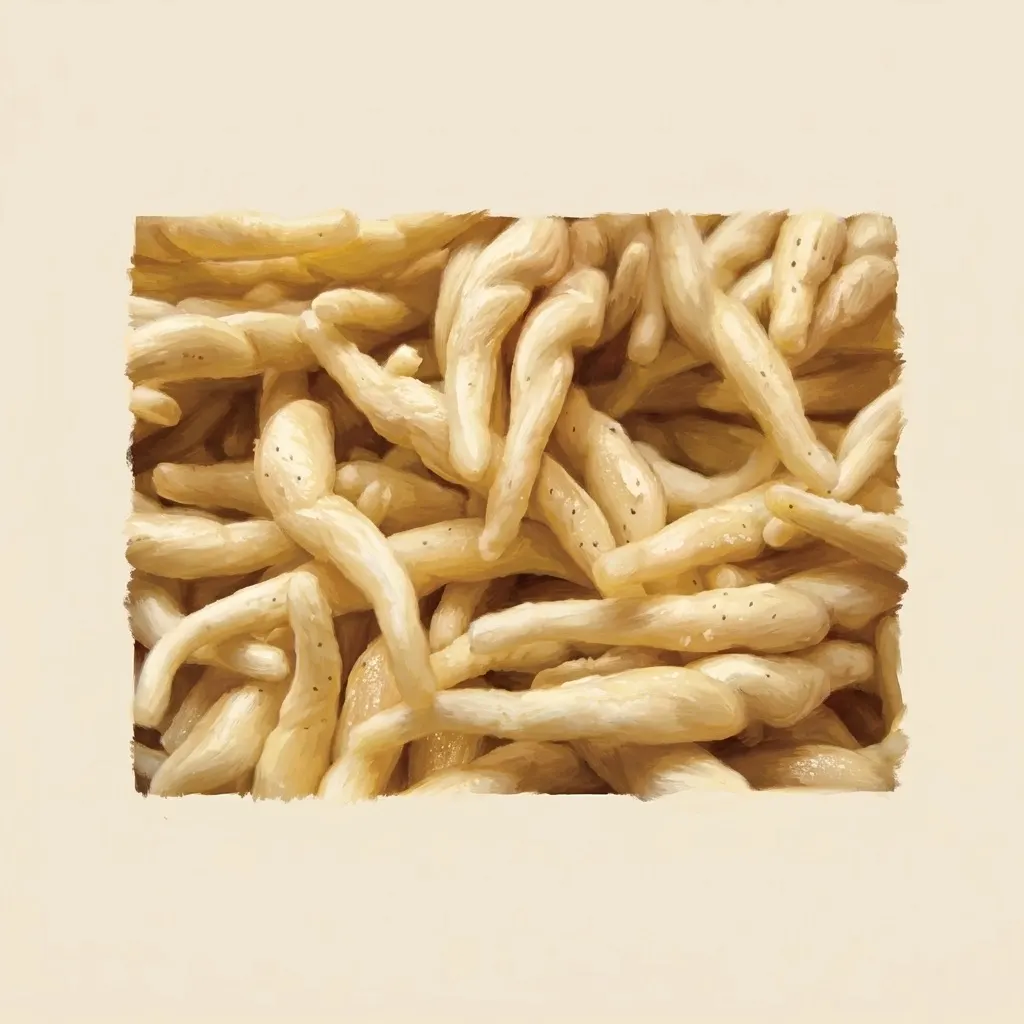
The twist is the working part.
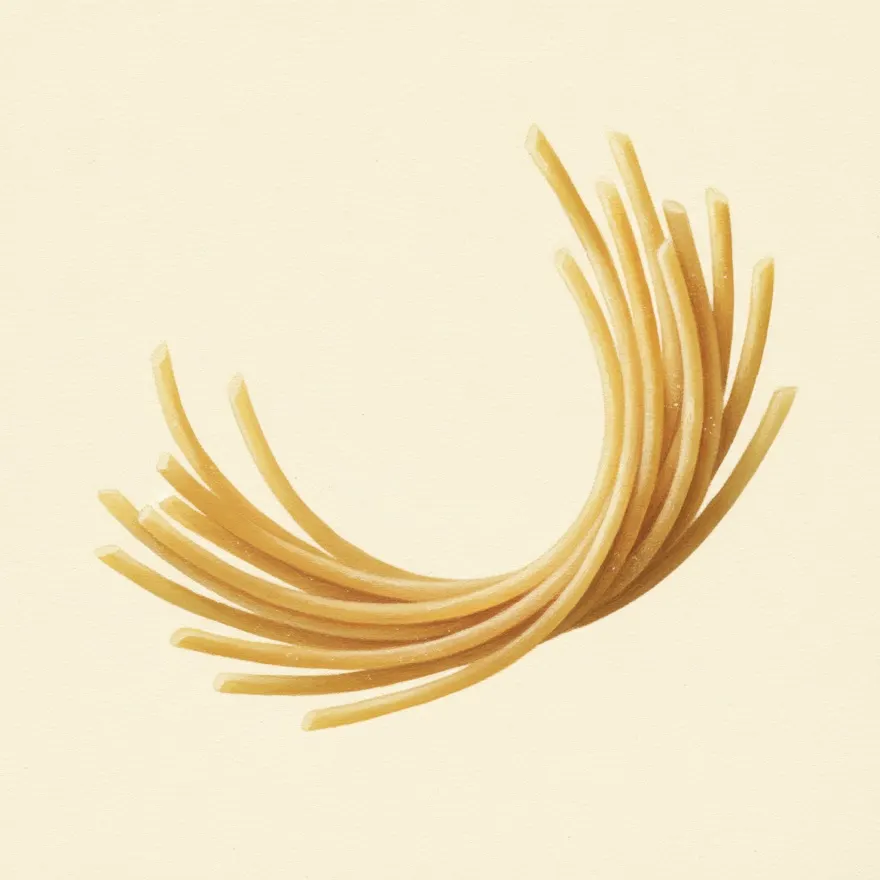
Which sauce fits depends on which vermicelli is in the box.
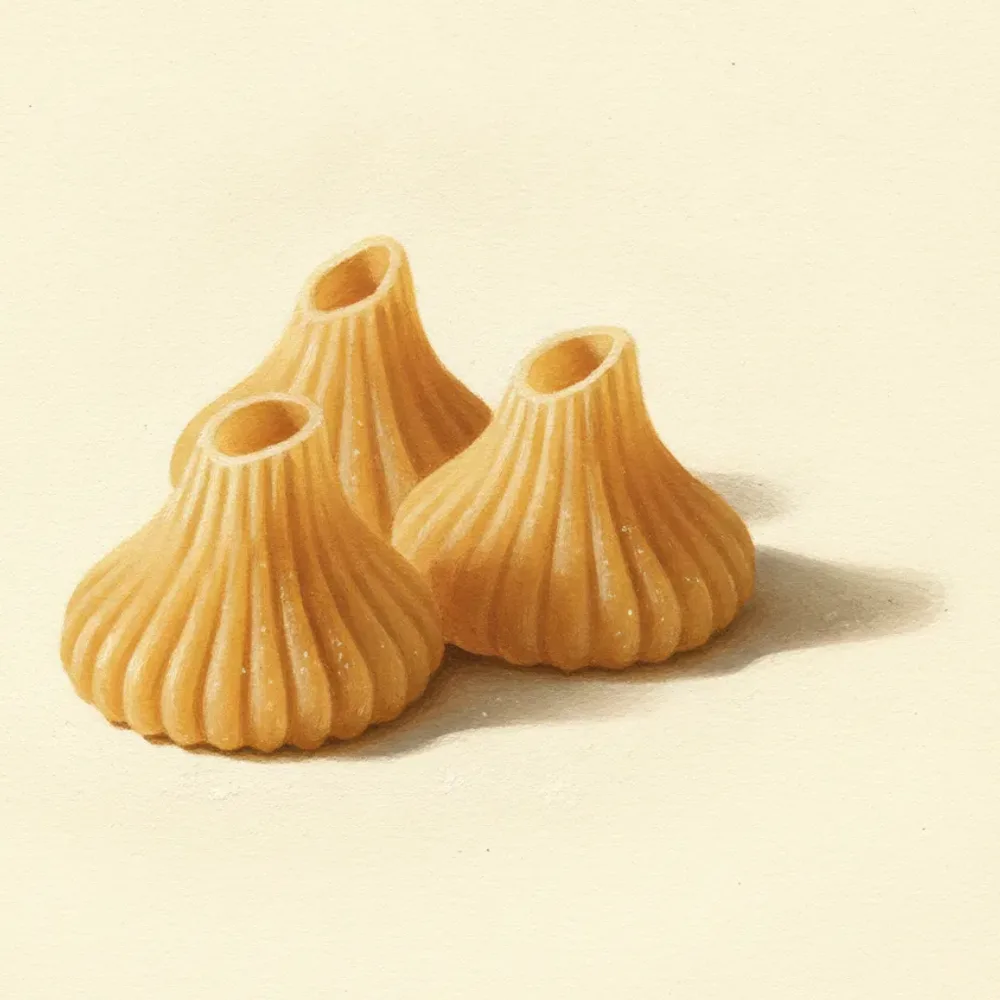
The piece is built like a hollow swirl that climbs from a wide base to a thin peak, so sauce settles into the folds and the central cavity instead of sliding off.
What we would not put it on
Fine strands. The dice slide off them and collect at the bottom, so the pasta and the vegetables are eaten in sequence rather than together.
Want it the other way around? Start from a shape in the Pairing Finder.
Stay in the loop
From the Almanac
Updates from Pasta Almanac, when there is something worth sharing.