Tonnarelli
toh-nah-REL-lee
Also known as spaghetti alla chitarra, maccheroni alla chitarra.
What it is
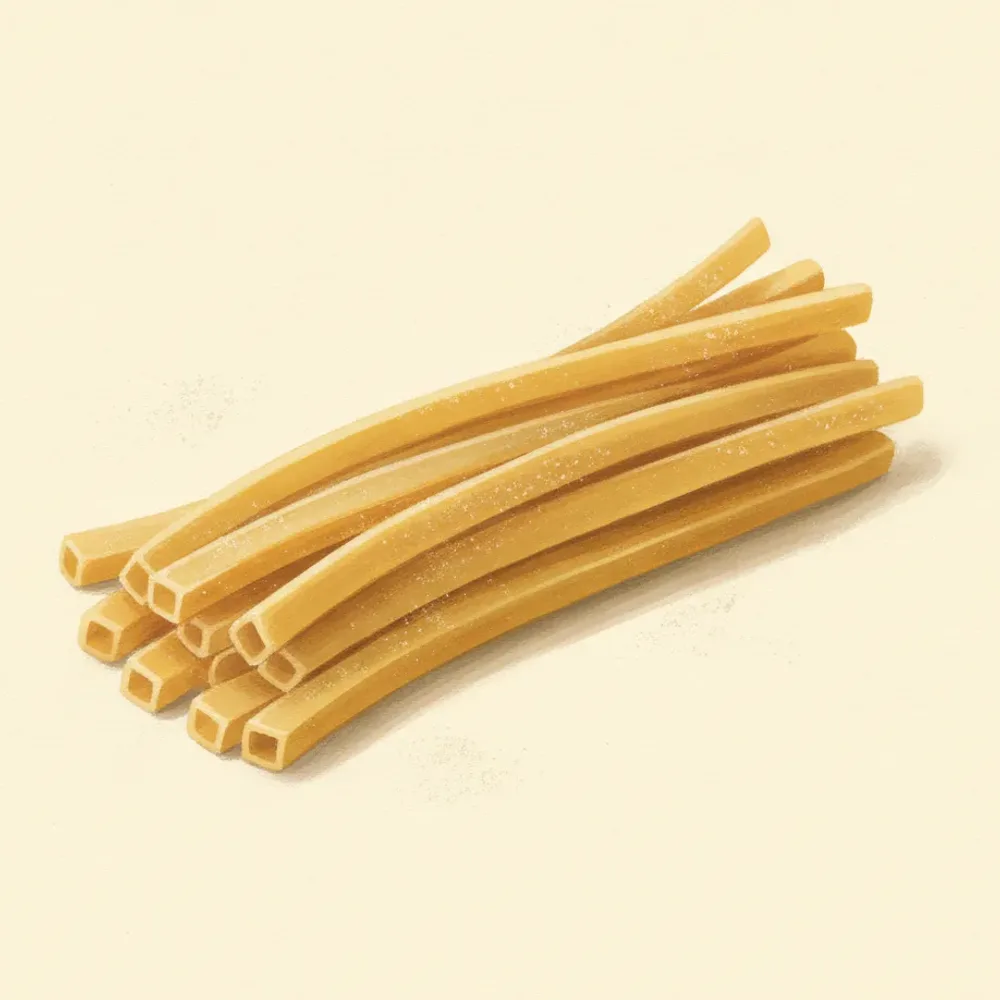
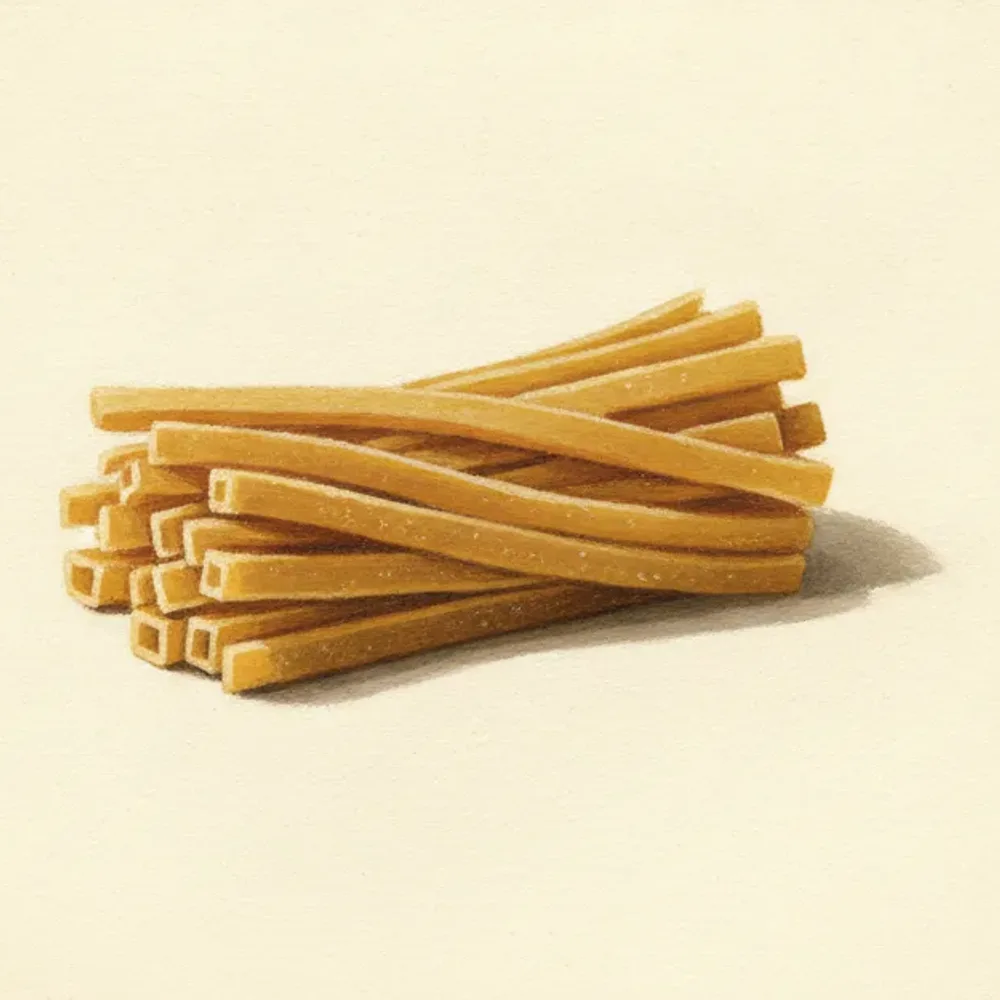
Tonnarelli is the Roman name for spaghetti alla chitarra, a square-section fresh egg strand cut by pressing rolled dough through a wire-strung wooden frame called a chitarra, which also leaves the surface slightly rough. The shape originates in Abruzzo, where a traditional recipe from the province of Teramo is documented to the early 1800s or before. Before the chitarra, the dough was cut with a notched rolling pin. In Lazio it took the name tonnarelli and became the canonical pasta for the Roman cacio e pepe. Treccani records the etymology as a diminutive of tondo, round, not from tonno, tuna, so the occasional tuna association is folk reasoning rather than a sourced origin.
Per the Treccani vocabolario, tonnarelli is a central and southern Italian form of tonderelli, a diminutive of tondo meaning round. The parallel name spaghetti alla chitarra comes from the chitarra, the guitar-like wooden frame strung with wires used to cut the strands.
What sauce it wants, and why
The square cross section gives more flat surface and edges than a round strand, and the chitarra leaves the pasta slightly rough and porous, so sauce clings to it well. That grip is why it is the classic carrier for emulsified Roman cheese sauces like cacio e pepe, and it also holds hearty meat ragu. Fresh egg tonnarelli cook in roughly 6 minutes, while dried semolina and water versions sold as spaghetto quadrato run about 10 to 13 minutes.
Classic plates: tonnarelli cacio e pepe, chitarra alla teramana, abruzzese ragu of pork, beef, and lamb.
No tonnarelli? Use these
Closest swaps by sauce behavior, not by looks. The ones most easily confused with tonnarelli, and how they read.

Easy to confuse with
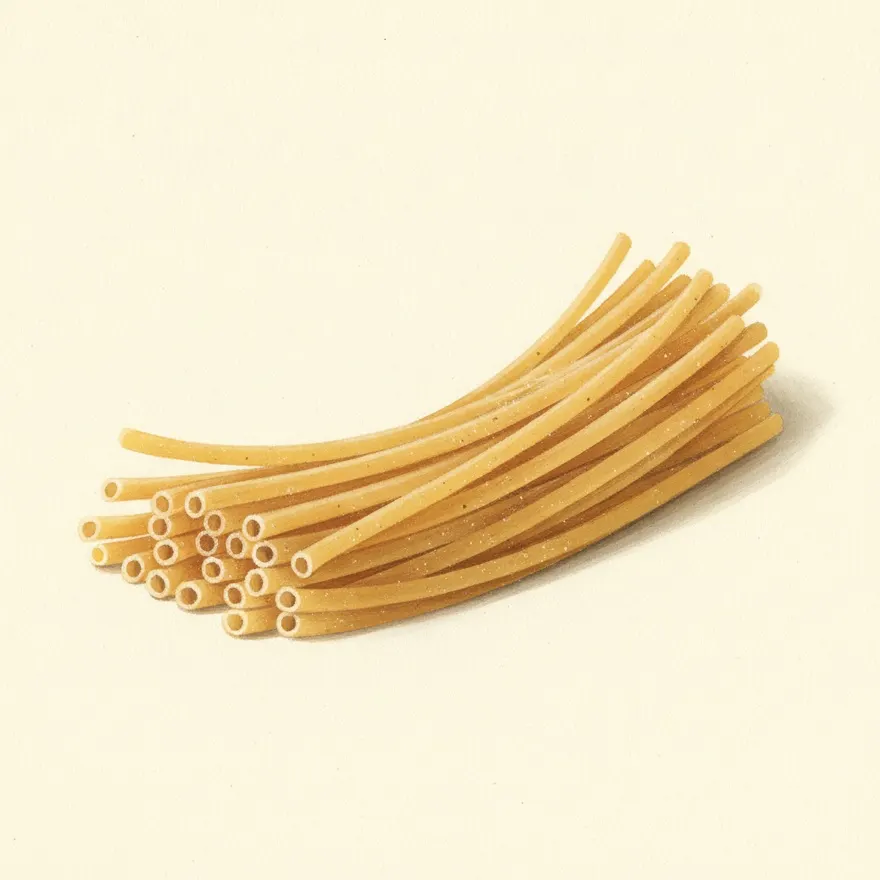
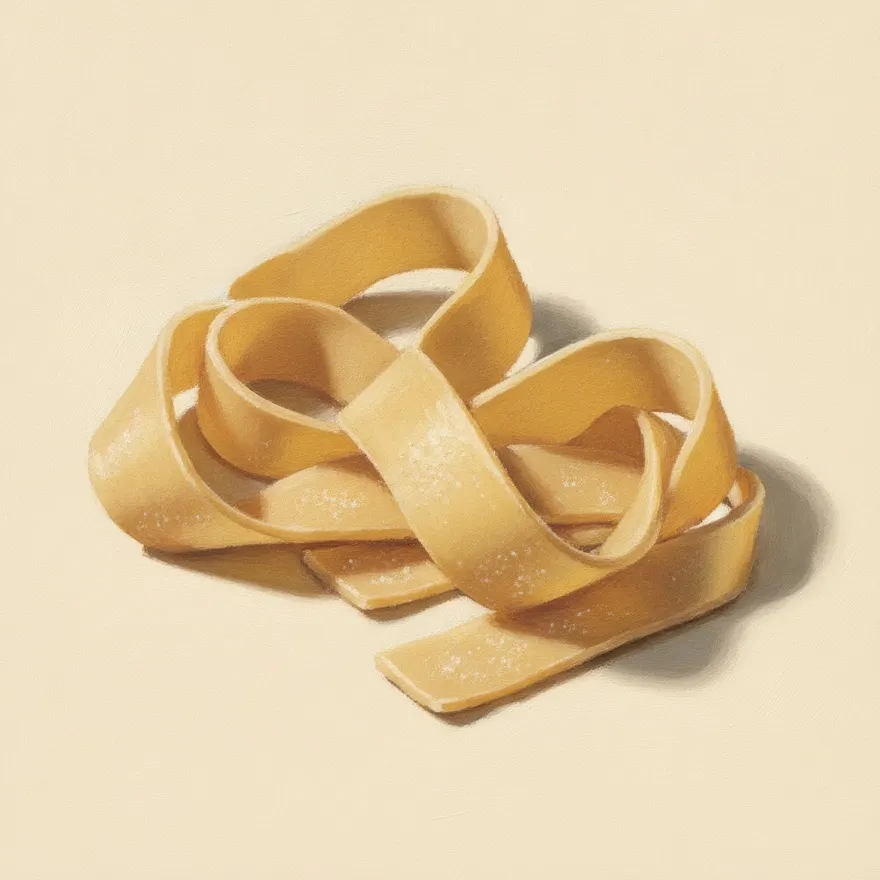
Square-section strands. Tonnarelli is the Roman and Abruzzese chitarra strand pressed through a wire frame, troccoli the Pugliese one cut with a grooved rolling pin, and stringozzi the Umbrian hand-rolled shoelace.
Learn it from someone
- Letizia Mattiacci, Madonna del Piatto
Cookbook author who teaches small-group classes in Rome, covering the Roman sauces and fresh pasta by hand. She ran a cooking school in Umbria for around twenty years before that.
People who teach this, listed because we think they are good at it. We take nothing for these.
Stay in the loop
From the Almanac
Updates from Pasta Almanac, when there is something worth sharing.