Casoncelli
kah-zon-CHEL-lee
Also known as pì fasacc', casonsei, casonsèi, caicc, calsù.
What it is
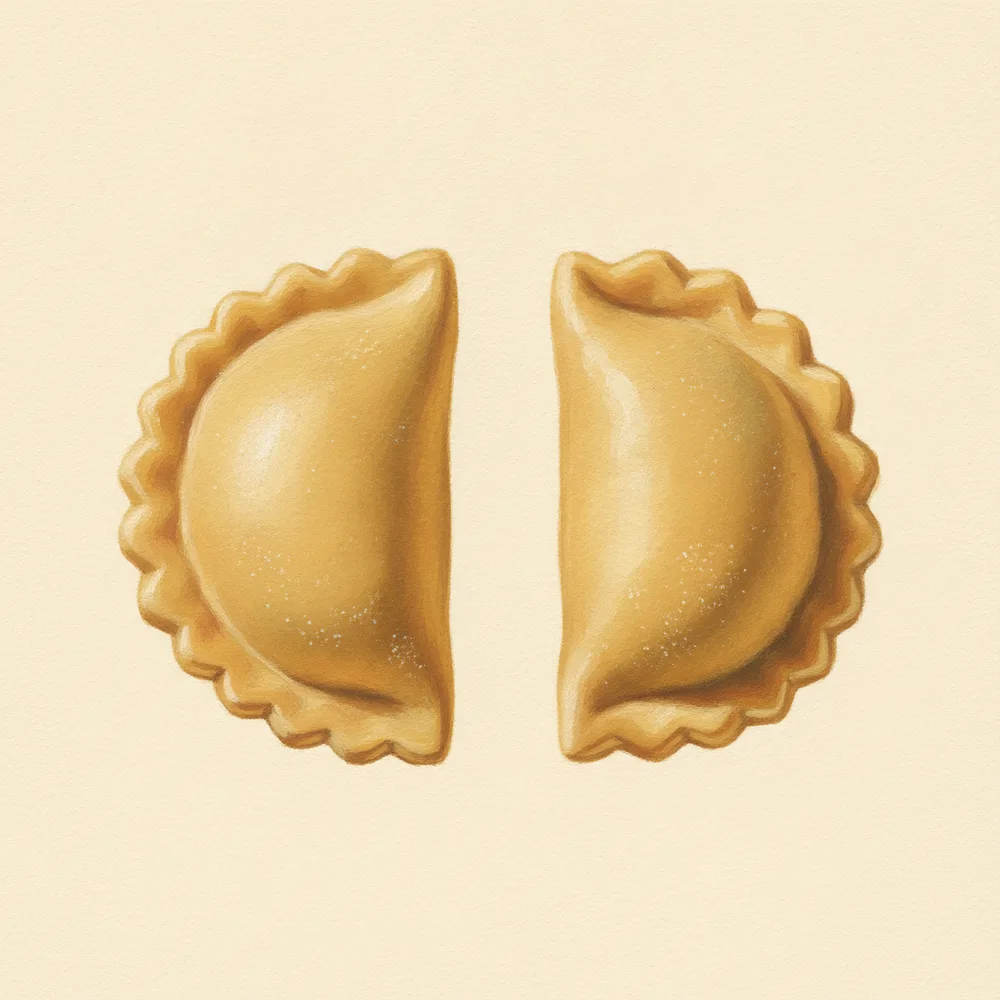
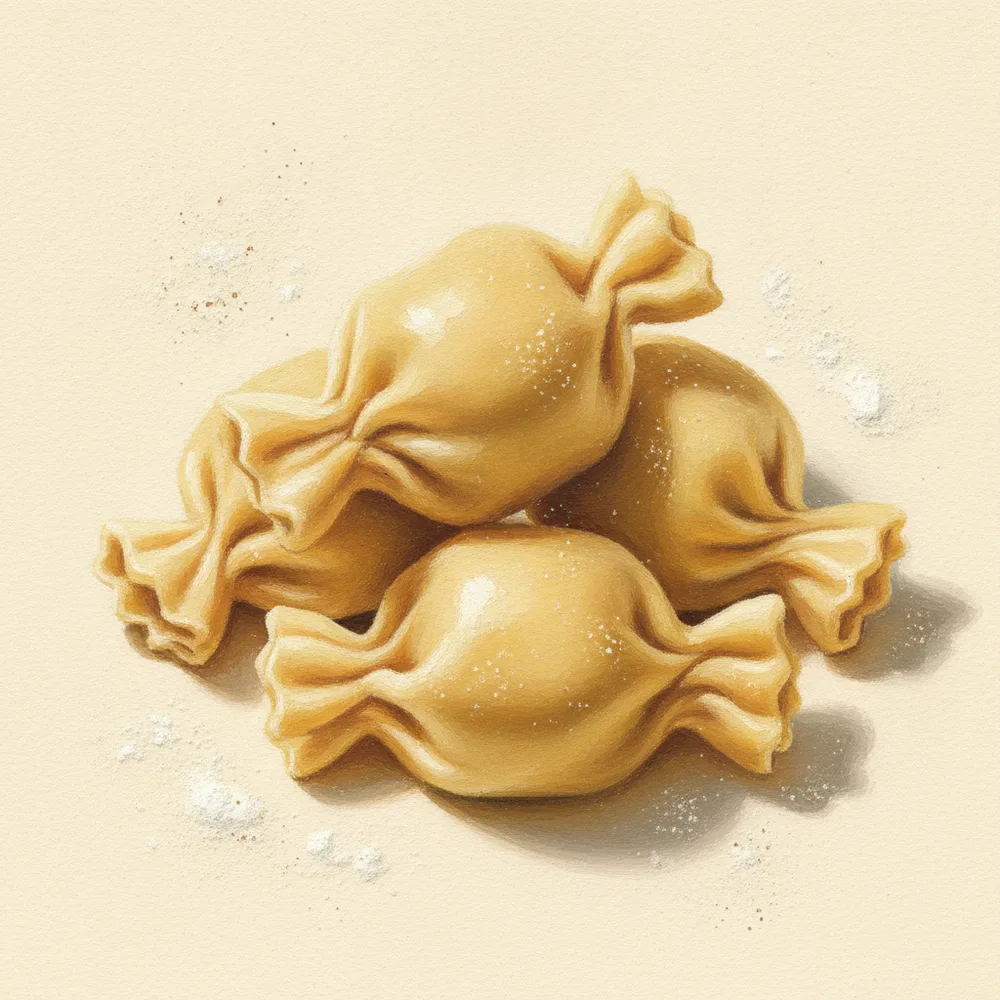
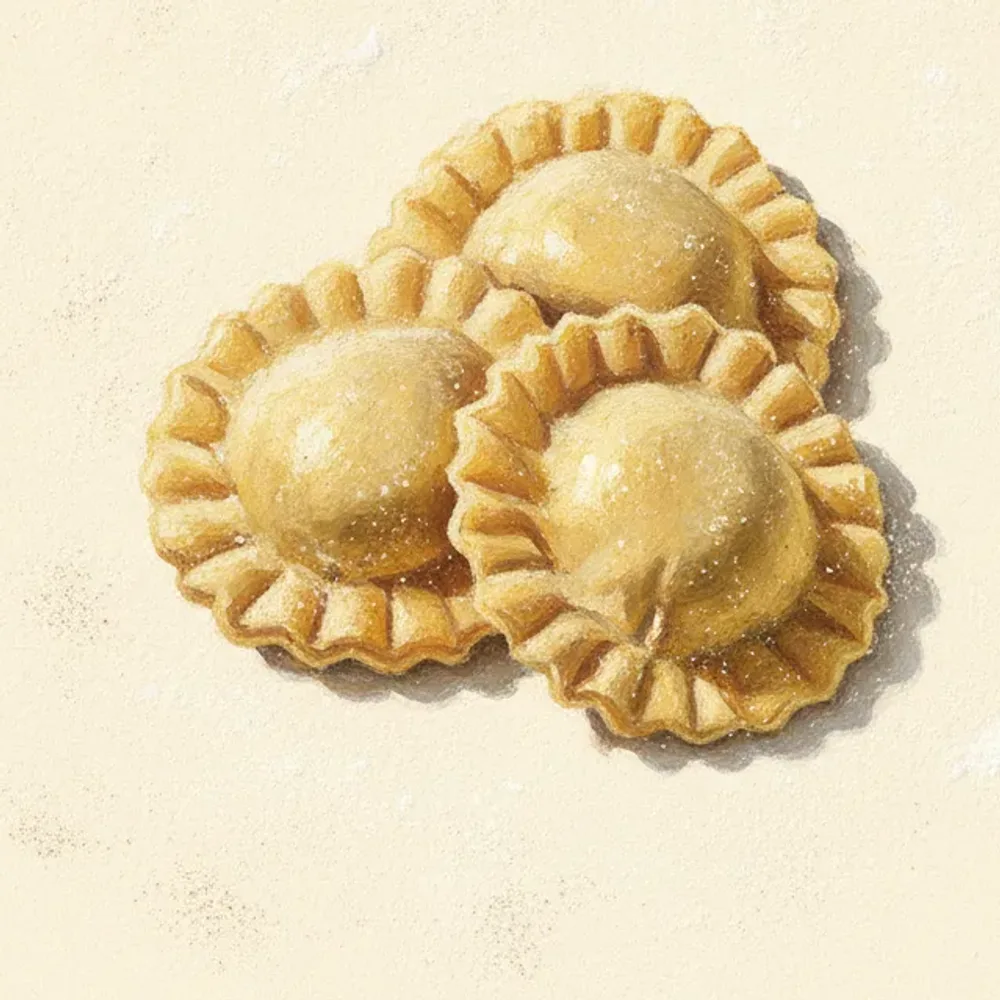
Casoncelli are a hand-folded stuffed pasta of eastern Lombardy, documented in Bergamo by 1386, when a chronicle records them served by the hundreds of platters at a city banquet. The shape varies by valley: a half-moon or folded handkerchief around Bergamo, a twisted candy-wrapper parcel in the Valle Camonica. The Bergamo filling is rustic and faintly sweet, mixing beef and salami meat with grated cheese, breadcrumbs, egg, amaretti, raisins, pear, and lemon zest, a profile that carries echoes of medieval and Renaissance cooking. The classic table version, casoncelli alla bergamasca, dresses them in melted butter, sage, crisped pancetta, and grated cheese.
The Valle Camonica dialect name pì fasacc' is glossed locally as a swaddled infant, after the wrapped look of the parcel. Standard dictionaries record no etymology for the standard Italian casoncelli.
What sauce it wants, and why
The filling is sealed inside thin folded dough, so the dressing only has to coat the outer pasta and frame what is already inside. The rustic, faintly sweet Bergamo filling is rich on its own, which is why the traditional finish stays light: melted butter, sage, a little crisped pancetta, and grated cheese. Browned butter and sage add nutty depth without burying the parcel, and the cheese ties the dressing to the filling. A heavy tomato or chunky meat sauce would fight the delicate shape and overwhelm the sweet, savory interior.
Classic plates: casoncelli alla bergamasca.
No casoncelli? Use these
Closest swaps by sauce behavior, not by looks. The ones most easily confused with casoncelli, and how they read.
Easy to confuse with
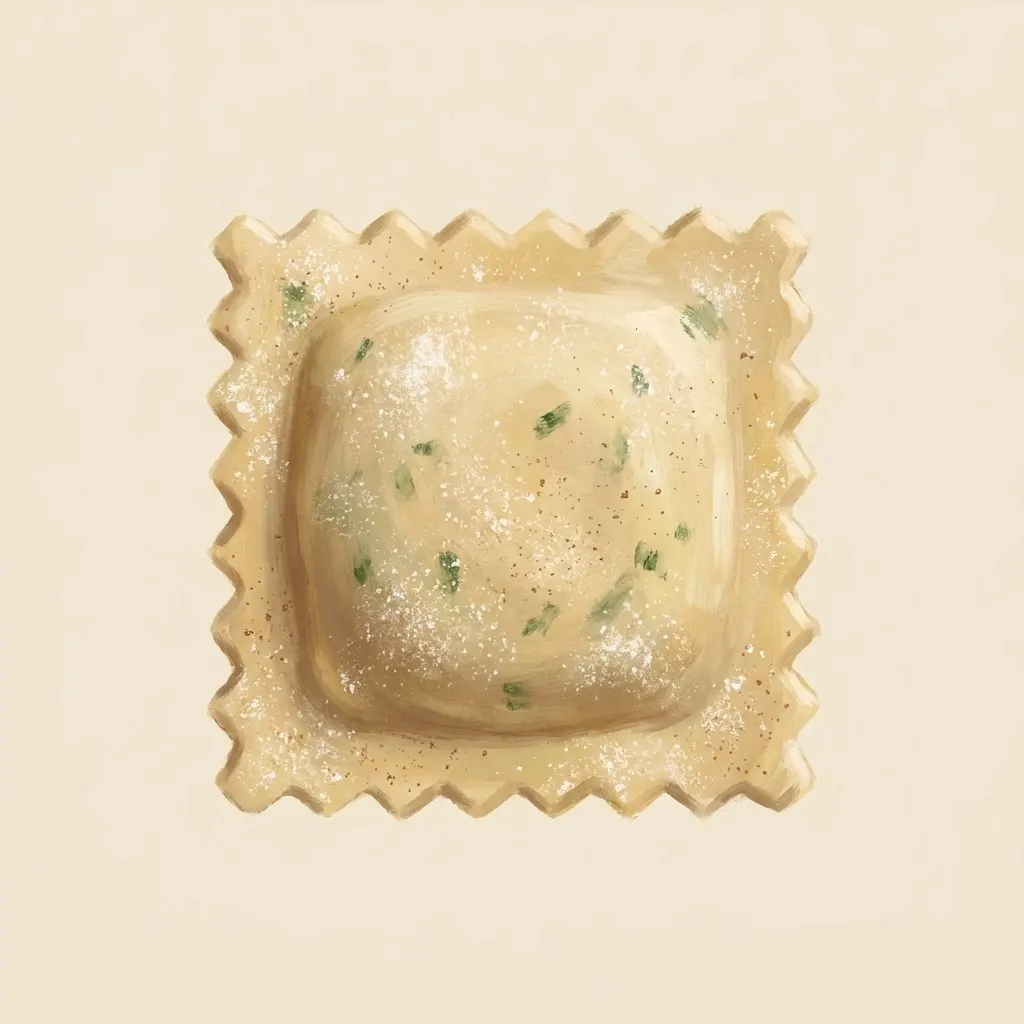
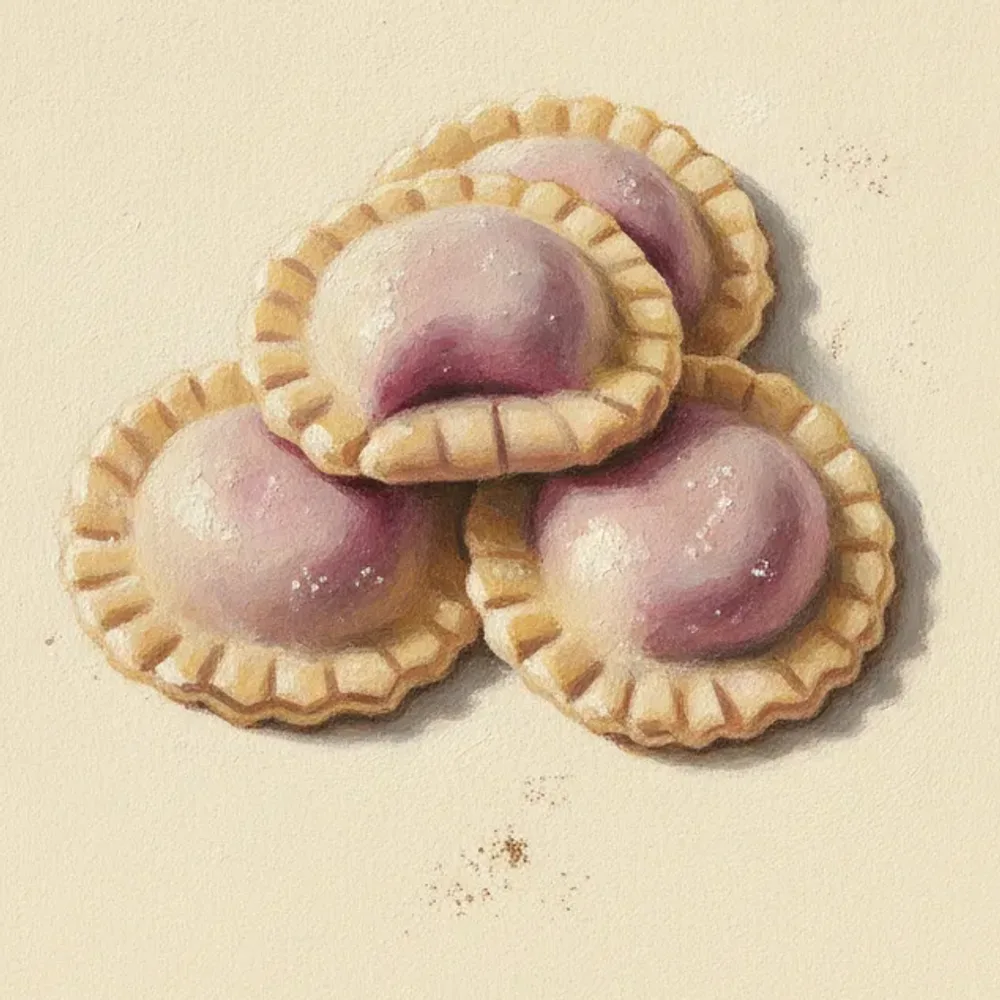
Half-moon or folded stuffed parcels. Mezzelune are the plain crescents, casunziei the Ampezzo version with a beet-pink filling, cjarsons the Carnia ones with a sweet-savory mix, and casoncelli the Bergamo parcels around a rustic meat filling.
Newsletter
Pasta mail
A new shape now and then, plus whatever pasta rabbit hole we fell down lately. No spam, promise.